Home Blog Page 64

FAA Considers Mandate Of Cockpit Video Recorders But Pilots Are Fighting It

Since the year 2000, the National Transportation Safety Board (NTSB) has been urging the Federal Aviation Administration (FAA) to mandate cockpit video recorders. The Air Line Pilots Association (ALPA) has resisted the move by claiming that cockpit video records can be misleading.

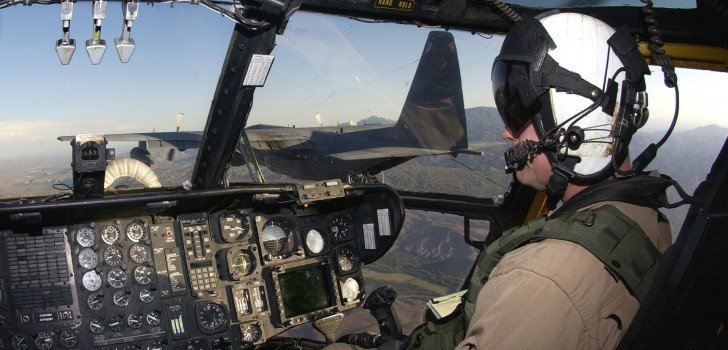
A failed helicopter rescue near Anchorage, Alaska in March 2013 illustrated the value that these video devices can provide. Moments after picking up a stranded snowmobiler, pilot Mel Nading lost his situational awareness due to bad weather conditions and crashed. The presence of a cockpit video recorder allowed investigators to observe Nading resetting his horizon indicator as the helicopter pitched back and forth, worsening his situation.

NTSB Investigator John DeLisi commented on the cockpit recorder, “It really gave us the insight that this pilot was spatially disoriented. Without the video, we would have been looking at a pile of burned-up wreckage, trying to figure out what caused the erratic flight path that led to this crash.”

Despite pilot arguments that money should be spent on other safety features, video equipment has become increasingly cheaper over the years and therefore more common in aircraft. Current video hardware from suppliers such as Appareo Systems and L-3 Communications Holdings can sell for less than $10,000 and are usually capable of storing flight data as well.

In October 2014, the investigation of the crash of a Virgin Galactic spacecraft was similarly aided by a cockpit video recorder. Pilot Michael Alsbury was seen to have activated one of the ship’s systems too early in the flight, leading to the crash.

Despite these instances of the equipment’s effectiveness, the FAA has stated that it will not be revising its policy on cockpit video devices. The FAA is due to undergo Congressional reauthorization next year, and some lawmakers plan on pushing for the requirement. Additional weight to the cause was provided by last year’s disappearance of Malaysian Airlines Flight MH370, which still remains a mystery.

Norway Limiting Asylum To Five Year Stay Due To Massive Influx Of Syrian Refugees

The government of Norway is establishing a new policy that limits terms of asylum to a maximum of five years. After this time period, refugees in Norway will be returned to their places of origin, assuming that the situation in their original country has improved during their stay abroad.

State Secretary of Norway Joran Kallemyr said, “If the war in Syria ends, or conditions in Iraq improve, they (the refugees) will have to prepare for the return trip. If there are changes in the country that means you no longer need protection in Norway, you should basically be returned.”

Kallemyr is a senior official from the Progress Party in Norway’s Ministry of Justice. He said that the policy was put out for consultation by the government. Kallemyr is hopeful that the policy can make its way through parliament before Christmas vacation.

Kallemyr went on to say that the policy would also apply to entire families.

He explained, “If anyone gets a family reunion and the asylum applicant who is the reference person can no longer stay in Norway, the whole family will return. What we are obligated to do under international law is to not prevent families being together, but we are not obliged to arrange for the family to come to Norway.”

According to Kallemyr, Norway has already ceased the practice of paying for flights and other needed expenses of people travelling to Norway for the purpose of seeing family members. However, Sweden is still continuing this practice.

Kallemyr says that the country is following in the footsteps of Germany by bringing in temporary asylum. Germany has allowed three years of temporary asylum for Syrians that are escaping the war in their country.

The immigration department of Norway expects more than 30,000 new asylum applications to be submitted next year. The country received a record 5,000 applicants last month.

University Of Phoenix Banned From Recruiting On Military Bases

The United States Department of Defense has banned the University of Phoenix from recruiting on military basis. The Defense Department has also forbidden troops from using federal money to attend classes at the largely online university.

The for-profit university has been under scrutiny regarding its recruitment efforts for months.

More than 200,000 people are enrolled in the university’s system. It is a major provider of classes to troops on active duty, reserve troops, and members of the National Guard. The University is widely recognized for its online classes.

Leader of the Defense Department’s Voluntary Education program Dawn Bilodeau said of the ban, “The institution will not be authorized access to DoD installations for the purposes of participating in any recruitment-type activities. Further, no new or transfer students at the institution will be permitted to receive DoD tuition assistance.”

The recently-enacted ban does not affect the enrollment of veterans, and troops that are currently enrolled in the university, who will be permitted to continue receiving federal funding.

Representatives from the University have stated that they will continue to work with federal authorities.

University of Phoenix President Tim Slottow said in a statement, “The University intends to continue its cooperation with federal and state agencies to respond to their requests. University representatives have been working closely with DoD leaders, and we all expected a different response from DoD. At this time, the university will not accept new students who wish to use tuition assistance program funds.”

Slottow says that he will appeal the decision, but for now, the university will comply with the ban that was issued by the Department of Defense.

Many experts speculate that the decision to limit the university’s recruitment efforts was based on the school’s low graduation rate and excessive defaults on loans by its students.

The university has been trying to improve itself by increasing its monitoring for financial-aid fraud and establishing new student orientation programs.

Enrollment at the University of Phoenix has fallen by 14.5% in the previous year.

Scientists Studying Sea Anemones In The Hope Of Discovering The Secret To Eternal Life

Researchers are examining sea anemones in order to possibly discover secrets to longevity.

Sea anemones are soft-bodied animals that were once thought to be plants. They attach themselves to rocks and coral reefs that live in shallow waters. An anemone injects poison into small fish and shrimp, and then it uses its tentacles to guide the stunned creatures into its mouth, which also functions as its anus.

Currently, more than 1,000 different species are known to exist. Some are only a few inches long, while others extend several feet. Sea anemones live in every ocean, including the Arctic.

They also come in a wide variety of colors, and many people consider them to be beautiful, elegant creatures. They can live beyond 100 years if conditions are kept proper. Some scientists speculate that they might be able to live indefinitely

Sea anemones are known to regenerate any part of their bodies that becomes detached, including their unique mouths. They simply get larger over time, and are known for being essentially immune to the process of aging.

The longevity of these creatures has greatly intrigued scientists. They are not known to develop tumors or cancer, which is remarkable considering that they constantly replenish themselves.

While they continue to age, they appear to remain youthful, vibrant and full of life. Even though the same structure remains, new cells are constantly being formed.

What scientists don’t know is the process involved. However, they would like to learn more, since they might be able to isolate a gene in order to prevent the process of aging in people.

Still, it’s unknown if a gene from a unique sea creature could be utilized in humans. But there is hope, as sea anemones are more similar to humans than most people realize. Both humans and sea anemones contain a central nervous system that contains a network of neurons enabling them to respond to stimuli. Although sea anemones are incredibly simple creatures, there’s more to them than initially meets the eye.

While these creatures might be silly forms of amusement to humans, they might ultimately hold the valuable secret to achieving immortality.

Countries In Syria Spying On Each Other While Also Trying To Prevent Spying

As Russia is continuing to escalate its involvements in Syria, the country is utilizing electronic warfare systems in its efforts. The use of such systems has proven to be extremely popular throughout the conflicts in Syria.

One of these Russian systems is the Krasukha-4, which is designed to prevent satellite systems and surveillance radars from operating properly. It works by jamming the frequencies that are emitted by the satellites. Russia has reportedly been using the Krasukha-4 against low-orbit satellites of the United States.

The commander of the United States Army Forces in Europe Lt. General Hodges has stated that Russia has previously demonstrated an advanced level of offensive electronic warfare technology when it used the Krasukha-4 against Ukraine.

While Russia and Western countries largely agree on the need to defeat forces of the Islamic State in Syria, they disagree on what should be done about Syrian President Bashar al-Assad. Russia wants to keep President Assad in office, while the United States is working to bring him down.

The United Kingdom originally developed electronic warfare (EW) in World War II in an effort to defend itself against bombings and to prevent Allied nations from being detected by enemy surveillance systems.

Since then, EW technology has progressed tremendously, and it is now considered to be a major element of any serious war. Countries are continuing to invest billions of dollars in order to further develop the technology.

There are many aspects of EW, including attack and support, electronic intelligence and signals intelligence. Typically, EW is employed in very early portions of wars, before any actual combat begins, as a method for preventing the opponent from obtaining information about their weapons and their forces. It is also used throughout wars as a primary method of spying.

The United States has used EW technology throughout its involvement in Syria. The country has used EW to gather intelligence from opposing forces such as ISIS, and it has shared such intelligence with its allies. It has also used EW to prevent ISIS forces from communicating.

Russia is well aware that its aircrafts are being monitored by forces such as the United States. As such, it is no surprise that Russian forces are working diligently to prevent other countries from spying on them while figuring out who their next target will be.

However, the Krasukha-4 can only be used to hide Russian activity to limited effectiveness. The United States and other enemies of Russia are making use of electronic counter-counter measures (ECCM) to prevent the surveillance-prevention device from working. By doing this, the United States and its allies will be able to continue to spy on Russia.
Of course, similar activity is going on the other side of the fight. The result is one giant game of cat and mouse that is very reminiscent of the Cold War.

But regardless of the outcome, it’s clear that the Syrian situation is giving military powers a chance to test out new technology in real situations.

Still, it’s nothing more than one big circle.

Lyft Is Offering New Features And Driver Perks In An Effort To Beat Its Rival Uber

Ride-requesting service Lyft is offering new services and features in an effort to better appeal to consumers and attract more drivers. Lyft is the primary rival of Uber in the United States.

These new services primarily consist of Lyft partnering with outside companies in order to offer these new features and perks to its drivers. One of the main initiatives is a partnership with car rental service Hertz that will allow customers to rent cars on a daily, weekly or monthly basis.

Lyft will also be introducing a new feature called Express Pay that will let Lyft drivers immediately deposit their earnings to their bank accounts as soon as they earn a minimum of $50 from their fares. The feature is a joint effort between Lyft and the payments processing company Stripe.

Lyft will also be working with oil company Shell to give their drivers discounts on gasoline.

These new services represent a clear effort by Lyft to better compete with its rival Uber, which is known for offering many perks to its drivers.

Uber is currently valued at $51 billion globally, while Lyft only stands at $2.5 billion.

Lyft recently agreed to a partnership with Didi Kuaidi, the largest ride-requesting service in China.

Lyft has also joined forces with insurance company Allstate in order to offer roadside assistance to its drivers.

Starbucks has also started working with Lyft, as drivers for Lyft will receive discounts on coffee.

Lyft has stated that these new features are being released in phases, and they should all be available by early next year.

Lyft was founded in San Francisco in 2012 by Logan Green and John Zimmer. It currently operates in 65 cities in the United States, and the company has plans to expand both domestically and internationally.

Meanwhile, Uber has faced troubles internationally, as many countries have banned or placed restrictions on their services.

Stabbing Attacks Widespread Between Israel And Palestine

Five Palestinian demonstrators in Gaza were killed on Friday by Israeli forces in the latest in a string of stabbing attacks that have taken place in both Israeli and Palestinian territories. The attacks are starting to bring widespread fear to local communities.

The recent attacks have been conducted by young Palestinians who have no known links to armed groups. They have been attacking Israeli soldiers and civilians at random, and their strikes have complicated Israeli efforts to keep the violence under control.

The Israeli-Palestinian border has mostly been quiet since the conclusion of the war between Israel and an Islamic militant group known as Hamas last summer.

Representatives from the Israeli military said that nearly 200 Palestinians in Gaza moved towards the border, while they threw rocks and rolled burning tires at stationed troops. Forces allegedly opened fire at the main attackers in order to try and prevent their advancement.

Hamas leader Ismail Haniyeh has supported the recent stabbing attacks. He declared the attacks to be an uprising against Israel.

While the attacks were initially confined to east Jerusalem, they have since spread to other cities in Israel.

An attack against a 14 year old boy from Jerusalem took place on Friday by a Palestinian wielding a vegetable peeler. A separate attack took place near the entrance of Kiryat Arba, as a Palestinian was killed by a police officer when he tried to attack the office with a knife.

Meanwhile, in northern Israel, a 29 year old woman of Arabian descent was shot and wounded as she attempted to stab people at a bus station. Another stabbing occurred at the bus station one day prior.

An apparent revenge attack took place shortly after, when an Israeli man stabbed four Arab individuals in Dimona, a city in southern Israel. The man was described as mentally ill, and bystanders quickly acted to aid the Arabs.

Officials have promised that anyone who conducts attacks will be prosecuted to the fullest extent of the law.

Video footage of these attacks has been displayed on the internet.

Former CIA Operative Fighting Against Italian Extradition In Portuguese Court

Former CIA operative Sabrina De Sousa is fighting to stay in Portugal after she received a six year prison sentence in Italy for kidnapping an Egyptian cleric in Milan in 2003.

De Sousa was arrested at Lisbon International Airport on Monday because of an arrest warrant that was issued by Italy. De Sousa has citizenship in both the United States and Portugal.

In court hearings, De Sousa told a judge that she wants to remain in Portugal. She even stated that she would rather serve a prison sentence in Portugal than return to Italy.

De Sousa says that she was never informed about her arrest warrant in Italy. Authorities do not believe that De Sousa was trying to flee because she had already purchased a return ticket to Portugal.

At the time of her crime, De Sousa was operating for the CIA. She was originally acquitted because of diplomatic immunity, but was eventually found guilty in 2014 by the highest Italian court.

De Sousa was born in India, and she is particularly concerned about losing her freedom to visit her family still living there. De Sousa was reportedly trying to visit her 89 year old mother in India when she was arrested.

When questioned why De Sousa was not arrested at an earlier time, Portuguese authorities stated that they did not know that she was living in the country.

Lawyers representing De Sousa have stated that they will not comment on the case until an outcome is determined.

For now, De Sousa is being given a chance to present her arguments for remaining in Portugal to the court.

After De Sousa makes her case, the court will have ten days to make a decision. While the constitution of Portugal usually does not allow for the extradition of its citizens, the court will also be required to take the laws from the European Union into consideration.

Swiss Banks Disclose Their Secretive Techniques To Avoid Paying Fines

Swiss banks are starting to reveal how exactly they have been able to assist wealthy Americans in avoiding taxes thanks to a forgiveness program from the Justice Department.

Such tactics used to be kept in secret, but after banks in Switzerland signed amnesty agreements with the United States Justice Department, they have been mandated to expose their secrets regarding how they help customers hide assets from taxation.

Meanwhile, American citizens keeping money in Swiss banks are realizing this, and they are starting to relocate their money to other countries, such as Singapore and Israel.

The top tax prosecutor Caroline Ciraolo says, “The money is moving out of Switzerland to a variety of jurisdictions. We’re following leads and following the money, wherever that leads us.”

The amnesty program in Switzerland is part of a major attempt at curbing tax evasion. These efforts largely grew in intensity after 2009 when the largest Swiss bank paid $780 million to avoid prosecution. Meanwhile, the United States initiated criminal investigations at 14 other banks as well.

In order to get Swiss banks to expose their tricks, the United States promised to not prosecute any Swiss bank that revealed their tax-evasion methods starting in 2013.

So far in 2015, 41 banks have paid a combined $355 million in penalties. In exchange, none of these banks have been prosecuted. These penalties are smaller than what the banks had anticipated.

However, the program functions in a unique way. The more revelations the Swiss banks make about their techniques, the less money they have to pay the American government.

Meanwhile another 40 banks are also expected to enter the program this year.

With banks in Switzerland largely being milked for their secrets, American investigations are now largely focusing their efforts on countries where the money was relocated, such as Singapore.

A major tactic used by the Swiss banks involved transferring the money of their clients to other accounts both in Switzerland and internationally. Much of the money was transferred to obscure places where investors wouldn’t think to look.

The IRS is also gathering information from American taxpayers who revealed their offshore accounts. Since 2009, more than $7 billion has been paid back by nearly 50,000 taxpayers.

Switzerland has a long history of being an ideal place for banking. The country made it a crime in 1934 to reveal information regarding their clients. Bank accounts in Switzerland typically feature numbers rather than the names of the clients, and banks typically hold mail to avoid creating paper trails.
Swiss banks have also been known to assist clients in making cash withdrawals in order to avoid currency reporting requirements mandated by the United States. Other Swiss banks will convert the assets of a client into gold, which cannot be taxed as easily.

With the rush against Swiss banks, some Americans have converted their assets into foreign company holdings in order to hide their money. Some representatives from foreign banks and companies have even pressured wealthy Americans to allow them to hide their money by taking them out for fancy dinners and popular sporting events.

Since the amnesty program began in 2009, 106 Swiss banks have participated. Representatives from the Justice Department say that they have been able to obtain a large amount of valuable information thanks to the program.

3D Printed Reversible Concrete Will Revolutionize Temporary Architecture Forever

A new building process that uses only a 3D printing extruder, rocks, strings, and smart design, and which experts say may revolutionize temporary architecture, is being shown off at the Chicago Architecture Biennial.

The process called Rock Print, has been developed under a partnership between the Self-Assembly Lab at Massachusetts Institute of Technology (MIT), and Gramazio Koeler Research (GKR). It is virtually an alternative to concrete that doesn’t require explosives or jackhammers to remove.

MIT’s Department of Architecture Research Scientist Skylar Tibbits says the process involves ” jamming rocks together with algorithmically placed string”.

“We are using a similar technique to powder-based printing. There is a container, material is deposited layer by layer and a ‘binder; in this case the string, is applied to each layer in the specific pattern of the slice.” he says.

Andreas Thoma, GKR’s project installation head says,. “When structures are aggregated from crushed gneiss, we get load bearing structures that can withstand enormous forces.” which can be shaped into a wide range of designs. Thoma says the real value of Rock Print is that when you want one of your structures to be gone, you just virtually “wind the string up, pack up the rocks, and it’s like it was never there”.

“The ability to digitally fabricate, disassemble, and reassemble structures with no material losses changes the paradigm of architecture as well as the view of permanent / temporary architecture,” says Thoma.

GKR and MIT have been testing materials, string patterns, and fabrication methods since 2014, but the idea behind the process dates back to 2011. Thoma says it was back then when Chicago University professor Dr. Heinrich Jaeger hosted a meeting of architects, physicists and material scientist to explore the possibilities of the “jamming phenomenon”, which is what happens on a physical level when “you cram a bunch of stuff into one spot”. MIT and GKR joined forces at the conference.

Thoma says, “This is the beginning of the research and a step towards an alternative to concrete.”

FAA Working To Intercept Drones That Fly Into Restricted Airspace

The Fed­er­al Avi­ation Ad­min­is­tra­tion (FAA) has teamed up with military contractor CACI International to develop and test new technology to track and discourage commercial and personal drone operators from flying into restricted and sensitive airspace such as airports.

FAA deputy administrator Michael Whitaker says it is imperative something is done to control drone flights near airports to prevent “a po­ten­tially cata­stroph­ic col­li­sion between a drone and an air­liner”.

He says the FAA is concerned about the the increasing number of drone sightings by com­mer­cial pi­lots. He says his agency receives about 100 re­ports a month of drone sight­ings near air­planes and air­ports.

Aviation experts say the CACI partnership with the FAA is the latest in a series of attempts to keep drones from ac­cess­ing re­stric­ted air­space. Some Congressmen are pushing the FAA to to cre­ate man­dat­ory geofences that would pre­vent drones from be­ing flown where they shouldn’t.

Sen. Chuck Schu­mer will be introducing legislation to set up vir­tu­al fences around sens­it­ive areas where drones would be kept them from en­ter­ing the “fenced-off” areas by built in software. The experts say although it’s a step in the right direction, Schu­mer’s plan is not fool­proof. The geofen­cing soft­ware in drones can be easily disabled and modified by a savvy user.

The technology being tested in the CACI/FAA partnership goes further than geofen­cing.

CACI’s president of U.S. Operations says the tech­no­logy can “pass­ively de­tect, identi­fy, and track UAS or aer­i­al drones and their ground-based op­er­at­ors.”

Whitaker says the technology will be able to loc­at­e op­er­at­ors who are fly­ing drones.

Ac­cord­ing to Congressman Peter De­Fazio, the tech­no­logy has “been used in mil­it­ary ap­plic­a­tions. As they ex­plained it to me, they can pin­point the op­er­at­or — that’s good. They can do nu­mer­ous things: They can force the drone to land, they can force it to go back to the op­er­at­or, or, in the case of hos­tiles, they de­liv­er something to the op­er­at­or.”

“You wouldn’t want to ne­ces­sar­ily dis­able them and have them drop out of the sky, but they can also dir­ect them to an­oth­er place, and if we had des­ig­nated safe sites around air­ports or crit­ic­al air­space and we used this tech­no­logy, we could dir­ect the drones there and say, ‘Oh, come get your drone, we’ll be wait­ing,’” says DeFazio.

The FAA has already put a less in­trus­ive strategy into place – an edu­ca­tion cam­paign called “Know Be­fore You Fly” and “No-Drone Zones”, aimed at hob­by­ists and com­mer­cial drone op­er­at­ors.

Researchers Are Discovering Why Elephants Are Better At Fighting Cancer Than Humans

Elephants have a strong defense system against cancer, and scientists from the University of Utah are starting to figure out why.

Typically, large mammals are believed to be of particularly high risk for developing the deadly disease. The idea is that since every cell in the body can potentially become cancerous, having more cells increases the risk of one developing cancer.

Based on this logic, since elephants have 100 times as many cells as humans, they should be 100 times more likely to develop cancer.

However, this is not the case, as statistics show that only 5% of elephants die from the disease compared to 25% of all humans.

In order to study this phenomenon, scientists from the University of Utah started examining the DNA of elephants. Cancer is the result of mutations in the DNA of a cell which causes rampant growth and quickly becomes destructive to the body.

Scientists determined that animals such as elephants are able to use certain genes to detect the damage that is occurring and either repair offending cells or kill them off.

Researcher Dr. Joshua Schiffman said, “By all logical reasoning, elephants should be developing a tremendous amount of cancer, and in fact, (they) should be extinct by now due to such a high risk for cancer. Nature has already figured out how to prevent cancer, it’s up to us to learn how different animals tackle the problem so we can adapt those strategies to prevent cancer in people.”

However, some scientists are arguing that the focus shouldn’t be on how to stop cancer, but rather discovering why humans maintain a high rate of developing the disease in the first place.

Cancer research scientist Professor Mel Greaves said, “In terms of adaptive mechanisms against cancer we have the same as a chimp, but we get a lot more cancer than a chimp. I think the answer is humans are completely unique as a species in having very rapid social evolution in a short period of time.”

Professor Greaves also pointed to the unhealthy behaviors of humans, such as smoking, obesity and sunbathing.

Other experts mention the possibility of birthing cycles having an effect on cancer development. Elephants typically produce offspring at later ages than humans. Therefore, elephants need to live longer to reproduce. Humans do not need to reach old ages to bear children. The result is that evolutionary pressure for humans to create natural mechanisms for preventing cancer at old ages does not largely exist.

Regardless of the reason, there’s no denying the fact that cancer is a major problem in humans, and scientists will continue to pursue viable solutions to the disease.

Peruvian Vigilantes Taking Brutal Measures For Justice And Post The Videos On Facebook

A Peruvian Facebook page encouraging citizens to “Catch Your Thief” has attracted a large amount of attention, as people are watching vigilantes catch their local wrongdoers.

In Peru, the page is known as “Chapa Tu Choro”. Participants post videos of themselves capturing criminals and then proceeding to punish the bad guys in whatever way they see fit.

A large number of these punishments are extremely brutal and graphic in nature, while others are humiliating. One woman accused of stealing was stripped naked and forced to carry a sign that read “I’m a thief”.

Many citizens see this as a way of working around their local police forces, which are known for being corrupt.

However, this vigilantism has led to some suspected criminals being unofficially punished by citizens when they were in fact innocent. One such case involved a man who was suspected of robbery being beaten. It was later revealed that he had nothing to do with the crime.

But sometimes the outcome is more serious. Since the campaign was launched last August, three men have been killed. Two suspected murderers were burnt to death, and a 17 year old was shot after he was accused of stealing a cell phone.

The Facebook page was launched after Peruvian Journalist Cecilia García and her neighbors captured a local thief. They turned the criminal over to a local police agency, and he walked free after just 30 minutes. García was greatly offended, and she started encouraging people to take justice into their own hands rather than allowing proper authorities to hand out extremely lax punishments. Many people support García and her efforts.

Resident of a crime-filled neighborhood in Peru’s capital city of Lima, Holler Vilchez said, “There were so many muggings, residents started to take justice into their own hands. The police never came when we most needed them, they would say they didn’t have a car, or didn’t have enough fuel, or would arrive an hour later. So we catch our criminal and punish him ourselves.”

Vilchez insisted that his group of neighborhood patrollers is not messing around. He produced photographs showing how far his team has gone.

“Here we hang criminals, drug addicts and rapists. We will burn them alive,” he said.

Now, officials are acknowledging that the program has gone too far. Interior minister José Luís Pérez Guadalupe has stressed to vigilantes that it’s okay to “catch your thief”, but you must turn them over to the police instead of punishing the wrongdoer on your own.

Guadalupe said, “If they want to take justice into their own hands, the country’s justice system must also judge them.”

However, Peruvians do not trust their local police to deliver that justice. A recent poll of residents of Lima determined that 55% of residents do not have trust in the local police, while 79% do not have faith in the judiciary. Additionally, 72% of citizens support the “Catch Your Thief” program.

While the program originally had good intentions, it has since gotten out of hand. Thanks to the corruption of police officers in Peru, local citizens have taken matters into their own hands, and they have taken things too far.

Cinemagraphs Are Becoming Creative Commodity As Stock Photography Sites Compete

Although having been around for years, cinemagraphs are quickly becoming one of the hottest commodities in the creative community, with both start-ups and established stock photo sites jumping on the wagon.

Cinemagraphs are still photographs in which a minor and repeated movement occurs, giving the viewer the illusion they are watching a video. Although they have been in existence for several years, they have become popular in social media mediums like Instagram, Twitter and Tumblr, with stock image companies now looking to exploit this for advertising needs.

Facebook has just launched animated profile pics, and the new iPhones have a moving photo creation feature.
Berlin, Germany, based startup Gallereplay, focuses solely on cinemagraphs and sees it as a huge business opportunity.

Gallereplay co-founder Marco Woldt says that he started the company he was aware others would enter the field, but he is hoping the company has had a significant head start as it “taps more artists” and gets more images into its portfolio. He charges $200 for each cinemagraph used in marketing and $100 for use in editorial.

“Since introducing looping video earlier this year, we’ve seen a dramatic increase in the number of cinemagraph posts on Instagram,” says Woldt . “In the last 12 months, the number of cinemagraph posts have increased tenfold.”

He says well known brands including Dunkin Donuts, Starbucks, Walmart, Dos Equis and Apple, have been increasingly using cinemagraphs in their social media promotions.

Stock photo site Shutterstock, has just entered into a partnership with Flixel Photos and will soon be offering more cinemagraphs.
Robert Lendvai, Flixel’s VP of marketing, says the company’s partnership with Shutterstock will put more than 1,000 new cinemagraphs on that site. He says, “I’m not sure how Gallereplay will be able to compete once we see the big guys move into the space — which is about to happen.”

Instagrams director of market operations says cinemagraphs on the platform are one of the more creative styles embraced by marketers.
He says “People love them, advertisers love them, and they really are a great way of drawing attention to certain aspects of the photo.”

Jon Jackson, partner and designer at Work & Co. which has worked on cinemagraphs for Disney and Target says, “You get a lot of bang with great animation depending on how you do it,” said “Cinemagraphs are the rich man’s GIF.”

Newly Created ESports Web Series Will Feature The Most Important News In Gaming

The popularity of eSports is continuing to grow, as fiercely competitive gaming matches now have their own news show similar to that of “SportsCenter”. The new show is being called “ESports Weekly with Coca-Cola”, and it will be sponsored by Coca-Cola and IGN.

The show will run for 30 minutes as an online series. It will cover all of the important events that occur in the world of eSports. IGN’s Kevin Knocke will host the show.

The show is an important project for both of the companies, as they have high expectations for the competitive gaming scene which is continuing to grow in popularity. Establishing a permanent news show is an important step towards its development.

Co-founder of IGN Peer Schneider says, “In a short amount of time, eSports has become very popular; viewership is through the roof. What we haven’t seen is the variety in programming develop.”

Head of gaming at Coca-Cola Matt Wolf says, “We want to create a new watering hole for the eSports community. Something they can dig into, something that can have real reporting behind it, not fluffy pieces but interesting news stories.”

Although Coca-Cola’s company name is in the title, they insist that their effort goes beyond simply sponsoring the program. The company is working in conjunction with IGN to help plan and develop the program.

The current content from the gaming world largely consists of tournaments that are streamed live. Fans often don’t have the time to watch every major tournament or keep up with critical news. The newly established show will give fans an important recap of current events in gaming.

IGN has tried similar shows in the past, but they ultimately determined that the market wasn’t quite ready before shutting the shows down. This time around, the company believes that the gaming scene is large enough to support a full-fledged show.

However, IGN insists on covering the gaming leagues of other companies rather than creating their own league. The company says that they don’t want to be the equivalent of “ESPN and the NFL at the same time”.

The show will premiere on Friday at IGN.com. Fans will be able to access the show on mobile and TV apps, as well as on YouTube and Facebook. The show will air every Friday night at 7pm EST. As of now, only eight episodes have been ordered, but more will be produced if the series does well.

Statistics show that nearly 204 million people either watched or participated in eSports in 2014. By the end of this year, that number is expected to increase to 226 million. Revenues in 2015 are estimated to reach $278, which is a 43.1% increase from last year. By 2018, revenues are expected to rise to $765 million.

Almost No Diesel Vehicles On The Road Today Are Compliant With Pollution Laws

Four more automotive companies are now facing similar scrutiny as Volkswagen, as diesel vehicles from Mercedes-Benz, Honda, Mazda and Mitsubishi have all shown to emit more pollution on the road than when regulatory testing is taking place.

When certain Honda models were put through realistic driving simulations, the vehicles showed pollution levels of up to twenty times the allowable amount.

CEO of the company that conducted these tests, Emissions Analytics, Nick Molden stated that the issue is systematic across the entire automobile industry.

Other companies that are suspected of producing diesel vehicles that are producing more than the legal amount of pollution include Renault, Nissan, Hyundai, Citroen, Fiat, Volvo and Jeep.

However, unlike Volkswagen, there are no reports of any of these companies employing cheating devices in their vehicles.

According to Emissions Analytics, only five of the nearly 200 diesel vehicles that were put through real world simulations matched the pollution levels shown in their regulatory tests.

This phenomenon has been occurring for years, but it wasn’t until Volkswagen crossed the line by using actual cheating devices that the issue came to attention. Molden reports that diesel vehicles produce about four times the legal limit of pollution on average. Car companies are able to get away with this because of the lenient nature of emissions testing.

While environmental agencies worldwide have tried to reform testing procedures, lobbies representing car manufacturers have worked against them. Some environmentalists are trying to do something about this.

Campaigner from Friends of the Earth Jenny Bates said, “With further manufacturers implicated, this is yet more evidence that this scandal goes way beyond VW, and should cause decision-makers to question the very future of diesel vehicles on our roads. This is a massive public health disgrace and the failure to prevent vehicles breaking pollution rules will have cost lives.”

Meanwhile, some car companies, such as Mercedes-Benz and Honda, have come out saying that they would support more intensive testing in order to improve industry standards.

But until testing procedures are changed, car manufacturers will continue to get away with skirting the rules.

Apple’s iPhone 6S Global Sales Are Bloated By Chinese Market

How important the Chinese market is to consumer product sales is being clearly demonstrated by figures for Apple’s iPhone 6S and iPhone 6S Plus, according to news reports coming from Tencent, China’s largest and most used Internet service portal.

According to reports posted on the company’s website, if the Chinese market is entered into the equation, global sales of the phones have not been as good as had been predicted and hoped for by Apple.

The reports say that on the opening weekend of global sales for the iPhone 6S and iPhone 6S Plus, 13 million units were sold, exceeding sales of 10 million last year. Yet China was not included in the initial batch when Apple launched the iPhone 6 in 2014, meaning this year’s sales figures are ” bloated” by sales in the world’s largest iPhone market.

China represents a whopping 35% of total iPhone sales.
Tencent’s report say if the sales for the iPhone 6S are separated, China accounted for 4.55 million units, more than half of the 8.45 million global sales – a drop of 15.5 percent compared to the same
markets last year.

The reports claim another reason for the lower sales of the newer generation is that the initial model attracted more buyers with significant new features such as the screen size, while iPhone 6S and iPhone 6S Plus don’t really have the lure of anything remarkably new. They say the technology behind the newer iPhone Force Touch, which are heavily promoted by Apple, has already been implemented in smartphones produced by Chinese phone manufacturers like Huawei.

The other features for the new apple product, which include a new color option of rose-gold, and a 12-megapixel camera, up from the 8 megapixels in earlier models, have not swayed potential buyers.

Tencent says Apple’s lowering of the price of the iPhone 6 after the hyped launch of the iPhone 6S, also impacted sales of the new phone. On the Chinese market the iPhone 6 can be purchased for as low as $504 which is 40 percent lower than the retail price for the iPhone 6S.

Volkswagen Facing Second Investigation For Another Harmful Cheating Device

Volkswagen is now facing a second investigation, as regulators in the United States have begun looking into a second program in the German automotive company’s diesel vehicles that is also suspected of affecting the emission controls of the cars.

The news comes after Volkswagen recently admitted to installing cheating devices into 11 million of its diesel vehicles worldwide in order to trick regulators into believing that their vehicles were compliant with emission standards, when in actuality they were producing pollution up to forty times the allowable levels.

The company has already stated that it plans to cut diesel vehicles from their 2016 lineup in the United States.

The existence of the second program was disclosed by President of Volkswagen America Michael Horn at a recent Congressional hearing. According to environmental laws, the program is considered to be an auxiliary emissions control device, which changes the performance of the emission-controlling equipment.

Volkswagen would not state whether or not this recently discovered software was designed to cheat emissions control tests like the first program that was discovered.

Agency spokesperson Nick Conger said, “VW did very recently provide EPA with very preliminary information on an auxiliary emissions control device that VW said was included in one or more model years.”

Typically, automotive companies are allowed to use such auxiliary emissions control devices in their vehicles. These devices function by temporarily increasing emissions when the car is working under stressful conditions, such as travelling up a steep hill or driving in very cold weather. However, these devices must be disclosed to regulators.

Volkswagen reportedly did not inform regulators about the existence of such a device. According to automotive pollution expert Dan Becker, this is a violation of the law.

Becker stated, “They put it in their vehicles, and then they signed a certification petition to the regulator saying what they put in their vehicles and didn’t mention it. It’s certainly a material omission.”

For now, Volkswagen is focused on fixing its nearly 500,000 diesel vehicles in the United States which were involved in the original scandal. So many cars are affected that owners might have to wait one or two years before their vehicles can be fixed. Most of these cars will require a major fix, such as a change of hardware and software. Some reports have indicated that it might take up to ten hours to fix a single car. Work on these vehicles is expected to begin in 2016.

Horn stressed at the Congressional hearing that the company is focused on fixing the cars instead of buying them back.

“Our plan is not to buy back the inventory. Our plan is to fix the cars,” he said.

Many lawmakers went on to criticize Horn for not providing a firm deadline to fix the vehicles. Horn also failed to provide substantial details about the scandal and who exactly was responsible.

He attributed the incident to “a couple of software engineers who put this in for whatever reason.” Horn also did not object when lawmakers expressed beliefs that top executives in the company knew about the scandal before the news was released to the public.

Names Perceived As Sounding ‘Black’ Are Associated With More Dangerous People

A majority of Americans perceive people with ‘black’-sounding names as physically larger and less successful than those with ‘white’-sounding names. A new study exploring racial bias exposes the deep racial profiling that is prevalent in America today and that has led to movements such as “Black Lives Matter.”

A study by UCLA researchers published in the journal Evolution and Human Behavior on Thursday has revealed controversial gaps in how brain mechanisms for social interpretation have evolved. In the study, 1500 people mostly whites drawn from various regions and whose ages ranged from 18 to mid-70s, were given one of two vignettes. One featured a name associated with black people, such as DeShawn, Darnell or Jamal while the other featured a name associated with white people, such as Connor, Garrett or Wyatt.

The vignette read:

[NAME] woke up Saturday morning and began his day by brushing his teeth and taking a shower. After eating breakfast, [NAME] watched TV for a while and talked on the phone. Then [NAME] went to a nearby store and bought some groceries. Once he had gotten home, [NAME] received a text message from a friend inviting him to go out later. That night, [NAME] went out to meet his friends at a bar. As he entered the crowded bar, he brushed against the shoulder of a man walking the other direction. The man turned, glared at [NAME], and angrily said “Watch where you’re going, a–hole!”

A control group read the neutral vignette while the others read a vignette with one of the black or white names with two additions: a “successful” scenario in which the character was a college graduate or business owner, the second was a “threatening” scenario in which the character had been convicted of assault. Participants were then asked for their impressions of the height, physical build, appearance and aggressiveness of the characters.

The results revealed that participants associated the names of black characters with large, physically intimidating characters while linking that with poor social status or level of success. White sounding names were associated with greater social status.

According to research scientist Collin Holbrook from the anthropology department in UCLA, “In the ‘successful’ scenario, the white and black characters are similarly perceived. And when the character is convicted of assault, they again have similar outcomes, no matter their name. But people imagine the neutral black character as similar in size to the white criminal character, and we know that this shift in size is a proxy for how violent and aggressive they implicitly perceive the person to be. It’s quite disturbing.”

In another version of the study, characters with names such as “Jun” and “Jose” were perceived as much more violent and lower placed socially than characters like “Chen” and “Hikaru”.
The study reveals a growing bias against blacks and Hispanics in the U.S. By linking them to violence and lower social status, the two groups were already set up for discrimination.

The study is part of a larger project funded by a grant from the U.S. Air Force Office of Scientific Research to understand how people make decisions in situations where violent conflict is a possibility.

Facebook To Expand Like Button To Include More Expressive Reactions

Facebook is expanding the ‘like’ button to make it more expressive. The social media company has revealed that it plans on making the button more expressive for circumstances where ‘liking’ an event would not be appropriate.

Facebook is launching a pilot test for new emoticons to accompany the like button. Through the pilot test, the social network company hopes to determine the viability of a wider range of emotions on posts. The range of emotions set to be introduced include: love, anger, happiness and sadness.

Mark Zuckerberg, chief executive of Facebook said in a recent post, “Not every moment is a good moment, and sometimes you just want a way to express empathy. A like might not be the best way to express yourself.”

Zuckerberg added, “Reactions gives you new ways to express love, awe, humor and sadness. It’s not a dislike button, but it does give you the power to easily express sorrow and empathy — in addition to delight and warmth. You’ll be able to express these reactions by long pressing or hovering over the Like button.” Only last month, Zuckerberg had hinted at expanding the like button.

In a video accompanying the post, chief product officer Chris Cox said the pilot test would be conducted in Spain and Ireland where it would be available on Android, iOS and desktops.
Cox further said that the six buttons would appear as emoticons and would pop up after long clicking the like button. The company was keen on using the results of the test study to improve the feature before rolling it out to everyone. The post was ‘liked’ by more than 7,500 people in just two hours.

Cox expressly stated that the features would not include a dislike button. He said, “As you can see, it’s not a ‘dislike’ button, though we hope it addresses the spirit of this request more broadly.”

While many petitions have called for a dislike button, many have expressed concern that such a button would increase cyber bullying and negativity online.

The new reaction expressions will create a personalized experience for millions of Facebook users around the globe. Through them, they will be able to express their love, anger or even empathy toward their friends and associates, something that was impossible before.

Netflix Increases Subscription Service Costs For North America

Netflix, the world’s most subscribed paid online video service has raised the price of its monthly streaming subscription service by $1. The additional cost marks an increased confidence by the online video service in its product and its customer’s appreciation.

Netflix has increased its online streaming subscription service to $9.99 for all new customers in the U.S., Canada and parts of Latin America. For customers who are already subscribed, the increase will be delayed for a grace period of varying lengths before they are roped in.

The increase only affects the streaming service that allows two users to use a subscription at once. The one screen and four screen plans will not have their prices affected.

The company is counting on the more than 65 million subscribers it benefits and an increased subscription cost to fund its growing finance costs. Netflix has $4.3 billion in costs of programming every year. It is expected to hit $5 billion by 2018.

According to Rich Greenfeld, a BTIG LLC analyst, “It feels like they are confident in how well they are growing and that they have the consumer love to push the price.”

Netflix has said it plans to increase its presence across the world to countries such as New Zealand, Australia and Japan by end of 2015. It plans on finishing its global expansion by the end of next year.

Netflix has been raising prices gradually ever since its much publicized 60 percent increase in 2011. The company split its streaming and DVD-by-mail services while increasing its prices leading to a loss of 800,000 subscribers.

Subsequent price increases did not affect consumers in the same way. In Europe, the company increased prices by one Euro in August. In 2014, the company also increased prices worldwide. However, they accorded existing customers a lower rate for a single year or two.

Aside from increasing its global footprint, Netflix is working to introduce new shows on its service including new Walt Disney Co. movies by next year.

Netflix is looking to become the premier online subscription service in the world. Through increasing pricing costs, it aims to accumulate enough funding for growth and to meet increasing financial costs.

Ex-Reuters Employee Aids Members Of Anonymous In Cyber Attack

A former Reuters employee has been convicted of conspiring with members of the internet group Anonymous in a cyber attack against Tribune Media, his former employer. As social media editor at the Tribune, Matthew Keys provided Anonymous with username and password information so that the group could “go fuck some shit up.”

Convicted of conspiracy to damage a protected computer, transmission of malicious code, and attempted transmission of malicious code, Keys claimed in his defense that he was all along planning to expose the group.

Anonymous is composed of an international group of internet activists who have conducted attacks on targets such as the Church of Scientology, U.S. government agencies and military contractors. Critics of the group describe it as engaging in cyber-terrorism, and also point out that their shutting down of the websites of terror groups and child pornographers can actually hinder efforts to combat them.

After Keys provided Anonymous with the login information, a headline was changed at the Los Angeles Times newspaper, which is owned by Tribune. Anonymous hackers could have used that same login to target websites of FOX television affiliates or other media properties of Tribune.

Keys had a history of unusual behavior leading up to the crime, including online stalking and harassment of love interests who had rejected him, posting fake suicide notes and other attention-seeking behaviors. Keys sought out Anonymous in late 2010, when he offered the group his services as a press liaison.

According to prosecutor Benjamin Wagner, “Although this case has drawn attention because of Matthew Keys’ employment in the news media, this was simply a case about a disgruntled employee who used his technical skills to taunt and torment his former employer.”

The U.S. government has been dealing with the fallout from many recent attacks at the hands of foreign actors in Russia and China. To discourage such behavior from within its borders, the U.S. justice system is attempting to make an example out of people like Keys, who potentially faces 25 years in prison.

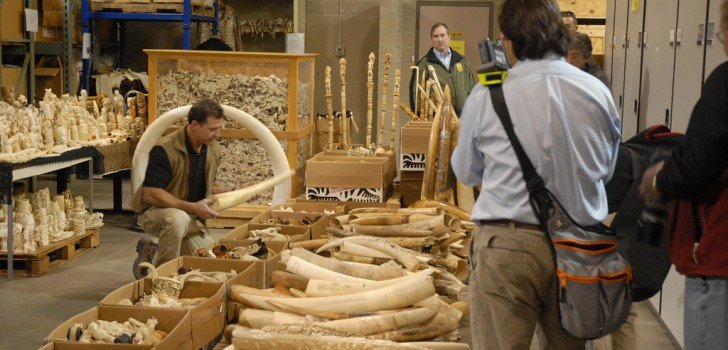
Authorities Capture Ivory Trader Responsible For Killing Over 500,000 Elephants

African authorities have nabbed an infamous ivory trafficker who is believed to responsible for the deaths of more than 500,000 elephants.

Yang Feng Glan was captured in Tanzania after authorities had been stalking her for a year. Glan was known as the “Queen of Ivory”. The 66 year old Chinese woman had been travelling between Beijing, Uganda and Tanzania in order to operate her illegal ivory trade.

Authorities have described Glan as “the most notorious ivory trafficker brought to task so far.”

Glan was reportedly the key link between poachers in Africa and purchasers of ivory in China. In China, the tusks of elephants and the horns of rhinoceroses sell at extremely high prices. Glan was charged with smuggling ivory. The ivory that she helped to smuggle from 2000 to 2014 was valued at about $3 million. Many people believe that Glan had been operating the trade since 1980.

Two local poaching suspects were also arrested in the situation.

Glan is also being accused of financing local gangs in order to help them purchase weapons and bribe officials.

The country of Tanzania is well known for its elephant poaching relating to the ivory trade.

Estimates show that 85,000 elephants have been poached in the country during the past five years. The elephant population fell from 350,000 fifty years ago to just 100,000 by 2009. Some experts believe that only 35,000 elephants remain in the Tanzanian wild.

For Africa as a whole, the elephant population was approximately 1.3 million in 1979. By 2007, it was down to less than 500,000. The population has most likely continued to decline since that time.

In the United States, importing ivory for commercial reasons is forbidden.

Meanwhile, environmentalists are celebrating the arrest of Glan.

The Executive Director for the Elephant Action League Andrea Crosta said, “It’s a very important arrest, the most important in Africa in the past years. The hope is that she will talk and lead the task force not only to her Chinese business partners, but also to local corrupt government officials who probably knew about it, and helped her out. She has been trafficking ivory for at least the past 10 years, and you don’t smuggle for so long and (with) such big quantities without the knowledge and collaboration of some local officials.”

NASA Establishes New Program Designed To Help Small Companies And Spur Innovation

NASA is relying on the innovations of others, as the space agency is launching a program which will allow entrepreneurs to utilize its patented technologies without having to make an initial payment.

By doing this, NASA is hoping that others will be able to use their technologies to make their own scientific breakthroughs.

The program is being called Startup NASA.

The space agency said in a press release, “The Startup NASA initiative addresses two common problems startups face: raising capital and securing intellectual property rights.”

The new program has the goal of encouraging business growth and advancing technological innovation in America.

Only companies in the United States are expected to be allowed to participate in the program, but this has not yet been confirmed.

The program is a part of NASA’s Technology Transfer Program. By participating in the program, startup companies will be allowed to make use of more than 1,200 technologies that have been patented by NASA.

The space agency has 15 different categories of patents. Some of these categories include aeronautics, electronics, IT and software, materials and coating, power generation, storage and robotics.

NASA’s chief technologist David Miller says, “The Startup NASA initiative leverages the results of our cutting-edge research and development so entrepreneurs can take that research, and some risks, to create new products and new services.”

In exchange for participating in the program, companies will be required to pay NASA a royalty of 4.2% of total net sales that are related to their usage of technologies that are patented by NASA starting three years after the company enters into the program.

NASA is clearly trying to lessen its burden to develop innovative new technologies, as the agency is expecting that fresh minds will be able to do the work for them. That being said, it’s a good concept because it will help small companies get started, and it will allow for more technological innovation to take place in the United States.

Billionaire Investor Bill Gross Files Suit For Hundreds Of Millions Against Company He Co-Founded

Billionaire investor Bill Gross has filed a civil lawsuit against the company he co-founded, Pacific Investment Management Co. (“Pimco”), over his 2014 ouster, which he claims was improper.

Gross, known as the Bond King for his amazing investment returns, filed the lawsuit in California state court on Thursday morning and is seeking over $200 million in damages.

The lawsuit also names Pimco’s parent Allianz SE as a defendant. His complaint describes, for the first time, Gross’ version of the power struggle that led to his being pushed out of the company.

In the suit, Gross alleges that his former colleagues pushed him out of the investment juggernaut that he helped build so that they could stake a bigger claim on the annual bonus pool.

The complaint states that, “Driven by a lust for power, greed, and a desire to improve their own financial position and reputation at the expense of investors and decency, a cabal of Pimco managing directors plotted to drive founder Bill Gross out of Pimco in order to take, without compensation, Gross’s percentage ownership in the profitability of Pimco.” The complaint also claims that Pimco executives’ “improper, dishonest, and unethical behavior must now be exposed.”

According to the filing, Gross claims that the California-based firm owes him at least “hundreds of millions” of dollars for his wrongful termination, breach of written contract, and breach of the covenants of good faith and fair dealing.

Gross was expecting a bonus of about $250 million for fiscal year 2014, most of which was due in the second half of the year, according to the lawsuit. Because he left the firm days before the end of the third quarter, Pimco refused to pay him a proportionate amount.

Patricia Glaser, Gross’s lead attorney, told reporters that Gross, who is reportedly worth $2 billion, would not keep any money he recovered and that all proceeds from the lawsuit would go to charity, including the Pimco Foundation.

Pimco responded to the allegations by stating that, “This lawsuit has no merit and our legal team will be responding in court in due course. Our focus remains on our clients and their investment portfolios.”

Gross essentially claims that he was trying to do what was right for the company’s investors and that other executives were trying to bilk its customers and pad their wallets instead.

The lawsuit will be closely watched by the business and finance community.

The First Official Marine Sanctuaries In 15 Years Have Been Established

Lake Michigan and the Chesapeake Bay will likely be the locations of two new marine reserves, marking the first time in 15 years that a marine sanctuary has been established.

President Barack Obama revealed earlier this week that the National Oceanic and Atmospheric Administration (NOAA) approved for Mallows Bay in the Chesapeake Bay and an 875 square mile area of Lake Michigan to be recognized as national marine sanctuaries.

Both of these areas contain special ecological and archaeological significance. Additionally, they both are known for their vast amount of shipwrecks.

Mallows Bay contains the largest amount of World War I battleships in the world. This wreckage is commonly known as the “ghost fleet”. Other ships in the bay date back to times before the Civil War. Many of the ships were poorly created after the United States Shipping board was established to quickly assemble a navy to serve in World War I, and many of the ships were built as cheaply as possible.

Several of the ships weren’t even used in the war, and instead they ended up in the bay.

Historian Donald Shomette explains, “They were throwaways. They weren’t going for quality.”

The Lake Michigan site, which is off the coast of Wisconsin, is the location of 39 known shipwrecks. According to state historian John Broihahn, the ships were built between the 1830s and 1918.

By being designated as official marine sanctuaries, these two locations will likely receive additional recognition, and more care will be taken to preserve them. Both Shomette and Broihahn believe that the sites will improve with their new designations.

However, time is not on their side. In Maryland, rising sea levels are threatening to sink the “ghost fleet” in the Mallows Bay completely. Meanwhile, in Lake Michigan, invasive mollusks are starting to damage some of the historic shipwrecks.

Luckily, the growth of water tourism and new designations from the NOAA should help to bring proper awareness to these locations.

Innovative Power Plant Will Forever Change Hydroelectric Power

An innovative new type of power plant is being developed in the United Kingdom for use in the city of Swansea, where it will provide power to approximately 155,000 homes for the next 120 years.

The power plant will make use of tides that are channeled into a manmade lagoon. A concept like this has never been utilized before.

The plant received full planning permission last June, and it’s being named the Swansea Bay Tidal Lagoon. If the plant is successful, similar concepts could be adopted throughout the world as a method of cleanly generating electricity while also providing protection to coastal communities.

The process of using tides to generate electricity has existed for decades. The world’s first tidal power station was built in France in 1966. However, Swansea’s proposed model makes the technology more adaptable and better for the environment.

Current models of tidal power plants can only be created in areas that feature an easily bridgeable gap. Swansea’s concept works around this issue by changing coastlines in order to artificially create the conditions needed to generate power.

By being able to construct the required conditions instead of having to look for places where they naturally occur, many more potential location sites will exist.

Additionally, these spots can also be used by the public for recreational purposes. The plant in Swansea will feature a walking trail, fishing spots, an aquatic farm and a visitor’s center. The area could also be the host of water sports events.

However, some experts believe that the plant could be harmful to the environment despite its claim of being completely green. Researchers found that the Rance Tidal Power Station in France was disrupting the migration flows of fish.

Additionally, the plant supposedly changed the salt content of the water, leading to changes in the plants and animals living in the area. The plant in Swansea could potentially do the same thing.

That being said, other experts dismiss these claims. Since the Swansea Bay Tidal Lagoon won’t cover a river mouth like its counterpart in France, it is less likely to disrupt the migrations of marine wildlife.

There is still the major concern of a hefty price tag. The station in Swansea will cost about $1.5 billion to build. The plant is likely to recover that investment during its expected 120 year lifespan, but it will need the help of government subsidies.

Construction of the power plant will not occur until at least 2017. It still requires the formal approval of the British government.

Eyewitness Painting Of Abraham Lincoln’s Assassination To Be Restored

The only known eyewitness painting of President Abraham Lincoln’s assassination is being restored by art conservation activists. The oil painting has been soiled by aging, dirt and grime.

The painting has been maintained by the National Park Service since 1978. It is titled “Lincoln Borne By Loving Hands”.

The painting was created by the German immigrant Carl Bersch, who lived nearby Ford’s Theatre. At the time, Bersch was sketching a victory parade celebrating the end of the Civil War.

However, the celebration was interrupted as President Lincoln was carried across the street while he lay bandaged and dying.

President Lincoln was shot and killed by John Wilkes Booth during the evening of April 16, 1865.

Bersch wasted no time, immediately getting to work on painting the tragedy that unfolded right before his eyes.

A written account of the incident produced by Bersch was later recovered.

It read, “I had a clear view of the scene, above the heads of the crowd. I recognized the lengthy form of the President by the flickering light of the torches, and one large gas lamp post on the sidewalk. The tarrying at the curb and the slow, careful manner in which he was carried across the street, gave me ample time to make an accurate sketch of that particular scene. Altogether it was the most tragic and impressive scene I have ever witnessed.”

The painting represents an image of Lincoln that has been mostly forgotten by the public. Most Americans remember President Lincoln as the man who fought to ensure that everyone, regardless of the color of their skin, would have equal opportunities in the United States. The portrait of a frail, dying Lincoln is largely not remembered.

By restoring the painting, people will be able to recognize the horror that Americans experienced when their country’s leader was killed in the mid-1860s. The portrait shows the horrified faces of bystanders as they witnessed a legendary assassination take place.

Once the painting is restored, the National Park Service is planning to showcase it at the historic Ford’s Theatre.

While Detroit Is Making Positive Progress There’s Still Much Work To Be Done

With the positive gains made by the American automotive and engineering industries, many midwestern cities have begun to rebound as well. Lots of young, educated people are moving to the region and the availability of good jobs is on the upswing. With respect to one of the hardest-hit cities, many thought Detroit was finally ready to overcome its past, forget about its bankruptcy and put to bed the corruption that has plagued its government. Well, not so fast. Detroit may not be doing as well as people thought.

Some parts of the city are doing well and the quality of life is improving. Other parts of the city, however, are not faring so well.

Here is the good news: one year after Detroit exited its historic bankruptcy, things are looking up to some degree. According to a new report released by the Pew Charitable Trusts, municipal utility crews are actually ahead of schedule in placing and installing thousands of LED streetlights across the city. Also, under Mayor Mike Duggan, Detroit has brought various complaints against 2,000 property owners whose real estate is devalued, damaged, or abandoned and basically has seen better days. The report states that, “By the end of the year, the city will have torn down about 8,000 vacant homes.”

In other parts of the report, the study found that a number of Detroit’s positive developments and attributes only benefit some parts of the city, like the $650 million entertainment district and the new Red Wings arena.

So, while a number of changes in the city are definitely positive, it may not be accurate to claim that Detroit has “rebounded.” For some residents, given enough time and the current conditions, things will likely keep heading in the right direction. For many of its citizens, including the most poor and needy, there is no real indication that their situation is improving.

Unfortunately, there are some areas of the city that are doing worse than a few years ago, and it does not look like things will reverse course. The sheer number of dilapidated and/or vacant properties in Detroit is going to make forward progress extremely difficult, if not impossible.

Timothy Thorland, executive director for Southwest Housing Solutions observes that, “The specific challenges in Detroit’s housing market are certainly not uncommon circumstances in cities all across the country. Whether it be vacancy, abandonment, low valuations, aged housing stock, constrained resources, lack of mortgage product, lack of access to capital, high property tax, high insurance premiums or the like, what makes it nearly catastrophic is the unique combination of scale and acuteness. The Detroit market is dealing with all of these issues simultaneously.”

And, while some point out that the decreasing number of underwater mortgages and the rising share of household equity is good news, other property issues offset that positive news.
Erika C. Poethig, director of urban policy initiatives, states that, “[Despite the positive indicators,] Detroit is grappling with some serious challenges – more than 80,000 vacant homes drag down surrounding property values and create the conditions for crime; distressed sales complicate the appraisal of properties, which makes getting a mortgage difficult for many potential homeowners; and, many of the available properties require significant rehab that goes well above the loan-to-value ratios most mortgage products offer. Other cities face these challenges, but no other city in the U.S. has to tackle these issues at this scale.” (Emphasis in original).

So, while people want to focus on the positive, the negative forces working against Detroit cannot be ignored if the city hopes to make a full recovery.

Ruling That Isolated Genes Cannot Be Patented Could Be A Major Blow To Big Pharma

The High Court of Australia has unanimously ruled that a variation of a gene that has been linked to an increased risk for cancer is not allowed to be patented.

The court case was filed by 69 year old pensioner Yvonne D’Arcy who lives in Queensland. D’Arcy took United States company Myriad Genetics to court over its patent regarding mutations in a gene that carries an increased risk for both breast and ovarian cancers.

D’Arcy lost twice in the lower courts of Australia before having her appeal granted by the country’s highest court. The court ruled that a gene could not be patented under the law.

The decision made by the court was based on the fact that even though the isolated gene was a product of human action, the information that was stored in the DNA of the gene was a product of nature, and products of nature that do not require human action to be brought into existence and therefore cannot be patented.

The pharmaceutical and biotechnology industries have been working against this kind of logic for years. The argument that genes should be allowed to be patented suffered a critical blow in 2013, when the Supreme Court of the United States denied Myriad Genetics patents on similar genes.

Pharmaceutical and biotechnology companies were hopeful that successfully patenting the gene in Australia would preserve the idea that isolated genes could be legally owned by a company.

With the recent ruling in Australia, it is now highly unlikely that judges throughout the world will allow genes to be patented.

The result will likely save thousands of lives, as without patents, companies will not be able to prevent other companies from conducting their own tests for the genes. Before the ruling, companies such as Myriad Genetics were able to charge thousands of dollars to test the genes of patients to determine their risks for certain illnesses.

Many of these patients were unable to afford the tests, and they passed on receiving them. As a consequence, these patients most likely did not take necessary steps to reduce their chances of developing dangerous illnesses. Some of these patients inevitably developed diseases that they were unaware that they were at high risk for developing, and they likely died as a result.

The ruling in Australia opens the door for new companies to enter into the gene testing market, which should lower prices. Additionally, with more companies involved in genetic testing, it is more likely that major medical innovations will occur.