Home Blog Page 66

Climate Change Is Causing Butterflies To Shrink And It Could Prove Disastrous

In Greenland, butterflies are shrinking because of the effects of climate. Researchers are very concerned about the trend, as it could severely harm the well-being of the butterflies in the future.

According to researchers, species are able to adapt to rising temperatures in different ways. Some species relocate to new territories. Others alter the timing of their activities, such as sleeping during the day instead of at night.

However, in extreme cases, animals will make evolutionary changes in order to adapt. This includes changing the size of their bodies. This is supported by the fact that larger animals tend to be found in cooler environments. For instance, Moose in Sweden tend to be larger in northern areas of the country.

Bioscientist of Aarhus University in Denmark Joseph Bowden explains, “Metabolism increases with temperature. When it’s hotter, organisms have to burn more energy to obtain the food they need to grow, develop and reproduce. This could especially be the case for things like insects and spiders, as their physiology is under direct control from the external environment.”

The result is that butterflies have been decreasing their size in order to adapt to warmer environments.

Bowden, along with a team of colleagues, have been examining butterflies in the arctic since 1996. Their study has focused on two species of butterflies that are common to the area. The species are the Arctic fritillary butterfly and the Northern clouded yellow butterfly.

The researchers measured the wing sizes of thousands of butterflies from 1996 to 2013. They also took note of local temperatures and the rate at which snow melted.

Their results showed that butterflies of both species grew smaller wings in warmer years. The sizes of the wings changed by only one millimeter at most, but it still represents a major change in their physique.

According to Bowden, this could mean major trouble for the butterflies. Smaller wings might prevent the butterflies from travelling long distances. This could limit the gene flow of the butterflies, resulting in future generations that would be weaker than if they were able to access a larger gene pool. Future generations of butterflies in the region might be less likely to survive and reproduce.

While this is just one example, it does indicate that climate change is having an adverse effect on many arctic animals. It’s unlikely that every species on Earth will start shrinking with climate change; different species react in different ways. But it does show that animals will need to adapt if they want to survive. And sometimes, these necessary adaptations might leave the animals worse off than they were before.
Israel Joins Google’s Lunar X Prize Competition

Israel is the latest entry in the $30 million Google Lunar X Prize (GLXP) contest, bringing the number of teams to 16. Each team is vying to be the first privately funded team to successfully land a robotic craft on the moon by December 31, 2017. The Israeli team calling itself SpaceIL announced it has signed a contract to launch its craft towards the moon in the second half of 2017, making it the first team to name even a rough time frame for a lunar landing.

GLXP was developed in 2007 to encourage development of the private spaceflight industry as well as affordable access to the moon and other space destinations.

X Prize Vice Chairman and President Bob Weiss says, “We are proud to officially confirm receipt and verification of SpaceIL’s launch contract, positioning them as the first and only Google Lunar X Prize team to demonstrate this important achievement thus far.”

SpaceIL’s announcement marks them as the only team to complete the verification process so far, which involves contest organizers reviewing and assessing the launch contract and supporting documents. Under contest rules, at least one GLXP team had to have a verified launch contract by the end of this year for the competition to be extended through to the end of 2017.

Weiss says, “The magnitude of this achievement cannot be overstated, representing an unprecedented and monumental commitment for a privately funded organization, and kicks off an exciting phase of the competition in which the other 15 teams now have until the end of 2016 to produce their own verified launch contracts.” He added, “It gives all of us at X Prize and Google the great pride to say, ‘The new space race is on!’

The contest is not over once one of the entries lands a robotic craft on the moon. Once there, the craft has to move at least 1,650 feet and beam high-definition video and photos back to Earth. The first team to do so wins $20 million, the second $5 million and a further $5 million is set aside for other milestones.

Company Planning On Spending $1 Billion In Creating A Town That No One Will Live In

Telecommunications and tech firm, Pegasus Global Holdings, is planning to build a full-scale American town in the New Mexico desert that can house 35,000 people. Except – no one will ever live there. The 15-square mile town, called CITE (short for The Center for Innovation, Testing and Evaluation) will truly be unique.

On its website, the company describes CITE as “the first of its kind, in scale and scope, fully integrated test, evaluation and certification facility dedicated to enabling and facilitating the commercialization of new and emerging technologies.”

“CITE will be modeled after a mid-sized modern American city, integrating real-world urban and suburban environments along with all the typical working infrastructure elements that make up today’s cities. This will provide customers the unique opportunity to test and evaluate technologies in conditions that most closely simulate real-world applications.”

Pegasus plans to spend $1 billion on creating the town with a projected finish date as early as 2018. Companies and governments will have the ability to test a number of innovations (such as driverless vehicles) in a human-free environment. The website touts that, “The structure and policies in place at CITE are specifically designed to remove legal, cultural and budgetary impediments as are currently prevalent in the process of moving beyond basic research and development activities.”

The company envisions that CITE can be used to test Intelligent Transportation Systems (ITS), Green Energy: Alternative Energy Power Generation (e.g. Geothermal, Solar), Smart Grid Technologies, Telecommunications, Resource Development (e.g. Desalinization) and Security.

Nataly Gattegno, a designer at Future Cities Lab, believes the city would help accelerate experiments in creating a final product. She notes that, “It sounds like rapid simulations and evaluations would be possible with CITE, which would allow us to cycle through tests much faster.”

Others believe that CITE is a good idea but cannot predict actual real-life scenarios without the presence of people. Professor Steve Rayner observes that, “Technologies are not merely artifacts, they are social systems intermediated by materials and devices. The idea of ‘testing’ complex socio-technical systems without the people is bound to yield misleading results because real people frequently interact with materials and devices in ways that are not anticipated by disaster.”

Pegasus hopes that CITE will become a place where companies in both the public and private sector merge to innovate.

JFK Airport Creating Its Own Farm To The Delight Of Commuters

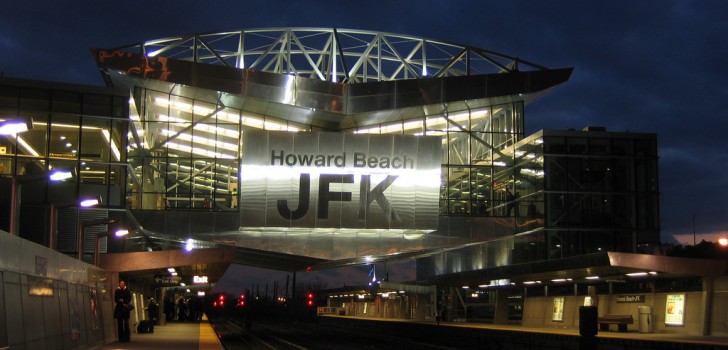
JetBlue Airways, which knows all about transporting people from the city to the country and vice versa, is now embarking on a project which will quite literally bring a little bit of the country to one of the world’s biggest and busiest cities – New York.

The airline has announced it is creating its own “farm” outside Terminal 5 at New York’s John F. Kennedy International Airport in partnership with nonprofit GrowNYC, an environmental group that focuses on “greening” New York City “block by block”.

Sophia Leonora Mendelsohn, JetBlue’s head of sustainability, says although the farm is meant to educate travelers rather than feed them, the airline eventually wants to serve items grown there inside airport restaurants.

She says one day, if airport authorities allow, the farm may have bees, butterflies and even animals.
“We know people like green space. It’s what they have at home. Why not put that at an airport if that’s what they love and want?” says Mendelsohn

The airline expects to grow 1,000 potato plants, yielding more than 1,000 pounds of spuds every four to six months, along with an additional 1,100 plants such as mint, chives, arugula, basil, beets, garlic, onions, spinach and carrots. Some of the herbs will be used by restaurants in JetBlue’s terminal, while other produce will be donated to local food banks.

GrowNYC will bring in students from local area schools to learn about gardening.

Mendelsohn says it took Jetblue three years to get approval from airport officials for the project.

She says airports are concerned about anything that would attract wildlife, especially birds, which means there will be no corn, berries, seeds or sunflowers grown on the JetBlue farm.

All plants will be grown in plastic milk crates bolted together and tied to hooks in the cement floor around Terminal 5.

African Countries Using Insurance To Deal With Natural Disaster

African countries are trying to figure out ways to better handle natural disasters, and they may have found a solution in insurance policies, which can change the way that they prepare for events of nature.

Africa is suffering disproportionately from climate change. While the continent is only responsible for a tiny portion of global greenhouse gas emissions, its environment is one of the most heavily affected areas on the planet.

Most of the African population is dependent upon agriculture and rangeland, which requires optimal weather in order to survive. Extreme weather activity caused by climate change brings the continent an increased risk of crop failure, which could lead to hunger and malnutrition across much of the continent.

Africa has very little resources in place to handle a natural disaster. Funding for recovery efforts is largely obtained after the fact, making quick mobilization a serious concern. The result is that lives are lost, property is destroyed and development is halted. A major storm that would cripple an American city for a week could set a Sub-Saharan African country back several years.

However, Africa is trying to make changes. Countries in Africa are transferring the risk away from themselves to international financial institutions using insurance.

The African Risk Capacity (ARC) agency was established in 2012 by 26 countries in Africa. Along with a mutual insurer, the agency was able to establish a fund to provide easily accessible capital in the event of a major disaster. The premiums of the policy have been paid through 2020.

The program has already proven to be a success.

In September of 2014, the countries of Senegal, Mauritania and Niger experienced a severe drought. They were able to plan accordingly, knowing that insurance would cover the costs required to help their troubled populations. By January of this year, the insurance company paid out more than $26 million to the African countries.

Meanwhile, aid from the United Nations was still awaiting approval. Without the insurance, it would have taken several months for the African countries to receive help. It is estimated that nearly 1.3 million people would have been forced to ration food, remove their children from school or leave their homes.

By 2020, the ARC hopes to expand its membership to 30 countries. It will reportedly offer $1.5 billion in coverage against disasters such as droughts, flooding and hurricanes. Approximately 160 million African people will be indirectly insured under the policy. With the coverage, the way that African countries prepare for natural disaster is expected to dramatically change for the better.

The ARC is also working to ensure that these risk management investments are sustainable and capable of being utilized as the climate continues to change in the future. Representatives say that they want to prepare for the future as early as possible.

While Africa might not be responsible for climate change, leaders from the continent know that their countries are being affected, and they are taking the right steps to protect themselves from the effects created by the rest of the world.

United States And Pakistan May Reach Civil Nuclear Deal

According to a report published by the Washington Post, the United States and Pakistan are quietly negotiating an agreement which may result in a civil nuclear deal between the two countries. David Ignatius, an opinion writer for the Post wrote that, “The White House is exploring what could be a diplomatic blockbuster: possible new limits and controls on Pakistan’s nuclear weapons and delivery systems.” Any progress in this area would break a stalemate that has existed between the two countries since the United States discovered the existence of Pakistani’s nuclear program in the mid-1980s.

The report suggested that Pakistan may agree to limit its prized nuclear program to only those weapons and delivery systems that are appropriate for its defense needs against rival India. “Pakistan might agree not to deploy missiles capable of reaching beyond a certain range.”

In return, the United States might agree to support the issuance of a waiver by the Nuclear Suppliers Group. Such a waiver would exempt Pakistan from certain rules that ban nuclear trade with countries not following the Non-Proliferation Treaty. The United States did something similar with India in 2005.

It is likely that any negotiations between Pakistan and the United States will have its hurdles and likely take time and patience. Pakistan honors its nuclear program and may be unwilling to accept the limitations necessary in order to secure a deal.

In addition to trying to reach a deal with Pakistan, the Post reports that, “The U.S. is quietly exploring some diplomatic options that could reduce the violence in Afghanistan.” This is even more important in light of recent violence in the region, including last week’s deadly attack on one of Afghanistan’s international hospitals. The group, Doctors Without Borders, alleges that the deaths of 22 patients and staff at the hospital in Kunduz was a war crime.

NATO commander, General John Campbell, said the attack was a mistake and the United States has promised to investigate the incident.

Four years ago, the United States determined that the best way to exit the Afghanistan conflict would be to reach a diplomatic settlement- that involved the Taliban and its Pakistani partners. Talks have taken place between all parties, but further talks are being postponed due to the recent violence.

Dirty Volkswagen Vehicles Set To Be Recalled In January

The 11 million vehicles affected in the recent emissions scandal by Volkswagen will start being recalled in January. The news comes after Volkswagen admitted to using cheating devices in order to trick regulators in the United States that its diesel vehicles were compliant with required standards, when in actuality, they were emitting pollution up to forty times the allowed amount.

The company’s new CEO Matthias Mueller promises that all the cars involved in the scandal will be fixed by the end of 2016. Volkswagen has put aside more than $7.3 million to cover the cost of the recall.

Mueller says, “If everything goes as planned, we can start the recall in January. All the cars should be in order by the end of 2016.”

Former Volkswagen CEO Martin Winterkorn resigned shortly after news of the sandal was released to the public. He is currently facing a criminal investigation in Germany.

In most cases, Volkswagen will be able to simply apply a software update to fix the diesel engines. However, some vehicles will require new injectors and catalyzers. A temporary workshop will be established to fix the vehicles.

According to Mueller, only a few Volkswagen developers were aware of the tampered cars. He claims that the company’s top management was largely unaware. Meanwhile, four employees, including three senior managers that were in charge of engine development have already been suspended by the company. Others who were involved escaped while they could and took an early retirement.

For now, Mueller is focused on repairing the company’s tarnished image.

“Volkswagen made a serious mistake. We must answer for that. But bear in mind that there were no dead with us; our cars were and are safe.”

The German company has not been fined at this time. The United States could hit the automobile manufacturer with a fine of up to $18 billion. Volkswagen is supposedly capable of raising about $46 billion before it would be required to liquidate assets.

New York Prison Inmates Are Champions Of Words And Reasoning

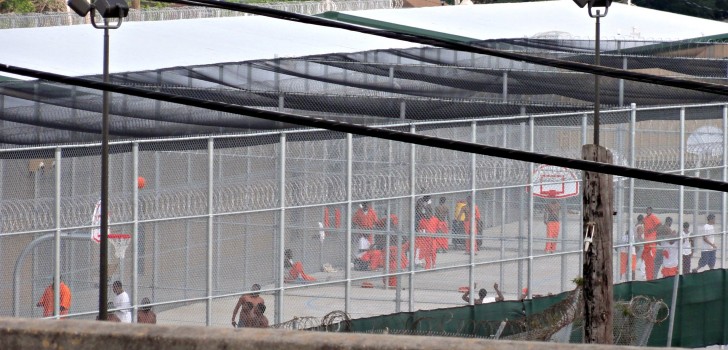
Over the last two years, a debate team made up of New York prison inmates has outsmart some of best debating teams in New England. Now they have proven they are world class, having defeated the very best in a showdown of words and reasoning at the maximum security Eastern New York Correctional Facility.

Prisoners at the facility can take educational courses taught by faculty from nearby Bard College.

One of the most popular education related clubs at the facility is the Debate Club, whose inmate members have built quite a reputation in the debating world. Since the club was formed two years ago, they have defeated teams from the University of Vermont and U.S. Military Academy at West Point.

Although proud of their success to date, the club’s members decided to see how they would fare against the very best by inviting Harvard University’s undergraduate debating team in for a friendly but serious debate. The Harvard team had just last month won the national debating championship and was crowned world champions last year.

Against the Ivy Leaguers the inmates had to argue that public schools should be allowed to turn away students whose parents entered the U.S. illegally. By using arguments that the Harvard students appeared to not have heard before and had no real answers to, the panel of neutral judges declared the inmates victorious.

The Harvard team was not immediately available for comment, but just after the loss they posted a comment on their team Facebook page.

“There are few teams we are prouder of having lost a debate to than the phenomenally intelligent and articulate team we faced this weekend,” they wrote. “And we are incredibly thankful to Bard and the Eastern New York Correctional Facility for the work they do and for organizing this event.”

The win did not surprise the Bard faculty who help teach the inmates.

The executive director of the Bard Prison Initiative, Max Kenner says, “Students in the prison are held to the exact same standards, levels of rigor and expectation as students on Bard’s main campus. Those students are serious. They are not condescended to by their faculty.”

Kenner says, “The fact that we won is nice, but it isn’t the most important thing,” adding the debating club is meant to help students articulate what they’ve learned.

“They make the most of every opportunity they have,” he says.

Sex Scandal Rocks Stanford’s Graduate School Of Business

The scandal seems like a business management case study that would be taught at Stanford’s Graduate School of Business (GSB). However, the drama GSB now faces is real and played out by the school’s dean, Garth Saloner, one of the world’s leading experts on the psychology of power, Deb Gruenfeld, and her husband, James Phills, former faculty director of the GSB’s Center for Social Innovation.

Saloner is known for being a visionary for the school and has transformed GSB into a leader of worldwide innovation. He is an expert on mathematical modeling and game theory, and his ideas helped Netscape persuade federal prosecutors to bring antitrust claims against Microsoft in the 90s. Under Saloner, the school has flourished.

Others do not have such a rosy impression of Saloner. Many feel that his administration is ruled by fear and that he is extremely harsh and difficult to deal with. He is accused of browbeating his subordinates who disagree with or challenge him. In his own words, Saloner has said that, “I’ve been very ambitious and passionate about advancing the mission of the school . . . I strongly believe in getting the whole team aligned behind a focused vision. I have to acknowledge that, although it was definitely not my intention, the process of achieving alignment was sometimes harder on people than I realized.”

In 2011, Saloner and Gruenfeld became romantically involved, while Gruenfeld was still married to Phills. Phills filed for divorce shortly thereafter and his employment with GSB was terminated in 2014 – and that is the subject of his lawsuit against the school. Phills claims that Saloner and Gruenfeld carried on a secret relationship at the same time Saloner was making decisions about Phills’ employment with the school and regarding his housing located on campus.

Stanford, on the other hand, does not believe that Phills’ termination was discriminatory. The school released a statement that, “Several months after the couple’s separation, Dr. Phills’ estranged wife and Dean Saloner, who was widowed, began a relationship. The dean informed Stanford leadership at the very beginning of the relationship, and others in the university took responsibility for final decision-making about matters involving Dr. Phills and his wife. At all times Dr. Phills was treated fairly and equitably.”

During the divorce, which is still pending, and Phills’ lawsuit against the school, several emails and messages between Saloner and Gruenfeld became part of the public record.

As a result of the mess, Saloner announced last month that he was resigning from his post at the end of the academic year. He will continue to remain as a tenured business professor. He released a statement that he did not want “a baseless and protracted lawsuit related to a contentious divorce between a current and former member of our faculty” to harm the reputation of the school.

At the time, the GSB community was confused by the announcement as it was largely unaware of the situation. The story broke later that day. Still, despite the sordid details, many supporters are sad to see Saloner go. Finance professor Peter DeMarzo stated that, “The prevailing mood is disappointment and dismay that we’re having a transition when we have so much momentum.”

Still, others like those who endured the wrath of Saloner, are not sad one bit to see him go.

When asked whether the scandal would harm the reputation of GSB, Professor Joel Pfeffer opined that the school will certainly bounce back as institutions are much bigger than single individuals. He noted that, “The only difference between Stanford and Google is we have a higher profit margin. This school is a success story.”

Banks Heavily Affected By Glencore’s Severe Financial Troubles

Financial firms are extremely concerned about their heavy involvement with struggling commodity trader and mining company Glencore. Banks from across the world have approximately $100 billion invested into the company, and most of its trade finance deals are unsecured.

Many banks are very worried that the risks involved with Glencore are higher than they originally believed. There is also widespread concern that Glencore’s level of debt is much higher than expected. Some analysts suspect that Glencore’s debt may be up to three times greater than its reported adjusted net debt of almost $30 billion.

With the massive downturn of the global commodity market spurred by an economic slowdown in China, Glencore has suffered tremendously. Now banks might be paying the price. Financial firms are trying desperately to reduce their involvement with the company.

Glencore is deeply entrenched in debt, while its market value has fallen off substantially during the year because of decline in prices of commodities such as oil and copper, which are major building blocks for China.

The company says that it is doing everything it can to cut its debt. Glencore CEO Ivan Glasenberg has promised to cut debt by $10 billion, while also exposing more details regarding its financing methods in an attempt to calm down investors. Last week, Glasenberg stated that Glencore has $13.5 billion of available liquid capital, and he promises that Glencore will escape from debt even stronger than it once was.

While shares for Glencore have more than doubled in value since their all-time low on September 28th, the stock is still down by over 50% for the year.

For now, with the commodity market down, banks will be thinking very carefully before getting involved with companies that are heavily dependent on commodity prices.

Meanwhile, Glencore has argued that its trade financing deals from financial firms are of very high quality, and the company has insisted that its likelihood of default is very low.

However, the numbers do not appear positive. Glencore currently owes $50 billion in committed credit lines $35 billion in bonds, $9 billion in loans, $8 billion in available drawings and $1 billion in secured borrowings. Glencore only has $90 billion in property, plants, equipment and inventories.

Over 60 banks are reportedly invested in Glencore.

Small Ecuadorian Town Forever Changed By Influx Of Foreigners

Vilcabamba is a small town in the mountains of southern Ecuador that has recently been attracting many tourists, much to the displeasure of local residents.

The locals say that the town used to be isolated from the rest of the world. The population lived in peace, as the only travelers coming through would be passing by on their way to Peru.

Native residents enjoyed living off the land by growing coffee, cocoa, corn, sugarcane and fruit throughout the year. They also appreciated the town’s beautiful Yambala River.

However, the town’s economy has largely shifted from agriculture to tourism. The trend started in 1973, after a National Geographic article promoted the once undisturbed town.

The town became known for its longevity, as many of its citizens were known to reach impressively old ages. However, further research determined that the life expectancy in the town was less than that of the United States. Nevertheless, the association between old ages and the town stuck.

Many tourists flock to the town, allegedly to learn the secrets of achieving old age.

The locals are not happy about it, saying that their once peaceful landscape has been disturbed.

Some foreigners have even decided to settle in Vilcabamba permanently. This has led to a real estate boom in the area, with several upscale houses being built. It’s a far cry from the small huts and shacks that were once the norm in the town.

Meanwhile, experts say that the transformation is unlikely to slow down any time soon. As more people are seeking ways to escape a fast-paced consumerist lifestyle, towns like Vilcabamba will continue to experience change.

As of now, foreigners represent more than 25% of the population of the town, which is struggling to maintain its traditional small Ecuadorian town charm. Many locals have sold their land to foreigners for prices greatly exceeding local market values in order to start better lives for themselves and their families.

It is a major change for the natives who used to swim in the Yambala River and pick ripe fruits off of trees. With foreigners continuing to move in, it is likely that the once quiet town will never be the same.

ISIS Is Buying Dangerous Radioactive Material And Authorities Are Unable To Stop Them

In Eastern Europe, criminal organizations with Russian connections have been selling radioactive material to ISIS extremists. Authorities working in conjunction with the FBI have prevented four such transactions from occurring in the past five years.

The most recent transaction to be broken-up took place last February, when material smugglers offered to sell a massive amount of cesium to representatives from the Islamic State. Cesium is poisonous to humans, and the amount that was for sale would have been enough to contaminate several city blocks.

Officials believe that the material is being stolen from Russian hospitals where it has medical applications. Fortunately, there have not been any indications that overly-excessive amounts of radioactive materials have been able to enter into the trade.

Criminal organizations have been operating a thriving black market for nuclear materials in the impoverished country of Moldova. While authorities have prevented some transactions from occurring, there have been some shortcomings. Leaders of the criminal organizations often escaped custody, and many of those who did get arrested managed to use their influence to avoid lengthy prison sentences and return to smuggling.

Authorities from Moldova say that the lack of cooperation between Russia and the Western World has made preventing this smuggling very difficult. Moldovan officials say that they expect the trade to continue.

Moldovan police officer Constantin Malic says, “We can expect more of these cases. As long as the smugglers think they can make big money without getting caught, they will keep doing it.”

The enforcement against smuggling has been weak. Authorities have been trying to capture suspects in the early stages of transactions, allowing smuggling leaders to get away with the nuclear material. Meanwhile, investigators from Moldova are having a hard time keeping up due to their limited resources.

In cases so far, investigators have tried every trick in the book. They have gone undercover, posing as gangsters with fancy cars, to try and meet with the alleged smugglers. The authorities have made use of high-tech gear, such as radiation detectors, and discreet recording devices.

In the past, Moldovan authorities used to turn a blind eye to the nuclear black market in their country. However, with help from the FBI, they have been trying to prevent the trade in more recent years.

Meanwhile, political analysts are particularly concerned about the potential of nuclear weapons landing in the hands of ISIS forces.

Policy analyst and Harvard Professor Matthew Bunn says, “In the age of the Islamic State, it’s especially terrifying to have real smugglers of nuclear bomb material apparently making connections with real buyers.

As for the Moldovan investigators, they are absolutely terrified heading into undercover investigations. Officer Malic admits that he was so scared that he took shots of vodka before such meetings.

And like any deal involving illicit goods, the buyer has the potential of getting ripped off. In one case involving cesium, the undercover investigators purchased a vial that contained material with barely any levels of radioactivity, which made it unsuitable for creating nuclear weapons.

But perhaps most troubling was a case involving a dangerous Russian man named Alexandr Agheenco. A middle man working for Agheenco was secretly recorded as saying that the sale of nuclear material needed to be made to ISIS forces.

Agheenco stated in the recording, “’I really want an Islamic buyer because they will bomb the Americans.”

While the middleman was arrested, Agheenco was able to get away. Most cases have resulted in middlemen being arrested, while ringleaders have been able to escape custody, keeping their stockpiles of nuclear material safe.

Authorities are doing everything they can to stop ISIS from obtaining dangerous radioactive material, but they will need to step up their game because as of now, the criminals are winning.

Researchers Discover Several New Endangered Species In Himalayas

The World Wildlife Foundation (WWF) has discovered several new species in the eastern Himalayas, including a new species of monkeys. The region is becoming widely recognized by researchers for its outstanding biodiversity.

Altogether, researchers have discovered more than 200 new species of plants and animals in the region over the past six years.

The Burmese snub-nosed monkey is one of many recently discovered species in the region. The monkey is known for its excessive sneezing on rainy days. It keeps its head down between its legs in order to prevent water from running into its upturned nose. Researchers say that it’s easy to find the monkey in bad weather because of its sneezing.

The monkey has been nicknamed “snubby” by Researchers.

Other new species of animals include a “Dracula” fish, nicknamed the Dracula minnow, and a new frog that has eyebrows resembling horns. The Dracula minnow received its nickname because of its unusually large fangs at the front of its jaws. The fish was found in large numbers in a small stream.

The frog with horn-like eyebrows is known as the megophrys ancrae. Most of its living area is unprotected by the government, making it prone to habitat destruction.

The region of the eastern Himalayas covers areas from northern India, through Nepal, Bhutan and Tibet, as well as a small portion of Myanmar’s far north.

While the region is known for its biological riches, many of its species are becoming endangered. The Burmese snub-nosed monkey is most likely to be considered to be critically endangered once it receives its official classification.

Other threatened animals in the region include the Asian elephant and the one-horned rhinoceros.

The animals in the region are mostly being harmed by the effects of tourism, water pollution, illegal hunting, fishing, the construction of dams and logging.

The WWF hopes that its report of new discoveries will bring attention to the region and convince people to take greater measures to protect the environment in the future.

Ruling Over Bank Of China In Gucci Case Aimed To Reduce Counterfeiting

It is a victory for companies who have been fighting Chinese counterfeiters for years. A New York judge has ordered that the Bank of China must hand over specific detailed information about Chinese bank accounts used by counterfeiters which sold millions of dollars of fake Gucci products.

The decision will likely have far-reaching implications as this allows United States courts to have jurisdiction over Chinese banks regarding the alleged criminal activities of its customers. As of now, Chinese banks serve as a safe place for money launderers and counterfeiters to store their profits – on an enormous scale.

Obviously, Chinese banks fought vigorously to avoid this outcome. They argued that a United States court ordering a Chinese bank to produce such information essentially tampers with China’s sovereignty. Indeed, the case has attracted political attention from both China and the United States.

The fundamental question becomes about whose rules Chinese banks located in the United States should be following.

Dan Plane, an intellectual property lawyer at Simone IP Services in Hong Kong, warned that even though the Bank of China is now required to disclose account information records, it will disclose few details. The bank also will likely tell its customers how to avoid such risks following the disclosure. He explained that, “[The court’s order] gets you over the initial hump, but there are still going to be challenges, particularly in actually collecting a damages award. The biggest question of all is: Are you ever going to be able get your hands on counterfeiters’ funds in the control of Chinese banks?”

While many state-run Chinese banks and China’s financial system are frequently used by counterfeiters to stash their illegal profits, United States investigators are not able to dig into the situation. It is therefore very difficult for American prosecutors to get records that essentially trace the flow of profits gained illegally. They are also hampered in their ability to freeze illicit funds.

The ruling in the Gucci case changes things by determining that U.S. courts have jurisdiction over the Bank of China because it has four branches in the United States and facilitates wire transfers of U.S. dollars to and from China. In his decision, United States District Judge Richard Sullivan wrote that, “Forcing Gucci to initiate this process in China would be significantly less efficient, extremely time consuming, and potentially fruitless.”

Intellectual property lawyer, Geoffrey Potter, observes that Chinese banks have been “helping” counterfeiters for years. If the banks are compelled to reveal specific details about its clients’ accounts, it would make business much more difficult for counterfeiters. “Counterfeiting is a crime committed in order to make money. In order to get paid you need to be part of the banking system.”

Study Shows That Bach Is A Big Hit With Unborn Babies

You can expect sales and downloads of Johann Sebastian Bach’s Partita in A Minor for Flute Alone – BWV 1013 to dramatically increase following news of research findings of how unborn children first begin to hear and react to music.

Researchers at the Institut Marquès, a gynaecology and fertility clinic in Barcelona, Spain chose the music to play to fetuses as part of their study into when a fetus first responds to sounds, particularly music.

They found an unborn baby will respond to music at just 16 weeks, not the previously thought 23 weeks.

By playing the music through a special sound emitting device inserted into the mother’s vagina, the researchers found fetuses first started hearing and responding to the musical stimulus by opening their mouths and sticking out their tongues, making “vocalisation movements”.

Principal researcher, Dr Marisa López-Teijón says, “We have discovered that the formula for fetuses to hear like us is to emit music from the mother’s vagina. They barely hear the sound that reaches them through their mother’s abdomen: the soft tissues of the abdomen and the inside of the mother’s body absorb the sound waves,”

“We can say that learning begins in the womb. For the first time, we have been able to communicate with the fetus. From the 16th week, it is capable of responding to musical stimuli,” says López-Teijón.
Alberto Prats, professor of anatomy and human embryology at the University of Barcelona says “We believe that the music induces a response through vocalisation movements because it activates brain circuits that stimulate language and communication.”

As well as proving when a fetus begins to hear sounds, the music emitting device also enables doctors to rule out fetal deafness, makes ultrasound scans easier and reduces stress levels of parents during pregnancy.

Resetting Your Old Smartphone To Factory Settings Won’t Protect You

A new study conducted by data recovery experts has found that many problems related to data storage on cell phones – and PCs – are still the same as they were 15 years ago. Despite a person’s efforts to delete data on his or her cell phone prior to selling it on eBay, that data can be recovered if someone has the right software.

This problem was reported in detail in 2013 when researchers at the University of Cambridge demonstrated that the “factory reset” – at least on Android phones – does not actually erase everything.

The used smartphone industry is huge and ever growing as new models seem to come out every year. Hundreds of millions of phones sold in the secondary market are susceptible to the “failure to erase data” problem, however.

Text messages, Google account information, emails, pictures and videos were all able to be recovered on on Android devices – back in 2013 as well as today.

Researchers determine that the blame lies with Google as well as the phone makers. Bad design, very slow upgrades and software updates do not help. Also, manually deleting every photo, app and message does not work either. This is because “flash memory” is extremely difficult to erase.

Ross Anderson, a Cambridge engineering professor who worked on the study in 2013 stated that, “This can be desperately complicated.” Cybersecurity expert, Per Thorsheim, went even further and stated, “Don’t hand off your old phone. Smash it.”

The new study, conducted by Blancco Technology Group and Kroll Ontrack, showed that failure to erase data from used mobile devices continues to exist. In 35% of the devices analyzed, residual data was recovered, including thousands of texts and emails. Returning the phones to factory settings simply did not erase the data.

Some devices contained enough information that the original owner was easily identified.

Paul Henry, IT Security Consultant for the Blancco Technology Group, noted that Apple’s technology seemed to prevent the problem while Android devices did not. “Apple devices use encrypted storage so deletion of the encryption key makes recovery impossible. But Android devices, on the other hand, do not use this method and rely upon a user overwriting data to erase it and prevent it from being recoverable.”

In the new study, a total of 122 devices were analyzed, including 20 mobile devices and 102 hard drives.

After conducting the research, Henry stated that, “Whether you’re an individual, a business or a government/state agency, failing to wipe information properly can have serious consequences.”
He further concluded that, “One of the more glaring discoveries from our study is that most people attempt in some way or another to delete their data from electronic equipment. But while those deletion methods are common and seem reliable, they aren’t always effective at removing data permanently and they don’t comply with regulatory standards.”

Toyota Under Investigation After Their Vehicles Appear In ISIS Propaganda Videos

U.S. officials are investigating how Islamic terror groups got their hands on a large quantity of Toyota SUVs and pick-up trucks that appear not only in TV news reports of conflict in the middle east, but also in ISIS propaganda videos.

Pimped up with heavy weapons, Toyota Land Cruisers and Hilux pick-ups are featured prominently in recent ISIS propaganda videos filmed in Iraq, Libya and Syria.

Toyota, the world’s second largest vehicle manufacturer, is assisting in the investigation being led by the Terror Financing unit of the U.S. Treasury Department, which according to a spokesman, is part of an effort to stop Western-made goods from being used by terror groups.

He says U.S. Treasury officials are “working closely with foreign counterparts and stakeholders” on the issue.

Toyota’s Washington-based director of public policy and communications, Ed Lewis, says Toyota does not know how ISIS obtained the vehicles. He says the company has a “strict policy to not sell vehicles to potential purchasers who may use or modify them for paramilitary or terrorist activities”.

He added, “It is impossible for the company to track vehicles that have been stolen, or have been bought and resold by middlemen.”

“We briefed Treasury on Toyota’s supply chains in the Middle East and the procedures that Toyota has in place to protect supply chain integrity,” says Lewis

Iraq’s ambassador to the U.S. Lukman Faily says as well as using older trucks, it is believed ISIS has “acquired hundreds” of “brand new” Toyotas.

Toyota’s Iraqi sales figures show Land Cruiser and Hilux sales increased from 6,000 in 2011 to 18,000 in 2013, and then dropped to 13,000 in 2014.

In a released statement Toyota says it is not aware of any dealership selling to ISIS, but “would “immediately take action” including terminating distribution agreements.

CEO of the Counter Extremism Project Mark Wallace, a non-profit which investigates the financial support networks of terror groups, says, “Regrettably, the Toyota Land Cruiser and Hilux have effectively become almost part of the ISIS brand.”

SABMiller Rejects Latest Offer In Potential Landmark Merger Of Beer Companies

SABMiller rejected the latest proposal from Anheuser-Busch InBev. This time, the offer to purchase the company was for $100 billion.

This offer represents the latest development in the ongoing saga for the world’s largest producer of beer to become the owner of the second largest producer. If the companies were to join forces, they would control the number one and number two positions in 24 of the world’s 30 largest producers of beer.

AB InBev offered to pay $65.54 per share for SABMiller. The amount is 44% higher than the closing level for SABMiller in London on September 14th. AB InBev also proposed an alternative offer of $57.40 per share with the addition of stock options.

However analyst do not believe the negotiations are over just yet.

RBC Capital Markets analyst James Edwardes stated, “This is not, in our view, intended as ABI’s concluding proposal. But it is likely to put pressure on SAB’s management to engage and at least there is now a formal proposition to discuss.”

Meanwhile, the largest shareholder of SABMiller, Altria Group Inc., wanted to accept the offer. Altria Group Inc. maintains 27% ownership of SABMiller.

SABMiller has already rejected two previous offers made by AB InBev. According to law in the United Kingdom, AB InBev must make a final offer by October 14th, or else it must exit negotiations. If that were to happen, AB InBev could not attempt to takeover SABMiller for a time period of six months.

However, AB InBev is not ready to give up just yet.

CEO of AB InBev Carlos Brito said during a conference call, “We continue to work towards a recommended transaction, it’s just that after a couple weeks trying the private route we didn’t get any meaningful engagement from the board and with the deadline approaching we felt it was important for SABMiller shareholders to understand the compelling opportunity and look at our proposal.”

If the proposal can be completed, it would be the largest merger of 2015. The newly established company would be expected to earn an estimated $25 billion next year.

AB InBev is known for its Budweiser and Busch brands of beer, while SABMiller is the maker of Miller Lite.

US Defense Department To Decide If Russian Rocket Engines Can Be Used On US Spacecraft

The United States Defense Department will make an important decision in the near future which will determine whether or not a major spacecraft launching service in the United States will be allowed to continue using rocket engines from Russia.

United Launch Alliance needs a waiver from the Defense Department in order to keep using Russian engines. United Launch Alliance represents a joint effort between Lockheed Martin Corp. and Boeing Co.

If the group does not receive a waiver, they will not be able keep using the engines. A new United States law that was introduced last year banned the use of engines from Russia. If ULA is unable to continue utilizing the engines, it says that it will have a difficult time competing with rocket companies Space Exploration Technologies and SpaceX.

ULA has been the main service for satellite launches by the Air Force since 2006.

The Defense Department says that they are still working on reaching a final decision.

Defense Undersecretary Frank Kendall said, “We’re still working our way through that. I don’t have a decision yet.”

The engine that is primarily utilized by ULA is the RD-180 from Russia. It is used to power its main rocket, the Atlas 5.

Last year, lawmakers in the United States banned the use of Russian engines for the purposes of military activity and spy satellite launches. The new law came after Russia took over the Crimea region in Ukraine. The law affects 24 of the 29 engines that were ordered from Russia by ULA.

Officials from the Air Force are expected to support a waiver in favor of ULA, but they have not made any formal requests at this time.

For now, the Defense Department is ensuring that another company for launching satellites is available in the event that it decides not to grant a waiver to ULA.

“If you’re only dependent on one source for launches, and something happens to that source, then you’re in deep trouble. At the end of the day we want to make sure we have two ways to get our payloads into space,” said Frank Kendall.

ESPN Distancing Itself From Fantasy Sport With Show Segment Sponsorship Removal

ESPN announced last week that it would not be accepting fantasy sport advertising on some of its college sports related partnership stations and will also no longer be accepting sponsorships from the industry for show segments.

Before the channel could make any PR play of the move with an official announcement, the news was leaked by ESPN personality Bob Ley during the “Outside the Lines” show. Ley dropped the sponsorship news when talking about the recent fantasy sport “insider trading” controversy. An employee of fantasy sport giant DraftKings won $350,000 on a competitor’s website by supposedly having betting information well before the public had access to it.

“ESPN today continued running commercials for the two main daily sports fantasy companies, but has removed sponsored elements from within shows,” Ley said during the show.

Ley also revealed information that Disney has increased its equity deal with DraftKings into a “2-year, $500 million exclusive” advertising deal that begins in 2016.

Advertising experts say ESPN’s decision not to have fantasy sport sponsored segments was more PR related than an effort to disassociate itself from the industry. The industry is currently under scrutiny in Massachusetts, New Jersey and California, where lawmakers are considering introducing initiatives to regulate the rapidly growing market.

They note that while ESPN may be pulling away from sponsored segments, there has been no announcement of dropping fantasy sport advertising.

The experts say that two startup companies – DraftKings and FanDuel – control 95% of the fantasy market, and are valued at $1.2 billion and $1.3 billion respectively. Both companies spend big time on television advertising, including on ESPN. Ad tracker iSpot.tv says in just one week in September, DraftKings spent $20 million on TV advertising.

Maldives Current President Abudullah Yameen Unharmed In Bomb Attack

In the aftermath of the September 28th bomb attack on Maldive President Abudullah Yameen, two security personnel have been arrested.

Yameen was unhurt during the attack, which took place on his speedboat during its approach to the capital city Male. However, his wife was injured along with two aides.

Early suspicions were that the explosion was due to a mechanical failure, but this was later disproved by the U.S. FBI, Saudi Arabia and Australia, according to cabinet member Mohamed Hussain Shareef.

Shareef commented on the attacks, “They are now telling me that they have enough evidence to believe that it is likely to have been an attempt on the president’s life. Authorities have arrested two people… in line of command who had access to the vessel.”

Yameen’s rise to power has been viewed with suspicion by the U.S. and Amnesty International, with one point of contention centered on the March sentencing of the previous president, Mohamed Nasheed, to 13 years in jail. Political unrest in recent years has impacted the island nation’s status as a popular tourist destination.

Nasheed claims that he was forced to resign the presidency “at gunpoint” by a network of Gayoom loyalists within the country. Maumoon Abdul Gayoom held the presidency from 1978 to 2008, weathering three attempts to overthrow him, as well as a 2008 assassination attempt. During his tenure, Gayoom was accused by international human rights groups of terrorizing and imprisoning political dissidents.

The United Nations recently ruled Nasheed’s jailing illegal, citing the rushed nature of his trial. It is also suspected that he was jailed due to one of his last actions as president, the 2012 arrest of a supposedly corrupt judge.

Following Nasheed’s victory in court on Monday, his lawyers have called for “targeted sanctions” to be placed on the Maldives government. A member of Nasheed’s counsel, Amal Clooney, stated that tourists should also consider boycotting the country if it does not respond to international pressure.

New Study Shows That Arabic Is America’s Fastest Growing Language

The two fastest growing foreign languages in the United States are Arabic and Urdu. Arabic is the most popular language in the Middle East and Urdu is the native language of the Pakistanis and is regarded as their national language. Both languages are associated with Muslim nationals who have immigrated into the region in high numbers in the recent past.

According to Census’ Bureau 2014 American Community Survey (ACS), in a new report by the Center for Immigration Studies, Arabic and Urdu are quickly taking over many American households. They attribute this to a rapid increase in the number of immigrants from Muslim countries.

Statistics show that more than one out of five U.S. residents uses another language, apart from English, when they are at home. In the period between 2010 and 2014, the use of Arabic has increased by 29 percent, while that of Urdu leaped by 23 percent.

Previously, the United States has been in the limelight for having the second largest Spanish-speaking population in the world. But this is likely going to change soon if the increase in Muslims is anything to go by.

Persian, a language spoken in Iran, has also gained popularity among residents, having increased by nine percent in the last five years.

According to other previous studies, the Muslim bloc is getting bigger and stronger as a result of increasing levels of immigration from Asia. Annually, the number of Muslim foreigners immigrating to the U.S. is estimated to be at least 280,000.

The country provides them with visas and other benefits such as social welfare, resettlement of relatives, and finally citizenship and voting rights on application.

The rapid growth of these languages is causing worry among native U.S. nationals. Steve Camarota, the author of the report, said, “English as our common language is part of the glue that holds our country together.” Camarota said the surge in Muslim immigrants will cause a huge strain on the bond that unites Americans. “With no pause in immigration levels in sight, the nation is headed into uncharted territory.”

As the 2016 presidential election continues to shape up, immigration laws are coming into focus. While Republican presidential candidate Donald Trump said he would deport all immigrants, Florida Sen. Marco Rubio has called for tolerance with regard to immigrants, saying attention should be shifted to the law.

Porsche Snubs Google Android Auto For Apple’s CarPlay

German carmaker Porsche has chosen Apple’s CarPlay over Google’s Android Auto for its new connected car. The distinct choice by Porsche has elicited a lot of curiosity from the auto world, opening a can of worms that reveals just how much Google information requires from drivers of connected vehicles.

In its upcoming 2017 Porsche 911 Carrera and the 911 Carrera S, Apple’s CarPlay will be used. The automaker snubbed Google because the search engine demanded too much information from their vehicles.

According to a publication released by Porsche, Android Auto tracks a host of variables including throttle position, vehicle speed, fluid temperatures and engine revs. The information is then sent to Google. In comparison, Apple’s CarPlay infotainment system only required to know the car’s powertrain control module to determine whether the car was in motion.

Part of the reason Porsche does not want such data revealed is because it believes the data is what makes its high end vehicles special. Another reason analysts believe played a role is Google’s plans to make its very own vehicle.

In a statement by Porsche however, the company said, “There’s no technological reason the 991/2 doesn’t have Android Auto playing through its massively upgraded PCM system. But there is an ethical one.”

It is immediately unclear what Google would do with all that data. Many are now questioning whether other cars fitted with Android Auto are sending similar amounts of data back to Google’s headquarters.

Apple’s CarPlay was first unveiled in March 2014 as an “iOS in the car”. The system allows vehicles to display the CarPlay interface through a touch screen positioned on the dash board. Whenever the iPhone is connected, drivers can give directions, including making phone calls, playing music, sending or receiving text messages, without having to pick up the phone.

Google’s Android Auto is for Google smart phones running on Android Lollipop or any other higher version. It provides similar features while adding several new features such as Google Now’s active information stream and functional third party messaging apps.

Porsche’s 911 Carrera is one of the most anticipated high end vehicles for the German car maker. Going with Apple over Google will increase the vehicle’s high end status while safeguarding a lot of information considered private.

Shutterstock Offers Photos Made In America Following Bush Campaign Ad Blunder

Shutterstock may have discovered a new market for “Made in America” stock photography in the wake of a recent gaffe made by a Jeb Bush super PAC advertisement. The video ad in support of the Republican candidate featured stock video footage of “amber waves of grain” and a construction scene that was later disclosed to have been shot in England and Asia, respectively.

The ad was intended to display Bush’s optimism for America, in contrast to Donald Trump’s often critical remarks that claim the country is headed down the wrong path. In an ironic oversight by the Right to Rise super PAC, that future America just happened to be located overseas.

In anticipation of the early primaries in Iowa and New Hampshire, Shutterstock released a collection of stock photography on Tuesday titled “Safe for IA and NH” featuring iconic images from the country’s Midwest, such as tractors, pies and cornfields. The main selling point, of course, is that the photos are all shot within the U.S.

Shutterstock curator Robyn Lange commented on similar slip-ups by previous campaigns, “It does happen a lot. You know these people are under, you can understand, really tight deadlines.”

As primary season progresses, Shutterstock will offer more collections of embarrassment-proof American photography if they see sufficient interest. Lange speculated that there may one day be state-specific collections.

As of June 2014, Shutterstock’s current offerings now extend beyond photography to include a music library of more than 60,000 audio clips that are searchable by mood. Additionally, the company soon plans to add thousands of 4K and HD quality video as a result of a deal with Red Bull Media House. Featured among the offerings will be a unique “point of view” style of videos filmed through the eyes of athletes, or on location in some of the world’s most remote and extreme environments.

ISIS Forced Abducted Women To Have Abortions Before Being Sold As Sex Slaves

Three women who escaped from ISIS claim that the militants force young women sold into slavery to have abortions. ISIS has been capturing young women from Iraq and selling them off as sex slaves. These women who were lucky to escape now tell their story.

Bushra, 21, narrates how she was abducted by ISIS militia men who had raided her home in Sinjar province, Iraq, last August. She says that after raiding their village, the soldiers lined them up and had each of them inspected by gynecologists, to determine if they were virgins or if they were pregnant.

According to Bushra, “One of my friends was pregnant. Her child was about three months in the womb. They took her into another room. There were two doctors and they did the abortion.
“Afterwards, they brought her back. I asked her what happened and how they did it. She said the doctors told her not to speak.”
Bushra said her friend was left bleeding so heavily she could not walk or talk.

Another escapee, Noor, 22, remembers being examined by the invading ISIS militants. Noor said they examined her “belly, teeth and breasts” before one settled on her. The fighters showed her a letter saying that any captured woman would become a muslim if 10 ISIS fighters raped her. Noor said she was raped by 11 fighters.

The Yazidi’s, a small minority in Iraq, to which Bushra and Noor belong, believe in one god who created the whole earth before leaving it in the delicate care of a peacock angel. The minority has been the target of ISIS fighters who accuse them of devil worship.

ISIS controversially claims that abducting non-muslim women and girls and raping them is permitted by the Quran. Islamic scholars refute this vehemently.

Another escaped victim, Munira, said she was sold twice to ISIS fighters. Traumatized by the experience, Munira attempted suicide by swallowing a whole bottle of pills. Munira said, “I collapsed and didn’t die. They took me to the hospital and in the hospital I woke up.”

Munira said many others had tried to kill themselves. Some succeeded, other did not. She said, “One day, there were 14 girls with me,” says Bushra. “They tried to kill themselves by drinking rat poison, but [ISIS] took them to the hospital and cleaned their stomachs.
“They told us: ‘We will not let you die so easy.'”
Munira, Noor and Bushra were lucky to have escaped. The three have been granted asylum in the west and are working with authorities to spread the word against ISIS and radicalization. The trio said they wanted to reveal the truth about ISIS and possibly save those they left behind.

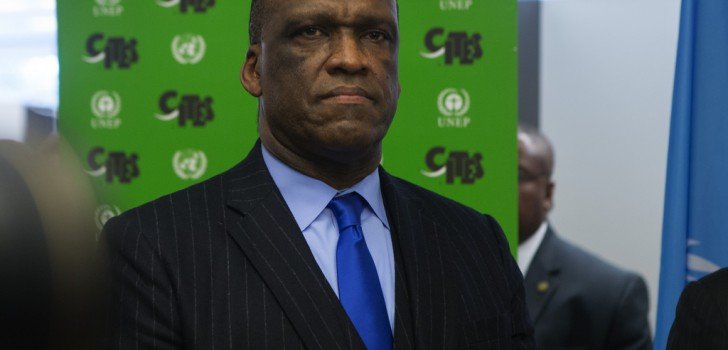
Former UN President John Ashe Arrested for Accepting Bribes

Former United Nations General Assembly President John Ashe has been charged by the United States for allegedly accepting bribes from a billionaire in China.

Prosecutors in New York claim that Ashe turned the United Nations into a money-making scandal. Ashe reportedly assisted Chinese real estate tycoon Ng Lap Seng in gaining government contracts.

Ashe allegedly received $1.3 million in bribes. He supposedly spent the money on luxurious goods.

Secretary General of the United Nations Ban Ki-Moon said that he was shocked and deeply troubled by the reports.

United States Federal Attorney Preet Bharara said, “In return for Rolex watches, a basketball court and bespoke suits, John Ashe sold himself and the global institution he led. United by greed, they converted the UN into a platform for profit.”

According to prosecutors, Ashe utilized his permanent resident status and General Assembly President position of the United Nations to introduce documents in support of a multibillion-dollar conference center. The proposed conference center would have been located in Macau, China, and it would have added to the real estate legacy of Ng.

Ashe stated that the purpose of the conference center was to operate as a satellite operation for the United Nations.

The scandal took place between 2011 and 2014. Ashe’s term as President of the General Assembly lasted from 2013 to 2014.

Additionally, Ashe also allegedly established meetings with government officials in Antigua and Kenya in order to assist real estate developers secure lucrative building contracts.

Ashe was arrested on Tuesday. Five other people involved in the matter, including Ng, are also being detained at this time.

Diplomat Francis Lorenzo from the Dominican Republic was arrested for reportedly helping the scandal take place. He was charged with bribery and conspiracy to launder money. Two other citizens of the United States have been charged as well.

Meanwhile, the investigation is still ongoing, and more arrests could take place in the near future.

Environmentalists Outraged As Rare Bird Photographed Then Killed By Researchers

The extremely rare moustached kingfisher bird was photographed and then promptly killed.

The American Museum of Natural History released the first ever photographs of the elusive bird. The pictures featured its vibrant blue color, suggesting that it was in extremely good health.

Much to the anger of environmentalists, researchers decided to kill the rare bird in order to study it in further detail. Museum representative Paul Sweet said that the population of the bird was substantial enough to handle the loss of one bird.

The bird was discovered in the remote jungle highlands of the Solomon Islands. A team of researchers who were working for the museum heard the bird’s distinctive call, and they quickly located the bird before it flew away right before their eyes. It took the group four days to capture the elusive bird.

Researcher Chris Filardi said, “When I came upon the netted bird in the cool shadowy light of the forest I gasped aloud, ‘Oh my god, the kingfisher!’ One of the most poorly known birds in the world was there, in front of me, like a creature of myth come to life.”

The research team promptly took pictures of the moustached kingfisher, and they recorded its distinct calls. The bird is listed as “endangered” by the International Union for Conservation of Nature. The union believes that there are only 250 to 1,000 mature birds of this species left in the wild.

Of course, the ultimate decision to kill the bird was met with a large amount of outrage.

Professor emeritus of ecology from the University of Colorado Marc Bekoff wrote, “Killing ‘in the name of conservation’ or ‘in the name of education’ or ‘in the name of whatever’ simply needs to stop. It is wrong and sets a horrific precedent for future research and for children. Imagine what a youngster would think if he or she heard something like, ‘I met a rare and gorgeous bird today…and I killed him.’ Even if this handsome male were a member of a common species, there was no reason to kill him. It sickens me that this practice continues and I hope more people will work hard to put an end to it right now, before more fascinating animals are killed.”

Hopefully in the future, scientists won’t be so quick to kill an innocent animal for research purposes.

US Commerce Secretary Pritzker In Cuba Today To Discuss Trade

United States Commerce Secretary Penny Pritzker is visiting Cuba today in order to promote the possibility of better trade relations between the United States and the island nation. The visit comes as existing trade has been lessening between the two countries.

Even though Cuba has been under an embargo from America for the past 53 years, the country still buys some goods from America. Certain exceptions allow American companies to sell food and medical supplies in Cuba.

Surprisingly, even though the United States and Cuba have started to settle their differences, trade between the two countries has declined in recent years. From 2007 to 2014, agricultural exports to Cuba by the United States fell from $710 million to $291 million. This year alone, they have further declined by 41% to just $122 million.

Officials are quick to point out that the Cuban government has just as much to do with the situation as the Obama Administration.

President of the US-Cuba Trade and Economic Council John Kavulich says, “What the Obama administration does is only 50 percent of the equation. This is also about what the Cuban government wants. And right now the Cuban government is showing a less than enthusiastic focus on what the president’s done.”

Some of the decline is simply related to basic economics. Global commodity prices are down, resulting in a decreased value for all trade. Furthermore, Cuba can purchase agricultural products anywhere in the world. A disadvantage to buying from the United States for Cuba is that law in the United States does not allow domestic producers to sell goods on credit to Cuba. Elsewhere, other countries worldwide are willing to sell Cuba goods on credit.

Meanwhile, Cuban politics are also harming trade. In Cuba, all agricultural goods that are purchased from the United States must be sold to the state-owned company of Alimport, which many analysts believe the Castro regime uses as a political influencer. Indeed, Alimport has been known to make decisions based on politics rather than economics.

The burden is felt by companies in the United States. Texas agricultural company WestStar Food previously sold 5,000 tons of pinto beans to Cuba on an annual basis. Now, those sales are gone.

WestStar president Patrick Wallesen said, “We haven’t exported anything there for almost four years now. For the most part, the way I see it, they pretty much quit buying everything except chicken and grains.”

However, the government of the United States is hoping to rekindle its relationship with Cuba. In August, the embassy of the United States reopened in Cuba’s capital city of Havana. Last month, the Cuban government loosened restrictions on companies from the United States operating in Cuba. Such moves should allow greater business opportunities between the two nations.

For now, many people are hopeful that Pritzker’s visit today can provide the needed spark to stimulate trade between the United States and Cuba.

NATO Does Not Buy That Russia’s Entering Turkish Air Space Was A Mistake

Earlier today, NATO rejected Russia’s explanation that its warplanes violated Turkish air space by accident over the weekend. The organization also confirmed that Russia was building up its naval presence in Syria as well as sending more ground troops to the region.

Turkish President Tayyip Erdogan stated earlier this week that he was upset by Russia’s violation of his country’s air space and acknowledged that he would not accept any other incidents as “mistakes.” He continued to emphasize his frustration and loss of patience with Moscow’s actions as Russia conducted recent air strikes against the Syrian city of Palmyra (which borders Turkey). Erdogan warned that, “An attack on Turkey means an attack on NATO.”

Russia maintains that the incident over the weekend was an accident and that its SU-30 warplane entered Turkish air space “for a few seconds” – a mistake caused by poor weather conditions. Russia said it is looking into NATO’s allegation that a Russian warplane crossed into Turkish air space on Sunday.

When reporting on Russia’s military build-up in Syria, NATO Secretary-General Jens Stoltenberg stated that, “I will not speculate on the motives . . . but this does not look like an accident and we have seen two of them.” He noted that both “accidents” “lasted a very long time.”

NATO describes Russia’s moves as “unacceptable” and “extremely dangerous.” It notes that Russia’s intervention could further escalate an already intense Syrian civil war.

Stoltenberg said that NATO has not received “any real explanation” from Moscow regarding the incidents and the United States believes that Russia’s claims of an “accident” are far-fetched.

Conversely, Russia’s NATO envoy claims the United States-led coalition is twisting facts to distort Moscow’s aims of combating ISIS in addition to other “terrorists.”

Alexander Grushko told reporters in Brussels that, “The impression is that the incident in Turkish air space was used to plug NATO as an organization into the information campaign waged by the West to distort the aims of the operations carried out by the Russian air force in Syria.”

Russian and United States warplanes are flying combat missions over the same country for the first time since the second World War and, despite its misgivings, the United States wishes to avoid an escalation of tensions with Russia.