Home Blog Page 75

United Nations Cancels Australia Visit Citing Offshore Detention Facilities

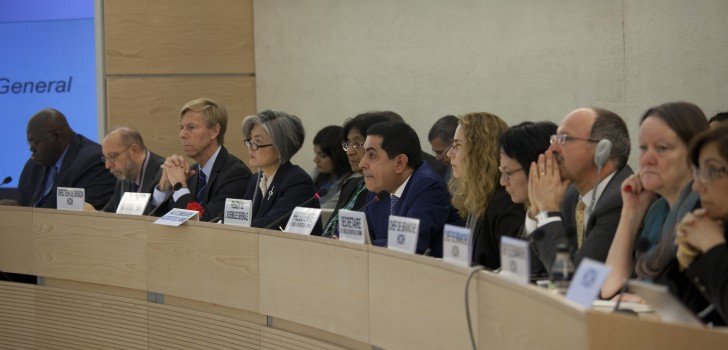
The United Nations cancelled a visit to Australia recently after criticizing the country’s policies in relation to detention centers it operates on the Nauru and Manus Islands. Australia aspires to take a seat on the 47-member UN Human Rights Council (UNHRC), so the news came as an unwelcome setback.

Australia’s passage of the Border Force Act this year outlawed disclosures about operations at the detention centers by immigration personnel employed there, with the potential penalty of up to two years in prison. The United Nations’ Special Rapporteur, Francois Crepeau, was due to conduct an investigation of the detention centers on Sunday and cited the law as reason for the cancellation.

Mr. Crepeau stated that his visit would be unproductive due to the new law and that Australia has repeatedly denied his requests for access to the offshore facilities since March. Australia’s Immigration Minister, Peter Dutton, stated, “The government accommodated to the fullest extent possible the requests of the office of the Special Rapporteur as it has with past visits.”

Australia’s Department of Immigration clarified that Mr. Crepeau was scheduled to visit other detention centers in Australia, but any visits to the offshore facilities would have to be at the approval of the Papua New Guinea and Nauru governments.

The UNHRC holds as its mission, the promotion and protection of human rights around the world, which is why the U.S. State Department recently welcomed Saudi Arabia as head of one the key human rights panels this year.

Saudi Arabia has held a seat with the Council at various times, despite its status as one of the most oppressive regimes in the Middle East. Its recent selection to head a human rights panel illustrates the farce that is the UNHRC.

For Australia, it is still better to have a seat at one of the world’s governing bodies, hypocrisy or not. Executive director of the Human Rights Law Centre, Hugh de Kretser said the cancelled visit was a great disappointment, “This is extremely damaging for Australia’s reputation – particularly when our human rights record will be reviewed at the UN in November and we’re seeking election to the UN Human Rights Council in 2018. It’s extremely damaging to our ability to advance our national interest on the world stage.”


Zimbabwe’s President Mugabe Prepares For His Successor

As Robert Mugabe prepares to step down as Zimbabwe’s president following his near 20-year reign, preparations have been made for his successor, current vice president Emmerson Mnangagwa. Mugabe has methodically been replacing cabinet positions with Mnangagwa supporters, in anticipation of the change in leadership.

Nicknamed “Crocodile,” Mnangagwa is well-positioned to take the presidency, having been with the Zimbabwe African National Union – Patriotic Front (ZANU-PF) party since its founding in the 1960s, along with Mugabe. ZANU-PF currently has the majority of seats in Zimbabwe’s parliament.

Due to Mugabe’s suspicions of the previous vice president Joice Mujuru, she was removed from office last December in favor of Mnangagwa.

Mugabe’s wife Grace has revealed her own leadership ambitions in the past year and gained the support of a younger group of ZANU-PF politicians who want to see her succeed president Mugabe.

Political science lecturer at the University of Zimbabwe, Eldred Masunungure, stated that Mnangagwa’s future presidency is not assured, “He will have to contend with various forces…he has many obstacles to overcome. Having said that, he is the most strategically located to take over. He is a close ally and confidante of the president for a long time.”

Zimbabwe has suffered severe economic conditions in recent years due to misguided policies that saw formerly white-owned farmland seized by the government and then distributed to political allies.

Mnangagwa is said to have also urged Mugabe to re-engage with the West, and has attempted to portray himself as a business-minded candidate saying, “A leader must not take the people where they want to go, but where they ought to go, whether the people or the leader want it or not, or whether it is hard or not.”

Given that Mr. Mugabe is known for fits of whim, Mnangagwa will still have to tread carefully as the 2018 election approaches. But Mnangagwa displayed his familiarity with political maneuvering as he explained the meaning behind his nickname, “You know the traits of a crocodile, don’t you? It strikes at the appropriate time.”

Scientists Just Developed A Game Changing Test For Hundreds Of Diseases That’s Quick And Cheap

Scientists in Montreal have developed a revolutionary method for detecting a wide range of diseases that can be performed in minutes while costing very little. Using equipment similar to the test strips used by diabetics for analyzing blood sugar levels, a biosensor utilizing matching pairs of DNA strands performs the analysis by bonding to antibodies present in the body from various diseases.

A paper published in the Journal of the American Chemical Society described the new method. If a disease being tested for is present, the antibody attaches to one of the DNA strands, which can then complete its pairing with the complementary strand and produce an electrical signal.

One of the paper’s co-authors, Alexis Vallée-Bellisle, commented on the development, “What these tests are looking for is antibodies — proteins that are generated by the body in response to viruses or bacteria. The highlight of the technique we developed is you put a drop of blood on our electrodes, and in five or 10 minutes you can know if you have the antibody. And in principle, you can detect any antibody you want.”

Not only can the test detect the presence of a particular disease’s antibodies, it can also detect the prevalence of those antibodies within the blood. The process is known as electrochemical steric-hindrance hybridization assay (eSHHA).

There currently exist antibody test for HIV that are similar to eSHHA, but are unable to detect the levels of antibodies found. This feature could be useful for fine-tuning the dosages of drugs for individual patients.

STD screenings could be performed for over a dozen different antibodies simultaneously using just a drop of blood.

One of the method’s biggest advantages is cost, with one test electrode costing only five to ten cents, and the associated DNA sequences costing as little as $10.

Vallée-Belisle is currently searching for business partners as he prepares to bring the new process to market.

The development is similar to the super secretive Theranos Labs, a company which has raised billions of dollars for similar rapid testing machines despite disclosing precious little about how exactly it conducts the tests.

Harvard Study Finds Women Aren’t Running America’s Corporations Because They Simply Don’t Want To

Companies today are still unlikely to hire a female to serve as a CEO or in an executive position, as a significant gender gap for positions of power still exists within American corporate society. Women continue to have a difficult time obtaining influence, while men still dominate corporate power.

There are several theories for the trend, such as women being perceived to be less knowledgeable and less aggressive than men while others believe that women cannot serve as leaders and raise children at the same time.

However, one paper from Harvard Business School says that women aren’t in power because they simply do not have as much desire for power as men. According to the paper, women associate power with stress, burdens, and conflicts.

Basically, women don’t want to be in control of America’s large corporations and the decision is all on their terms.

The paper was published in the Proceedings of the National Academy of Sciences (PNAS). It featured nine studies that examined people who serve in positions in power or people that desire positions of power.

The studies tended to indicate that power is less valuable for women than it is for men.

One study focused on 650 recent MBA graduates. The graduates had to rank their current position in the industry, their preferred position, and the highest position that they believed they could ever possibly attain.

Women said that they believed they could achieve the same level of success as men. However, women typically listed lower preferred or ideal positions than that of men.

Meanwhile, another study suggested that women are more likely than men to associate negative emotions with power than men.

Paper co-author and Harvard Business Professor Alison Wood Brooks said, “Women expect more stress, burden, conflicts, and difficult trade-offs to accompany high-level positions.”

Some people believe that women have less time to obtain power. This was shown in one study, where adults were asked to rank their life goals. Women listed more goals on average than men, and these goals were less likely to be related to societal power.
Simply put, women aren’t in power because power isn’t important to them; it’s not one of their goals. The goals of women are more likely to revolve around families, while the goals of men are more likely to revolve around power.

Brooks continued, “Right now, it is likely that women have more goals in life because pursuing career and family goals simultaneously is a relatively new concept for women.”

Another co-author of the paper, Francesca Gino believes that talking about the issue may bring about better results for women in the future.

“I hope these findings will lead people and managers to ask workers (about) their preferences. Some women may deeply care about power, some may not. Some may see too many negatives. For the latter category, talking may lead to identifying opportunities that remove some of those negatives,” she said.

This Monday Americans Will See A Spectacular ‘Blood Moon’ For The First Time In 33 Years

On Sunday September 27th the coupling of a lunar eclipse with a supermoon event will take place. This coincidence is somewhat rare, with the previous one having occurred in 1982, causing some to fear the event as a sign of the “end times.”

Whether or not one is looking forward to it, the event is expected to be spectacular, with the best viewing available to those in the eastern U.S. Astronomer Mark Hammergren of Chicago’s Adler Planetarium commented, “It’s a way of connecting us to the universe at large. It gives us this view that there’s a bigger picture than just what we’re concerned with in our daily lives.”

Observatories in the U.S. are holding special occasions to observe the phenomenon. The observatory at the University of Nebraska, Omaha has added telescopes with smartphone capability, which will allow visitors to photograph the event.

For those who can’t attend one of these functions, NASA will be live broadcasting the eclipse. Additionally, if weather and light pollution permits, backyard viewing is available.

The start of the eclipse will occur at 8:11 p.m. ET, with the total eclipse occurring between 10:11 p.m. and 11:23 p.m.

It is often called a “blood moon” because of the reddish tint, which occurs due to the scattering of sunlight through the Earth’s atmosphere. The same hues can be seen during a typical sunset or sunrise.

This eclipse will mark the fourth and final in a series known as a “tetrad,” with each prior eclipse having occurred on a six month interval.

Those predicting the apocalypse point to the coincidence between the recent tetrad and Jewish holidays, while (intentionally?) failing to realize that the Jewish calendar is a lunar calendar.

If you do plan on viewing the eclipse, those in the southeast and Gulf Coast are expected to have cloudy conditions, and so may have to use the NASA coverage option. North of Massachusetts, skies are supposed to be clear.

Happy American Museum Day! Over 1,400 Museums Across The U.S. Are Free Today!

Today, more than 1400 museums across the U.S are offering the public free admission to commemorate the 11th annual Museum Day Live. Last year a record 400,000 people took advantage of the Smithsonian hosted event, with organizers expecting that number to be significantly higher this year.

Many of the participating museums will be putting on special exhibits and programs, which will give the public an inside and close up look at some of their more unusual and unique offerings – from handcrafted voodoo dolls and skulls to Thanksgiving Day pardoned turkeys.

According to The Smithsonian here’s what will be happening today across the nation:

  • At the Morven Park Museum in Leesburg, Virginia, the former home of Governor Westmoreland Davis, visitors can learn about the history of the annual Presidential Turkey Pardon, an event where the incumbent U.S. President pardons one turkey from becoming someone’s’ Thanksgiving Day dinner. The pardoned Turkey in this tradition dating back to President Abraham Lincoln, is sent to roam the grounds of the museum, forever free of fear of ending up on someone’s dinner table.
  • The story of the women that some people call America’s version of Imelda Marcos, even though she is renowned for designing shoes rather than just wearing and collecting them, will be on display at the Long Island Museum in New York, as part of a traveling exhibit called “Beth Levine:First Lady of Shoes”. The exhibit features many of her famous shoes and other footwear, fun memorabilia and photographs which show how the Long Island born Levine became a fashion icon and designer of shoes for actresses, first ladies, female icons and musicians, including Nancy Sinatra who Levine persuaded to wear a pair of her white stiletto boots while performing her signature song “These Boots Were Made For Walkin’.”
  • At College Park Museum in Maryland, which overlooks the world’s oldest continuously operating airport – College Park Airport – visitors will be able to view its collection of aeronautical artifacts including the 1924 Berliner Helicopter which is regarded as the craft whose design and features lead to the advancement of the modern day helicopter.
  • For fans of the Uncle Remus stories, the place to be today is at the museum that bears his name and which is located in the hometown of his creator Joel Chandler Harris. As well as being able to explore Harris’s life, visitors will be able to view the recently donated first edition of his first collection of Uncle Remus stories – “Uncle Remus: His Songs and His Sayings—The Folklore of the Old Plantation”.
  • As kids most people loved carousel rides so seeing one as an adult brings back happy memories. That being the case, there will be many fond memories floating around today at the museum dedicated to the inventor of the portable carousel, Charles Wallace Parker. At the C.W. Parker Carousel Museum in Leavenworth, Kansas, visitors will be able to see photographs, drawings and plans, among other artifacts, from Parker’s life, as well as early carousels, including the “1850 Primitive Carousel”, which is the oldest, still operating wooden carousel in the country.  
  • Besides Jazz and mardi gras, New Orleans’ is renowned for its long time connection to voodoo magic. Tucked away in the French Quarter visitors will find the original Voodoo museum where today, for free, they have an opportunity to meet and talk with local voodoo practitioner Cinnamon Black. The museum founded in 1972, also has a vast collection of all things voodoo, dating back to the 18th century, which tell the history of voodoo – dolls, beads, bones, candles, human skulls and jars used to store souls.
  • At the only museum in the U.S devoted to metal work, the Metal Museum in Memphis, Tennessee, visitors will be given tours by metal workers including master metalsmith and Professor Emerita of the University of Wisconsin-Whitewater, Linda Threadgill. The tours include the museum’s “Master Metalsmith” exhibit which honors 30 of the world’s finest metal artists.
  • Finally, people who want to experience all the beauty of the Arctic Circle’s winter polar nights, without the cold, and for free, can do so today at the Anchorage Museum in Alaska. On display will be a new exhibit simply called “Polar Nights”, which takes visitors on a tour of the sights, sounds and the life of an Arctic night with only a small penlight to guide them. The exhibit is a partnership with Norway’s Tromsø University Museum.

For a full list of participating museums and weekend events head over to The Smithsonian

Female Ranger Graduation Marred By Allegations Of Favoritism

Fresh doubts are being raised about just what happened when two female Army Rangers graduated Ranger School this year. Revelations emerged late this week that special concessions were given to female Army Ranger School candidates in the months leading up to the graduation of the school’s first female candidates.

Before this year’s female graduates had completed their first day of Ranger School on April 20th, officials are said to have decided that “at least one” would get through.

Multiple sources revealed that women were given special treatment during the two-week Ranger Training and Assessment Course (RTAC), which is used to determine whether candidates are prepared for Ranger School. During this they were allowed access to one of the tougher sections of the actual Ranger School course in order to practice—male candidates are only allowed to see it once the test has begun. On a similar note, female candidates were also allowed to repeat key sections of the course, which was not the case for the men.

Even after completing RTAC, the female candidates went on to perform additional training in preparation for Ranger School, while male candidates were given no such option.

The U.S. Army Ranger School contains three phases that total to 61 days including marches, assault training, and patrols, across all types of terrain. Graduation rates in recent years have hovered around 50%.

Major General Scott Miller oversees the Ranger School and denied that standards were relaxed to produce female graduates. Ranger school instructors contradicted this, stating they were given orders to help produce female graduates

Once actual Ranger School began, all of the original 19 female candidates failed to pass the first phase of the test. Meetings were conducted between General Miller and the women before eight were given the option to repeat the first phase, they failed. Three of those eight were given another chance on phase one, but failed yet again.

General Miller arrived during the women’s next attempt on the course, after which they passed and progressed onto phase two.

The Ranger School was able to produce two female graduates by August 21st, one of which was shocked they made it, saying, “I thought we were going to be dropped after we failed Darby the second time.” Darby refers to one of the sections in the first phase of Ranger School.

Oklahoma Republican Representative Steve Russell requested documents on Tuesday from the Department of Defense (DOD) in relation to special treatment that might have been provided for female candidates at the school.

Currently there are no women performing as Army Rangers in combat roles. This will change on January 1st, 2016 unless actions by current and former Rangers who are pressing the issue, cause the DOD to issue an exception.

In Her 2010 Campaign Carly Fiorina Paid Herself While Leaving Staffers Owed Hundreds Of Thousands

Carly Fiorina’s 2010 run against Democratic incumbent Barbara Boxer ended in defeat, but after the election was over, she proceeded to take campaign funds to first reimburse her personal contributions to the campaign. Staff who worked on her campaign were left empty handed to the tune of $500,000.

The incident raises tough questions about Fiorina’s moral compass and how well she can or cares to truly relate to everyday Americans.

Debts at the end of campaigns are not unusual, but the size of those left by Fiorina saw even her campaign manager Marty Wilson out of $60,000. Wilson commented on the debts, “The problem with campaigns is you project debt based on what you think revenues are going to be. People say they are going to send money, but Election Day comes and goes, and you’ve lost, and those receivables don’t materialize.”

Federal election laws allow a candidate to spend unlimited amounts on their own campaigns, which they can then choose to reimburse once the campaign gains outside sources of funding. Fiorina acted quickly to take her $1.25 million check from the campaign purse because the McCain-Feingold Act of 2002 limits the time that such payments can be made.

The law’s original intent was to prevent lobbyists from paying the campaign expenses of candidates. Paul S. Ryan of the Campaign Legal Center reinforced the criticism of Fiorina’s move, “It’s not illegal, but one may draw their own conclusions about the type of person who would rather pay themselves back a loan, when they are free to spend as much money as they want on their campaign, rather than repay others who they owe money to.”

Fiorina let the debts remain for five years, until she decided that she would run in the 2016 Presidential race. At that point she made the decision to pay the remaining balance on the debt of $487,410.

Unlike her Senate bid, Fiorina’s current campaign has only seen a total of $5,400 donated from both she and her husband. Maybe she has learned her lesson, or the more likely case: She wants to avoid any possible bad press by appearing to pursue the same shady strategy as in 2010.

Amid Talk Of Cyber Espionage Pact China’s New J-31 Fighter A Direct F-35 Copy

According to cybersecurity expert Justin Harvey “90 percent of U.S. companies are not equipped to deal with cyber espionage.” Harvey, who is the chief security officer for U.S Government contractor Fidelis Cybersecurity, says companies are investing in security tools but not in the people who have expertise to operate them effectively.

“They’re buying these tools, but they’re not investing a ton in the people. Whenever a company is attacked, they typically call Fidelis or similar cybersecurity firms to consult because they don’t have employees with the training or experience to assess the breach.” he said.

“I think the defense industrial base and financial services industry are the best-protected,” he said when asked to comment on theories that China’s new J-31 fighter bears uncanny resemblance to its U.S rival the F-35 Joint Strike Fighter, which could be the result of a cyber breach.

Back in 2009, China was suspected of stealing the F-35’s design data although U.S. officials claim no classified information was stolen in that breach. In 2011 news broke that China was building the J-31, a multirole stealth fighter jet similar to the F-35, that could attack targets in the air and on the ground. This led to suspicions that U.S. officials had not been telling the complete story of the breach. The J-31 took to the air in tests in 2012.

Although the Pentagon has been working with defense companies for several years to beef up its cybersecurity Harvey says there is a huge gap in security talent within these firms, something he said the Pentagon has to look at seriously.

Although the similarity between the J-35 and the F-35 military is remarkable, military experts say it’s not the looks but “what’s under the hood and embedded in the skin” that really matters. They say the U.S. has the advantage of more advanced computer software, sensors, engine technology and stealth coating.

However Harvey and other cybersecurity experts say that cyber espionage allows China to save billions of dollars on the nuts and bolts military hardware research and development. They say this means that although the Chinese jet fighters may be inferior to their American counterparts, not having to do the early research gave the Chinese time to focus on improvements and upgrades.

Peter Singer, a strategist and senior fellow at New America says maintaining a future competitive edge “will be incredibly difficult because we’ll have paid the R&D for our competitors.”

Dwindling Supplies Of Fresh Water Provide Investment Opportunities

Scott Slater has been preparing over two decades for what he thinks will be the next hot commodity: fresh water. In the Mojave Desert, his company, Cadiz, oversees 34,000 acres of land situated above billions of gallons of fresh water, which he hopes to soon begin pumping to California customers.

Before Slater can provide that water to drought-stricken Californians, he has estimated that it will take at least $200 million more than what he has already spent, which is considerable. Over the past ten years, his firm has spent between $10 and $20 million per year, raising the money through issues of company stock and borrowing.

For a price comparison, Las Vegas’ new supply line to Lake Mead had a cost of $817 million, and still awaits completion of a new pumping station in 2020 for $650 million. With Slater’s projection for future costs, his project would end up costing around $400 million.

With support from Wall Street investment firms like Water Asset Management (WAM), Slater has been able to keep the dream alive. John Dickerson of Summit Global Management, with similar investments to WAM, laid out the problem facing Slater, “Cadiz has promoted the dream and for years Wall Street has pumped optimistic paper water for Cadiz. But now the hard question for them is, Where is your real water and when can we drink it?”

Obstacles to completion for projects similar to Slater’s include the usual suspects: regulators, dubious customers, and environmental groups. However, Poseidon Water will soon be able to turn on its new San Diego desalination plant, following 15 years of environmental lawsuits and trouble with regulators.

Many oppose firms like Cadiz and Poseidon merely because they view the idea of profiting from diminishing sources of fresh water as unethical. Once Poseidon’s desalination plant goes online, the price for the average San Diego water consumer will rise from $75 to $80.

Such criticisms seem to ignore the fact that investors in Poseidon and Cadiz have been taking the losses for years, with Poseidon expecting its first ever profit next year.

Realizing the negative impacts that these types of projects can produce, firms like Impax Asset Management have taken a politically safer approach by investing in water supply manufacturers.

One such firm is Xylem, which produces pumps, filters and water treatment supplies.

Regardless of which side of the public-private debate one comes down on, according to industry consultant Steve Maxwell, “It doesn’t make any difference whether it’s a public agency or a private company that manages your water, the prices are going up. It’s not because of municipal inefficiency or corporate greed. It’s because we’re running out of water.”

Uruguay Exits Top-Secret Trade Negotiations

Uruguay has ended its participation in the Trade in Services Agreement (TISA), becoming the only known country to exit the secretive trade agreement led by the United States. Uruguay was pressured by its domestic unions and other local movements to leave the agreement.

Countries throughout the world have been extremely secretive of TISA, not wanting the public to know anything about its existence or its purpose.

However, TISA is said to be one of the most important trade agreements in the entire world.

WikiLeaks essentially says that TISA is the most important of three major treaties that are designed to help the United States in trade. The other treaties are the TransPacific Partnership and the TransAtlantic Trade and Investment Pact.

More countries are involved with TISA than the other two treaties combined.

The countries included in the treaty are: The United States and all 28 members of the European Union, Australia, Canada, Chile, Colombia, Costa Rica, Hong Kong, Iceland, Israel, Japan, Liechtenstein, Mexico, New Zealand, Norway, Pakistan, Panama, Paraguay, Peru, South Korea, Switzerland, Taiwan and Turkey.

These countries have formed a group called the “Really Good Friends of Services”. Together the 52 countries control nearly 70% of all service trading worldwide.

Uruguay was supposed to be the 53rd member.

TISA has been secretly developed over the past two years. The agreement’s provisional text states that the document is supposed to remain confidential and that the public cannot see its contents for a minimum of five years after the treaty has been signed.

Additionally, the World Trade Organization has been barred from participating in negotiations.

Several requirements of TISA have been exposed thanks to organizations like WikiLeaks. Some of these mandates include the locking-in of the privatization of services, restricting the ability of participating governments to regulate areas such as environmental standards and financial services, and banning most restrictions regarding cross-border flows of information concerning a country’s own citizens.

TISA would also establish a “global enclosure system” that is designed to protect the interests of corporations by reducing their financial risk and removing both their social and environmental responsibilities.

Uruguay exiting TISA is probably not going to stop the treaty from coming into effect. The country has a small population of only 3.4 million people, and it has limited political and economic power.

The Obama administration has already been granted fast-approval on such trade agreements by the United States Congress. Meanwhile, the European Commission should also have no problems putting this treaty into effect.

However, Uruguay’s exit does have some important symbolic purpose. By exiting the negotiations, Uruguay has shown that it is indeed possible to leave major global negotiations and that seemingly inevitable deals can be pulled back.

The country reportedly exited negotiations due to disagreements over superficial details of the implications of the treaty.

Unfortunately for Uruguay, leaving the treaty will probably be detrimental to its corporations in the global market. That said, it’s impressive that the tiny country was able to stand up to the rest of the world like that.

It remains to be seen if any other countries will follow the example put forth by Uruguay.

Remains Inside Florence Tomb, “Very Likely” Belonged To Mona Lisa

Leonardo Da Vinci’s Mona Lisa continues to captivate, with her famous “disappearing smile,” but scientists may now have confirmed the long-suspected identity of the portrait’s subject. Using carbon-dated bone fragments from a Florence convent, researchers consider it “very likely” that the remains belonged to Lisa Gherardini del Gioncondo, the wife of a textile merchant.

Lead researcher Silvano Vincenti commented on the discovery, “There are converging elements, above and beyond the results of the carbon-14 tests, that say we may well have found Lisa’s grave.”

Gherardini has long been considered the subject of the painting, according to accounts from 16th-century artist Giorgio Vassari. In 2005, the discovery of a margin note from a 16th century text confirmed those suspicions.

In creating the famous portrait, Da Vinci employed the Sfumato style of painting, which when translated means “blurred” or “soft.” Considered the most famous practitioner of the style, Da Vinci used the technique to subdue the outlines of her smile. As a result, viewers of the painting notice that she seems to be smiling more when they look at her using their peripheral vision, such as when focusing on her eyes. When they focus on the mouth, she seems to have lips that are pursed.

As a result of the exhumation of a Florence tomb that began in 2011, the remains of 12 individuals were discovered. Only one among that group was dated to the time period in which Gherardini lived.

Researchers also conducted DNA analysis of the fragments, but it remained incomplete due to the degraded nature of the sample. Vincenti stated that definitive proof will require more DNA sources that are as of yet, undiscovered.

Even as one more detail of her identity is revealed, the famous smile of the Mona Lisa will undoubtedly continue to draw tourists to the Louvre.

U.S Pharmaceutical Company Taking Canadian Government To Court For Attempting To Lower The Price Of The World’s Most Expensive Drug

In another example of drug company greed, a U.S. pharmaceutical manufacturer is taking the Canadian government to court for its attempt to lower the price of Soliris which has been labeled the world’s most expensive drug.

Now, in a motion filed in the Federal Court, Alexion Pharmaceuticals is arguing that Canada’s drug price watchdog has no power or authority to force it to lower the price it charges for the drug used to treat rare blood diseases that affect one in every one million people. In Canada, a 12-month treatment costs $700,000 while in the U.S. it costs about $669,000. As patients usually need to take the medication indefinitely, it costs tens of millions of dollars over a lifetime.

The court documents show Alexion has not changed the price of Soliris since it went on the market six years ago. It argues the price difference between what is charged in the U.S and Canada is a result of the currency exchange rates.

The two diseases which the drug is used for – haemolytic uremic syndrome (AHUS) and paroxysmal nocturnal hemoglobinuria (PNH) – force the human immune system to kill red blood cells, causing blood clots, anemia, organ failure and eventually death.

Although Soliris is not a cure, it can prevent the disease from attacking organs and tissues.

Due to its high price and because only some provinces cover the cost of treatment, many patients in Canada don’t have access to the drug.

Even though Soliris is the only drug produced by Alexion, experts say it has earned the company $6 billion over eight years.

Canada’s Patented Medicine Prices Review Board is saying the price is excessive and that it costs more in Canada than other places in the world. Legal experts say the Board began hearings in June to force Alexion to review its prices, and determine if the charged price was excessive. If the latter is found to be the case, the experts say Alexion could be forced to pay back Ottawa for past overpayments, setting a legal precedent for other provinces to recoup funds.

Alexion’s Federal Court filing asks the court to order the review board to stop both its hearings and prevent it from making any orders that could affect the price of Soliris.

Amir Attaran, a University of Ottawa professor specializing in health law says he is “shocked” by Alexion’s challenge to Canadian authorities regulation of drug prices. He says if the challenge is successful it could end the Canadian Government’s ability to control the cost of patented drugs.

“This is the single greatest threat to pricing of drugs in Canada ever,” he said.

Alexion has not responded to media calls for comment.

This isn’t the only pharmaceutical company that made headlines recently. Last week a former hedge fund manager Marin Shkreli, turned pharmaceutical entrepreneur received worldwide condemnation for raising the price of Daraprim which is used to treat life-threatening parasitic infections in HIV/AIDS patients 5,500 percent. This increase saw the price of the drug go from $13.50 to $750 per tablet.

California Prison Policy is Abusive to Inmates

California prison inmates are complaining about required security checks that require guards to check on them every 30 minutes. The purpose of the checks is so that inmates do not try to hurt or kill themselves. The inmates are saying that the checks are essentially a form of torture and sleep deprivation.

The protest comes less than a month after a settlement was reached to stop extremely long periods of solitary confinement, lasting up to decades at a time.

The security checks are based on a 1995 court case that determined that the California Department of Corrections and Rehabilitation (CDCR) was not doing enough to care for prisoners with mental illnesses.

Some prisons started instituting the checks in 2006, but others implemented them at later dates.

The checks are particularly troublesome for inmates in secure housing units, better known as solitary confinement or the SHU. These inmates are constantly subjected to banging metal doors, buzzers, and having flashlights shined upon them.

Inmates housed in the SHU spend anywhere between 22 and 23 hours per day in 8ft by 10ft room with no windows. They are not allowed to have physical contact with visitors, and they cannot use the phone. Additionally, they cannot participate in helpful educational and recreational programs.

Spokesperson for the CDCR Terry Thorton stated that the agency has provided ear plugs for inmates, and they have mandated that the guards wear softer shoes that they make less noise that could potentially wake sleeping inmates.

However, relatives of inmates say that their locked-up loved ones are not satisfied.

The mother of an inmate, Dolores Canales, said, “I visited my son in the Pelican Bay SHU, and he is going crazy from not being able to sleep. I’ve never seen him like this. He couldn’t think, and he fell asleep while I was talking with him from across the glass partition.”

Canales was a part of a group of protesters that gathered at Pelican Bay Prison to fight against the security check requirement. They had banners that said “Sleep deprivation is Torture”.

Inmates are disputing the checks, saying that they violate the Eighth Amendment of the United States Constitution. The Eighth Amendment bans cruel and unusual punishment.

Some attorneys are stating that the 1995 court case never mandated the prisons to conduct security checks but rather that the prisons had to develop some method of suicide prevention.
There have been multiple reports of guards abusing this system by making excessive noise by stomping, jingling their keys, and slamming doors.

Some inmates believe that the guards have been abusing the practice at a higher rate following the settlement that banned excessively lengthy stays in solitary confinement. Prisoners used to be locked in solitary confinement indefinitely, based on their status as gang members.

It will be interesting to see if the prison inmates will be able to reduce the frequency of these security checks. They certainly have a case that can be made.

Navy Develops New Revolutionary Cybersecurity Measure

The United States Navy is working to develop a defense system against hackers in order to protect its ships from being disabled or controlled by external parties.

The defense system is called “The Resilient Hull, Mechanical, and Electrical Security System”, or RHIMES. Its goal is to prevent cyber attackers and hackers from compromising certain critical programmable logic controllers that are used to connect the computers of the ship with the ship’s onboard physical systems.

RHIMES utilizes various methods of core programming for each physical controller of the ship. By doing this, it prevents a single cyber-attack from disabling or taking over the entire ship all at once.

Basically, multiple hacks would be required in order to take over or disable multiple parts of the ship because the same hack would be ineffective against the ship’s other controllers.

While this precaution might seem basic, it will most likely be a major step towards protecting critical warship systems. By using this method, major ship functions such as electrical power, steering, and engine power are much more likely to remain protected in the event of a security breach. Losing such functions could be particularly devastating if they took place mid-battle.

Cyber-attacks affecting large physical systems have become a greater threat in recent years. The United States has gotten involved in the hacking game, as it used a “computer worm” known as Stuxnet to attack Iran’s nuclear program. A similar effort against North Korea’s nuclear program failed.

Germany also experienced a cyber-attack, when one of the country’s steel mills was hacked in 2014. A blast furnace was overheated, while plant workers were prevented from properly shutting it down. This led to the system experiencing significant damage.

The Navy is smart in being proactive when it comes to cybersecurity. If a security breach had occurred without prior preparation, it could have led to many deaths.

Meanwhile, a system similar to the RHIMES approach might be useful in cars, aircrafts, and factories in order to prevent hackers from manipulating their processes.

Leader Of Islamist Extremist Group Cannot Read Quran Nor Perform Muslim Prayers

The Islamist extremist group, Boko Haram, calls itself the “Group of the People of Sunnah for Preaching and Jihad.” One problem: the man who claims he is a leading member of the group admits that he can neither read the Quran (the Muslim holy book) nor explain or describe how Muslim prayers are spoken or performed. So, how is a group that professes to be Islamist not even understanding the tenets of its religion?

Bulama Modu is purported to be a Boko Haram commander from the northeastern region of Nigeria. According to Nigerian officials, Modu and many other members of the militant group were recently captured by the Nigerian government.

During his interrogation, he was questioned about his understanding of Islamic beliefs and in response, Modu stated that, “I don’t know how to read the Quran. And I don’t know how to perform [Muslim] prayers either.”

Officials hope that Modu’s statements, captured in video footage, will cause unrest throughout the Boko Haram organization.

Boko Haram is based in northeastern Nigeria and is also active in Niger, northern Cameroon and Chad. Since 2009, the terrorist group has killed more than 17,000 people, killing over 10,000 in 2014 alone. By the end of 2014, more than 1.5 million people had fled the war-torn region. The group has carried out mass abductions and is most known for the kidnapping of over 200 young schoolgirls in the spring of last year.

Boko Haram claims it wants to establish an Islamic state in northern Nigeria, where the population is mainly Muslim. However, most Nigerian Muslims loathe the terrorist group and view its violent attacks and activities as extremely un-Islamic.

Nigerian President Muhammadu Buhari has issued orders to the country’s military that it has until November to end the Boko Haram rebellion. Since the deadline was announced, Nigeria’s military has made progress by winning several battles against the group. The military has also rescued over 200 women and children captured by Boko Haram – a sign that the group’s terrorist regime may soon come to an end.

British Government Spies on Internet Activity

The Government Communications Headquarters (GCHQ) in Britain has been spying on “every visible user on the internet”, as new documents have revealed the nature of a British government operation called KARMA POLICE. The operation was named after the popular rock band Radiohead’s song of the same title.

The operation was put into place in 2009. The British Parliament was not consulted, and the matter was not brought to public attention. The operation recorded the browsing habits of every internet user without having legal permission.

Construction of the operation took place between 2007 and 2008. It was developed with the full intention of matching-up every visible web user with every website that they visit.

By doing this, KARMA POLICE was able to construct a web browsing profile for every visible internet user and a visitor list for every visible website on the internet.

The study reportedly focused on people listening to certain online radio broadcasts, particularly ones that recited passages from the Quran, which is the holy book of Islam.

However, attention was also apparently paid to people who visited the information website Cryptome.org and the popular pornography site known as RedTube.

Statistics show that KARMA POLICE affected nearly 225,000 unique IP addresses during a period of three months. By 2012, the operation was reportedly obtaining 50 billion records on a daily basis. More than 1.1 trillion records were collected between August of 2007 and March of 2009.

Meanwhile, a separate operation called BLAZING SADDLES focused on particular radio broadcasts to understand the trends and behaviors of listeners.

The operations allegedly targeted some users under the suspicion that they were involved in terrorist related activities. However, most of these internet users were innocent, having simply visited some social media websites in Arabic.

These scary revelations show the capabilities that big governments have over their citizens. While protecting citizens against terrorism is widely viewed as a good thing, this is probably going too far, as privacy on the internet needs to be protected.

Government Working On Developing Mobile Phones With Brain Chips

It seems like something out of a James Bond movie – a mobile phone that can self-destruct if it falls into the hands of someone who walks or talks differently than the intended owner. And, while self-destructing phones already exist, phones with self-destructing “brains” do not.

Specifically, Boeing and HRL Laboratories, a software firm jointly owned by General Motors and Boeing, are working with the United States Department of Homeland Security to develop and test a mobile phone’s self-destruct “brain.” The companies will work on the project for over 2 ½ years with a budget of about $2.2 million.

According to Vincent Sritapan, the program manager from Homeland Security’s mobile device security program, described the project in a recent interview with Nextgov.com. Basically, the team will use the Boeing Black phone for experimentation with the brain chip – a so-called neuromorphic computer chip that can simulate human learning.

The MIT Technology Review describes the functionality of neuromorphic chips as follows: “Like the neurons in your own brain, those on [a brain chip] adjust their synaptic connections when exposed to new data. In other words, the chip learns through experience.”

The chip could recognize a user’s walking style, and if the gait does not match up with the authorized user’s known walking style, officials would be alerted. This type of gait recognition is “learned” using the phone’s GPS, the accelerometer and the brain chip. The chip would also utilize information recorded on the phone’s standard features such as microphones, touchpads and cameras. Sritapan pointed out that all of these features working together will be more apt to answer the question, “Are you who you say you are, and do we give you access to enterprise resources like email?” If not, the phone will completely erase itself.

Sritapan further noted that, “I would call this a high-risk, high-reward type of project. If successful, this technology can go into any device the manufacturers are willing to integrate it with” and would meet the security specifications of a number of federal agencies.

As of now, United States State Department workers currently use, or are planning to use, the Boeing Black for their enhanced security features.

Bill Gates Suing Major Brazilian Oil Company Petrobras

The charitable organization run by Bill Gates is suing Brazil’s state-run oil company, Petrobras, in order to reclaim losses resulting from a corruption scandal at the oil company. The lawsuit was filed on Thursday in New York.

The complaint states that Petrobras’ “pervasive bribery and money laundering scheme” led to the Gates Foundation losing tens of millions of dollars by investing in the oil company.

Another plaintiff, WGI Emerging Markets Fund LLC, is also on the side of Gates, having lost money as well.

The complaint stated, “Indeed, the scandal still seems to escalate by the day – as more guilty pleas, more arrests, and more secret bank accounts are uncovered.”

This lawsuit is the latest in a series of legal actions against Petrobras, as the Brazilian company had allegedly practiced various methods of corruption and bribery for many years. As a result of these practices, it managed to artificially inflate the value of more than $98 billion of company stocks and bonds.

The market value of Petrobras has plummeted by over 90% from nearly $300 billion just seven years prior. In April, the company took a $17 billion write-down for overvalued assets.

Prosecutors have stated that over $2 billion in bribes were paid across a decade. Most of these bribes were paid to executives of Petrobras from construction and engineering companies.

Additionally, a Brazilian affiliate of PricewaterhouseCoopers, the auditor of Petrobras, is also a defendant in the case alongside Petrobras.

Lawyers for both sides did not offer any comments on the situation.

The Bill & Melinda Gates Foundation was founded in 2000, and it focuses on improving education and access to healthcare, while also reducing poverty. With a $41.3 billion endowment, the organization is among the largest charities in the world. The charity is based in Seattle.

Obama Administration Looking into Encryption-Breaking Methods

The Obama administration has looked into four different approaches which tech companies could utilize that would enable law enforcement officials to unlock encrypted devices. Some tech firms claim that their systems are not designed to provide such access.

While the solutions were determined to be “technically feasible”, they also had some drawbacks.

The methods were examined as part of a major government discussion on how to deal with encryption. When encryption is put into place, nobody but the user of the device is able to view the information. This prevents people from seeing the personal e-mails and text messages of others.

Law enforcement officials have stated that the lack of access makes it difficult for them to do their jobs. They believe that having a warrant should grant them access to the information.

Officials from the Obama Administration say that they have no intentions to offer the approaches as “administration proposals”. The reason for this is because they are afraid that they would be publically attacked on the grounds that they do not support privacy.

Instead, the administration hopes to build cooperation with the tech companies and the public.

National Security Council spokesman Mark Stroh spoke on the matter.

“The United States government firmly supports the development and robust adoption of strong encryption, while acknowledging that use of encryption by terrorists and criminals to conceal and enable crimes and other malicious activity can pose serious challenges to public safety. The administration continues to welcome public discussion of this issue as we consider policy options,” he said.

The administration took a compromise, offering a set of principles designed to guide engagement with the private sector. Some of these principles include no bulk information collecting and no “golden keys” for the government to access encrypted data.

However, the group has asked federal law enforcement officials and intelligence agencies for their ideas. Despite this, the administration says that they were only exploring their possible options.

The potential solutions examined by the administration included adding an unlockable encrypted port to devices, hacking the devices, splitting encryption keys, and uploading data on an encrypted device to an unencrypted location. Each solution had its own pros and cons.

The methods described are referred to as “backdoor” by encryption experts, as they require developers to change their systems by including a mechanism for accessing content that is encrypted.

However, law enforcement officials have rejected the term “backdoor”. Instead, they want a method that provides clarity and transparency.

Additionally, people in the technology industry have argued that such methods of accessing encrypted data would weaken data security by adding new factors that might hide bugs and provide additional targets for hackers.

In the end, most officials acknowledge that they want the technology companies themselves to create solutions based on their own systems, rather than be bogged down by any federal requirement.

Whether or not the companies will willingly develop methods that make it possible to access encrypted data remains to be seen.

Batmobile Given Copyright Protection By U.S. Court of Appeals

It’s official – the Batmobile is a real character with one new defensive shield – a ruling by the U.S. 9th Circuit Court of Appeals which has given it copyright protection.

The court’s appellate judges said the Batmobile “is a sufficiently distinctive element” of the old Batman TV show and Tim Burton film, and that it’s legally recognized copyright owner’s, DC Comics, had not transferred its “underlying rights to the character” when it licensed rights to produce “derivative works”.

DC comics, a subsidiary of Warner Bros, had been challenged by Temecula mechanic Mark Towle, claiming a 2011 ruling which had seen him sued for selling replicas of Batmobiles from the TV show and film for $90,000 apiece, was not legally binding. He argued that the Batmobile is merely a functional “useful article” rather than an artistic object which could have copyright status.

“As Batman so sagely told Robin, ‘In our well-ordered society, protection of private property is essential,’ ” the court ruled. “Here, we conclude that the Batmobile character is the property of DC, and Towle infringed upon DC’s property rights when he produced unauthorized derivative works of the Batmobile as it appeared in the 1966 television show and the 1989 motion picture.”

Judge Sandra Ikuta said the opinion for the 9th Circuit used legal history as a basis for its decision, citing other characters in entertainment like James Bond and Godzilla. A 2008 court decision also successfully put to the test the theory that “a character may be protectable if it has distinctive character traits and attributes” in regards to the auto character of Eleanor from the movie Gone in 60 Seconds.

“In addition to its status as ‘a highly-interactive vehicle, equipped with high-tech gadgets and weaponry used to aid Batman in fighting crime, the Batmobile is almost always bat-like in appearance, with a bat-themed front end, bat wings extending from the top or back of the car, exaggerated fenders, a curved windshield, and bat emblems on the vehicle,” Ikuta wrote. “This bat-like appearance has been a consistent theme throughout the comic books, television series, and motion pictures, even though the precise nature of the bat-like characteristics have changed from time to time.”

Towle had argued that the Batmobile has not always been black in color nor aerodynamic, nor had its exaggerated front fenders, bat themed gadgets or jet-engine afterburner.

The argument, though, is considered “irrelevant” because even if the mechanic’s replica Batmobiles were indirect copies of DC’s character, the plaintiff “is entitled to sue for infringement of its underlying work.”

Cheap And Simple Solution Now Available To Fight Jaundice In Developing Nations

Infant mortality is still a very serious problem in developing nations, with sub-Saharan Africa currently the most affected region. Due to the efforts of Nigerian and U.S. researchers, the contribution of deaths from jaundice may soon be on the decline.

In developed countries, UV light incubators are used to treat jaundiced babies by breaking down the bile pigment bilirubin. Researchers have discovered that a widely available plastic film can be constructed into canopies which allow the natural blue UV wavelengths from sunlight to filter through, while blocking the other wavelengths.

Researchers at Stanford, the University of Minnesota, and Massey Street Children’s Hospital in Nigeria collaborated on the project.

Because of the film’s ability to block out most wavelengths of light, it prevents sunburn and overheating, a serious danger when placing newborns in sunlight.

Over 160,000 babies per year suffer brain damage or die due to a lack of UV treatment, whether from lack of electricity or funds. When jaundice is left untreated, it produces a type of brain damage called kernicterus, which can cause seizures, brain swelling, and death.

In a trial of 447 jaundiced babies in Lagos, Nigeria, the canopy treatment was randomly assigned alongside competing treatments using UV incubators. Babies treated using the canopies could be held and breastfed by their mothers, which is not possible with the standard incubator treatment. As a result, a report in the New England Journal of Medicine showed that the canopy treatment was 93% effective, as compared to 90% for the standard treatment.

David Stevenson of Stanford University spoke on the importance of the new treatment strategy, “As people read an article like this, they realize they don’t need Stanford University or me, they just need access to the [plastic] films. They can build their own.”

The poorest parts of the world suffer higher incidence of jaundice. Stevenson plans to initiate a public health campaign with his colleagues to spread awareness of their simple solution.

ISIS Running Out of Desperately Needed Money

In news that may not come as a surprise to some, the terrorist group ISIS is apparently running out of money. The main reason: thousands of people who have until now resided in areas controlled by ISIS are fleeing for Europe.

The refugees escaping the region include ISIS’ most skilled and talented workers, such as doctors, engineers and other professionals. The group is therefore suffering a “brain drain” as well as losing money.

At the same time that people are leaving the so-called Caliphate, the cost of supplies in Mosul, ISIS’ capital, have skyrocketed drastically. Refugee Sayf Saeed, a dental student who escaped Mosul and traveled to Baghdad early in the summer, pointed out that since ISIS took control of Mosul, the cost of fuel in the city has increased from about 30 cents per gallon to about two dollars per gallon.

He also added that Mosul’s residents are suffering devastating poverty and that, “The only relief kitchen is run by locals. Every day there’s a line round the block. They give out one meal a day to the starving.”

Another reason that the flow of cash has slowed down is because foreign donors are contributing much less to the organization since British jihadi Junaid Hussain was killed in a United States drone strike last month.

Hussain was a technical guru and responsible for much of ISIS’ recruitment, online scams and hacking which raised cash severely needed by the group. Since his death, ISIS’ online activity has significantly decreased.

In light of losing money on several fronts, ISIS is resorting to taxation in order to raise money. There is a problem with that approach however. The greater than eight million poor people who remain in the region are simply unable to pay any kind of taxes. Meanwhile, millions of others have departed, taking their money with them.

A counterterrorism analyst at the Foundation for Defense of Democracies, Daveed Gartenstein-Ross, points out that, “The people who have highly desirable skill sets like doctors are fleeing. The oil industry is another area where [ISIS has not] preserved the level of talent that they need.” He further added that, “If people are leaving because of ISIS’ inability to provide basic governance, that calls their legitimacy into question.”

Some analysts have estimated that while ISIS earned about $1.4 billion in 2014, at least one-half of that came from robbing Iraqi banks – a one-time cash deposit. Analysts also believe that the salaries of the group’s militant fighters alone cost about $358 million per year.

As a result of the financial problems faced by ISIS, many fear that the organization will turn to its followers in other countries to carry out isolated attacks. In fact, this week alone, Malaysia raised its threat level over fears that ISIS may conduct an imminent attack.

Breaking News: John Boehner To Retire From His Position As Speaker Of The House And His Congressional Seat

In news that shocked Republican lawmakers throughout Congress, House Speaker John Boehner announced that he will retire from Congress at the end of October. The move comes following one of his crowning achievements as Speaker – bringing Pope Francis to the White House.

One of Boehner’s aides stated that, “The Speaker believes putting members through prolonged leadership turmoil would do irreparable damage to the institution. He is proud of what this majority has accomplished, and his speakership, but for the good of the Republican Conference and the institution, he will resign the Speakership and his seat in Congress, effective October 30.”

Boehner’s departure will catalyze an intense battle for leadership among GOP lawmakers. While next in command is House Majority Leader Kevin McCarthy, the present unrest among Republican members of Congress may cause others to vie for the Speaker position.

Boehner’s retirement clears the way for House Republicans to approve a short-term funding bill that will prevent a shutdown of various federal agencies. The Republicans said that with the Speaker’s retirement, there was agreement to pass a clean spending bill to prevent the government shutdown. Conservative lawmakers who were holding out on supporting the bill will now do so without their demands to defund Planned Parenthood as part of it. Republican Representative John Fleming stated that, “The commitment has been made that there will be no shutdown.”

After voting on the clean spending bill, Republican lawmakers will move on to considering the repeal of the Affordable Care Act, i.e., ObamaCare, and the defunding of Planned Parenthood.

Many lawmakers released statements regarding the Speaker’s announced retirement. Representative Paul Ryan said he did not want the job and stated that, “This was an act of pure selflessness. John’s decades of service have helped move our country forward, and I deeply value his friendship. We will miss John, and I am confident our conference will elect leaders who are capable of meeting the challenges our nation faces.”

Others did not have such kind words for Boehner. Representative Tim Huelskamp voiced his belief that, “[Obama has] run circles around us since John Boehner was speaker of the House. I think [his retirement] is a victory for the American people.” He also added that it was “clear that [Boehner] did not have the votes to remain as speaker unless Nancy Pelosi helped him out, which is obviously a very vulnerable position.”

In fact, Boehner’s camp stated that his retirement means that he is able to walk away on his own terms rather that relying on support from Democrats or being voted out of his position.

Google Might Face Major Antitrust Charges In The United States

Google is once again under scrutiny from United States antitrust regulators who are accusing the global giant of having a monopoly. In this case, the technology company is said to be preventing access to its Android mobile operating system to competitors.

The Federal Trade Commission (FTC) has agreed with the Justice Department to launch an investigation into Google’s Android business. According to reports, Google grants priority to its own services on its Android mobile platform. Meanwhile, the services from companies outside of Google are restricted and given reduced priority.

Several Google services, such as its search and maps, are bundled together on Android devices.

The investigation is still in its infancy, and there is no guarantee that an actual legal case against Google will be started.

The inquiry comes just two years after United States antitrust officials closed an investigation into Google’s internet search business. The company was accused of favoring its own services in its search engine results. The investigation was dropped after Google made voluntary changes.

Russia recently declared that Google is in violation of antitrust laws, demanding that the company “end abuse of its dominant market position”.

Earlier this year, Google faced antitrust issues in Europe over its internet searches. The EU has also been investigating Google’s Android platform for possible antitrust violations. It is not known if EU officials are cooperating with investigators in the United States on the matter.

Statistics from the second quarter of this year showed that Google’s Android represented 59% of all smartphones in the United States. Apple’s iPhone came in second with 38%, and Microsoft’s Windows Phone was in third with just 2.35%.

NYU Law Professor Harry First has been examining the issue from a legal perspective.

First said, “The practice of bundling products and services together may violate antitrust laws if a company dominates the market for a product that customers need, and then forces them to buy a complementary product or service. If consumers can go to other manufacturers to avoid the bundled product, there’s likely no antitrust violation. The question for Android is: do they really have sufficient market power, particularly in a world where there are other mobile-phone operating systems?”

Having previously been under antitrust scrutiny in the past, it is clear that regulators are going to take a good hard look at Google to ensure that the company is not intentionally trying to maintain a monopoly in the mobile operating system market. Google might have a more difficult challenge convincing regulators this time around.

U.S. High Speed Rail Projects Continue Slowly But Surely

Despite a history composed largely of inaction on the issue, U.S. plans for high-speed rail systems are being rejuvenated following an announcement last week of the new XpressWest bullet train line connecting Las Vegas and Los Angeles.

In partnership with China Railway International, officials confirmed that an initial investment of $100 million had been secured and hope to begin construction in September 2016.

The XpressWest had hit earlier troubles when it was denied federal funding due to “Buy American” provisions, which encourages recipients to use parts manufactured in the U.S. This is a difficult feat when there are no high-speed rail manufacturers in the U.S. The plan will continue by sourcing foreign-manufactured material, which will then be assembled in Nevada.

Following Florida Governor Rick Scott’s denial of federal funds to initiate a high-speed rail project in that state, plans are proceeding with funding from venture capital and real estate. Texas is also pursuing privately funded initiatives.

U.S. plans for a high speed rail system originated in 1965 with the passage of the High Speed Ground Transportation Act, which followed the introduction of Japan’s first bullet train. This led to the nation’s first high-speed rail line, connecting New York City and Washington D.C. with a transit time averaging 3 hours. That line now uses Amtrak’s fleet of Acela trains, which are scheduled to be retired soon for newer versions.

More recent plans have been proposed by Amtrak for a high speed rail (HSR) line between New York City and Washington D.C. costing $117 billion. The plans call for a 220 mph train capable of a transit time of 96 minutes, with an estimated completion by 2030.

As part of the project, existing lines would be upgraded, allowing the current Acela trains to travel at higher speeds. Acelas are able to travel at up to 150 mph, but would eventually be phased out in favor of the 220 mph trains.

Belgium Becomes Latest Country to Ban UberPop

Belgian courts have told UberPop to stop offering service in their country. The ride app service has three weeks to cease its operations in Belgium or face major fines.

Uber is known across the globe as a popular ride service that lets people easily get from one place to another. Its subsidiary company UberPop allowed riders to connect with private drivers that are not licensed by Uber to receive rides at rates much lower than traditional taxis.

Meanwhile, UberX will not be affected in the country. UberX requires drivers to be licensed by Uber, but it is more expensive. UberX was launched in Belgium earlier this month, a sign that the company was anticipating the ban.

UberPop faced a similar ban in April of 2014 that it ignored. The company says that the decision hurts hundreds of its drivers as well as thousands of people that rely upon the company for a means of reliable transportation.

While Uber is upset over the matter, licensed cab drivers are applauding the decision, saying that the service was putting their jobs at risk by putting a massive amount of low-cost drivers into the market.

Cab drivers in other countries have brought violence upon UberPop. In France, taxi drivers burned Uber cars and blocked their access to airports and train stations. Other cab drivers went on strike in order to protest. Police eventually had to use tear gas to break up the crowds of taxi drivers.

UberPop was eventually banned in France, but the company has made attempts to continue operations in the country. The app was also outlawed from taking bookings in the Netherlands, as the Dutch threatened the company with fines of up to $123,000. Denmark and Norway have also been voicing negative opinions about Uber.

China joins the list of countries that have forbidden ridesharing services as well. The country will suspend licenses and invoke fines upon anyone caught using Uber to provide taxi services.

Uber services in India were once banned after a passenger was raped. However, the company secured a taxi license, and operations have since resumed.

The latest news from Belgium shows that many countries across the globe are saying no to ridesharing services, as they don’t want to threaten the livelihood of their cab drivers. They also want to protect their citizens from potential dangers that come about when people take rides from strangers.

Professors Spy On Study Habits Of Students To Predict Course Success

Digital textbooks now have the ability to determine how much material a student has read, as well as how long it took them to read it and their personal “active reading” study habits.

Professors are using this data to predict how their students will perform in a class.

A study that followed 236 undergraduate students from Texas A&M University of San Antonio utilized digital textbooks in order to determine what type of studying was most beneficial to succeeding in college courses. Some theorized that how long the student read would matter most, while others believed that “active reading”, such as using a highlighter tool, would result in success.

The results showed that students who spent more minutes reading typically did better in the class. This factor was more accurate at predicting course outcomes than previous academic performances.

However, concerning take away from the results is that students aren’t reading. Students observed in the study read a median amount of two hours and 49 minutes per semester, about the duration of a long movie.

The Iowa State University Professor who was conducting the study, Reynol Junco, said, “It’s not that students were overworked or required to read a crazy amount. The reading was pretty fair for college students.”

The company that produced the digital textbooks, CourseSmart, provides an “engagement index” that professors can view for each student. This index measures both time spent reading and active reading engagements. It also knows if the student falls asleep with the book open, and it is able to predict course outcomes and pinpoint students at risk for failure.

The data also showed that most students did not participate in active reading. However, the students that did active reading typically performed better in the class. It also showed that “speed readers”, those who rushed through readings particularly quickly, usually performed worse than students that took their time.

While students might be a little irked that their study habits can be spied upon by the professors, there is a bright side. Professors will be able to better determine which students are in the most trouble and perhaps offer them some much needed guidance or pointers.

Highly Offensive Russian Textbook Removed from Stores

The Russian textbook that stated that disabled people are not true individuals or citizens has been taken off of store shelves.

Publisher of the book, Drofa Publishing House, plans to submit the textbook to receive “additional expert analysis”. The publishing company says that they will recall the book if it fails to secure the approval of said experts. In such an event, the company will offer an appropriate replacement book.

The textbook that is designed for eighth graders has sparked outrage across Russia.

Specifically, the text reads, “Imagine a person who suffers from a serious psychological disorder since early childhood. He is incapable of studying, working, creating a family, of anything that forms the spiritual world of an individual. In other words, he is not an individual.”

The textbook goes on to state that only individuals are able to qualify as citizens of Russia.

The book is listed on Russia’s Education and Science Ministry’s list of recommended school manuals. It was edited by Dorfa’s former CEO of history and social sciences Tatyana Nikitina and Doctor of Education Anatoly Nikitin.

The company’s chief editor Ruslan Gagkuyev defended the book’s position.

“(The textbook) passed all the necessary expert reviews, and having received positive evaluations, was included in the federal list of (school) manuals,” he said.

Meanwhile, Russian activists put a petition on a website to have the book recalled. The writings of the textbook were compared to Nazi psychiatrist Alfred Hoche. As of Friday morning, the petition has more than 1,000 signatures.

Russian advisor on social issues Yelena Klochko says that the textbook goes against the UN Convention of the Rights of Persons with Disabilities.

Head of the Center for Autism Problems, Yekaterina Men, declared the textbook as “fascist”.

The textbook also drew outrage for stating that a “real man” must be intelligent and strong, and a “real woman” must be attractive.

Porsche CEO To Take Charge Of Volkswagen Amid Emissions Scandal

Porsche CEO Matthias Mueller is about to take over Volkswagen as its new CEO. Mueller will help lead the troubled automotive company through the crisis as it works to recover from its recent emissions scandal.

Former CEO Martin Winterkorn resigned on Wednesday.

A veteran of the auto industry for four decades, Mueller will have his hands full in repairing Volkswagen’s image. The company is undergoing a sweeping overhaul, with looming changes throughout the company.

So far, Audi development chief Ulrich Hackenberg and Porsche development head Wolfgang Hatz have been fired. Hackenberg controlled Volkswagen’s brand development from 2007 to 2013, while Hatz was in charge of the company’s motor development from 2007 to 2011. Their departures come as no surprise, since the Volkswagen vehicles involved in the scandal spanned from 2009 to 2015.

Volkswagen United States brand chief Michael Horn is also on his way out. Before being let go, Horn took the opportunity to apologize.

“We have totally screwed up,” he said.

Winfried Vahland is set to take Horn’s place as brand chief. Vahland currently runs Škoda Auto.

It is highly likely that many more top executives within the company will be shown the exit as well. Additionally, they might face criminal charges.

Volkswagen was recently exposed for installing cheating devices in its diesel vehicles in order to make the cars appear to be compliant with emissions standards, when they really weren’t. More than 11 million vehicles worldwide were affected.

So far, Volkswagen has lost $22.4 billion of its market value.

Mueller will have to be particularly savvy with the public, as the image of the company is in tatters. Working to repair it will not be an easy task.

Automotive analyst Juergen Pieper said, “For the next 12 months or so, he’ll be a problem-solver who’ll have to credibly drive this process internally and represent it publicly.”
Mueller is no stranger to dealing with tough crowds. While with Porsche, Mueller used to attend classic car conventions to connect with automotive purists and justify his company’s decision to expand into mainstream segments. Profits rose by 62% during his four years at Porsche.

As for the financial side of things, Volkswagen shares are making the slow recovery process. After the stock saw a disastrous loss of 35% over Monday and Tuesday, it gained as much as 4.3% near the end of the week.

Meanwhile, the rest of the automotive industry is coming under public scrutiny. All 28 members of the European Union have been urged to launch investigations of their own. Additionally, Japan, India, and South Korea have announced that they will look into the situation as well.

In the United States, individual states are looking into the scandal, with many sending subpoenas to Volkswagen. The states are pursuing charges on the grounds of consumer-protection and environmental laws. The United States Justice Department has already launched a criminal investigation.

Volkswagen has already hired Kirkland & Ellis to represent the company in its legal affairs. Kirkland & Ellis is the same law firm that led BP through their oil spill fiasco. The company has also requested local prosecutors in Germany to start a criminal investigation, a clear way to show the public that the company wants to move forward and take responsibility for its actions.

For now, Matthias Mueller is excited about his latest opportunity.

“It won’t be boring in our business,” he said.