Home Blog Page 140

2016 Set To Be The Year Of Virtual Reality

Virtual reality has been around for nearly 40 years in some shape or form. From cardboard blue and red glasses of the 80s to the virtual reality programming languages of the mid-nineties, the technology has long been hailed as game changing.

Yet it’s never really caught on.

Motion sickness has caused people to try it once and never return, while clunky displays and virtual reality worlds that look anything but convincing have further reduced the appeal of the technology.

This all appears set to change next year.

Facebook owned VR company Oculus VR announced this week that its much anticipated headset, the Rift, will hit the market during the first three months of 2016.

Until now, the company has only sold developer editions that were targeted at video games creators and were not the product’s final design.

Yet despite the rough around the edges prototypes people are starting to take notice.

Magazine publisher Vanity Fair is already working on 3d magazines and other video content, recognizing that immersive 3d worlds could quickly overshadow traditional print and even online magazines.

Facebook took note of this trend as well, when it bought Oculus VR for $2bn in 2014, despite the company lacking a commercial product.

Rivals too are ready to jump into this potentially game changing market. HTC will launch a competing virtual reality headset, the Vive, before the end of the year.

Video game console maker Sony will also be in the fray, lauching its PlayStation’s Morpheus headset, at some point during the first six months of 2016.

This means consumers will have headsets designed specifically for both video games consoles and traditional computers. It’s likely we’ll see many more entrants in the mix from the usual tech manufacturers like Samsung, LG and perhaps even Apple at some point.

“All the hype around virtual reality grew up around Oculus over the last two years, and not to come to market before what is looking like a compelling proposition from HTC represents a moderate surrendering of the initiative,” Piers Harding-Rolls, head of games at the IHS Technology consultancy, told the BBC.

“But I don’t think we’re talking about it missing out on huge sales volumes at what will be an early stage of demand for VR.”

The virtual reality goggles will allow user to see both computer-generated and filmed movies, presenting creative new ways to story-tell and film-make.

The goal is to provide a greater sense of immersion, helping them feel as if they are actually within a video game or interactive film or documentary, as opposed to just watching it. Facebook even envisions a world in which you watch the big game or hot new movie in a virtual living room with all your friends from around the world.

While previously the stuff of sci-fi fantasy, advances in processing power and faster internet connections have allowed the technology to mature to the point where it will be truly world-changing.


3D Printed Gun Lawsuit Has Big Implications For Our Constitutional Rights

Two years ago entrepreneur and gun enthusiast Cody Wilson received a letter from the State Department demanding he take down his blueprints for the world’s first 3D printed gun, the aptly named Liberator.

Now Wilson’s advocacy group, Defense Distributed, along with rights group the Second Amendment Foundation, have filed a lawsuit against the State Department and several of its officials, including Secretary of State John Kerry, alleging their rights have been violated.

The timing behind the lawsuit shows it was carefully researched and is a well planned defense of the 2nd Amendment that looks into the future of what it means to own a firearm. The issues deal with gun regulations as well as freedom of speech.

In the complaint, filed Wednesday, the groups claim that the Directorate of Defense Trade Controls (DDTC), a State Department agency, violated their 1st amendment right to free speech by telling Mr Wilson that he couldn’t publish a file that contained designs for a single-shot plastic pistol, called the Liberator, as well as a collection of other printable gun parts, on its website.

The DDTC claimed Defense Distributed had violated arms export controls by posting the file online, much the same as if it shipped fully assembled firearms to Canada.

The specific laws it was alleged to have violated are called the International Traffic in Arms Regulations (ITAR), which govern how Americans sell arms and other military related gear, including advanced cryptography, to other countries. ITAR once banned the export of strong encryption algorithms to countries such as Iran and Russia.

The group’s lawsuit argues that irrespective of whether the Liberator is a weapon, its blueprints are “speech,” and that this speech is protected – online or offine. If the speech can be turned into a weapon with just a few clicks it would be similar to a chemical engineering textbook detailing how to make explosives – instructions don’t make the weapon in other words.

“The internet is available worldwide, so posting something on the internet is deemed an export, and to [the State Department] this justifies imposing a prior restraint on internet speech,” says Alan Gura, the lawyer leading the lawsuit said to online magazine Wired. “That’s a vast, unchecked seizure of power over speech that’s not authorized by our constitution.”

“If code is speech, the constitutional contradictions are evident. So what if this code is a gun?” asks Cody Wilson, Defense Distributed’s founder. “Nothing can possibly stand in the way of this being disseminated to the people, and yet they insist on maintaining the power to do so.”

While Mr Wilson may seem like a provocateur, he actually dropped out of the University of Texas law school to run the firearms access group full time. He’s passionate about the law behind his activities as much as the activities themselves, making him a formidable adversary for over-reaching government agencies intent on watering down the constitution.

Massive Bidding War For Nokia’s Mapping Data Is All About Self Driving Cars

It seems anyone with an interest in self driving cars realizes quality mapping data will be essential to their success, as a long list of rival firms line up to try and buy Nokia’s mapping unit HERE.

Taxi hailing app Uber has reportedly joined the fray with a massive $3 billion bid.

Uber is battling a joint bid by Audi, BMW, Mercedes-Benz and Chinese web business Baidu. Microsoft, Apple and Tesla have all been rumored to be involved though have not put a bid in as of yet.

HERE has the second best mapping data to rival Google, which levies a hefty tax on companies like Uber or Mercedes Benz while also getting to peak at all their request data. That request data can help Google analyze a business like Uber and possibly create its own that could leapfrog the competition.

Car makers also don’t want to rely on Google because of its ambitions in self driving cars. If Google were to release an open source self driving car platform, similar to its Android smartphone system, it could massively disrupt the auto industry while hugely benefiting Google.

It would also save them a Google tax on the mapping data for their car GPS systems and traffic routing applications.

Uber’s bid indicates that despite a $258 million investment into the company through its Google Ventures arm, all is not well between the two. Google has a reputation of investing and then competing and Uber could fear just such a scenario.

FTC Pushes For Big Overhaul Of U.S. Patent Laws

In what has surely been a long time coming, the US Federal Trade Commission (FTC) is pushing the Patent and Trademark Office (PTO) to drastically re-work its rules on licensing intellectual property.

“Clearer patent notice can encourage market participants to collaborate, transfer technology,” the FTC wrote in an open letter the PTO, which pushed for simplification and streamlining.

“Or, in some cases, to design-around patents, thus leading to a more efficient marketplace for intellectual property and the goods and services that practice such rights.”

The second statement is a call to stop patenting ridiculously simple and obvious patents, for things such as ‘business methods’. Such patents add a great deal of inefficiency to the marketplace thanks to lawsuits that drag on for years or decades.

By allowing the patenting of obvious things the patent office also places more strain on its limited resources, making poor judgment calls thanks to over-worked patent examiners.

The overall aim is to boost the quality of patents which should cut down on lawsuits and allow new companies to be created free from legal trouble.

“Because patents publicly disclose the inventions that they embody, the patent system also promotes the dissemination of scientific and technical information that might not otherwise occur,” the FTC said.

“Working in tandem with the patent system, market competition stimulates innovation by creating consumer demand for new or better products or processes.”

The FTC also wants rules to both speed up the issuing of new patents and set clear boundaries on them. By having less vague patents the chances of lawsuits is further reduced.

Companies including Google, Apple, IBM, and Intel have all asked the government to pass laws that would cut down on lawsuits from patent trolls. Adding the FTC should help give this a push though the measures are strongly opposed by universities, who feel such changes would harm their ability to research new fields.

The move would also be fought by Big Copyright organizations like the MPAA, RIAA and Disney, who believe big corporations should be able to own and tax even the simplest of ideas.

Pentagon Staff Caught Buying Porn With Official Credit Cards

An embarrassing leak this morning from a yet to be released GAO report shows that Pentagon employees used their government issued credit cards to pay for highly inappropriate expenses. The charges appear to be attempts at hiding personal spending on gambling and adult websites from their spouses.

The Inspector General’s report, which has not been made public, shows workers racked up nearly a million dollars in gambling charges and spent $96,576 at “adult entertainment establishments.”. Given the high level of spend in the DOD the charges are more of an embarrassment than a widespread problem, although the practice does appear to have been commonplace in certain departments.

“Clearly the behavior displayed by these individuals neither comports with our values nor represents the good service of the vast majority of or service members or DOD Civilians,” an unnamed official told news outlet CNN.

“While any misuse of the card is taken seriously, the amount of this misuse is extremely small given the size and scope of the Department of Defense travel charge card program.” the official went on say.

No money was found to be taken from the government, with employees paying back the charges at the end of the month. The cards are issued to staff for travel and other related business expenses.

Most of the offenders have been subject to discipline already.

Complex Tax Laws Lead Americans To Give Up Passports

New data released by the U.S. government yesterday shows that a record 1,337 Americans gave up their passports in the first three months of the year.

That number is nearly 40% of the 3,415 Americans that gave up their citizenship last year, which means we’re on track for a record number of U.S. renunciations this year.

The stunning number makes for a troubling trend as in 2014 the number of Americans who renounced was 15 times higher than in 2008.

The surge can attributed to complex new U.S. tax laws for citizens residing abroad. The complicated paperwork and the IRS’ tough talk has made it logical to renounce citizenship rather than deal with the taxes. The paperwork is so complex that most must hire tax professionals which mean the yearly cost is in the thousands of dollars.

Yet the situation is getting worse and not better. Thanks to the Foreign Account Tax Compliance Act, aimed at tax dodgers, individuals must now report certain foreign assets while banks must disclose all foreign accounts held by Americans.

Few banks even understand the complicated new rules, with many, fearing sanctions, kicking American customers out for fear they will breach compliance standards.

Funnily enough it is actually illegal to renounce your U.S. citizenship just to get out of paying taxes. The U.S. government will also track you down for back taxes regardless of your current citizenship status.

David Cameron, Conservative, Pull Off Stunning Win In UK Elections

Experts predicted that the UK election would be too close to call with it perhaps taking days to tally the precise number of votes.

The opposite happened Thursday night as David Cameron and his conservative party was convincingly re-elected. The party now has more power than it did in the 2010 elections.

As of this morning it was reported that the party had 326 seats, giving them an absolute majority.

The stunning victory was promptly followed by the resignation of opposition Labour Party leader Ed Miliband and Liberal Democrat leader Nick Clegg.

The results mean that the Conservatives now get to govern alone, unlike the last five years in which they were forced to rule by a coalition.

The win means we can expect more hard-nosed politics, with expansion of spying programs, tough dialog with the European Union and a tough on crime agenda.

While these are not beneficial to the British economy and defy academic research they are what wins conservative votes.

Another key thing to watch will be Scottish independence. The Scottish National Party had its best showing ever which could renew calls for independence.

Officially the Conservatives have said they’ll look at austerity measure to tackle the UK debt, reduce welfare benefits and hold a national referendum on continued EU membership by 2017.

Financial markets responded positively to the clear outcome after days of shaky returns due to the uncertainty.

NASA Tech Finds Four Nepal Quake Survivors By Their Heartbeats

Four men that were trapped under 10 feet of bricks have been rescued in Nepal thanks to a new search and rescue technology developed in partnership with NASA.

The device, named FINDER (Finding Individuals for Disaster and Emergency Response), employs microwave-radar technology to listen for heartbeats of victims trapped in wreckage.

In the wake of the April 25th earthquake in Nepal, two prototype FINDER devices were deployed to help locate survivors in the hardest hit areas areas.

“The true test of any technology is how well it works in a real-life operational setting,” said DHS Under Secretary for Science and Technology Dr. Reginald Brothers. “Of course, no one wants disasters to occur, but tools like this are designed to help when our worst nightmares do happen. I am proud that we were able to provide the tools to help rescue these four men.”

The four men had been trapped under the debris for days in the remote village of Chautara. A contingent of international search and rescue experts from China, the Netherlands, Belgium and members of the Nepali Army in Northern Nepal used FINDER to detect two heartbeats beneath each of two different collapsed structures. The rescuers dug into the structures and uncovered the trapped men and saving their lives.

“NASA technology plays many roles: driving exploration, protecting the lives of our astronauts and improving–even saving–the lives of people on Earth,” said Dr. David Miller, NASA’s chief technologist. “FINDER exemplifies how technology designed for space exploration has profound impacts to life on Earth.”

FINDER has previously been able of detect buried people under up to 30 feet of rubble, hidden behind 20 feet of solid concrete, and from a distant of 100 feet in open spaces. A new “locator” feature has now been added to show the approximate location of trapped individuals within about five feet, depending on the type of debris.

FAA Testing Drones That Fly Beyond Visual Range

In a positive announcement for the U.S drone industry the FAA has announced tests of drones in three key use cases, in moves that pave the way for drone delivery services. The industry has been hampered relative to international peers due to clumsy and delayed regulation by the FAA.

That looks set to change as the agency will now test drone use in urban areas and operating them outside the pilot’s line-of-sight.

FAA administrator Michael P. Huerta announced the Pathfinder Program on Wednesday a new partnership with three American companies to explore key types of unmanned operations related to widespread commercial use.

Drone manufacturer PrecisionHawk will be surveying crops using unmanned aircraft flying outside of the pilot’s direct visual range, while Warren Buffett’s BNSF Railroad will test drones to inspect their rail infrastructure in similar beyond visual range operations.

CNN, the cable news operator, has been approved to test drones for news collection over urban areas.

The FAA also released a smartphone app, B4UFLY, to determine whether there are any FAA flight restrictions or requirements at the location where people want to fly their drones.

The app is available to about 1000 private beta testers and will be available on iOS first with an Android version to follow.

China Issues Travel Bans To Citizens Who Behaved Badly While Abroad

In a surprising move Chinese authorities have banned four people from leaving the country after they were caught misbehaving on a recent trip.

Beijing is seeking to improve the image of its tourists in the global economy as they are visiting touristy spots in increasingly large numbers. Chinese tourists have earned a reputation for rudeness in recent years.

The China National Tourism Administration banned a woman who poured instant noodles soaked in hot water onto a flight attendant. Her boyfriend was also blacklisted after joining in the altercation.

While the bans may seem extreme, in America the two would have been arrested. The incident caused their AirAsia flight to be diverted, which authorities here view very seriously. The pair were not charged in the incident.

The two are the first to join the travel ban program, which was just authorized in April. The new law allows authorities to ban travelers for unruly, disruptive, disrespectful or illegal behaviors while travelling abroad. No punishments are specified but police, customs, border security, transportation agencies and credit agencies are all informed of the ban.

The bans will be effective until until March 2017.

Another person was handed a similar two year ban for forcibly opening an emergency door on a domestic flight.

The most serious ban was for a fourth man who climbed onto statutes of revolutionary soldiers, drawing widespread condemnation on Chinese social media. He was handed a 10 year ban.

The move roughly speaking brings China into line with western countries in terms of discipline for incidents that involve planes. In most developed countries tampering with aircraft systems or abusing flight attendants is groups for charges, although travel bans do not customarily result from such incidents. Passengers can, however, end up on the much more severe No Fly List which is difficult to get off and contains no provision for appeal.

Famous Pirate’s Treasure Found Off Madagascar

Underwater archaeologists in Madagascar have discovered pirate booty belonging to famous 17th-Century pirate William Kidd, better known as Captain Kidd.

Capt Kidd is notorious as he was first appointed by the British government to fight piracy but later became a ruthless criminal himself. He was eventually executed in 1701.

A silver bar weighing approximately 100lbs was brought ashore Thursday on the island of St. Marie. The bar is thought to be from the wreck of the Adventure Galley, Kidd’s ship.

Madagascar, a remote island off the coast of Africa, was teeming with excitement about the big news.

Madagascar’s president accepted the bar at a special ceremony, where soldiers watched over the silver along with curious diplomats

U.S. explorer Barry Clifford, who helped discover the sunken treasure, says there are many more bars still inside the wreck.

The team suspects that the bar, marked with a letter S and a letter T, is from 17th-Century Bolivia. Yet the ship it was found in looks to be built in England, which seems to associate it with Captain Kidd.

Unusually for treasure finds the location of the ship has actually been well-known but no treasure has been discovered previously. It was believed to have sunk in 1698,

While UK ambassador to Madagascar Timothy Smart, said he “hoped that Mr Clifford’s latest discovery would raise Madagascar’s profile as a tourist destination”, that could be problematic for the exotic species that call the island home.

The country is often referred to as a continent because of its diverse and incredible wildlife. Yet as tourism grows this wildlife is coming under immense pressure from deforestation, poaching and wildlife smuggling.

Nevada Athletic Commission Voids Mayweather Win Over Pacquiao

While being billed as the ‘Fight of the Century’ days after the Pacquiao-Mayweather welterweight fight unfolded in Las Vegas, it’s now being called the ‘Scam of the Century,’ and ‘Scandal of the Century.’

Yesterday, in an unprecedented move, the Nevada Athletic Commission voided the unanimous decision win by Mayweather over Pacquiao.

“There’s just too many missteps leading to and during the fight and we cannot sit here and just do nothing,” Commission Chairman Francisco Aguilar told reporters.

In voiding the fight results, Aguilar presented a laundry list of what went wrong:

– Pacquiao’s camp did not disclose the boxer’s rotator cuff injury in the pre-fight medical questionnaire.

– Pacquiao alleges that he was denied a legal injection to relieve the pain from his injured shoulder.

– Both Pacquiao and Mayweather should have been examined by an independent medical doctor but were not.

– While both boxers weighed under 147 pounds during the official weigh-in on Friday, they weighed way over the welterweight maximum weight on Saturday.

– The judges’ summary scoresheet was not filled out correctly, casting doubt on whether it was Mayweather or Pacquiao who scored higher.

– There were more hugs than punches during the 12-round fight, especially by Mayweather.

– Both camps violated a new commission rule that no celebrities are allowed as part of the boxers’ official entourage. Mayweather had Justin Bieber in his entourage while Pacquiao had late night talk show host Jimmy Kimmel.

– Three national anthems were sung during the fight — U.S., Philippine and Mexican national anthems. The singing of the Mexican anthem misled many spectators and television viewers to think that Pacquiao was Mexican.

Aguilar also said that numerous lawsuits against Pacquiao, the boxing promoter and even the Nevada Athletic Commission have started to emerge, and “it is the commission’s responsibility to protect and preserve the integrity of professional boxing.”

The move is black eye for the sport, which once dominated professional athletics but has fallen by the wayside due to corruption and the emergence of rival fighting series UFC.

Both Mayweather and Pacquiao, through their representatives, declined to comment on the decision.

Egypt To Rebuild Alexandria Lighthouse, One Of World’s Seven Ancient Wonders

Egypt’s supreme antiquities council has approved the rebuilding of the Lighthouse of Alexandria, one of the World’s Seven Ancient Wonders.

The Lighthouse, which was built by the Ptolemaic Kingdom in 280 BC, once stood over 400 feet tall and was one of the world’s tallest man-made structures for hundreds of years.

Almost 1000 years after being badly damaged by a number of earthquakes in 1323, Egypt is seeking to revive the lighthouse at it’s original location.

“Members of the Permanent Committee of the Egyptian Antiquities have approved an old project, submitted previously by the Alexandria governorate, aiming to revive the lighthouse,” Secretary General of the Supreme Council of Antiquities Dr. Mostafa Amin told Youm7, an Egyptian newspaper.

According to Dr. Amin, the full details of the final plan have been submitted to Alexandria’s governor for final approval.

The Lighthouse, known as the Pharos Lighthouse, was commissioned shortly after Alexander the Great died by the first Ptolemy and completed during the reign of the second Ptolemy.

Despite being destroyed in 1323, remnant stones of the structure were used to build the Citadel of Qatibay in 1480, which stands in Alexandria to this day.

Along with being one of the world’s tallest structures for hundreds of years, the Lighthouse was also the third longest surviving Ancient World Wonder after the Mausoleum at Halicarnassus and the Great Pyramid of Giza.

After years of protests and violence, Egypt is looking to rebuild its one flourishing tourism industry. Travelers are increasingly put off by violence against westerners in the country as well as tense condition with its neighbors Syria, Iran, Israel and Saudi Arabia.

Tehran Replaces Anti-American Billboards With Fine Works Of Art

Tehran’s billboards are usually filled with portraits of martyrs from the country’s long line of wars, quotes from religious icons and even the occasional poster condemning American policies and political icons.

But the Iranian capital underwent a facelift last night, in a project that the city’s elected officials hope will encourage people to visit museums. The billboard ads are gone, instead replaced by artworks by renowned artists. For ten days, images by the likes of Henri Matisse, Pablo Picasso and René Magritte are turning the capital into one big art gallery.

The long highway into the city is now featuring Edvard Munch’s ‘The Scream’. Other streets have works by Belgian surrealist Magritte, landscape artist David Hockney and famous Iranian artist Sohrab Sepehri. Driving around the city, the sense of an art gallery is quickly instilled.

In total over 1,500 billboards will display over 700 works that also include reproductions of traditional traditional sculptures, rugs, figurines and other indigenous treasures.

A Gallery As Big As a Town is certainly a fitting name for the project, which has been met with universally positive reaction. Sadra Mohaqeq,a jounralist in Tehran, was enthusiastic in an interview with English newspaper The Guardian:

“It’s pretty exciting. It’s wonderful to see billboard ads of laundry machines or big corporate banks being replaced by a Rembrandt or a Cézanne or a Picasso, what better than that?” he said to the English newspaper. “For 10 days, people have time off from the usual billboard ads just promoting consumerism. It is going to affect people’s visual taste in a positive manner.”

Jamal Kamyab, a municipality official involved in the project to the paper that “Unfortunately people don’t visit museums or cultural institutions as often so we wanted to encourage them to go,”

Tehran’s Museum of Contemporary Art holds one of the world’s finest modern art collections, with original works by Warhol, Pollock, Rothko, Bacon, Magritte and Munch among others.

Yet most of the pieces have been sitting in the basement for years, gathering dust because censors in Iran have refused to let them be displayed for a number of ideological and religious reasons. The paintings are a memory of a time when Tehran was not so religious and more open to free expression and ideas.

All billboards displayed in public have, of course, been vetted by the authorities before they were installed.

The mayor of Tehran, Mohammad-Bagher Ghalibaf, has been widely praised for changing the city in recent years, notably for encouraging more green spaces. His success has led the city to be given more funding by the Iranian government, which has in turn led to a more successful and ambitious city.

H/T to Saeed Kamali Dehghan who was one of the first to bring this story online

Appeals Court Rules NSA Spying Illegal

While an appeals court found Thursday that the NSA’s data collection on law abiding Americans over-reaches and raises grave privacy concerns, it remains to be seen if the ruling will put any type of halt on the agency’s programs.

The bulk collection of Americans’ phone records by the government exceeds what Congress has allowed, a federal appeals court said Thursday as it asked Congress to step in and decide how best to protect the population from the invasive spying.

Trouble is, time and again, politicians have voted in favor of the NSA programs. Scaremongering wins votes and combined with powerful military industrial complex lobbying its hard for elected officials to say no.

There’s also the fact that the NSA has a dossier on all our elected officials, as well as their family, friends and business associates.

In short, the agency has plenty of leverage over lawmakers to ensure its wings aren’t clipped.

The three-judge panel of the 2nd U.S. Circuit Court of Appeals in Manhattan permitted the National Security Agency program to continue temporarily as it exists, and all but pleaded for Congress to better define where the boundaries exist.

“In light of the asserted national security interests at stake, we deem it prudent to pause to allow an opportunity for debate in Congress that may (or may not) profoundly alter the legal landscape,” the opinion written by Circuit Judge Gerald Lynch said.

“If Congress decides to authorize the collection of the data desired by the government under conditions identical to those now in place, the program will continue in the future under that authorization,” the ruling said. “If Congress decides to institute a substantially modified program, the constitutional issues will certainly differ considerably from those currently raised.”

The appeals judges said the issues raised in a lawsuit by the American Civil Liberties Union illustrated the complexity of balancing privacy interests with the nation’s security.

During arguments heard in December, the judges said the case would likely be decided by the U.S. Supreme Court.

In 2013, secret NSA documents were leaked to journalists by contractor Edward Snowden, revealing that the agency was collecting phone records and digital communications of every American even though the vast majority were not suspected of crimes.

Nintendo Partners With Universal Studios To Build Theme Parks

Mario, Luigi and Princess Peach will be coming to a theme park near you, according to a press release issued early Thursday morning.

The companies will be creating “creating spectacular, dedicated experiences based on Nintendo’s wildly popular games, characters and worlds.”

The immersive experiences will include major attractions at Universal’s theme parks and will feature Nintendo’s most famous characters and games.

The move highlights the trend of video-game companies capitalizing on intellectual property in ways that go beyond traditional games. Rovio, maker of the poplar Angry Birds mobile game franchise, has gone a similar route.

The Finnish company licenses its characters for t-shirts, keychains, bottle openers and even candy. The firm also has a major motion picture in the works, slated for release sometime in 2016.

The deal with Universal marks the first time Nintendo has ventured beyond its signature games.

Financial terms and other details of the agreement were not announced.

Fish Farm Induced Sea Lice Could Kill Millions Of Salmon

Independent researcher Alexandra Morton claims a sea-lice infestation off the coast of British Columbia, Canada, will kill “hundreds of thousands if not millions” of wild salmon this spring.

The controversial biologist, who in 2001 sounded the alarm about sea-lice infestations on the B.C. coast, is once again blaming fish farms for the outbreak.

She says densely packed farm pens serve as reservoirs for the lice, which drift with the tide, infecting passing wild salmon. Her claims highlight that farmed fish may not be the solution it claims to be, especially when it follows the same risky habits of large scale commercial farms on dry land.

Industry lobbyists for the farms say that when lice are detected, fish are promptly treated with SLICE, a pesticide that is 95 per cent effective. The practice raises further questions about the sustainability of the practice, given it means dumping chemicals into the open ocean.

But Ms. Morton counters that she has been collecting samples of young pink and chum salmon at the same three sites near salmon farms since 2001, and is now seeing some of the highest numbers of sea lice.

“I’ve had a crew out there since April 4 and we were very surprised to see heavy concentrations of sea lice,” she said Wednesday. “We look at 100 fish at each site, so 50 pink and 50 chum and … 94 per cent are infected.”

Ms. Morton said the sample sites are all located near fish farms and the tiny, juvenile wild salmon, which recently hatched from eggs in nearby rivers, average two lice a fish, which is enough to kill them at this early stage of life.

“For the past seven years we saw excellent low levels of lice. Suddenly, this year, we are back up,” she said. “Now, we don’t know whether the salmon farms failed to treat, or if their treatment failed.”

Sean Godwin, a Simon Fraser University doctoral biology student, published a paper last week that showed wild juvenile sockeye salmon infected with sea lice have a tougher time surviving.

“We found sockeye salmon highly infected with sea lice are less able to compete for food than lightly infected or uninfected fish,” said Mr. Godwin, whose study showed infected fish were able to consume about 20 per cent less food on average.

Mr. Godwin said his research did not try to determine the source of the lice he found on wild sockeye.

In a statement, Chief Bob Chamberlin, chair of the First Nations Wild Salmon Alliance, said he was “deeply concerned” by reports of sea-lice infestations. He called for an end to the expansion of fish farms on the B.C. coast.

Meet The 27,000 People Working To Spy On You

A trio of transparency scholars have collected personal details of 27,000 intelligence officers they say are working on surveillance programs. The data dump not only names the officers, but in some cases tells you where they live based on data sourced from LinkedIn profiles and other publicly available data sources.

While some will cry foul over this tactic it should be pointed out that this is precisely what these people are doing to law-abiding Americans. Only in much greater detail and using patently illegal methods to do so.

M.C McGrath, founder of Transparency Toolkit, along with coder Brennan Novak and sysadmin Kevin Gallagher have compiled the records into the ICWatch database, which is searchable by company, title, name, and location.

McGrath says the astonishing open-air intelligence reveals details about intelligence officers’ private and work lives. It also reveals troubling previously unknown intelligence programs.

“Luckily it is very easy to find out who is in the surveillance state with just a few Google searches,” McGrath says.

“People post things like ‘I know how to use XKeyScore and MS Word’.”

McGrath was speaking at the Re:Publica conference in Berlin this week, where he identified four spooks using easily-accessible data on LinkedIn, Facebook and other sites to rebuild their personal and work lives.

One blundering spook listed working on more than two dozen surveillance programs including XKeyscore, WealthyCulster, and PinWhale, along with new surveillance programs not currently on the public record.

The revelation of the new programs show that those revealed in the Snowden leaks are just the tip of the iceberg and the full extent of states spying on their citizens is much worse than initially feared.

The research published this week confirm suspicions that every single piece of information shared electronically is logged by the NSA and compiled into dossiers on every single American citizen.

McGrath was able to infer basic definitions of those new codewords based on the context provided on LinkedIn profiles.

“[One officer] identified, collected, and performed direction finding of specific target signals using PENNANTRACE, DISPLAYVIEW and CEGS and it looks like something around geo-location data and airborne SIGINT platforms, so potentially something with SIGINT drones.”

The researchers then probed other online resume sources to learn more about the PENNANTRACE. He found one veteran of some 22 years appeared to have lobbied for “transparency and change” concerning some intelligence programs, swapping jobs within months, before quitting the industry and becoming a used car salesman.

“It’s an indication that people are perhaps trying to change the intelligence community from within,” McGrath says.

The research team has also created active network graph visualizations showing which companies and LinkedIn members work with which programs, and the relationships between the military and surveillance industries.

datavis

That graph data is taken from a LinkedIn feature which shows related profiles.

They also mapped the number of mentions for specific programs over time, which could indicate the commencement of large programs and the agencies involved.

“I’m hoping this data will be used to start debates about programs not previously known …. or to use this information as the basis for FOI (freedom of information) requests”.

McGrath invites interested and capable people to get involved in the project.

The database, named ICSWatch, was down at the time of writing. The cause of the downtime is unknown and highly suspicious.

Tesla Conference Call Reveals Flaws With Batteries

Thanks to a couple of key pieces of information on last night’s Tesla earnings call there are fresh doubts about the company’s new battery products.

Bloomberg ran some calculations and now the world gets an idea of what the retail from-the-installer price of the battery might look like, as opposed to the wholesale numbers given out last week.

Tesla cousin company SolarCity, Bloomberg reports, will ship an installed 10 kWh Powerwall for $7,140 (outright purchase) or $5,000 plus a nine-year lease.

To match a 16 kW generator that sells for just US$3,699, would require around US$45,000 worth of Powerwalls on the lease deal.

Bloomberg New Energy Finance doesn’t see the Powerwall making a dent in European markets like Germany, where the economics of solar power are very well-understood. Its take is that “the economics of an average home with rooftop solar are not significantly enhanced by including the Tesla battery”.

The problems get worse for the larger battery, with SolarCity’s Jonathan Bass telling Bloomberg the 10 kWh unit is limited to around 50 charging cycles per year (500 over its lifetime).

That makes the 10 kWh version incompatible with off-grid applications, leaving the 7.5 kWh Powerwall as the only contender in that market.

Bloomberg also confirms previous findings of power output shortfalls in the Powerwall batteries: “The model puts out just 2 kilowatts of continuous power, which could be pretty much maxed out by a single vacuum cleaner, hair drier, microwave oven or a clothes iron.”

Apparently nobody has done the math however as more than 38,000 people have reserved batteries, which will likely be a huge disappointment.

Survey Finds Retirement More Myth Than Reality

A new survey released on Wednesday shows that the dream of retirement may be falling by the wayside, a victim of both financial inequality and better quality of life in later years.

According to a new survey only 21% of Americans say they plan to stop working at the age of retirement. 61% of Americans expect to continue working past the age of 65 or do not plan to retire at all.

The Transamerica Center for Retirement Studies (TCRS) surveyed 4,550 full-time and part-time workers about their retirement and savings plans.

One in five said they would continue working as long as possible and 41% planned to reduce their hours.

“Today’s workers recognize they need to save and self-fund a greater portion of their retirement income,” said Catherine Collinson, president of TCRS. “The long-held view that retirement is a moment in time when people reach a certain age, immediately stop working, fully retire, and begin pursuing their dreams is more myth than reality.”

The move of corporate America away from defined benefit pensions plans is a key driver of the findings. Under such plans workers were paid fixed sums for the rest of their life, leading to a predictable income stream upon retirement.

Today’s defined contribution plans only stipulate how much is put into a plan, not what is paid out. In an environment of pathetically low interest rates and high money management fees workers are left with little in the way of pensions and so are looking to keep working as long as possible.

JP Morgan Investigated In Yet Another Criminal Probe

It wouldn’t be a week in the financial markets without more revelations of criminal conduct at a global mega-bank. Yesterday it was revealed that JPMorgan Chase has been placed under formal investigation in France as part of a probe into alleged tax evasion by senior managers at investment firm Wendel, a court official said on Wednesday.

The probe indicates that JP Morgan knew about the tax scheme and helped the company carry out the criminal activity. The bank is suspected of acting as an accessory to tax evasion, the court official said.

A Paris-based spokesman for JPMorgan declined to comment on the move, part of a wider investigation in which as many as 14 Wendel executives face charges including tax evasion and insider trading over transactions conducted in 2004-2007.

JPMorgan filed a notice with the SEC on Tuesday saying that in April it had been “notified that the authorities were formally investigating its role” in transactions financed by the bank on behalf of a number of Wendel managers.

France has vowed to crack down on tax avoidance by individuals, offshore companies and the financial institutions that serve them, following publication of leaked HSBC client data that had been handed to the Paris authorities in 2008.

French magistrates last month ordered HSBC to post bail of 1 billion euros ($1.13 billion) to cover potential fines if convicted on charges that it helped French clients dodge tax.

JPMorgan is also defending separate civil claims by some of the same Wendel managers, according to the quarterly filing made on Tuesday, which gave no further details.

“JPMorgan Chase is responding to and cooperating with the investigation,” it said.

The probe, once again, illustrates a long pattern of criminal conduct by the company. Yet the company and its large peers, such as Goldman Sachs, HSBC and Citi, remain beyond reproach from regulators. The fines they often rack up are paid by shareholders and senior executives remain out of prison despite orchestrated complex criminal schemes that victimize working class Americans.

Canada Passes Sweeping Spy Bill Aimed At Citizens

While Europe comes to its senses and resoundingly rejects measures that allow governments to spy on its citizens, Canada has moved in the opposite direction. The federal government’s controversial new anti-terrorism bill won the approval of the House of Commons yesterday and will be in effect very shortly.

The latest news marks a trend in Canada to go backwards when the world moves forward. In addition to the sweeping new spy powers granted to the military and law enforcement, the country has also recently started imposing mandatory minimum prison sentences and stopped parole of many types of inmates. The moves see the country, once a progressive world leader, follow the failed policies of the United States and the United Kingdom.

The Anti-Terrorism Act passed on partisan lines thanks to the Conservative government’s majority which short-circuited any dialog and compromise on the radical legislation.

The legislation gives the Canadian Security Intelligence Service, the Canadian version of the NSA, more power to spy on citizens by permitting broad exchange of federal security information.

While neatly titled ‘information sharing’, the measures are actually just warrant-less wiretapping. The bill allows for CSIS to conduct mass, dragnet spying, and then allows law enforcement, who have traditionally been held in check by courts and the rule of law, to no longer be subject to court oversight.

A national day of action against the government’s proposed Bill C-51 was held in March but little could be done given the governments majority position.

A range of interests — civil libertarians, environmental groups and the federal privacy commissioner — have expressed grave concerns about the information-sharing provisions, saying they will open the door to abuses.

Prior to the vote, the Opposition New Democrats voted noisily — and in vain — in favor of proposed amendments that they say would have added a level of oversight and stronger privacy protections, among other things.

The new powers will also permit CSIS to thwart travel plans, cancel bank transactions and covertly interfere with media using so-called ‘psychological operations’.

Given the bill requires no oversight of CSIS, it will be unknown to the public just how often and to what extent these measures are used against Canadian citizens.

U.S. Navy Halts Escorts For American Ships Off Iranian Coast

The U.S. Navy halted a mission to accompany American-flagged ships passing through the Strait of Hormuz, the Pentagon announced Wednesday.

The move is being interpreted as a sign of reduced tensions in the strategic waterway.

The protection had been ordered last week after a Marshall Islands-flagged vessel was seized by Iran’s Revolutionary Guard forces and a U.S.-flagged vessel was also harassed.

The order came to an end on Tuesday although U.S. warships will remain in the area to conduct “routine maritime security operations,” said spokesman Colonel Steven Warren.

The U.S. Navy adjusts its mission based on its view of the conditions and there had been “several days without incident,” Warren said.

The order to accompany vessels expired on Tuesday and commanders chose not to renew it, he said.

The Pentagon had previously stated that the protection mission could be extended to other countries’ vessels, including British-flagged commercial ships.

Iranian authorities have said the Marshall Islands-flagged Maersk Tigris was impounded because of a commercial dispute.

It seems this explanation has satisfied Navy commanders, at least for the moment.

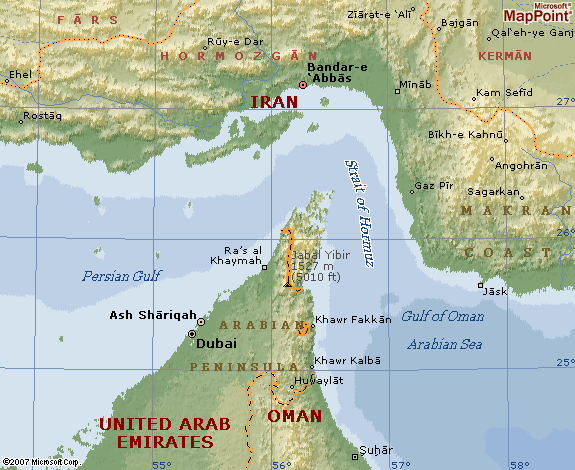
The Strait of Hormuz is widely regarded as the world’s most important oil export route. About 30 percent of all oil traded by sea moves through the narrow body of water.

At its narrowest, the strait is just 21 miles wide, but the width of the shipping lane in each direction is only two miles, separated by a two-mile buffer zone. Given the large size of the vessels involved it makes for incredibly tight quarters.

Strategists have long worried that a miscalculation in the crowded channel could trigger a conflict.

Virus That Destroys Your Computer Highlights Trend Of Destruction

A new computer virus that tries to avoid detection by making the machine it infects unusable has been discovered this week.

Dubbed ‘Rombertik’, it senses if you’re trying to detect it, triggering evasion techniques theat deletes key files on a computer, making it constantly restart.

Analysts said the virus is unique among malware samples for resisting capture so aggressively. The virus steals login data and other confidential information.

Rombertik typically infects a vulnerable machine after a booby-trapped attachment on an email message had been opened, security researchers Ben Baker and Alex Chiu, from Cisco, said in a blog posting.

Many of the messages Rombertik travels with pose as business enquiry letters from Microsoft.

The malware also “indiscriminately” steals data entered by victims on any website, the researchers said.

But it gets even nastier when it spots someone trying to understand how it works.

“Rombertik is unique in that it actively attempts to destroy the computer if it detects certain attributes associated with malware analysis,” the researchers said.

The malware regularly carries out internal checks to see if it is under analysis.

If it believes it is, it will attempt to delete an essential Windows system file called the Master Boot Record (MBR). The code replacing the MBR makes the machine print out a message mocking attempts to analyse it.

It will then restart the machine which, because the MBR is missing, will go into an endless restart loop.

The solution to restoring a PC with its MBR deleted is reinstalling Windows, but that likely means important data is lost.

Rombertik also uses other tricks to foil analysis but is regarded as a rather crude piece of spyware.

More sophisticated malware does everything it can to remain silent, so it can harvest information over a long period of time. By taking such aggressive measures to prevent analysis, the virus has drawn attention to itself and makes it an easy target for security firms to hunt and kill.

The destructive nature of the virus highlights a trend towards hacking attacks that destroy systems. 2014s attack on Sony Pictures saw a similar destructive bent, where hackers no longer just steal information but actually physically damage systems and delete data in order to cause chaos.

The pattern shows that many different players, from militaries to intelligence agencies to fraudsters and cyber-vandals, are now involved in creating computer viruses.

Tornadoes and Flooding Rocks Oklahoma And Kansas

Severe weather roared through the Midwest on Wednesday, unleashing tornadoes, rain and golfball-size hail. It also shut down the main airport in Oklahoma City.

Flooding and heavy winds were reported in parts of Oklahoma, Kansas and Nebraska on Wednesday night.

Oklahoma City was hardest hit, with over eight inches of rain reported within hours, according to the National Weather Service. The large amount of rain is the 3rd most on record.

Such conditions can lead to flash flooding, which can have deadly consequences. Residents had already begun to report washed-out roads early Thursday morning.

In addition to the flooding, at least 13 people were injured when a tornado hit a mobile home park, said Susie Patterson of the Emergency Medical Services Authority in Oklahoma City.

“There’s debris just everywhere, and there’s a lot of water on the roadways,” Capt. Paul Timmons of the Oklahoma Highway Patrol told local media.

The National Weather Service declared a flash flood emergency for the first time in Oklahoma City’s history. The main airport canceled all flights for the rest of the night, and evacuated passengers and employees to an emergency shelter. It is no yet known when flights will resume.

The storms are part of a large system making its way through Kansas, Oklahoma and Texas.

On Flash Crash Anniversary Real Culprit Is Now A Publicly Traded Company

Today marks five years since the infamous May 6 2010 ‘flash crash’ that erased billions from U.S. markets. The event was caused by electronic trading firms matching wits against a single human who knew how to beat them.

That human, Nav Sarao, is now in jail while the firms, such as Virtu, Citadel, AQR and others enjoy the high life. Virtu, strongly suspected in fingering the patsy, Mr. Sarao, is now a publicly listed company. It also reported earnings the same day as Mr. Sarao’s arrest, which was likely orchestrated to deflect attention from the company’s suspicious financial results.

The company has never lost money on a single day in over 6 years of operation.

The firm calls this trading while more knowledgeable investors call it rigging the market.

Earlier today Mr. Sarao was fighting if not for his life then certainly his freedom when he told a London court he had done nothing wrong, the Flash Crash was not his fault, and was just good at his job.

“I’ve not done anything wrong apart from being good at my job. How is this allowed to go on?” Sarao said at Westminster Magistrates’ Court.

How is it allowed to go on? Simple: Mr. Sarao threatened to expose the “mass manipulation of High Frequency Nerds”, and since Virtu was about to report its first public quarter since going public, someone had to deflect attention from the true culprits of the flash crash.

In other words, he is the scapegoat: a patsy who “traded from his parents’ modest home in west London.”

Worse, the ‘mastermind’ behind the biggest, if briefest, wipe-out in market value in history, is unable to find the 5 million pounds he needs to post bail.

As Reuters reports, Sarao’s lawyer James Lewis said Mr. Sarao had not been able to access the 5 million pounds because U.S. authorities had frozen his assets.

“We cannot obtain any money. Any request to obtain the money was refused,” Lewis told the court.

So while the predator high frequency trading firms continue to prowl the market, stealing a little tiny bit from average Americans on every single trade, an innocent man sits in jail.

Greece To Join Australia In Taxing Cash As Soon As Next Week

In what looks to become a trend, reports emerged today that Greece is finalizing capital controls that will take the form of a tax on withdrawals. The country is also considering a ‘ceiling’ on the withdrawals as well.

Specifically, the struggling nation will introduce a surcharge for all cashpoint withdrawals and financial transactions. The move is a desperate attempt to prevent citizens withdrawing their money from the country’s beleaguered banks.

Ministers hope to raise as much as €180 million from the controversial move, which the Athens government hopes will help the country avoid defaulting on debts owed to international creditors.

A senior finance ministry official helpfully offered that the charge will not apply to money paid in to a bank account. At least not yet. With Australia taxing deposits its possible Greece could resort to similar moves as well.

The official said that Greece is also considering a ceiling on bank transfers over €1 million in what would signal the start for hard capital controls, if Greece does go bust in the coming months.

The trend towards stealing bank deposits from citizens is a worrying trend, as governments who already heavily tax citizens come back to the trough once they’ve mismanaged the tax revenues.

Readers should remember that elaborate tax structures are an incredibly modern invention. They are just over 60 years old – prior to that only minimal tax was paid on property. Further, they were supposed to be temporary wartime measures that would be repealed at the end of the conflict.

Governments have since become addicted to the stream of easy money and are increasingly inventing new and elaborate ways to part savers and their money.

The Real Winner In The Iran Nuclear Deal: Arms Dealers

Reports have begun to emerge that in order for the Iran nuclear deal to be approved by its Middle East neighbors, the U.S. had to make big concessions.

And yet these weren’t really concessions at all but were instead massive trade deals.

Over the weekend the Wall Street Journal reported that “Gulf States want U.S. assurances and weapons in exchange for supporting Iran nuclear deal.”

The details fit the usual pattern of the U.S. Military-Industrial Complex in action: the U.S. pretends to wage an aggressive diplomatic campaign of peace while behind the scenes it is just as actively selling weapons of war. The weapons sales are usually for tens or hundreds of billions of dollars, the real prize for American interests.

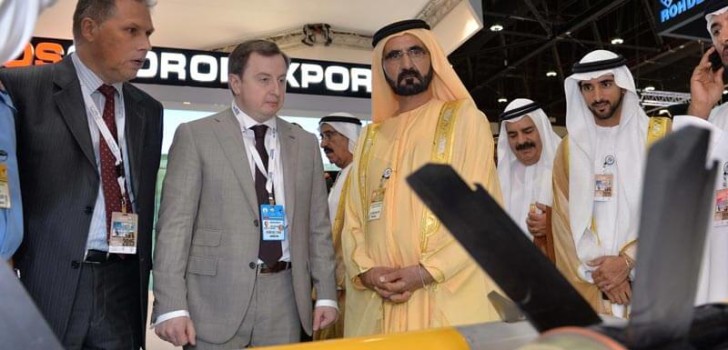
In this case, the leaders of the six-nation Gulf Cooperation Council, including Saudi Arabia, the United Arab Emirates and Qatar, plan to use a high-stakes meeting with President Barack Obama next week to request additional fighter jets, missile batteries and surveillance equipment.

They also intend to pressure Mr. Obama for new defense agreements between the U.S. and the Gulf nations that would outline terms and scenarios under which Washington would intervene if they are threatened by Iran, according to these officials.

While the deals are ethically questionable they are extremely lucrative, both to defense contractors and our country as a whole. The bigger issue is when lucrative arms sales start interfering with foreign policy. While its fine to do the deals if it happens to work its decidedly not-fine to re-work foreign policy to facilitate arms sales.

Given the close ties between defense firms, their lobbyists and politicians its almost certain this is occurring.

Kim Jong-un Furious After 16 Citizens Flee Country On His Birthday

North Korean dictator Kim Jong-un has demanded that officials “go to South Korea if they have to” in order to arrest those who defected on his birthday.

Radio Free Asia quoted internal sources as saying Kim was furious when told that 16 North Koreans defected on February 16th. Word of the defections was kept secret as it reflects badly on the backwards country.

“During Kim’s birthday, the nation was under a special warning period for defecting, and when reported by his officials, Kim ordered them to send out an arrest squad to catch the ‘fleed family,’” the source was quoted as saying. It’s common for defectors to leave as a family, as the government will often kill all the family members of a defector.

The source also stated that the officials were threatened with punishment if they failed to bring back the defectors from the North Hamgyong Province.

North Korea’s propaganda website, “Uriminzokkiri,” published a statement asking the defectors “to return to the arms of their republic,” and that the nation’s “heavens have newly opened”.

Life inside the hermit kingdom is notoriously harsh. It is plagued by constant food shortages and is unable to produce enough energy to meet its needs. It also has one of the worst human rights records in the world.

China Fights Islam By Forcing Shops To Sell Beer, Cigarettes

Chinese shopkeepers in the Xinjiang region have been ordered by authorities to sell alcohol and cigarettes. The items must also be advertised with huge, eye-catching posters.

The interesting laws have been imposed in order to ‘further weaken Islam’. Xinjiang is a troubled region, where radical Muslims have been trying to gain influence by spreading their middle-ages religious beliefs.

The measures have raised questions of Islamiphobia as Muslims there are not allowed to attend mosques, grow beards, wear burqas, teach their religion to children, fast in the Ramadan and any other type of activity related to religion.

In fact, the government categorizes non-smokers in the region as religious extremists. While the measures are decidedly harsh, and fall afoul of basic rights to individual freedom, the moves highlight the firm stance the country takes on so-called religions that look to reduce hard-won rights.

Under the new law shopkeepers who do not comply will not only have their shops and restaurants closed, but will also have to legally respond for their actions.