Home Blog Page 73

New Ad Campaign Links Tinder And Grindr With Sexually Transmitted Diseases

Many people have strong opinions about the location-based hookup apps, Tinder and Grindr. The apps (Tinder is geared towards heterosexuals while Grindr focuses on gay individuals) allow users to “swipe right” if they think someone is attractive and “swipe left” if they don’t. Hookups can be arranged in a matter of minutes. The sites are referred to as hookup apps instead of dating apps because the main goal of users is to find someone to hook up with as opposed to finding a meaningful, long-lasting relationship.

The apps have taken heat for their methods, but now they feel that some opponents have taken their disapproval too far.

The AIDS Healthcare Foundation has recently launched an advertising campaign that links the popular apps with the spread of sexually transmitted diseases. Billboards show a silhouette of a man’s faced labeled “Tinder” facing a silhouette of a woman’s face labeled “chlamydia.” Similarly, another ad features two images of men facing each other, one labeled “Grindr” and the other labeled “gonorrhea.”

The health group defended its tactics, and senior director, Whitney Engeran-Cordova, stated that, “Mobile ‘dating’ apps are rapidly altering the sexual landscape by making casual sex as easily available as ordering a pizza. In many ways, location-based mobile dating apps are becoming a digital bath house for millennials wherein the next sexual encounter can literally just be a few feet away – as well as the next STD.”

Reaction to the ads was swift.

In less than 24 hours, Tinder’s lawyers sent a cease-and-desist letter to the foundation claiming that the ads falsely and wrongly associate the app with the spread of sexually transmitted disease. A lawyer for Tinder wrote that, “These unprovoked and wholly unsubstantiated accusations are made to irreparably damage Tinder’s reputation in an attempt to encourage others to take an HIV test offered by your organization.”

The organization indicated it will not remove them and it responded to Tinder’s letter stating that it did not disparage the company. Michael Weinstein, the foundation’s president pointed out that, “It’s logical, if you can be hooked up with someone in an urban area within minutes, of course you’re going to have more STDs.”

The ads are currently displayed in Los Angeles and the foundation plans on displaying them in New York City, Fort Lauderdale and Miami.

Russia Boosting Syria’s Navy Power With Armored Vessels

Russia is building an armored navy lifeline for Syria’s embattled president Bashar al-Assad. Russia has been building its presence in Syria, with military exchanges between the two countries increasing exponentially. Though Russia’s motive remains unclear, the navy build up will offer insights on Russia’s military objective in the Middle Eastern country.

The Alexandr Tkachenko was an aging Russian vessel that ferried passengers from Russia to Crimea across the Kerch Strait. The mammoth sea vessel has since found its way to the Syrian port of Tartous.

On Sept. 11, reports indicated that the Russian naval presence in Syria had received a boost with the docking of the Tkachenko. The port of Tartous is one of the last ports controlled by Assad’s forces. Russia also has a leased naval base there. Reports indicated that the ship arrived full of trucks which contents were unknown.

Russian authorities did not comment on the contents of the vessel as of the time of reporting, while Moscow’s foreign affairs ministry had not issued a statement on the vessel’s transit to Syria.

The Tkachenko was previously held by Crimea based logistics company SMT-K. A statement from the company revealed that crossings between Crimea and Russia had ceased since August, after the vessel was taken to Syria. Officials from the company said the Russian government had chartered the ship and taken it away.

U.S. officials have raised concern over Russia’s increased military presence in Syria, saying it would hamper efforts to fight the terror group ISIS. Russia has maintained it has neither military presence nor plans of setting up such presence in the Middle Eastern country, despite traffic from Tartous to the Russian port of Novorossik averaging a vessel a month over the last year. Between Sept. 9 and Sept. 24, more than 6 cargo vessels docked in Tartous from Novorossiisk.

Assad has been suffering a sustained battle to remain in power. A sustained offensive from western backed rebels, the rogue terror group ISIS and the dissatisfied Syrian population, has left Assad with no allies other than Russia’s president Vladimir Putin.

The buildup of Russian military in Syria will affect the war on ISIS and inevitably serve to prolong the reign of dictator Assad. Though the Kremlin has maintained it seeks only to foster peace in the region, Putin’s army’s foreign excursions will serve to harm the country’s future for good.

Investor Carl Icahn Is Outraged By Current Tax Laws

Carl Icahn is urging lawmakers in the United States to pass measures that encourage American corporations to return foreign profits to the United States. The measures would supposedly help the Internal Revenue Service, which according to the billionaire investor, has been hurt by business loopholes that help American companies to avoid paying taxes in the United States.

Icahn wants action to take place quickly.

“Many big companies in the next year or two are planning on moving out of this country,” he said.

Icahn is suggesting a tax of 7% to 15% against abroad American corporations. Such a tax would bring more than $2 trillion to American soil. This money is currently being held by American companies in foreign countries.

But perhaps most importantly, taking this action would help stop companies from relocating their headquarters to countries with lower rates of taxation.

Multinationals of the United States have been lobbying for a tax deal of this nature for a long time. They say that it would make the reinvestment of foreign profits in America more affordable.

Meanwhile, the phenomenon of American companies relocating to more tax-friendly countries is a growing trend. For instance, Burger King acquired Tim Hortons of Canada. The burger chain then renamed its parent corporation “Restaurant Brands International Inc.”, and it relocated to Oakville, Ontario in order to take advantage of Canadian tax laws.

For now, Icahn is adamant that action needs to be taken quickly.

“I’ve already talked to people on this, I’ve been advocating for it. It’s insane almost not to do it. Get the $2 trillion back here to our economy, and lessen the real threat that a lot of companies will move out of this country,” he said.

Additionally, Icahn is also angered by the “carried-interest discount” in which profits earned by hedge fund managers are taxed at reduced income rates.

“One obvious problem the government should have fixed a long time ago is the carried-interest tax loophole. People on Wall Street, they’re good friends of mine, I like them, but not having to pay full taxes on money that you’re earning is an absurdity,” added Icahn.

Icahn is blaming the problem on politicians.

“These guys that run this money don’t take any risk, they only make the profit. Okay, good for them. They raised the money; they take a profit. That doesn’t mean they should pay a lower rate than a regular person. The middle class guy who’s making the $50,000 a year realizes, ‘I’m being taken advantage of.’ He can read, he can understand.”

Glencore Shares Rally Just One Day After Historic Loss

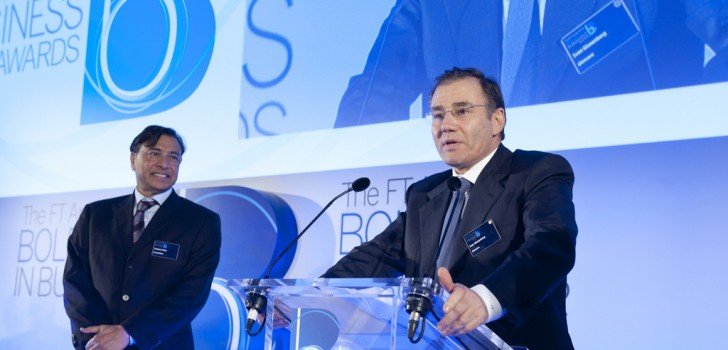
Shares for Glencore have rallied, achieving their biggest gain in the history of the commodity trading and mining company. The value of the shares increased by 17% after the company insisted that it will be able to withstand current market conditions.

Glencore has lost nearly $45 billion in market value this year, as shares have fallen by 73%.

Just yesterday, the company declined by 29%, which represented its largest single day loss. The declines have been driven by slow economic growth in China, which is the world’s largest importer of raw materials.

According to creditors, Glencore has an estimated 53% possibility of going into default sometime in the next five years.

Glencore released a statement yesterday that said it is adamant that it will stay afloat, despite the troubling outlook.

The statement read, “Our business remains operationally and financially robust – we have positive cash flow, good liquidity and absolutely no solvency issues. Glencore has no debt covenants and continues to retain strong lines of credit and secure access to funding.”

Investors of the commodity trader have urged Glencore to break its silence. Rumors of the company’s viability have hurt the performance of the stock considerably.

Professor of economics and finance at City University London said, “Investors can overreact on limited information. You can’t just sit back and take a 30 percent hit to your share price, this you have to react to.”

Despite the rebound, the future of Glencore still faces serious questions. Extreme market viability is almost never a positive sign for a company. Glencore fell 29% on Monday, only to increase 17% on Tuesday. It hardly ever gets more extreme than that.

As China’s economic slowdown has affected prices of commodities such as oil, copper, and coal, Glencore has suffered severely.

CEO of Glencore Ivan Glasenberg has been working on a plan to reduce the company’s debt. The plan includes dumping assets, ceasing dividend payments and offering more shares of company stock.

The 17% rise on Tuesday came after analysts determined that the collapse from Monday most likely did not indicate the true value of the company

Analyst Robin Bhar said, “The pummeling of Glencore yesterday was irrational. Unless you think commodity prices are going close to zero, then this was overdone.”

Even though Glencore had a good day on Tuesday, it still has a long, difficult road ahead. Unless the commodity market improves as a whole, Glencore will continue to face a murky future.

Native American Reservation To Open Massive Marijuana Friendly Resort

The Santee Sioux Native American tribe is planning to open the country’s first marijuana resort on its reservation. If successful, the experiment could pave the way for new economic opportunities for Native American tribes across the country.

The tribe has already had business successes in the past. They run a successful casino, a hotel, and a buffalo ranch in South Dakota.

Leaders of the tribe plan to cultivate their own marijuana and sell it in a smoking lounge. The lounge will also include a nightclub, arcade games, a bar, and food services. They also plan to incorporate slot machines and an outdoor music venue in the future.

President of the tribe Anthony Reider said, “We want it to be an adult playground. There’s nowhere else in America that has something like this.”

The tribe believes that it could potentially generate up to $2 million in profit every month. The project is already under construction.

Plans are for the tribe to begin selling marijuana on December 31st at a New Year’s Eve party.

Marijuana was legalized on the Santee Sioux reservation last June.

While other Native American tribes are reluctant to become involved in the marijuana industry, some believe that it could be the biggest thing for tribes of Native Americans since they introduced casinos nearly 27 years ago.

Business developer for Native Americans Blake Trueblood said, “The vast majority of tribes have little to no economic opportunity. This is something that you might look at and say, `We’ve got to do something.'”

The tribe has already started an indoor marijuana farm, growing more than 30 different strains of the plant. In order to assist them with the growing process, the tribe has hired Monarch America, a marijuana consulting firm from Denver.

There are plans for tribal leaders from across the nation and legislators of South Dakota to tour the facility.

Vice president of Monarch America Jonathan Hunt said, “This is not a fly-by-night operation. (Tribal leaders) want to show the state how clean, how efficient, how proficient, safe and secure this is as an operation. We are not looking to do anything shady.”

A full-blown marijuana resort has not yet been attempted in the United States. Even Colorado, where marijuana has been legalized for recreational use, only has a few private marijuana clubs.

The Santee Sioux Reservation covers 5,000 acres of land in South Dakota, spanning the area alongside the Big Sioux River. The reservation is noticeably better-off than most other Native American reservations, as it is full of large homes with beautiful scenery.

The tribe is hoping that the resort will be able to make money for the community. The money will be used for community services, and to provide a monthly income to members of the tribe. Some services that are already in place include a living community for seniors, a health clinic, and after-school programs.

The tribe hopes that profits from the resort will be able to fund more housing and an addiction treatment center.

However, there is some risk involved. When a new President takes over in 2017, their administration could possibly forbid the cultivation of marijuana on tribal lands. But the Santee Sioux Reservation is willing to take that risk.

That does not mean that there won’t be some strict guidelines that must be followed. For instance, marijuana cannot leave the reservation and every plant must have barcode. Additionally, customers will only be able to purchase one gram of marijuana at a time.

Despite the risks and regulations, the tribe is moving forward with the plan at full-force. If things work out, it could represent the future of Native American tribes.

DraftKings Signs Major Contract With NFLPA

It’s difficult to watch television without seeing advertisement for online fantasy sports leagues. It might become even more difficult in the future, as DraftKings has announced that it has reached an agreement with the National Football League Players’ Association to allow players to appear in its advertisements.

The NFL regular season started three weeks ago, and it showed a major increase in advertisement spending by fantasy sports websites DraftKings and FanDuel.

During the opening week of the 2015 NFL season, DraftKings spent more than $17.8 million on television advertisements. This was higher than any other company in the United States.

Throughout the past week, FanDuel was the top-spending company on television, as it spent $16.9 million. Meanwhile, DraftKings spent $12.6 million, which made it the sixth highest spending company on television advertisements.

Both DraftKings and FanDuel are valued at more than $1 billion.

In July, DraftKings stated that it raised more than $300 million from investors. These investors include Fox Sports, Major League Baseball, the National Hockey League, Major League Soccer and Madison Square Garden Co.

The National Football League Players’ Association declined to comment on the size of this deal. The association has been ramping up its efforts to market players of the NFL. So far, the association has added six new licenses this year.

Last week, the association launched a new media company called Athlete Content & Entertainment. The goal of this company will be to promote players off the field.

DraftKings is not the first fantasy sports company to form a partnership with the players’ association of the NFL. The other company is DailyMVP from TopLine Game Labs.

More than 41 million Americans play fantasy sports every year. The average age of participants is 34 years old. More than 80% of people who play fantasy sports are male, and 78% of participants are college graduates.

GOP Conference Will Meet In Attempts To Unite And Move Forward

One week after Republican Speaker of the House John Boehner announced that he was retiring from Congress at the end of October, a battle is heating up as to who will serve at the top positions opening up as a result. Next in line for the job is Representative Kevin McCarthy who announced earlier this week his plan on replacing Boehner. He will likely win the nomination, but the House Republican Conference is abuzz with campaigns of lawmakers wanting to secure the other top spots.

Representative Steve Scalise is unofficially getting into the game to serve as the number two in command, House majority leader. Representative Tom Price has also indicated his plan to vie for the position. And, yet another lawmaker who hopes to secure the position is Representative Cathy McMorris Rodgers – who in 2015 beat Price for the position of conference chair.

To discuss all of this, as well as the factions dividing the Republican party, a special meeting of the Republic conference will be held today – twice.

McMorris Rodgers released a letter regarding the upcoming gatherings of the GOP conference, stating that, “Th[e] conference meeting[s] [are] not about any one leader or group of Members. All of us want to work together with the trust and respect our service demands, and it starts with opening lines of communication on Tuesday.”

Representative Peter Roskam pushed for the conference meetings stating, “My argument is it would be a mistake to act as if John Boehner is simply retiring. We’ve got a situation here because the speaker obviously left because he didn’t enjoy the support that he needed from his own conference and I don’t know when the last time that happened.”

Indeed, Republican leaders hope to get the party back on track. The goal of the meetings has been described as a discussion about the party’s “strategy going forward.”

Echoing the sentiment that the party needs to unite and move forward, McCarthy stated that, “We have made real progress towards shrinking an overgrown federal government and reforming our broken entitlement system. But our work is far from done. We can’t ignore the differences that exist, but we can and must heal the divisions in our conference with work, time, and trust . . . I am also sensitive to what is happening outside of [Congress]. I want us to be much closer to the people we represent, and I want them to once again feel like this is their government, they are in charge, and we are here to serve them.”

New Zealand Announces Massive Marine Life Sanctuary

New Zealand has confirmed its intention to create one of the largest marine sanctuaries in the world, covering a vast swath of ocean located north-east of the island nation. The announcement has caught those in the fishing and mining industries by surprise, but Prime Minister John Key foresees the potential for greater revenues from tourism.

Encompassing the Kermadec Islands, the proposed nature preserve is home to a large variety of marine life, as well as being a region of great geographical diversity. As global fish stocks continue to decline, foreign fishing vessels have begun to encroach on the region, which contains hundreds of species of seabirds, dolphins, whales and sea turtles.

The owner of New Zealand-based Solander Seafood & Fishing, Charles Hufflett, stated he would be opposing the decision, “We have only really just developed a domestic tuna industry of any size and they are taking away this valuable area.”

According to Prime Minister Key, “The Kermadec Ocean Sanctuary will be one of the world’s largest and most significant fully-protected areas.” Covering nearly twice the area of New Zealand itself, enforcing the new policy will be a challenge, but drone technology, as well as a new system developed by Google, could make the job more manageable.

Google’s Global Fishing Watch uses satellite tracking devices already present on all large vessels and then picks out those that are fishing vessels based on recognized patterns. The new technology would not be able to track vessels that choose to turn off their transponders, however.

The recent announcement aligns New Zealand with other Pacific Island nations such as Palau, which decided to transform its entire 200 mile exclusive economic zone into a sanctuary for marine life. Prime Minister Key’s claims of increased tourist revenue would build upon recent gains in that industry, which this year saw over 3 million visitors, the largest in the nation’s history.

Next Generation Military Drone Has Successfully Completed Tests And Is Ready for Operation

The manufacturers of the next generation of military drone – nEUROn – say after five years of research and development, the craft has successfully passed the final string of stealth testing and will now be tested for full “operational use”.

Alenia Aermacchi, the Italian aerospace company that is heading the joint European Unmanned Combat Air Vehicle (UCAV) project, says the tests involved “12 highly sensitive sorties to verify the radar cross section (RCS) and infrared signature” and took place from the Decimomannu airbase in Sardinia. The craft will now undergo flight tests in Sweden, which will include the dropping of GPS-guided bombs.

The craft is a joint project of French, Swedish, Swiss, Italian and Greek aviation firms – Dassault Aviation, Saab, Finmeccanica-Alenia Aermacchi, RUAG, Airbus Defence and Space, and HAI.

An Alenia Aermacchi spokesman says the “sorties” flown out of Decimomannu were conducted at different flight profiles and altitudes against both ground and airborne radars. He says as well as passing the radar “stealth tests”, the nEUROn’s also successfully demonstrated the effectiveness of its smart integrated weapons bay (SWIB) system which “allows for the automatic detection and recognition of the target in stealth mode and enables the sending of an attack approval request to the ground station commander before the launching of weapons.”

He says the nEuro has previously completed 100 test flights in France from Istres airbase and once the 20 “sorties” in Sweden are over, all necessary flight-testing will have been completed.

Meanwhile, aviation experts say officials behind nEUROn’s British counterpart, the Taranis UCAV demonstration program, have been surprisingly quiet about developments. They say the last information released was at the Farnborough International airshow in July 2014.

A program spokesperson told reporters recently, “We are continuing to gather data and complete additional test points. Successful completion of this program proves the UK’s industrial capability to design and develop an unmanned, stealthy combat aircraft. This puts the UK in a strong position should we wish to enter into an international collaboration, by demonstrating a genuine UCAS design, development and manufacturing capability. We are in discussions with the Ministry of Defense about the next stage of testing for the aircraft, including any further flight trials.”

The FBI Uses Hacking To Get Around Encryption

While the FBI and other security agencies claim that encryption is preventing law enforcement officials from doing their jobs, they actually have a proven method to get around encryption. That method is good old-fashioned hacking.

The practice is perfectly legal for law enforcement officials when they have a warrant.

Officials are able to hack into encrypted devices by installing viruses and malicious codes onto the devices of their suspects. Once they have hacked the device, they are able to access communications that were previously encrypted, or protected.

Security officials do not like mentioning their ability to hack for two reasons. For one, hacking takes a considerable amount of effort. The process is slow and tedious. Weakening encryption would make the process of obtaining information much easier.

Secondly, confessing to the public about their use of legalized hacking makes the officials look bad.

However, security officials don’t deny the benefits of hacking. Executive director of the FBI’s Science and Technology branch recently said that hacking might be something for them to consider.

While the cases of hacking by the government are few and far between, they do exist.

One high school student in Lacey, WA who was making repeated bomb threats in 2007 was legally hacked by FBI agents in order to reveal his identity.

Another case occurred in 2013, when the FBI tricked alleged viewers of child pornography into exposing their personal information. However, many of these accused individuals were innocent, having never intentionally looked at the content.

The practice even goes back to 2001 when the FBI hacked into the computer of Nicodemo Scarfo Jr. in order to spy on the American Mafia.

The FBI has its own brand of malware. It is known as the Computer and IP Address Verifier (CIPAV). The malware is able to obtain valuable information about any device that accesses the internet, such as its browser activity, IP address, operating system, and more. The FBI also makes use of hacking applications, such as one called Metasploit.

The government has even worked malware developers, including the Hacking Team, a controversial Italian company that develops viruses.

Recently, a working group of the Obama administration that was examining different methods of unlocking encrypted devices proposed the idea of installing malware onto the devices of suspects through automatic updates.

Meanwhile, the NSA maintains another secret program that enables officials to hack computers on a large scale basis. The program allegedly uses automating processes to use various methods to access the information of millions of computers. The NSA has also invested into the development of its own malware programs.

And of course, the United States government hacked Iran using the Stuxnet virus to stop the country’s nuclear program in 2007.

However, there was a case where the FBI was denied its request to hack a suspected criminal. The FBI requested permission to hack everything from photos to personal emails. The courts denied the request from the FBI as a violation of Rule 41.

So far, the FBI has never succeeded in receiving a warrant to hack in an overly intrusive way. The FBI is required to list specific things that it wants to access when hacking legally.

Despite this, the FBI often hacks without receiving a warrant. The FBI has theorized that the Fourth Amendment, protection against unreasonable searches and seizures, does not apply when they attempt to find information that is not constitutionally protected, such as someone’s name. The FBI has been known to deploy malware in order to determine the owner of a suspicious device.

Additionally, federal investigators have argued that targeted hacking does not necessarily constitute a search. According to them, it shouldn’t require a warrant. With ideologies like this, additional protections are severely needed.

So while the FBI continues to lobby for weakening encryption, the organization can still hack its way into almost whatever it wants to.

Chinese Leader Continues To Surprise With Major Peacekeeping Contribution Pledge

In another surprising move, China’s President Xi Jinping has announced China will contribute 8,000 troops to United Nation’s (UN) peacekeeping efforts, as well as contribute $100 million in military assistance for African Union peacekeeping missions, and $1 billion to a joint UN-China peace and development fund.

Xi’s announcement, which came as he addressed the United Nations General Assembly, could make China one of the biggest role players in the UN’s peacekeeping efforts.

China watchers says Xi’s UN pledge comes on the heels of other non-traditional Chinese Government moves over the last week, including a non-cyberspying agreement with the U.S, a promise to do more for human rights, especially women’s equality, and a ban on ivory imports. They say these are obvious and very clear indications that China is attempting to demonstrate it is a responsible international player, as well as to deflect criticism of its territorial disputes with neighboring countries and a continuing military build up on its borders.

In an attempt to ease worries that China had ulterior motives in it’s UN peacekeeping plans, Xi said China would keep to a “peaceful development path”.

“China will never seek hegemony, expansionism or a sphere of influence,” he said.

The Chinese leader also said his country would give “favorable consideration” to other UN requests for more Chinese transport, medical and engineering staff, and threw down the gauntlet to other UN members to accept more developing nations on international bodies .

“The vote of China in the United Nations always belongs to developing nations,” he said.

George Washington University International affairs expert and former UN ambassador to Burkina Faso and Ethiopia, David Shinn, said he does not believe other countries should be worried about Xi’s announcement.

“I don’t think other countries should be concerned by these announcements by China. UN peacekeeping operations have widespread international support. There is plenty of room for everyone,” said Shinn. “I don’t believe China’s actions will change the strategies of other countries in Africa. For its part, China gains in international prestige by supporting African Union and UN peacekeeping operations. It is able to test its troops, police and equipment in different environments.”

Shinn added that in the past, China has put military personnel in place to protect Chinese nationals and interests in foreign countries, citing South Sudan as an example.

“This is especially true in Africa where more than 1 million Chinese nationals currently live,” he said.

Yale Researchers Use Nanoparticles To Develop Safer And Longer Lasting Sunscreen

Researchers at Yale University say they have developed the ultimate long lasting, safe sunscreen. However, they do admit animals were used to test it.

Mark Saltzman, a biomedical engineer at the University says, “The initial goal was to make a sunblock that lasted longer. But as I read more about sunscreen, I became aware of people’s concerns about safety.” Now Saltzman and Yale research colleagues say they have found the solution – a nanoparticle-based sunblock, which they claim is longer lasting than anything on the market and less likely to be absorbed into the body like traditional sunscreens.

Saltzman explained that sunscreens currently on the market work in one of two ways: by providing a chemical skin coating which filters out harmful UV rays before they reach the skin, or by blocking out sunlight with a zinc oxide paste. He says studies have shown the chemicals in these sunscreens have been found in human breast milk and urine, meaning they penetrate the skin’s outer layers and leach into the body. Other studies show the chemicals protecting us from UV damage can produce DNA-damaging molecules.

In the new Yale sunscreen, the researchers used minute nanoparticles that tightly stick to protein-rich surfaces, like the skin, and engineered them to form a chemical UV filter. They found that not only did these nanoparticles not penetrate the skin, but they were also more efficient than sunscreens now being used, needing only five percent of the UV protection chemicals.

Saltzman admits mice were used to test their product. They shaved the fur off four mice, sprayed them with the clear nanoparticle solution and exposed them to UV light. Comparing these mice to another four covered in traditional sunscreen, they found that although both groups were protected from key signs of UV damage, the mice with the new sunscreen had no traces of chemicals in their bodies, whereas the traditional sunscreen ones did.

Yale dermatologist Michael Girardi says the nanoparticle sunblock is water resistant but can be wiped off, and on the trial mice it was effective for five days.

Saltzman says they are not yet allowed to try out the product on humans, but they are in the process of applying for permission.

“I’ll certainly be the first volunteer if it’s allowed.” he said.

Patient Information Vulnerable To Cyber Hacks On Medical Devices

It seems like cyber attacks make headlines on an ever-increasing basis. Hacking into websites, payment systems, etc. seem to be common. However, a new threat is emerging – the ability to hack into patients’ medical devices and diagnostic systems.

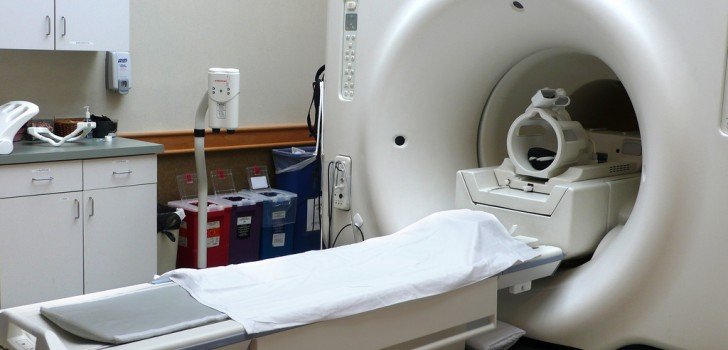
Security researchers Scott Erven and Mark Collao recently found that a “very large” number of medical systems, including cardiology, infusion systems, pacemakers, MRI scanners, among others, were vulnerable to computer hacking. Erven observed that, “Once we start changing [search terms] to target speciality clinics like radiology or podiatry or pediatrics, we ended up with thousands with misconfiguration and direct attack vectors. Not only could your data get stolen but there are profound impacts to patient privacy.” It seems like the vulnerabilities are infinite.

As part of their research, Erven and Collao laid out some “bait honeypots” in order to see if “real life” medical devices would actually be attacked. Sure enough, thousands of attackers logged into the software running the devices and some even completely disabled the devices. Collao reported that, “[The hackers] come in, do some enumeration, drop a payload for persistence and connect to a command and control server.” Scary stuff.

To show that some people take this seriously, former United States Vice President revealed that in 2007, he asked doctors (and engineers) to disable the wireless capability of his implanted heart device. He was afraid that, “a sophisticated attacker might wirelessly access the device, reprogram it it, and . . . kill [him].”

Many experts believe that the healthcare industry is not ready to deal with the risk. They are hoping to fix that. Kevin Fu, a professor in electrical engineering and computer science at the University of Michigan, works with manufacturers to improve the safety of medical devices.

Fu points out that many manufacturers are starting to wake up to the threat and have “started security engineering programs within their companies.” He notes however that, “While these early adopters are making great strides, many manufacturers are still playing catch up.”

For example, some specialists seem to believe that imminent attacks are remote possibilities. Richard Schilling, a cardiologist at the Bart’s Heart Center in London quips that, “The potential downsides are so small it would seem excessive to raise the prices of the devices, depriving some patients of their benefits, because of what I think is an unreasonable fear.”

It is likely that automakers felt the same way at one point. Fu notes that for years he wondered what would happen first – “a cybersecurity recall of a medical device or a car.” He stated that, “The medical device community should consider itself lucky that the automotive community has earned the dubious honor of having the first cybersecurity-only recall.” He also pointed out that it was “just a matter of time before some medical device company will receive a painful, late-night phone call.”

Goldman Sachs Almost Invested Into Rapidly Declining Glencore

Goldman Sachs nearly invested heavily into now-tanking company Glencore, but they didn’t because of potential regulatory limits. The investment firm was ready to put millions of dollars into the commodity trading and mining company, but they stopped at the last minute because they believed that the Federal Reserve would put a restriction on commodity trading by banks.

Now that Glencore has experienced a 78% decline over the past five months, Goldman Sachs has to be feeling pretty lucky.

When Goldman Sachs transitioned into a bank holding company in 2008, the Federal Reserve began monitoring their activities more closely. In 2013, politicians urged regulators to review the commodity-trading activities of the banks, as well as the exemptions that were put in place that enabled investment firms to own shares of commodity businesses.

Last year, subcommittee of the United States Senate recommended that investment firms shouldn’t be allowed to own physical commodities because doing so would provide unfair trading advantages and possibly threaten the financial system of the country if the investment firm faced financial trouble.

The Federal Reserve never acted on this recommendation, but it was enough to scare banks away. Investment firms began dumping commodity companies left and right. And purchases that were set to occur, like Goldman Sachs investing in Glencore, never took place.

Other investment firms also experienced fortuitous situations as a result of the Senate hearing. In July of last year, investment firm Morgan Stanley sold its stake in TransMontaigne Inc., an oil transportation company. In addition, it also sold some physical inventory. The total deal was worth around $750 million. Morgan Stanley made a gain of about $101 million on the sale. Since this deal took place, TransMontaigne shares have fallen by a third, while oil has declined by $60 per barrel.

Meanwhile, JPMorgan sold the majority of its physical commodities trading unit to Mercuria Energy Group Ltd. last October. With the decline in commodity prices, JPMorgan has to be feeling pretty good about that deal.

Banks recognize their lack of a need for physical commodities.

Morgan Stanley CFO Jonathan Pruzan said in June, “We don’t think we need to be in the physical oil assets or merchanting business to be effective. Ten years or 15 years ago it was important, and we thought it was a competitive advantage, but we don’t think that’s the case today.”

So while Goldman Sachs may have been heavily tempted to pursue the lucrative Glencore at one point in time, it has to be extremely thankful that it did not.

UN Proposes Energy Equality To The World’s Citizens While Fighting Climate Change At The Same Time

Most of the world’s leaders gathered in New York last week to submit their agreement with the United Nations Sustainable Development Goals. The goals span a number of areas, including universal access to energy as well as taking “urgent action to combat climate change.”

These specific goals seem to contradict each other. Providing citizens of poor countries with electricity comparable to that enjoyed in the West means producing greater greenhouse-gas emissions – which does not help climate change.

Amazingly, greater than 1.3 billion people across the globe do not have access to electricity. And, many of those who do have access experience blackouts and other shortages when bad weather takes its toll.

It is clear that when people do not have electricity, they use other forms of energy, including kerosene lamps – which cause fires and injuries, as well as produces harmful gases. However, the installation of power lines and electricity provides exponential benefits to its users. One study shows that electrification in the northern region of El Salvador was linked to an almost 80% increase in studying time and class time among children. It was also associated with increased profits of local businesses.

Recognizing the necessity of electricity in improving the lives of so many people simply means more energy. The International Energy Agency (IEA) has promoted the idea of modern energy access for all, including universal electricity and clean cooking fuel.

Herein lies the problem. The IEA proposal of the additional energy required to meet these goals is essentially negligible. Its proposed energy consumption levels are too low. The kilowatt hours (kWh) used by United States citizens are greater than 13,240 annually. The IEA suggests that 500 kWh are sufficient. Quite the discrepancy. If we want universal access to electricity, we need to consider equality in electricity usage. And that equality means much more than 500 kWh per person annually.

Reaching this goal means that global electricity production would have to increase by greater than 130%. By doing so, this would allow for income growth, poverty reduction, employment opportunities and improved health.

The downside to this is that more electricity means a greater effect on climate change. With the technology that currently exists, this is inevitable. This means that new technologies must be developed in order to create a sustainable balance between increased electricity and combating climate change.

Those who are anti-gas, anti-nuclear and anti-coal with respect to energy development implies that they do not want energy equality across the globe. A compromise must be made between these ideologies, and therefore new technologies must be researched and developed (through major investment) so that climate can be sustained while poor citizens of the globe enjoy a better quality of life.

Playboy Being Sued For Back Room Vodka Deal And Sham Accounting

Playboy Enterprises is being sued for $12 million for allegedly hiding commission amounts for Playboy-branded liquor and not honoring partnership contract stipulations it made with the Broad Street Licensing Group (BSLG).

As part of a two year agreement to act as Playboy’s exclusive spirits licensing agent, BSLG made a deal with Philippines-based company VuQo Inc.to manufacture Playboy coconut nectar branded vodka. The group alleges Playboy went behind its back, making a direct deal with VuQo’s lead investor, cutting Broad Street out of the commissions it would have received.

It also claims that before Playboy struck the backroom deal with VuQo, it had been hiding the commissions that BSLG should have been receiving.

The complaint filed in court says, “Not surprisingly, this ‘new’ Playboy-branded vodka is identical to the VuQo-manufactured Playboy-branded vodka: the vodka, the bottles, the label — everything is the same.”

Broad Street claims that because of the original agreement with Playboy it is entitled to commissions for the two years of the deal, plus one year following termination.

The complaint says, “To make matters worse, Playboy has also refused to pay BSLG commissions on $800,000 in royalty advances Playboy received in March of 2014 from VuQo, claiming — in a feat of accounting that would make Enron jealous — that these funds were ‘returned in the form of a credit to [VuQo’s lead investor] toward a future relationship with Playboy.’ ”

Playboy says that it “independently” formed a relationship with VuQo’s investor. BSLG claims “credit or not,” it is owed commissions.

Legal experts say the dispute mirrors what happens “when talent switch talent agents and look to avoid paying commissions to old reps”.

In the complaint BSLG “asserts breach of contract as well as breach of implied covenant of good faith and fair dealing while praying for damages not less than $12 million”.

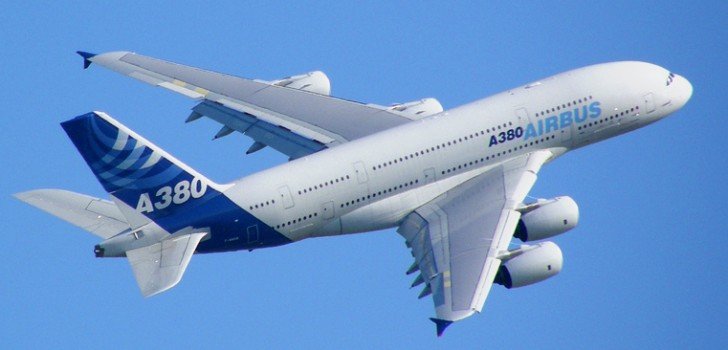
Airbus Setting Up Sleep Pods For Sleep Deprived Passengers

Airbus is building sleep bunkers in their planes for passengers travelling across long distances. For millions of passengers every year, long distance travel is a pain in the behind, back and neck, especially when trying to catch some sleep. Airbus’ new sleep pods will solve the problem for its passengers worldwide.

Airbus is seeking to patent economy-priced sleep pods at the rear end of their planes. The patent filed last week seeks to install sleep pods, which will be stacked onto each other and separated by four walls for passengers who may want to sleep while commuting.

The pods labeled “sleeping box” will be fitted into the Airbus A380 and 350, both of which are used in long distance routes. The beds would be safe to occupy during take-off, taxi and landing. The pods benefit from a cross section over 31 inches by 31 inches. The passengers would lie down perpendicular to the plane’s direction of flight and their heads would be toward the outer wall.

The pods would be assembled from fiber-reinforced plastic, meaning the equipment’s weight would be well manageable. The structures are fitted with inflatable airbags to protect passengers in the event of a crash and would be 5-10 cm thick for a smoother evacuation. Inflation would be sensor initiated.

The pods would be installed with a passenger safety unit (PSU) that would include an oxygen mask, air conditioning and a lamp. Flat screen video monitors could be provided for in-flight entertainment.

Beds on planes, however, are not an entirely new concept. Airlines such as Etihad and Singapore have been offering lavish bed accommodations in their first class suites.

Airbus seeks to capitalize on the large number of passengers complaining that airplane seats are too small to allow for quality sleep during long flights. The pods will save millions for travelers who pay for an extra seat just to be able to sleep comfortably during flights. It will also save millions for plane manufacturers who have to spend heavily on adjusting first class seats for sleep conscious clientele.

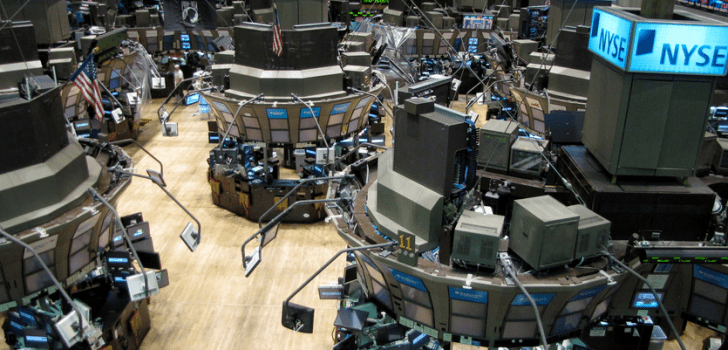
The Sequoia Fund Tanks As Major Drug Company Flops In The Market

Valeant Pharmaceuticals experienced a major decline in the market, causing the Sequoia Fund, which is worth about $7.8 billion, to lose around $1.2 billion in value.

The Sequoia Fund is managed by Ruane Cunniff & Goldfarb. It has been closed to new investors since 2013. The fund has had one of the best track records on Wall Street since its inception in the 1970s.

The pharmaceutical company fell by as much as 20% following a request from Democrats in the United States House of Representatives to subpoena the company in order to obtain documents concerning increases in the price of drugs. Politicians have been attempting to lower the prices on acquired drugs.

Ruane Cunniff is the largest shareholder of Valeant, holding 33.9 million shares as of late June. In New York as of 2:23 pm Monday, shares for Valeant fell by $35.79, an 18% decline in value. This represents a loss of $1.21 billion for Cunniff.

Richard Cunniff and William Ruane, both of whom have since passed away, founded the Sequoia Fund in 1970. William Ruane was a longtime friend of Warren Buffet from college. Ruane and Buffet met at Columbia University at an investing seminar which was taught by legendary investor and economist Benjamin Graham.

As of June 30th, Valeant Pharmaceuticals represented 29% of the holdings within the Sequoia Fund. The mutual fund has outperformed 99% of its rivals this year and 97% of its competitors during the previous five years. Over the past five years, shares of Valeant had multiplied almost seven times over. Clearly the company and the mutual fund had been performing exceptionally-well.

Unfortunately, that all came crashing down yesterday. It will take a long time for both the stock and the mutual fund to recover from this collapse.

Ruane Cunniff has yet to comment on the situation.

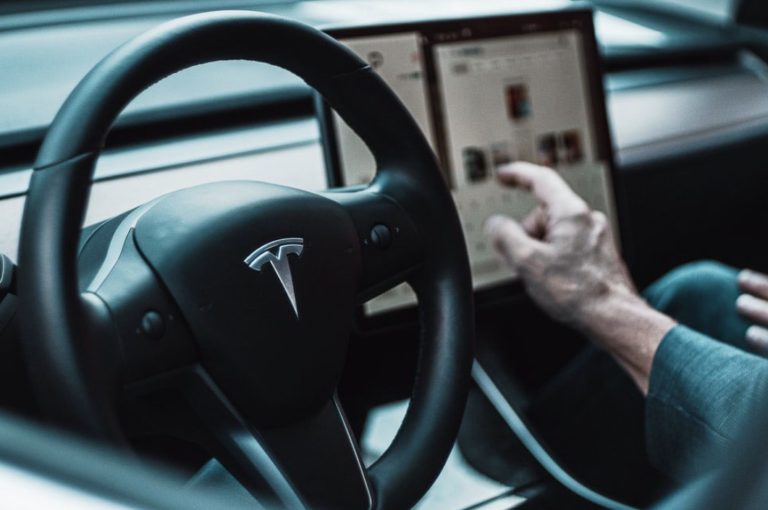
Check Out Tesla’s Model X SUV

The Model X sport utility vehicle from Tesla is finally going to hit the road, as the five-door SUV will see a limited release to company board members and some of their closest friends.

The Model X is the second vehicle from Tesla. The first was the Model S sedan. The performance of the Model X will be crucial to Tesla, as it hopes to expand its manufacturing and increase its public appeal.

Tesla promises that its vehicles have zero emissions and are fully electric.

The pressure will be on Tesla CEO Elon Musk to quickly bring up the production of the vehicle in order to meet targeted sales. The company expects a large portion of its sales this year to take place in the fourth quarter.

Executive market analyst Jack Nerad said, “We’ll see if Tesla can supply enough Model X’s fast enough to satisfy the waiting list.”

Tesla’s Model X will face competition from other automotive manufacturers in the luxury SUV category. Most of these competitors are from Germany companies, and include the Audi Q7, the BMW X5 and the Porsche Cayenne. The German automotive industry is under heavy fire as the German car company Volkswagen is dealing with a massive emissions scandal that has affected more than 11 million of its diesel vehicles. German car companies would love to beat Tesla in the constantly growing electric-car market.

However, this might be seen as positive for the clean-driving Tesla, as the industry as a whole is trying hard to regain public trust. Tesla just might be the best company for that role, as the public could backlash toward German vehicles after the Volkswagen incident.

But German car manufacturers are not giving up the fight.

Chief of staff to a German Chancellor Peter Altmaier said, “I know Elon Musk, I met him last year, he’s an impressive guy, and his Tesla car is an impressive car. I would be very pleased if the German carmakers would be able to produce an e-car that’s better and cheaper than Elon Musk’s car.”

However, skeptics are common in the industry right now. Regulators in Europe and the United States are thoroughly examining the emissions of vehicles in order to find any other cheaters.

Analyst Brian A. Johnson said, “The question on a lot of minds is: Are any other automakers cheating on emissions, or ‘optimizing’ for the best emissions results?”

The Model X was first shown to the public in February of 2012. Production was initially planned for 2013, but it was delayed until this year. The vehicle is finally seeing a limited release called the “Founders Series”. The limited edition Model X SUVs will be handed over at an event in Fremont, CA, the location of the Tesla factory.

Tesla will soon release the “Signature Series”, which is another limited edition of the Model X. Customers are putting down deposits of $40,000 to reserve the SUV.

The Model X is all-wheel drive, and it can either seat six or seven passengers at a time depending upon options that are chosen. However customers are concerned if sports equipment such as bikes and skis will be able to easily fit into the vehicle.

The SUV features “falcon wing” doors that open up vertically. It also includes a 90 kilowatt-hour battery that can reportedly travel for 250 miles on a full charge. The Model X will cost about $5,000 more than the Model S sedan due to its larger size. The Model S starts at $75,000.

Tesla plans to deliver somewhere between 50,000 and 55,000 vehicles this year. This includes both the Model S and the Model X. Tesla delivered almost 22,000 vehicles in the first half of this year.

With all of the commotion in the automotive industry over the honesty of car manufacturers, Tesla might really be able to change the game with its message of “Zero emissions. Zero compromises.”

Pop Culture Beginning To Embrace Muslim Women

At a time when the world seems to be in crisis mode, it is evident that modern culture is trying to embrace all types of people into one unified society. Pop culture especially is creating more opportunities for people of all shapes, sizes, colors, faiths and sexual orientation. One ethnicity that has been underrepresented in pop culture is that of Muslims, particularly Muslim women. Now, some companies and media are trying to fix that.

Many Muslim women wear scarves over their heads known as hijabs. The women are often referred to as hijabis. They have rarely been seen in popular media – until now. A new ad campaign by fashion company H&M prominently features a Muslim model proudly wearing her hijab. The ad also features a boxer with a prosthetic leg, a man in drag and a man wearing socks with sandals. The tagline: “There are no rules in fashion.”

The campaign has received rave reviews, particularly online, where one non-Muslim woman posted that she was “so happy that the gorgeous hijab-wearing fashionistas are being represented by a global brand.”

One of Britain’s most popular social media program, the Great British Bake Off, also features a very talented baker who wears a hijab.

Moreover, in America’s pop culture, ABC’s new show, Quantico, stars a hijab-wearing actress.

The implication of these moves is that it normalizes the image of hijabis in everyday life. Rather than being afraid of these women because they are part of the Muslim religion – often associated with extremists spreading terror all over the world – hopefully people will come to respect the hijab.

Unfortunately, when a religion is not fully understood by people, bad things happen. People judge those who practice the faith – sometimes violently. It is not uncommon that hijabis are spit at, punched and kicked, even in the presence of their children. All because people associate them with Islamic extremists. They are “easy targets” because of their appearance.

Hopefully, with the ever-increasing acceptance and portrayal of the LGBT community in popular culture, an acceptance and understanding of women of faith, including hijabis, will grow as well.

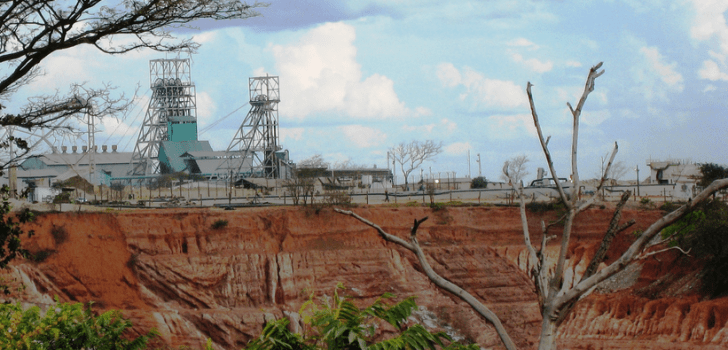
Zambia Economy Performing Dreadfully As Glencore Suffers

The recent pathetic financial performance from commodity trading and mining company Glencore is now affecting the country of Zambia in southern Africa. Zambia is known for its copper mines, and the awful performance by Glencore is having a direct negative impact on the country.

Zambia’s currency, the kwacha, declined by as much as 16% yesterday, reaching an all-time low. Meanwhile, stocks for Glencore fell by 29%. Glencore has already announced its plans to cease operations in Zambia. The company owns more than 70% of Mopani Copper Mines, which is the second largest employer in Zambia after the Zambian government. Mopani Copper Mines produces 26% of the country’s metal.

With Glencore’s rapid decline, there has been immediate pressure on the kwacha and investors are quickly dumping the currency. While this occurs, workers at the Mopani Copper Mines face almost certain job cuts.

The economy of Zambia has been crushed because of a major decrease in copper prices. Copper represents 70% of Zambia’s income from exports, and the metal has lost 21% of its value this year. With copper prices down, the country’s revenue is down, and the result is extremely high levels of debt.

Zambia’s credit rating was recently cut by Moody’s Investors Service to B2, which is five notches under investment grade.

As for the kwacha, the currency has fallen by 48%. This gives it the dubious distinction of being the stock with the largest decline this year according to Bloomberg, which tracks more than 150 different currencies worldwide.

Nearly 20% of the workers at the Mopani Copper Mines are expected to lose their jobs. Glencore also plans to cut jobs at Katanga Mining Ltd. in the bordering country of the Democratic Republic of Congo. The company will also temporarily suspend operations at their mines, as it tries desperately to stay afloat.

While the demise of the kwacha and Glencore are troubling, investors are looking at the situation and realizing that the two perhaps shouldn’t have been so connected in the market.

Market analyst Gareth Brickman said, “With the benefit of hindsight, we can see how the kwacha’s fortunes have become tied closely to that of Glencore’s, the major mining company in the country.”

Additionally, Zambia is facing power shortage problems. Half of the country’s electricity comes from a hydropower plant at Lake Kariba. Because of a drought, the world’s largest man-made reservoir is less than one-third of the way full.

Estimates show that the economic growth in Zambia will fall to its slowest pace since 1998. The country expects a budget deficit of 8.4% of gross domestic product, which is nearly double of the government’s goal of a 4.6% deficit.

Despite all of these troubles, Zambia has not resorted to requesting loans from the International Monetary Fund. However, the country is quickly depleting its reserves and watching its levels of debt skyrocket. Unless Glencore can get its act together, which is unlikely, the country will most certainly continue to experience significant financial woes.

Only About 20% Of Emissions Data Is Accurate In China

Automotive emissions data in China is apparently far more corrupt than the rest of the world, as one Chinese expert has admitted that about 80% of such data in the country is false.

The admission came shortly after Volkswagen confessed that 11 million of its diesel cars worldwide were equipped with a cheating device that enabled the vehicles to detect when emission testing was taking place. When a test was occurring, the vehicles would run their emission controls at their maximum settings. But when the cars were on the road, they would produce up to forty times the allowable amount of pollution.

In China, such a scandal would probably fly under the radar.

Chinese automotive researcher and engineer Li Wei said, “If that happened here, it would be difficult for us to detect it.”

All cars made in China are required to receive an inspection before they are approved for use. According to Wei, China’s emission standards and procedures for inspection mostly follow that of the European Union.

According to the president of an engineering company, Xiu Chunlin, “Only an estimated 20% of China’s vehicle emissions data is accurate.”

This extremely large amount of false data is said to be the result of a lack of supervision and enforcement by state regulators.

State regulators do conduct random checks on emission controls in vehicles. However, they only mandate that improvements be made within a specified time period. They do not impose fines, and they almost never take vehicles off the road. Car manufactures are given very little motivation to improve what could be a very dirty automobile.

However, Wei expects the situation to get better over time.

China recently revised its prevention of air pollution law, and the country has clarified the role of its government in the matter. The country is also making an effort to strengthen its supervision over the emission testing process, and is working on increasing the severity of punishment for non-compliance.

Still, China has a long way to go in terms of regulating the emission controls of their vehicles.

Most Chinese cars run on gasoline, unlike in Europe, where diesel is extremely popular. The country mostly avoids diesel cars because of pollution concerns and the higher cost involved. China has spent a large amount of resources in recent years to promote electric vehicles.

Snowden Backs Treaty Promoting Citizen Privacy Rights And Whistleblower Protection

Edward Snowden is backing a treaty providing for the inalienable right to have human mobile phone and private records kept secret. On the eve of the biggest gathering of world leaders at the UN Summit, former employee of the National Security Agency (NSA) and notorious whistleblower, Snowden, is appealing for public privacy.

Snowden appeared before a New York Forum by live video conference from Russia appealing passionately against the “global” problem of privacy rights violation. Snowden said, “We have to have a discussion, we have to come forward with proposals to go ‘how do we assert what our rights are, traditionally and digitally and ensure that we cannot just enjoy them, but we can protect them.”

The former NSA advisor made reference to the UN Declaration of Human Rights Article 12 which states in part, “no one shall be subjected to arbitrary interference with his privacy.”

Snowden urged all world leaders to embrace a new treaty aiming at securing the privacy rights of citizens. The new treaty labeled the “Snowden Treaty” specifically provides that governments signing it will not infringe on its citizens’ rights to privacy through spying on their online or mobile connections. The treaty also provides that countries signing it provide asylum for whistleblowers.

Snowden said, “This is not a problem exclusive to the United States … This is a global problem that affects all of us. What’s happening here happens in France, it happens in the UK, it happens in every country, every place, to every person.”

Snowden showed deep rooted concern over the actions of many governments aimed at increasing surveillance on private citizens rather than reducing it. He was speaking in the wake of a recent release of documents showing the massive surveillance by UK authorities on their people through a Government Communication Head Quarters (GCHQ) program. The surveillance targeted private persons’ data with regard to online radio, search engines, news and pornographic content.

The documents revealing the secret program called “Karma Police” narrates how peoples’ profiles were gradually built to reveal intricate details such as when they visited news sites like BBC and for which specific content they searched.

The Snowden Treaty has received support from various personalities including David Mirada, lawyer Glenn Greenwald, Kim Dotcom, DJ Spooky and Vivienne Westwood.

Edward Snowden shot to fame in 2013 when he released a host of documents detailing US surveillance practices on private individuals. Through the new treaty, the long time whistleblower wants to place private persons rights at the forefront of government security concerns.

Coal Fired Pizza Is Feeding U.S Coal Industry

The U.S. coal industry has found a partial savior in a very unlikely place – pizza parlors.

The chief executive officer of Pennsylvania-based Blaschak Coal, Greg Driscoll, says his company is keenly pursuing coal-fired pizza places which he says is a “market that just kind of snuck up on us.”

His company deals with anthracite coal, which is considered one of the hottest and purest burning types of coal in the world.

“It’s sort of in the face of everything that is going on.” he says referring to the many former customers, especially energy companies, turning to cheaper and more “green” products, as well as stricter environmental regulations.

Driscoll says the same qualities that make anthracite the perfect source for energy companies apparently also makes it ideal for giving pizzas a finer taste. Although pizza places at present just make up four percent of Blaschak’s wholesale market, Driscoll says it’s the fastest growing sector

Fred Le Franc of restaurant consultant group Results Thru Strategy says, “The phenomenon of coal-fired pizza has a lot to do with flavor. It’s the difference of having a steak cooked over a gas grill vs charcoal. You get this great smokey flavor.”

Anthracite burns at temperatures of up to 900 degrees Fahrenheit, which is dramatically hotter than traditional wood-fired ovens. This allows cooks to bake pizza not only much faster, but also more evenly while getting the smoky flavor the coal lets off.

Driscoll admits pizza alone cannot save the the anthracite industry. He says that in 2014, American coal mines produced about 2.5 million tons of anthracite, compared to the 1917 peak of 100 million tons. Last year Blaschak sold 375,000 tons to pizza places across the U.S. Driscoll says he is “willing to explore any new markets that present themselves”.

“Anthracite fueled the industrial revolution and two world wars,” Driscoll says. “Big events foster growth but they’re temporary. Don’t make them your plan.”

One things is for sure though, America’s coal-fired pizza ovens will not go cold from a lack of anthracite any time soon.

Japanese Children Demonstrate Higher Levels Of Independence Than American Children

In Japan, young children have been known to take public transportation on their own and without parental supervision. Some of the children are as young as six or seven years old, and they use the services to get to and from school.

Sending children out into the world at a young age is commonplace in Japan. One show that has been on Japanese television for more than 25 years is called Hajimete no Otsukai, or in English, My First Errand. The show features children as young as two or three years old completing everyday tasks for their families, such as going to the grocery store or the bakery.

While some children may be a slightly apprehensive at first, most become accustomed to the practice in a very short amount of time.

One independent train-riding 12-year-old named Kaito said, “At first I was a little worried whether I could ride the train alone, but only a little worried.” Kaito started riding the train when he was nine. Now he says that riding the train alone is easy.

Kaito’s parents were a little nervous at first as well. In fact, they were probably more nervous than Kaito himself. However, they convinced themselves that it was okay because many other children were doing it safely.

Sure enough, Kaito has been taking the train without any incident.

Kaito’s stepmother says, “Honestly, what I remember thinking at the time is, the trains are safe and on time and easy to navigate, and he’s a smart kid. I took the trains on my own when I was younger than him in Tokyo,” his stepmother recalls. “We didn’t have cell phones back in my day, but I still managed to go from point A to point B on the train. If he gets lost, he can call us.”

According to cultural anthropologist Dwayne Dixon, group reliance enables Japanese young people to become highly independent when compared to children of other cultures.

Dixon says, “[Japanese] kids learn early on that, ideally, any member of the community can be called on to serve or help others.”

At school, this message is reinforced. Children of Japanese schools take turns doing routine chores, such as cleaning and serving lunch. They do not rely on staff to perform these duties. Labor is distributed, and everyone learns useful practical skills.

Children in Japan learn how to take responsibility for public spaces at an early age. They know that if they make a mistake, they will have to fix it. However, they also know that in an emergency, other members of the group will be able to help them.

Another reason that Japanese children are able to function independently in public spaces is because of Japan’s very low rate of criminal activity. Parents of these children feel better about sending their kids out alone because of this low rate.

Additionally, public transportation is the norm in Japan, as more than 50% of all trips in Tokyo are made using public transportation systems. Another 25% of these trips take place on foot. Drivers in the city are accustomed to sharing the road with pedestrians and cyclists.

Parents typically perceive Japanese cities to be much safer than American cities. Kaito’s stepmother admits that she would not have allowed Kaito to ride the subway in London or New York alone as a 9-year-old. She says that the Tokyo subway system is much less risky.

By providing their children with the responsibility of being independent, parents place a great deal of trust in both their kids and the community as a whole. It can certainly be fascinating to Westerners who observe the level of unspoken trust and cooperation that takes place in Japan.

Trump Says He Would Tax All Offshore American Profits

Donald Trump, Republican presidential ticket front-runner, has made proposals aimed at simplifying the U.S tax code, bringing down the rate of corporate tax and further imposing a one-time levy on earnings from overseas obtained from U.S companies.

Speaking in a news conference held at Trump Towers, Manhattan, on Monday, Trump vowed to get rid of loopholes and deductions for special interest groups if elected President in the November 2016 elections. He said, “It’s a tax reform that I think will make America strong and great again,” promising “major tax relief for middle income and most other Americans.”

Donald Trump, a real estate magnate, has taken a different approach in his campaigns against other Republicans through anti-corporate rhetoric.

In the news conference, Trump proposed a 10 percent tax which is one-off on the profits of U.S companies held abroad, whether the companies are repatriated or not. These suggestions aim at solving the challenge of offshore bank profits that have plagued the country’s economy for years. The profits are estimated by Reuters to be worth 2.3 trillion US dollars.

The billionaire businessman said, “Everybody agrees it should come back, Republicans, Democrats. The reason companies aren’t bringing it back is the tax is onerous. It doesn’t make sense to bring it back.” Repatriated profits at the moment get a 35 percent tax.

Trump also proposed capping the tax rate on all types of businesses at 15 percent. The present corporate tax rate is 35 percent, which he thinks is too high and does not encourage a thriving business environment. He aims to also eliminate the death tax in formal halls referred to as estate tax.

Trump further assured the audience he would eliminate the “carried interest” loophole. This allows hedge fund managers and private equity to pay a tax rate that is lower. The tax brackets he promised would be reduced also from seven to four to make it easy for voters to file returns.

Trump’s policies on tax have far reaching ramifications, both economically and geographically. Through the application of the taxes on foreign profits, the billionaire will tap into sources of revenue previously alien to the federal government but at the cost of demotivating foreign investors.

MIT Student Builds Real-Time Train Schedule On His Wall

Figuring out when a train is scheduled to arrive can be a real chore. However, this is not true for 21-year-old MIT engineering student Ian Reynolds. The college student built a real-time map of the Massachusetts Bay Transportation Authority (MBTA) train schedule on the wall of his fraternity room.

Now whenever Reynolds wants to know when the train arrives, he just looks over his shoulder.

“The MBTA is a big part of life in Boston, and I built this as sort of a love letter to the transit system that we all know and love (to hate),” Reynolds posted on Reddit.

The map, which is updated in real-time with location data, was constructed using over two-dozen feet of pixilated LED lighting strips. It took Reynolds three weeks to finish his creation.

The map has been synchronized with the interface of the MBTA, allowing one to watch the trains move through the system. The trains are shown as bright LEDs, and the whole process is, well, kind of trippy.

Reynolds admits that he does enjoy watching the show go on.

“I do find myself staring at it sometimes. I’ll just turn it on and then zone out.”

For Reynolds, who doesn’t usually take the train, the map doesn’t receive much usage as practical train schedule. However, it does make his room a little more funky.

“It’s just something that makes the room look nice,” he adds.

Meanwhile, Reynolds has created a guide to help other engineers construct city maps of their own. He says that he had a good deal of fun tinkering with his creation.

The MBTA offers commuters in Boston bus, rail, subway, and ferry services. Its subway line is the fourth-busiest in the United States, while its light-rail system has the most riders in the nation. The MBTA is the largest consumer of electricity in Massachusetts. It is commonly referred to by locals as “The T” based on its logo.

Someone Is Arrested For Marijuana Possession Every Minute

While some states in the United States have embraced marijuana legalization, people in other parts of the country are still being arrested for possession of the drug. According to statistics from 2014, at least 620,000 people were placed under arrest for possession of marijuana.

That’s nearly 1,700 people on a daily basis. Based on these figures, someone in the United States gets arrested for marijuana possession every minute.

And these numbers are actually larger than they appear, since some states do not report the number of arrests in their state to the statisticians at the FBI.

More than 5% of all arrests in the United States are for basic possession of marijuana. This is a major increase from 20 years ago, when this represented less than 2% of arrests. This increase comes as states have adopted less restrictive marijuana laws over the years.

Marijuana-related arrests have even increased after Colorado and Washington state legalized cannabis. This shows that many jurisdictions in the country are increasing their efforts to enforce marijuana laws.

Meanwhile, a majority of the public says that they would vote for legalized marijuana.

Pro-marijuana spokesperson Tom Angell says, “It’s unacceptable that police still put this many people in handcuffs for something that a growing majority of Americans think should be legal. There’s just no good reason that so much police time and taxpayer money is spent punishing people for marijuana when so many murders, rapes and robberies go unsolved.”

As the law enforcement officials of the United States crack down on marijuana possession, more than half of the country’s violent crimes were unsolved in 2014.

Additionally, enforcing marijuana laws is costly for both states and arrested individuals. According to the American Civil Liberties Union, a typical marijuana arrest costs roughly $750, and that does not include adjudication or detainment. With 620,000 arrests last year, the country spent almost $500 million in order to arrest people for marijuana possession in 2014.

Meanwhile, the consequences of an arrest are devastating to the individual. An arrested person might have to miss work, which slows down productivity. It could also lead to a person being fired and unable to find a new job because of their arrest record. Furthermore, if a person is unable to post bail, they might spend weeks in jail while they wait for a trial.

As for the 2016 elections, California, Arizona, and Nevada are planning to put marijuana legalization on the ballot. But while many states are making the inevitable transition to legalization, it will take changes at the federal level to fix the consequences that come with illicit marijuana.

Millions Of Cancer Patients Unable To Receive Treatment

More than 15 million people throughout the world are diagnosed with cancer every year. Unfortunately, more than three-fourths of these people will not be able to access safe and proper surgery designed to control or cure the deadly disease. Surgery is required in 80% of all cases of cancer.

People in low-income countries are the least likely to be able access such surgery. In Zambia and Mongolia, only 5% of patients can obtain basic cancer surgery. The resources for such surgeries are scarce in these countries. However thousands of people in these countries are diagnosed with cancer every year.

So while the demand for surgery is very high, the supply remains unacceptably low.

More than 70% of all deaths related to cancer worldwide are said to occur in countries with low levels of income.

Leader of the cancer policy institute at King’s College London Richard Sullivan says, “(The) access to safe, affordable cancer surgical services is dismal.”

Cancer researchers are calling for “radical” action to establish high-quality training programs to help reduce the problem. These programs would allow more doctors and cancer specialists to perform basic cancer surgery on patients in poorer countries.

Meanwhile, another report showed that investing $97 billion to $184 billion in radiotherapy technology could save the lives of millions of cancer victims.

In the United States, nearly 1.7 million individuals are diagnosed with cancer annually. Almost 600,000 United States citizens are expected to die from the disease this year.

The most common types of cancers include breast cancer, lung and bronchus cancer, prostate cancer, colon and rectum cancer, bladder cancer, melanoma of the skin, non-Hodgkin lymphoma, thyroid cancer, kidney and renal pelvis cancer, endometrial cancer, leukemia, and pancreatic cancer.

By 2020, national expenditures for cancer treatment in the United States are expected to reach $156 billion.

Taliban Unleashes Rare Coordinated Attack To Take Control Of Northern City In Afghanistan

Just before dawn this morning, Taliban militant fighters overpowered Afghan security forces in the city of Kunduz, thereafter taking control of all major government buildings, a hospital and a prison. Security officials were stunned as Taliban insurgents attacked the city from four directions. The fall of Kunduz is a critical loss for Afghanistan and its Western-supported government, as gaining control of the city means that the Taliban now has an important operations base outside of their strongholds in the southern region of Afghanistan.

Afghan officials reported that military forces withdrew from the city so as to avoid civilian casualties. They stress that they are planning a counteroffensive attack to regain the city as soon as possible. Deputy interior minister, Ayoub Salangi stated that, “We are prepared and measures have been taken to recapture the city.”

A member of the provincial council, Amruddin Wali, observed that, “The defense line for government is now near the airport. The Taliban have taken key government buildings such as the police and intelligence headquarters and burned down some of them.”

The Taliban assault on Kunduz if the first of its kind. Mostly known for isolated strikes and suicide bombers, the latest attack showed that a large, coordinated group of Taliban fighters can effectively work together to penetrate into the heart of a major Afghan city.

The well-executed attack also came as a surprise since the group has suffered internal power struggles resulting from the recent death of its leader, Mohammad Omar.

Retired Afghan general and military analyst, Attiqullah Amarkhail pointed out that the attack “will have a lot of impact on morale on all sides. Government forces may lose morale while opposition forces’ morale will be boosted as they can now say they can capture cities.”

Amarkhail also noted, however, that it is unlikely that the attack means “the fall of the entire north or the fall of the government.”