Home Blog Page 74

Many Breast Cancer Patients Receiving Chemotherapy Unnecessarily

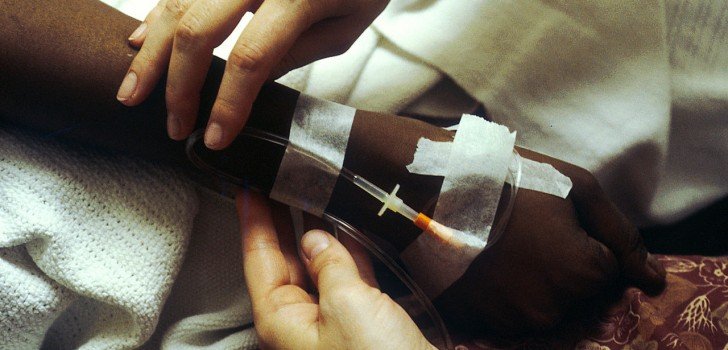
Chemotherapy is an unnecessary and possibly dangerous treatment for many women being treated for early stage breast cancer, according to a study released by New York’s Montefiore Medical Center.

The study, which investigated the value of gene-activity test Oncotype DX to gauge individual patient’s risk, says many women with early-stage breast cancer could skip the usually prescribed chemotherapy treatment without lowering their odds of beating the disease.

Study leader Dr. Joseph Sparano says the test identified a group of women whose cancers were so likely to respond to hormone blocking drugs that adding chemotherapy to their treatment would be of little, if any, benefit. Chemotherapy treatments would unnecessarily expose them to other health risks and side effects.

Independent observers including New York’s Memorial Sloan Kettering Cancer Center’s Dr Clifford Hudis agree.

The usual treatment for breast cancer is surgery which is followed by taking hormone-blocking drugs, often for many years. However, many patients were also encouraged to have chemotherapy in an endeavor to destroy any stray cancer cells that may have spread from the breast and could set in elsewhere. Doctors have known for some time that most women who have had surgery and are on a prescribed hormone blocking treatment don’t need chemotherapy, but up until now there had been no way to safely identify who.

Dr. Sparano said study participants who skipped chemotherapy had less than a one percent chance of cancer recurring elsewhere within the next five years.

Studies in the past have looked at how women classified as high, intermediate and low risk by the test have fared, but the new study also assigned treatment based on risk scores, and tracked recurrence rates.

Although full study results have not yet been released, independent monitors strongly recommended results of the low-risk group to be released, because it was clear that adding chemotherapy would not improve their success rate, and could in fact add other health risks.

Of the low risk group in the study, 99 percent had no breast cancer relapse after five years, 98 percent were still alive and 94 percent were totally invasive cancer free, including new cancers at other sites or in the opposite breast.

University of California breast cancer specialist Dr. Hope Rugo says “These patients who had low risk scores by Oncotype did extraordinarily well at five years. There is no chance that for these patients, that chemotherapy would have any benefit.”

Breast cancer survivor and advocate Mary Lou Smith, who helped design the trial said she thinks women “would be thrilled” to skip chemotherapy.

“Patients love the idea of a test to help reduce uncertainty about treatment”, she said. “I’ve had chemotherapy. It’s not pretty.”

The test used in the study costs $4,175, and is covered by many insurers and Medicare. Dr. Hudis said he hoped the new study results should encourage other manufacturers to compete on both price and accuracy.

“The future is bright for gene tests to more precisely guide treatment,” said Hudis.
Italians Allegedly Assassinate Immigrant Smuggler In Libya

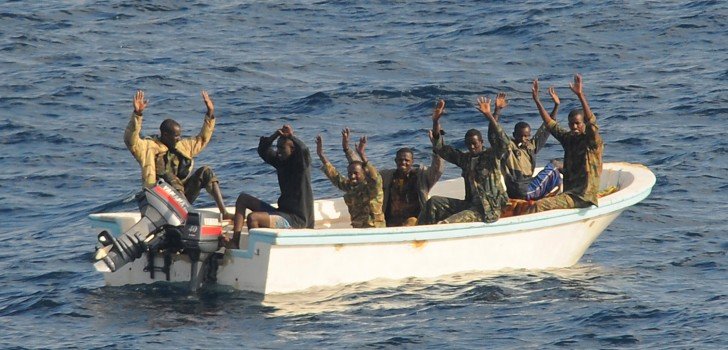
An Italian Special Forces unit is believed to have hunted down the largest people smuggler in Libya. The assassination allegedly took place on Friday in Libya’s capital city of Tripoli, near the city’s primary hospital.

Salah al-Maskhout was said to be the most prominent smuggler of immigrants in the Mediterranean. He was said to have been leaving an acquaintance’s residence when the shooting took place.

The Italian squad reportedly had four members that were armed with handguns. They supposedly used their vehicle to block Salah al-Maskhout’s car as he attempted to leave. Before he could get away, the squad killed him, along with others in his presence.

However, the accuracy of the story has been questioned by multiple parties.

Italy has denied the involvement of any of its country’s Special Forces in Libya.

Other people are claiming that Salah al-Maskhout was not the victim. People familiar with Salah al-Maskhout have stated that he is alive and well in Zuwara, a port city in eastern Libya that is known for immigrant smuggling.

Instead, it is speculated that Muhammad Salahuddin al-Maskhout was the victim. Muhammad Salhuddin al-Maskhout was a former official of the Gaddafi government. He controlled fishing territories that were located between Zuwara, Sicily, and Tunisia. His family reportedly has a large influence over the area near the Mellitah oil and gas complex, which represents the starting point of the Greenstream pipeline. This pipeline is operated by an Italian company called Eni.

Furthermore, last July, four Italian construction workers were taken hostage in the area. Negotiations for their release are ongoing. The attack could have taken place by the Italians for negotiation revenge purposes.

Some people theorize that the attack against Muhammad Salahuddin al-Maskhout was conducted by the Italian mafia. This theory makes sense because the mob would want to control lucrative smuggling routes.

Representatives of the hospital’s medical staff have stated that they have only found projectiles used exclusively by Western Special Force units.

Meanwhile, Western powers have indicated their desire to stop the smuggling of immigrants in Libya, as European Union Foreign Policy Chief Federica Mogherini said last Thursday that a second phase of operations against immigrant smugglers would soon commence.

The EU has recently been taking a harder stance against immigration, as estimates from the United Nations show that 129,000 immigrants have arrived in Europe from Libya this year alone.

Switzerland Launches Investigation Into Manipulation Of Precious Metals Pricing

WEKO, the Swiss competition watchdog, has just launched an investigation to determine whether several major banks have colluded to rig the precious metals market, including the pricing of gold, silver, platinum and palladium.

Since 2013, Switzerland’s Financial Regulatory Authority, known as Bafin, has scrutinized global precious metals trading. Back then, the organization suspected Deutsche Bank of manipulating gold and silver benchmarks. Even though the investigation “went away,” manipulation accusations did not.

WEKO has stated that it is investigating UBS, Julius Baer, Deutsche Bank, HSBC, Barclays, Morgan Stanley and Mitsui into whether they conspired to set bid/ask spreads. WEKO stated that it “has indications that possible prohibited competitive agreements in the trading of precious metals were agreed among the banks mentioned.”

The group also indicated that it would conclude its investigation in either 2016 or 2017 and that it could add more banks to its list if it has cause for suspicion.

The move comes at a time when European Commission and United States authorities are investigating at least 10 major banks for possibly rigging precious metals markets.

Brian Lucey, professor of finance at the School of Business, Trinity College Dublin, opines that the precious market price manipulations likely will not tank the industry. “The question is not if individuals, or groups of individuals are collaborating to rig the game for themselves, the question is if this has any material effect. I’m not convinced collusive behavior will have a meaningful effect micro-economically to the structure of gold trading around the world.”

What the actual effect is of the alleged manipulation in prices remains to be seen.

Copyright Laws Prevented Massive Volkswagen Scandal From Being Uncovered

Researchers might have been able to expose the recent emissions scandal by Volkswagen sooner if they hadn’t been stopped by copyright protection laws.

Under the Digital Millennium Copyright Act, independent researchers are forbidden from examining the codes that control the function of a vehicle unless they have permission from the manufacturer. While this protects automotive companies from having their technology stolen by other companies, it also makes things difficult for people to locate problems in the vehicles in terms of safety or security.

Car manufacturers such as Volkswagen can use the DMCA to their advantage. With copyright laws on their side, they are able to hide their corner-cutting practices. Since independent researchers are not able to examine the codes of a vehicle, they are unable to see things like how much pollution the vehicles generate.

Volkswagen knew this when it developed more than 11 million of its diesel vehicles worldwide that were equipped with a cheating device that hid the amount of pollution that its vehicles generated. While inspectors thought that the vehicles were compliant with standards issued by the Environmental Protection Agency (EPA), they were actually generating pollution in excess of forty times the allowable amount.

Shockingly, the EPA asked the Copyright Office to oppose exemptions to current copyright laws for research purposes. The EPA wanted these laws to remain in place in order to prevent practices concerning the modification of vehicles. Most of such modifications have nothing to do with pollution levels or the environment. Basically, the EPA is undermining its own ability to regulate vehicles.

While copyright laws are important for ensuring fair competition between companies, they should not prevent independent researchers from trying to understand exactly how a device functions and whether or not that device is safe. Had researchers been able to examine the diesel engines from Volkswagen, this recent discovery could have been made years ago.

As for Volkswagen, the German company has lost nearly $26 billion in market value since word of the scandal leaked out to the public. Martin Winterkorn stepped down as the company’s CEO, and has since been replaced by Porsche CEO Matthias Mueller. Germany recently announced that it is opening a criminal investigation against Winterkorn. The car company has a long road ahead in order to repair its tarnished image and regain the trust of the public.

CNN Expands Democrat Debate Criteria So That Biden Can Participate If He Chooses

In an effort to spice up the anticipation for the first debate between Democratic presidential hopefuls, and to the dismay of Hillary Clinton, CNN has announced its debate criteria- which allows Vice President Joe Biden to participate should he declare his run for president by October 14th.

In order to qualify for participation in the debate, co-hosted by CNN and Facebook, candidates must have achieved 1% of projected votes as measured by three CNN-recognized polls. This means that Biden can announce his candidacy on the day of the debate and still participate.

By formulating this criteria, CNN can expect some buzz leading up to the debate and it also can open the stage to more than just Clinton and Bernie Sanders, the two leading candidates. Other candidates who qualify include Martin O’Malley, Jim Webb and Lincoln Chafee.

The differences between the criteria for the Democratic and Republican debates illustrate just how dissimilar the two lineups are.

For example, while debate hosts must expand their requirements in an effort to include more than two Democrat participants, they must tighten their requirements in an effort to shrink the field of Republican debaters.

Former communications director for the Democratic National Committee (“DNC”), Mo Elleithee, points out that, “It’s a little bit of an issue, a little bit of a conundrum, for very different reasons than the Republicans. The reality here is: what kind of criteria do you set that actually gets all the credible candidates on stage in a field right now, where a lot them just aren’t registering in the polls?”

Democrat frontrunner Clinton launched her Presidential bid in April through a video on social media where she stated that, “Everyday Americans need a champion, and I want to be that champion – so you can do more than just get by – you can get ahead. And stay ahead. Because when families are strong, America is strong. So I’m hitting the road to earn your vote, because it’s your time. And I hope you’ll join me on this journey.”

Sanders announced his run by stating that the United States needs a “political revolution” of middle, working-class Americans so they can take control of the government from billionaires.

Biden, on the other hand, has publicly struggled with his decision on whether to join the primary. Many Democrats hope he will get in the race as public support for the Clinton campaign seems to continually decline as a result of her email scandal.

The debate will be held on October 13th at 9:00 p.m. EST.

Deceptive Practices By Mortgage Lenders Continue Despite Agreement To Stop

It appears that the United States’ largest mortgage lenders are violating the terms of a 2012 settlement that it made with federal and state governments. The punitive, or punishment, settlement was meant to prevent unfair, deceptive and unnecessary foreclosures by lenders. Many say these troubling practices continue despite the settlement and as a result, tens of thousands of homeowners are suffering.

Following the 2007 financial meltdown, the real estate market was soon in crisis. Record numbers of homeowners sought assistance from their lenders in order to stem off foreclosures. In response, many of the lenders took advantage of the situation in a number of ways.

One particular abuse that angered just about everyone included the practice of “double tracking.” Essentially, banks continued to accept monthly payments from homeowners while quietly filing paperwork to foreclosure their homes. The practice is still going on, and more and more cases are heading to court.

Greater than 60,000 complaints have been filed across the country since the beginning of 2014. According to the most recent data from CoreLogic, there are greater than 469,000 United States homeowners that are in some stage of foreclosure proceedings and there are another 1.3 million people who are delinquent on their loans.

Many people are attempting to modify their mortgage and are frequently met with responses from the bank that claim homeowners’ signatures are not cursive enough or are missing their middle initial. Other lenders say that some of the borrowers’ paperwork is missing despite numerous attempts to send and resend the documents.

Many lawmakers realize that minimal oversight over lenders’ practices is the cause for the current crisis, as government agents only audit a tiny percentage of the total servicing practices.

Yet the number of borrowers seeking help continues to overwhelm banks. And the banks are pushing back hard. When questioned about practices like requesting “more cursive” signatures, etc., a Bank of America spokesperson responded that, “Other than meeting program and investor guidelines for file accuracy and completeness, there is absolutely no logical reason that the bank, as servicer and representative of the investor, would do anything to delay the conversion of an approved and fulfilled trial modification to permanent status.”

Homeowners disagree.

Glencore Losing Massive Amounts of Money Could Spell Its Demise

Commodity trader and mining company Glencore lost as much as one-third of its value today, representing the company’s single largest one day decline since it made its initial public offering in 2011. The company has lost over 77% of its market value this year, and it’s presently the worst performer in the FTSE 100 index. Shares for the company are currently at an all-time low.

Severe concerns over weak commodity prices have resulted in Glencore’s catastrophic decline. One investment bank issued dire warnings on the risk for the company’s earnings outlook. It’s no surprise that its shares are plummeting at an alarming rate.

CEO of Glencore Ivan Glasenberg saw his 8.4% stake in the company fall below $1 billion in value for the first time ever.

The company has performed dreadfully this year. Part of the reason is its massive amount of debt. Glencore has twice the amount of debt of its market capitalization of $16 billion.

Meanwhile, hedge fund managers are loving the commodity trader’s decline, as short-selling the company’s shares has been one of the most successful European trades this year. Short-selling Glencore is somewhat of a bet against China, as the company deals heavily in copper, one of China’s main building-blocks in its efforts to industrialize.

Investors have stated that they will continue to short-sell the company’s shares, expecting the pains experienced by Glencore to continue for the foreseeable future.

Glencore is already $30 billion in debt, and the company has stated that it will not provide dividends for shareholders for at least the next year. Additionally, the company is preparing to sell assets in order to cut down its debt.

The company will undoubtedly face more trouble in the future if commodity prices don’t increase in value soon.

Market analyst Hunter Hillcoat says, “If commodity prices don’t appreciate, where does that leave shareholders? At current spot prices, all else being the same, Glencore’s equity value is zero.”

As growth in China has slowed, the entire commodity-trading sector has suffered. China is the world’s largest importer of raw materials, and the industry is extremely dependent on the expansion of the world’s most populated nation.

Four years ago, Glencore had a market capitalization of $60 billion. The company has declined by 46% since it issued $2.5 billion in stock just two weeks ago. The most recent offering was a failed attempt to reduce its debt.

Analysts have forecasted a pathetic amount of just $8 billion in earnings for the dying company by the end of the year. Glencore says that plans to reduce its debt by one-third before the end of 2015. However, analysts have their doubts.

U.S.-China Deal To Ban Ivory Trade Is Major Blow To Poachers

A major blow has been delivered to the illegal ivory trade with the announcement that China and the United States will co-operate to enact “nearly complete bans” on the import and export of ivory.

Conservationists say the agreement between China’s President Xi Jinping and U.S. President Barack Obama, is the “most significant step yet” to close down an industry that has put elephants at risk of becoming an endangered species.

China is the world’s largest consumer of the ivory trade, which conservationists say is responsible for the slaughter of 30,000 African elephants each year.

Conservationists say the agreement is particularly encouraging as it shows that China is prepared to follow through with the promise it made in May to come down hard on its domestic ivory trade which is driven by many of China’s growing middle class who see ivory as a status symbol. They say the agreement is especially significant because the Chinese government controls, and has for many years “essentially encouraged”, the ivory trade in the country as an income source.

An already near-total ban on commercial ivory already exists in the U.S. where commercial imports of African elephant ivory, including antiques, are prohibited. California has a total ban on ivory sales and other States are considering following suit.

The Humane Society of the United States says the agreement between China and the U.S. is the first time leaders of the two countries have ever worked on a major animal conservation issue.

In a released statement, the Society says the illegal ivory trade has been linked to terrorists and organized crime. With the Chinese and U.S. agreement, wildlife trafficking has been elevated “into the diplomatic discourse among the world’s most important global political leaders.”

The executive director of the non-profit group WildAid, Peter Knights says the agreement “should have a profound effect” on elephant poaching.

He says “The fight will carry on, but this is probably the largest single step that could have been taken” adding that the agreement also puts “Hong Kong under notice” where the “legal commercial trade often provide cover for those seeking to launder illegal ivory.”

United Nations Wishes To Censor World-Wide Internet

Maybe not intentionally, but the United Nations has taken sides in an ever-growing debate about the future of the Internet and the possible censorship of the world wide web. In a report released by the UN’s Broadband Commission for Digital Development, it issued a “world-wide wake-up call” to what it is has termed “cyber VAWG,” otherwise known as violence against women and girls.

The implications of the UN’s proposals are enormous. Essentially, the organization is attempting to transform the Internet from a network of complete freedom of expression to a watered-down version that enforces social commons.

The United Nations has proposed proactive policy changes for both social networks and governments alike to combat online harassment.

Presently, platforms such as Twitter and Facebook (in addition to thousands of others) are governed by United States law. As it stands, such platforms generally cannot be held liable for what people do on them. However, the UN proposes that these platforms proactively monitor and police every user’s profile and posts. It further proposes that government agencies only provide “licenses” to those companies who agree to do so.

The report reads that, “The respect for and security of girls and women must at all times be front and center.” This applies to those “producing and providing the content” as well as those with any ability to provide a “technical backbone and enabling environment of our digital society.”

The report does not provide specific steps or ideas as to how to make its proposals work. The report, however, does stress that social networks and governments need to create stronger anti-harassment policies – and enforce those policies.

The report concludes by stating that “political and governmental bodies need to use their licensing prerogative” to apply moral standards in protecting human and women’s rights. It should only grant licenses to “those Telecoms and search engines” that “supervise content and dissemination.”

Essentially, the UN is proposing that online platforms should be responsible for their users’ actions and for ensuring those users are not harassers.

Obviously, the protection of human and women’s rights is incredibly important. But, the UN’s proposals affect so much more than those rights. It essentially tries to insert its values that it believes the Internet should protect – and makes those failing to protect these values liable.

In reality, the proposals are essentially unfeasible. Persuading social networks to monitor and police everything that is posted is simply impossible. And, even if it was possible, there are major implications for free speech and innovation.

Basically, the exemptions given to online platforms allowed these platforms to come into existence. Taking away such exemptions – and making governments hold licenses hostage – would have extreme negative implications on how the Internet presently operates.

Fidgeting Can Help Offset A Sedentary Lifestyle

According to a new study, fidgeting throughout the day is good for your health. While it cannot come close to replacing traditional exercise completely, a little bit of fidgeting is a small part of a healthy lifestyle.

Sitting all day is bad for your health, and the same can be also said for standing all day. However, brief moments of fitness, such as fidgeting, are positive influences to your health.

By wiggling in your chair, shuffling your feet, and clicking pens, you are burning some calories, remaining active and maintaining good health.

We humans have experienced a major shift in behavior with our adoption of sedentary office lifestyles. Gone are the days of hunting and gathering, when our species was required to remain extremely active. Now we waste our lives away, sitting at desks and staring at computer screens.

However, fidgeting can assist in this dramatic transition, as it is believed to help our minds cope with our newfound ability to be lazy. Without little actions such as drumming our fingers or kicking our feet, many office-dwellers might have excess levels of energy that would drive our minds crazy.

One study on fidgeting followed 14,000 middle-aged women in Great Britain. Women that reported lower levels of fidgeting had the highest rate of death. Women that fidgeted on a regular basis were found to be more likely to live longer.

Study co-leader from the University of Leeds Janet Cade said, “While further research is needed, the findings raise questions about whether the negative associations with fidgeting, such as rudeness or lack of concentration, should persist if such simple movements are beneficial for our health.”

This is not the first study to indicate that fidgeting is a healthy practice. One study from 2011 found that “incidental activity”, another phrase for fidgeting, improves one’s overall level of fitness. Meanwhile, another study found that overweight and obese women were less likely to fidget on a regular basis than women of a healthy body weight.

So the next time you find yourself squirming in your seat or tapping your feet, don’t stop; keep going!

Saudi Arabia Is Going Broke Because Of Declining Oil Prices

Financial troubles are looming in Saudi Arabia, as the country has taken nearly $70 billion from global asset managers in an attempt to curb its budget deficit.

The country is attempting to stop the decline of its finances, as oil prices have fallen by 50% during the past year. Saudi Arabia is one of the largest oil producers in the world, and it represents roughly 80% of the country’s revenue.

The foreign-held reserves of the Saudi Arabian Monetary Authority (SAMA) have fallen roughly 10% since their $737 billion peak in August of 2014. These reserves stood at $661 billion as of July. In order to help maintain spending, the Saudi Arabian government is accelerating bond sales.

CEO of the Dubai-based company Insight Discover Nigel Silltoe said, “Fund managers we’ve spoken to estimate SAMA has pulled out between $50 billion to $70 billion from global asset managers over the past six months. Saudi Arabia is withdrawing funds because it’s trying to cut its widening deficit and it’s financing the war in Yemen.”

Silltoe refused to name the fund managers in question.

Dumping its foreign-exchange reserves is a rather unusual trend for the historically progressive country of Saudi Arabia. However, economists are not surprised by the country’s recent actions.

Economist Jason Tuvey said, “Foreign-exchange reserve depletion, rather than accumulation, is the new reality for Saudi Arabia. None of this should come as much surprise, given the current-account deficit and risk of capital flight.”

Because of Saudi Arabia’s major dependence on oil, the budget deficit of the country might increase to 20% of its gross domestic product (GDP) this year. SAMA is planning to raise somewhere between $24 billion and $27 billion in bonds prior to the end of this year. The country is trying to shift its economy somewhat away from oil in an attempt to diversify.

However, analysts are worried that Saudi Arabia’s dumping of foreign-exchange reserves to avoid additional cost-cutting could harm the country’s credit rating. The government of Saudi Arabia has been unclear on how exactly it plans to cut spending. Some possible plans include cutting fuel subsidies and investing capital into renewable energy sources.

Capital in Saudi Arabia has been continuously depleted because of oil subsidies, its military efforts in Yemen, and public hand-outs. The International Monetary Fund (IMF) estimates that the budget deficit in Saudi Arabia will exceed $108 billion by the end of this year. About 30 million people live in Saudi Arabia.

Meanwhile, other countries in the region are experiencing great financial success. Qatar plans to invest roughly $35 billion in the United States during the next five years, as the country wants to distance itself from deals in Europe. The country also plans to engage in a $10 billion investment with the Citigroup of China. Qatar is the world’s richest country per capita, and it is predicting a budget surplus by the end of the year.

Lawsuit Between Anti-Whaling Ships Sea Shepherd And Ady Gil Reaches Conclusion

The drama that began when anti-whalers scuttled a fellow anti-whaling vessel in the Southern Ocean in 2010 finally reached a conclusion. An arbitrator ruled that the Sea Shepherd “acted wrongly” when it scuttled a fellow ship without first contacting its owner.

In January 2010, the anti-whaling Sea Shepherd and the Ady Gil were sailing on the Southern Ocean in an attempt to stop the whaling ship, Shonan Maru #2, before the Japanese ship could catch and kill hundreds of whales.

However, during the scuffle between the ships, the Shonan Maru destroyed the Ady Gil. What followed became the issue in a lawsuit between the Ady Gil’s owner, animal activist Ady Gil, and the Sea Shepherd. Rather than attempt to salvage the Ady Gil, the Sea Shepherd’s crew decided to scuttle the ship – and did so without contacting Mr. Gil. The drama was captured on film for Animal Planet’s “Whale Wars.”

In making her decision, arbitrator Jean Kalicki took into consideration testimony by engineers that stated that while the Ady Gil was disabled by the Shonan Maru, it was not in danger of fully sinking. She further determined that the Sea Shepherd abandoned the ship for television ratings.

“[The Sea Shepherd’s crew] nonetheless concocted and implemented a secret plan to scuttle the vessel, for their own reasons and without consulting the vessel’s owner. This decision was not made for the primary reason of reducing navigational hazards . . . but for the purposes of continuing their mission and more fundamentally maintaining the high drama that they believed the Whale Wars audience had come to expect, and on which [the Sea Shepherd’s] own popularity (and potential future fundraising) in part depended.”

The arbitrator was particularly harsh on Sea Shepherd founder, Paul Watson as she found his testimony evasive, contradictory and lacking genuineness. As for Gil, she found that his testimony appeared genuine.

In siding with Mr. Gil, the arbitrator awarded him $500,000 in compensatory damages plus interest beginning January 8, 2010 onward.

Mr. Gil stated that he is happy with the decision and that he “cared more about the truth which came out, than the money.” He further stated that the compensatory damages he received will go back into his foundation to help animals.

As far as the Sea Shepherd, it released a statement that, “As Sea Shepherd has always maintained, responsibility for the loss of the Ady Gil lies with the Captain of the [Shonan Maru], who destroyed the ship without consequence. Sea Shepherd has been pursuing the Japanese whalers in court to compensate for its loss of the use of the vessel and will continue to do so.”

Chinese Leaders Hosting UN Gender Equality Meeting Called Shameless

The hosting of yesterday’s United Nations (UN) meeting on women’s empowerment and gender equality by Chinese leader President Xi Jinping and UN Secretary-General Ban Ki-moon has been called a major hypocrisy by some western diplomats and human rights defenders. One of the strongest critics is former U.S. Secretary of State and Democratic presidential candidate Hillary Clinton, who broadcast her feelings on twitter saying “Xi hosting a meeting on women’s rights at the UN while persecuting feminists? Shameless.”

The heads of 80 countries were at the meeting marking the 20th anniversary of the UN women’s conference in Beijing. The main thrust of the meeting was to push for the implementation of a 150-page action plan for gender equality – one of 17 goals adopted on Friday by the U.N’s annual gathering of world leaders.

Clinton as the U.S. first lady had attended the 1995 Beijing conference where her speech was one of the highlights. It included a line that has become a mantra for the women’s movement globally – “human rights are women’s rights – and women’s rights are human rights.”

Although Xi yesterday partly echoed Clinton’s 1995 words saying “women’s rights and interests are basic human rights. They must be protected by laws and regulations”, they were not met with the rousing response he may have hoped for.

Xi also said all Chinese women have the opportunity to excel, claiming his government had a stellar record on gender equality and women’s rights.

“As the Chinese people pursue a happy life, all Chinese women have the opportunity to excel in life and make their dreams come true,”

Samantha Power, the US Ambassador to the United Nations and a member of U.S. President Obama’s cabinet, said in a statement “If you want to empower women, don’t imprison them on the basis of their views or beliefs,”

Power over recent weeks has been pushing for the release of 20 women who she says have been unjustly detained around the world for their defense and beliefs of human rights. One of these is 71-year-old Chinese reporter Gao Yu, who in April received a seven year jail sentence for allegedly “providing state secrets to foreign contacts”.

China came under global condemnation in March for arresting five women who had planned to used International Women’s Day to demonstrate against sexual harassment on public transport. Although they were released from prison after serving a one month sentence, they say because they now have criminal records, they cannot take part in any activism without being jailed.

Human rights activists say Xi’s administration has jailed “hundreds” of human rights activists over recent years with some claiming this is “the worst clampdown on dissidents in China” for 20 years.

In a statement President Obama said “In too many places – from China to Egypt, from Russia to Venezuela – women have been swept up in repressive crackdowns on civil society, and deprived of their universal rights and fundamental freedoms.”

Xi hit back at critics, saying under its “basic state policy”, China would do even more to enhance gender equality, throwing out a challenge to “developed countries” to “scale up financial and technical assistance to developing countries”. To demonstrate, he and his government are prepared to put their money where their mouths are. Xi said China would make a $10 million donation to the UN’s gender equality organization UN Women, to “support women’s development worldwide”.

Li Junhua, the director general of China’s foreign ministry’s department of international organisations and conferences called the criticism groundless and based on misinformation.

“I believe the people in the best position to judge the state of women’s issues in China are Chinese people, particularly Chinese women,”

The five female activists jailed for their proposed International Women’s Day protest, released a statement saying “We sincerely hope … President Xi can lead by example.”

Major Criminal Investigation Has Been Opened On VW’s Winterkorn

The watch for former Volkswagen CEO Martin Winterkorn to receive criminal charges is on, as German prosecutors have officially opened a criminal investigation. Volkswagen recently admitted to using cheating devices to mislead officials about emission outputs in more than 11 million of its diesel vehicles.

The investigation focuses around fraud, as the company marketed its cars as “clean diesel”. The vehicles were said to have output as much as forty times the amount of emissions allowed by the Environmental Protection Agency of the United States. The goal of the investigation will be to try and determine who exactly was responsible for attempting to cheat regulations.

Volkswagen has stated that they plan to fully cooperate with authorities in the investigation.

The investigation comes five days after Winterkorn resigned as CEO. The scandal depleted $25.7 billion from the market value of Volkswagen.

Additionally, the incident has caused widespread concern throughout the automotive industry. BMW recently lost market value due to public fear that their diesel motors had also been affected. However, German officials have stressed that the scandal has not spread beyond Volkswagen.

Switzerland recently banned the sales of affected models from the German car company. Meanwhile, regulators in Germany said that the company must provide a solution for the 2.8 million affected vehicles in their country, or else they will be taken off the German streets.

Porsche CEO Matthias Mueller took over as Volkswagen CEO last Friday. Mueller will certainly need his decades of experience in the automotive industry, as he attempts to guide the automotive company through this very troubling period and repair its tarnished image.

Representatives from Volkswagen have not commented on the criminal investigation.

Volkswagen lost as much as 8.2% in the German stock market on Monday. The company has lost 39% of its value since the scandal became public on September 18.

Shell Gives Up Major Oil Search In Alaskan Waters

Shell is going to stop looking for oil in the arctic of the United States, as the oil company has not located any significant oil wells after spending $7 billion to conduct a search for natural resources in waters off of the coast of Alaska.

As a result of the failed exploration, Shell shares decreased by as much as 1.4%. As such, analysts have a mostly negative outlook for Shell stock this quarter.

French analyst Ahmed Ben Salem said, “This could be negative for third-quarter earnings because of potential impairment charges. On the other hand, in a $50 oil-price environment it’s not so bad to abandon that search because it’s expensive. Shell has enough resources already.”

Shell was looking for resources that it believed were as much as ten times as large as the amount of oil and gas produced in the North Sea.

The company faced criticism for exploring in the Arctic. Activists from the environmental group Greenpeace occupied the drilling rigs of the company.

Shell and other oil companies are planning to reduce spending since the price of oil has fallen by about 50% during the past year. There currently exists a global oversupply of oil.

Director of Shell’s Upstream Americans unit Marvin Odum said, “This is a clearly disappointing exploration outcome. While indications of oil and gas were present in the Burger J well in Alaska’s Chukchi Sea, they weren’t sufficient to warrant further exploration.”

The company had planned a drilling program that would last two years, starting in July of this year. Shell was attempting to continue work that had stopped in 2012 when the company’s primary drilling rig ran aground and was lost. As a result of air pollution violations, the company was fined by regulators.

The company’s decision to stop exploration in the region reflects both the high costs involved and the ever-changing federal regulatory environment that exists in offshore Alaska. Shell received approval for its drilling in May. Oil and gas were first discovered in the Alaskan region in the late 1980s.

Protesters from various environmental organizations have met Shell’s drilling plans with strong opposition. Last May, shareholders of Shell questioned why they should support an effort that might pollute waters and harm sea creatures.
As such, the leaders of the environmental organizations are pleased with Shell’s decision to stop drilling.

Greenpeace Executive Director in the UK John Sauven said, “Big Oil has sustained an unmitigated defeat. The Save the Arctic movement has exacted a huge reputational price from Shell for its Arctic drilling program. And as the company went another year without striking oil, that price finally became too high.”

Oil producers discovered more than 10 billion barrels of oil in the seas of the North American Arctic since the early 1970s. However, more of the resources in the region are locked under the sea floor. Pipeline capacity is unable to carry the oil to distant markets.

War Continues Between Streaming Services And Cable/Satellite Companies

It’s another disconnect between cord-cutters and traditional cable/satellite companies. More and more people who presently subscribe to cable and satellite are faced with the annoying requirement to rent their set-top boxes for nine dollars per month in some places. Now, the United States Federal Communications Commission (“FCC”) is deciding whether to do something about it.

Many companies who stream services such as Google and TiVo opine that the FCC should restrict cable companies from forcing their customers to lease the boxes. They proffer that marketplace competition would both decrease costs and improve the functionality of the devices. For example, by using boxes that could combine subscription channels with streaming services such as Netflix, only one remote control would be needed.

Chip Pickering, chief executive officer of the Comptel trade group (which includes members such as Netflix and Amazon) points out that, “Decades ago we ended the practice of forcing customers to lease a black rotary dial phone from Ma Bell. The archaic practice of forced leasing a set-top box from the cable company is a holdover from a bygone era.”

As suspected, the cable industry is doing everything it can to fight the possible transition. Already losing scores of cord-cutting customers, the industry is trying to right the ship. It is estimated that the cable industry makes about $19.5 billion annually in leasing fees.

And, as of right now, cable subscribers really do not have a choice regarding their set-top boxes. Approximately 99% of customers rent the boxes directly from the companies.

Some United States Senators, including Ed Markey of Massachusetts, are calling for a “new national consumer-friendly standard that will allow consumers to choose their own video box.” And, hopefully change will come as part of the FCC’s reviews of such standards.

Brian Dietz, a spokesman for the National Cable and Telecommunications Association Group provides the opposite view by questioning, “Do we want the federal government engineering a new TV device for consumers when the marketplace is clearly working? The market is working without government intervention.”

Is it?

As part of a task force convened the by FCC, the two sides could not agree on technical standards. The major point of disagreement: the group including streaming services believes that the standards should allow set-top devices to organize programs however they want. If that happens, Google wins. If the FCC goes with what what cable companies want, consumers would use apps approved by subscription providers to buy cable/satellite-TV programs.

Both sides are pressuring the FCC to make a decision. However, it is likely that the FCC will take its time. Until then, the battle continues to rage between the two very differing schools of thought.

Iran To Sue Saudi Arabia Over Hajj Pilgrimage Deaths

Iranian officials say they will use international legal resources to sue Saudi Arabia over the 717 deaths that resulted from a Haj pilgrimage stampede near the holy city of Mecca on Thursday, according to Iranian Prosecutor General Ibrahim Raeesi.

He said more than 130 Iranian pilgrims were killed in the stampede which has been described as the worst Haj disaster in 25 years.

Middle East watchers say Raeesi’s announcement, which comes on top of condemnation of Saudi Arabian officials by the Iranian Government, will do little to ease the tension that already exists between Saudi Arabia and Iran, who are on opposing sides in the bloody conflicts in Syria and Yemen.

Iran’s deputy foreign minister for Arab-African affairs, Hossein Amir-Abdullahian, said “The absence of accountability regarding the Mina disaster by Saudi officials is unacceptable. Saudi officials must not attribute the mismanagement by those in charge of the Haj rites to fate.”

Iran’s Supreme Leader Ayatollah Ali Khamenei has declared three days of national mourning for not just the Iranians killed, but also the other pilgrims. Khamenei has blamed mismanagement by Saudi Arabian authorities for the tragedy.

Saudi Arabia’s King Salman said he has told authorities to review all arrangements for pilgrims, while his interior minister and son, Crown Prince Muhammad bin Nayef, has called for an official investigation into the incident.

KIng Salman has conceded there is a need “to improve the level of organisation and management of movement” of pilgrims at the annual Haj.

Thursday’s disaster, was the second surrounding the Haj this month. Two weeks ago a crane collapsed and killed over 100 people at Mecca’s Grand Mosque.

Suleiman al-Amr, the head of Saudi Arabia’s civil defence authority said high winds during a storm caused the crane disaster.

Crowd control experts have said for several years that something must be done to reduce the numbers of pilgrims allowed to take part in the Haj each year.

Marines Relocating To Asia-Pacific To Discourage Chinese Expansion

The United States Marine Corps is planning to relocate nearly 15% of its service personnel in order to counter China’s increasing presence in the South China Sea. Nearly 30,000 Marines will be involved in this relocation.

The Marines have 190,000 members that specialize in expeditionary warfare. The military branch is usually mobilized for regional conflicts or for the quick delivery of combined-arms task forces with the United States Navy.

The purpose of this relocation is most likely to reduce the reaction time of American forces in situations that could arise in the Asia-Pacific region of the world. It is said to represent a major component of President Barack Obama’s “Asia Rebalancing” strategy.

Meanwhile, the Marine Corps have mentioned land reclamation activities by China, as well as the country’s constructions on disputed islands that are located in the South China Sea. By placing military personnel in the area, the United States will be ready to potentially engage China if the country continues to unnecessarily expand its territory.

Additionally, the United States is also monitoring other activities going on in the region, such as North Korea’s development of its nuclear program and the increasing amount of Russian aircrafts in Japanese air space.

Elsewhere, it has been reported that the four major strategic weapons of America will be placed either in South Korea or at the United States naval base in Guam by next month. This should serve as a warning to North Korea not to conduct any more nuclear tests.

The four strategic weapons include nuclear powered aircraft carriers, B-2 stealth bombers, F-22 stealth fighters and nuclear submarines.

In August, three B-2 stealth bombers were relocated to Guam. Meanwhile the USS Ronald Reagan aircraft carrier and two F-22 fighters are scheduled to arrive in South Korea next month. Furthermore, the RQ-4 Global Hawk drone should be put on display at the Seoul International Aerospace & Defense Exhibition that takes place from October 20 to 25.

Earlier this month, China reportedly constructed an airstrip on its artificial island of Mischief Reef. This airstrip is the third one that China has constructed in the South China Sea.

Indian Ride-Request App Ola Receives Funding From Didi Kuaidi

Ride-sharing apps are continuing to achieve major success throughout the globe, and India is no exception with its ride-sharing service called Ola.

The Chinese ride-sharing service Didi has joined forces with investors in order to fund Ola. Some of the investing companies include GIC, Falcon Edge, Tiger Global, and Softbank.

Earlier this month, Didi put $3 billion into Ola. The company also invested $100 million into United States ride-sharing service Lyft, and Didi was part of a $350 million financing round supporting Southeast Asian service Grabtaxi.

Many consider these investments by Didi to be a way of undermining Uber, which is its biggest competitor. Lyft and Grabtaxi are the biggest challengers to Uber in their regions as well.

Ola presently maintains an 80% share of the ride-sharing market in India. The company has more than 320,000 vehicles in 100 Indian cities and offers 750,000 rides on a daily basis.

Recently, Ola announced a $754 million expansion designed to increase its presence in India. The company hopes to raise its driver numbers by 100,000 before the end of next year with a $75 million initial investment.

Meanwhile, Didi is dominating the online transportation service industry of China. The company currently represents the vast majority of both taxi and ride-on-demand services in the country.

Didi has also increased its offerings to the public. Customers can now request customized shuttle services and carpooling services. Such offerings are a way for Didi to compete against Uber. They also help to lessen conflict with domestic regulators who question the legitimacy of ride-on-demand services.

According to Didi CEO Cheng Wei, the company is currently valued at $16.5 billion. The company has received funding from some of China’s largest sovereign wealth funds, including China Investment Corp. and Ping An Ventures.

Meanwhile, ride-requesting services have been under fire in other countries. Belgium recently banned UberPop, joining France and the Netherlands as countries that have outlawed the service.

China has also been rather harsh against ride-sharing services, threatening to suspend the licenses of anyone caught using Uber to provide taxi services.

New Research Provides Hope For Those With Lung Disease

It seems backwards. Some smokers will never get lung cancer, yet some who have never touched a cigarette have the genetic makeup that predisposes them to get lung cancer. New research sheds some light as to why people seem to have healthy lungs despite years of smoking and why some non-smokers will likely get the disease.

In a study conducted in the United Kingdom, researchers analyzed the DNA of greater than 50,000 people. The analysis indicated that favorable mutations in individuals’ DNA improved and enhanced lung function, thereby masking the deadly effects of smoking.

And, although scientists emphatically state that not smoking is always the best option, the research will hopefully lead to the development of more targeted drugs that will improve lung function.

Researchers focused on Chronic Obstructive Pulmonary Disease (“COPD”) which affects people’s ability to breath, increases coughing and causes repeated chest infections. The disease affects millions of people and encompasses other diseases such as emphysema and bronchitis.

In the study, smokers and non-smokers were compared in addition to those with COPD and those without the disease. Through comparison of the DNA, researchers discovered portions of the DNA genome that reduces the risk of COPD.

Essentially, smokers with “bad genes” had a much higher risk of developing COPD than those with “good genes.”

Professor Martin Tobin, one of the researchers, indicated that the specific genes in question seemed to directly affect the way lungs develop and how they respond to injury (including infections.) In an interview about the subject he stated that, “There doesn’t appear to be any kind of magic bullet that would give anyone guaranteed protection against tobacco smoke – they would still have lungs that were unhealthier than they would be had they been a non-smoker.”

He further pointed out that, “The strongest thing that people can do to affect their future health in terms of COPD and also smoking-related diseases like cancer and heart disease is to stop smoking.”

The researchers also discovered something interesting. They learned that there were portions of the genetic code found more commonly in smokers than non-smokers. Essentially,they determined that these genes altered the brain’s function – and how easily an individual can get hooked on nicotine.

Tobin stated that this discovery offered “fantastic new clues about how the body works that we really had little idea about before and it’s those things that are likely to lead to some really exciting breakthroughs for drug development.”

The head of research at the British Lung Foundation praised the new research and pointed out that, “These findings represent a significant step forward in helping us achieve a clearer picture about the fascinating and intricate reality of lung health. Understanding genetic predisposition is essential in not only helping us develop new treatments for people with lung disease but also in teaching otherwise healthy people how to better take care of their lungs.”

Virgins Are Giving Birth Through The Miracle Of IVF

Virgin women are now able to give birth, thanks to the wonders of in vitro fertilization (IVF). Four major fertility organizations in Great Britain have produced successful births using the method. Doctors say that there have been at least 25 successful IVF births during the last five years.

The program has been a success for women who want to have a child now without engaging in sexual intercourse. It costs a woman around $10,000 to conceive a child using this method.

Some women are utilizing IVF because they want to save their virginity for the right relationship. Other women have a fear of sexual intercourse. Many of these women are only in their twenties. They often maintain ordinary jobs, or they are still in school. Some still live with their parents.

However, the fertility treatments have been criticized by certain religious groups. They believe that it undermines the importance of raising children in a traditional marriage.

Medical director Maha Ragunath says, “The number of single women I see has doubled over the last decade and single women now account for at least ten per cent of my patients.”

Ragunath has provided successful treatments for three virgin women during the previous three years. One required multiple rounds of IVF in order to achieve the desired result. Another was still living at home with her parents. The third was an ordinary nurse who simply didn’t want to wait around for the right man to come along.

Some of the British organizations offering this method of conception to women include: London Women’s Clinic, Create Fertility, and the Assisted Reproduction and Gynecology Center. The British National Health Service does not provide funding for this treatment.

Meanwhile, senior fertility counsellor at the London Women’s Clinic Tracey Sainsbury says that she saw an average of two virgin women a year who wanted to have a child using IVF.

“Some have never had a relationship, others have been in a relationship but never had sexual intercourse, some are single lesbian women; for others there may be psychological or medical reasons why they have never had sex,” she stated.

However, many people aren’t as approving.

For instance, pro-life campaigner Josephine Quintavalle said, “What is the child for these women? A teddy bear that they pick off the shelf? The message from nature is for a male and female to have a child, and I am saddened that we are willing to distort this.”

Additionally, many religious leaders are frowning at IVF conception.

Bishop James Newcome said, “The ideal is that a child has a mother and a father who are married to each other. All the evidence shows that is the best context for a child.”

Whether or not you agree with this revolutionary conception method, it’s hard not to be amazed at what science is able to accomplish in today’s day and age.

Iraqi Refugees Leaving Finland Saying It Is Too Cold And Boring For Them

The saying beggars can’t be choosy does not apparently apply to some of the refugees who have flooded into Europe recently. Hundreds of mainly Iraqi migrants who have traveled all through Europe to Finland, are leaving the country saying it is too sparsely-populated, cold and boring.

Finnish immigration authorities say they have also seen an increase in the number of cancelled asylum applications.

The refugees in recent weeks have been crossing back into Sweden at the Haparanda-Tornio border, which is an hour bus ride from the Arctic Circle. The border area is the most convenient crossing route into Finland as refugees who do not have proper travel documents are unable to take the ferries that run between Sweden and Finland.

A group of 15 male Iraqi refugees waiting for a bus to take them to Sweden from Tornio said they were not happy with what they had found in Finland.

“You can tell the world I hate Finland. It’s too cold, there’s no tea, no restaurants, no bars, nobody on the streets, only cars,” 22-year-old Muhammed told reporters.

“Finland is no good,” the other echoed.

But if some Iraqis are unhappy about being in Tornio and Finland, some locals are also wondering why they are there. “I don’t know why they come here when even our own people leave this town,” said resident Matti Alaviuhkola.

Esko Repo, the Finnish Immigration Service’s head of asylum applications, says Finland has registered over 14,000 asylum seekers so far this year, and he expects that number to rise to 30,000 by the end of the year – eight times more than last year.

But Repo says cancellations of asylum applications have risen and registrations are not being processed as fast as usual because of the recent influx of ” migrants”.
According to Repo, “by last week around 200 applications from Iraqi asylum seekers had expired,” which means the “applicant had either withdrawn it, or had disappeared”.

Media reports of Iraqis leaving Finland may slow the numbers of refugees wanting to enter Finland. Iraqis are also posting unflattering self-shot videos of Finland’s capital city Helsinki on an Iraqi migrant Facebook page to dissuade others from coming.

But still, according to officials, 500 migrants in average are arriving in Tornio each day, with 1,000 migrants being there at any given time, a number they say is stretching resources in the tranquil town of 20,000 full time residents.

Greenland’s Melting Ice Is Destroying Atlantic Current

Earth has been particularly hot in 2015, as the planet has experienced its highest ever recorded surface temperatures in the first eight months of the year, dating back all the way to 1880. The National Oceanic and Atmospheric Administration (NOAA) says that this year will break records for all-time high temperatures.

However, while most of Earth is unusually hot, there is one spot of the planet that is going against this trend. An area in the North Atlantic Ocean just south of Greenland and Iceland has been noticeably colder than usual. This region has even experienced record cold temperatures.

Scientists believe that this phenomenon has been caused by the slowing of the circulation of the Atlantic Ocean.

Last March, several climate specialists such as Stefan Rahmstorf of Potsdam and Michael Mann of Penn State published a research paper that stated that the major ocean current, the Atlantic Meridional Overturning Circulation (AMOC) has been weakening. The AMOC is often confused with the “Gulf Stream” current, but that is just the southern part of the current.

The current exists because of differences in temperature and salt content of the ocean water. Cold water with a high salt content sinks since it is denser. Hotter water that comes from the south moves to the north to take the place of the cold water. Along with the hot water comes a large amount of heat energy. However, a large input of cold water with a low salt content can stop this process from occurring. As a result, the circulation is weakened.

In the paper published by Rahmstorf and Mann, it is believed that a large input of cold water with a low salt content is coming from Greenland, which is rapidly melting. The icy country is losing over 100 billion tons of ice annually.

Mann said, “I was formerly somewhat sceptical about the notion that the ocean ‘conveyor belt’ circulation pattern could weaken abruptly in response to global warming. Yet this now appears to be under way, as we showed in a recent article, and as we now appear to be witnessing before our very eyes in the form of an anomalous blob of cold water in the subpolar North Atlantic.”

Rahmstorf added, “The fact that a record-hot planet Earth coincides with a record-cold northern Atlantic is quite stunning. There is strong evidence – not just from our study – that this is a consequence of the long-term decline of the Gulf Stream System, i.e., the Atlantic Ocean’s overturning circulation AMOC, in response to global warming.”

The scientists went on to state that they don’t believe that the area will remain unusually cold permanently. However, they do expect the AMOC to continue to weaken.

Rahmstorf had discussed this trend as early as last year, as he noticed that the same North Atlantic region was unusually cold that year as well.

“The North Atlantic between Newfoundland and Ireland is practically the only region of the world that has defied global warming and even cooled,” he said at the time.

The phenomenon has only continued since then. For now, it would be wise to keep an eye on this region to see if the trend keeps going.

Toronto 18 Member Citizenship Targeted By New Canadian Anti-Terror Law

As a result of an anti-terror law passed in 2014, Canada moved to revoke citizenship from one of the members of a terror group known as “Toronto 18.” Zakaria Amara, 29, was involved in a 2006 plot to stage a truck bomb attack against the Toronto Stock Exchange and Canadian Security Intelligence Service, and is the first target of the new law.

The law known as the Strengthening Canadian Citizenship Act has several controversial elements, but the portion targeting Amara came into effect in May 2015.

The National Democratic Party (NDP) and Liberal party are opponents of the new law, arguing that it is unconstitutional. As federal elections approach, leaders of both NDP and the Liberal party vowed to repeal it if elected. NDP leader Tom Mulcair stated, “No elected official should ever have the exclusive power to revoke Canadian citizenship. Under a Liberal government there will be no two-tiered citizenship. A Canadian is a Canadian is a Canadian.”

The new law is being challenged in Federal Court by the British Columbia Civil Liberties Association (BCCLA) in collaboration with former Toronto 18 member, Asad Ansari.

Conservative Defence Minister Jason Kenney countered, “If someone hates Canada so much that they’re prepared to demonstrate violent disloyalty to our country, they forfeit their citizenship. It’s a simple principle.”

Amara first raised the suspicions of authorities in 2005 as he trained with one other individual in an area north of Mississauga, Ontario. He hoped that through terrorist attacks, he could force Canada to withdraw troops stationed in Afghanistan.

Amara was sentenced to life in prison in 2010 as a result of the bomb plot, but the revocation decision this year does allow him 60 days to appeal. Under the law, only individuals who hold dual-citizenship can be targeted. Amara also holds Jordanian citizenship and may be deported there as a result of the recent action.

Conservative party members contend that the law would only target the worst of the worst. So far, less than a dozen Canadians have received notice that they are being considered for revocation.

Donald Trump Says Bible Is “Favorite Book”; Won’t Quote Favorite Verse

In an effort to court Christian voters, Donald Trump brought a bible to a gathering of conservative evangelical Christians. This action came from a man who once said that the bible is his “favorite book” and then refused to quote his favorite bible verse.

Going after evangelical Christians seems unusual for Donald Trump, as the businessman built his brand largely on casinos and beauty pageants. Trump himself is a Presbyterian, and is currently leading Republican polls. However, his fellow candidates are quickly reducing his lead.

The Republican Presidential candidate spoke on Friday in front of more than 2,000 social conservative leaders at an event in Washington D.C. The event also attracted fellow Republican candidates Mike Huckabee and Ted Cruz.

Trump once held a reputation as a womanizer, and has said in the past that he supported a woman’s right to have an abortion. Additionally, the fact that Trump is often calling Sunday morning talk shows suggests that he does not regularly attend church.

However, Trump maintains that the bible is his favorite book, but he once refused to quote his favorite biblical verse. This is rather unusual, as most regular readers of the Christian bible are happy to share their favorite verse.

Last June, Trump stated that he has never asked for forgiveness from God. He also described communion as his time to drink wine. As one would expect, many evangelical leaders have their doubts about Donald Trump.

Religious leader Russell Moore believes that the businessman’s candidacy is opposed to fundamental values of Christianity.

Moore said, “When one looks at the very serious moral character questions, from Trump’s involvement in the casino gambling industry all the way through to his attitude toward women, Donald Trump is the embodiment of everything that evangelical Christians have been standing against in American culture.”

Although doubters of Trump’s religious attitudes exist, the Presidential candidate is still working very hard to convince conservative Christians that he is legitimate. This upcoming Monday, Trump plans to host a group of evangelical pastors and bishops at the New York Trump Tower for a meeting of prayer.

And while some Christian leaders are skeptical of Trump, others are applauding his messages, which come at a time when many Christians believe that some followers are losing their values.

The billionaire has a history of supporting Christian causes. His foundation gave $100,000 to the Billy Graham Evangelist Association in 2012. He has also provided financial support to ministries throughout the country.

For now, Trump plans to continue his work to win the Christian vote.

Once Thought To Be Vegetarian, Study Shows Orangutans Eat Meat

The Bornean orangutan, long thought to have been strictly herbivore may in fact be an omnivore, according to a report published in the latest edition of Primates journal. The report written by University of Cambridge researcher Benjamin Buckley, follows observation of a wild male Bornean orangutan eating a squirrel in a remote forest in Borneo.

Buckley is head of a research project called Tropical Peatland, a joint research project of the UK’s University of Cambridge and University of Durham which has so far racked up 16,000 hours of orangutan observation time.

Herbivores are strictly plant eaters while omnivores eat both plants and meat.

Buckley says although another species of orangutan found in Borneo, the Sumatran orangutan, has been known to eat meat, this is the first time a Bornean orangutan has been seen eating any kind of meat since the Tropical Peatland project began looking into their lives in 2003.

Buckley says that just before researchers saw the orangutan devour a squirrel “he was acting aggressively, throwing branches and shaking trees.” When he calmed down to eat, he turned his back on the research team each time observers tried to see what he was eating.

“After a short while I managed to find a spot to watch him clearly,” says Buckley. “I saw that he had a squirrel in his hand, which he was tugging at with his teeth, and I could hear crunching noises as he chewed.”

Buckley says “The entrails of the squirrel were dropped but every other part of the carcass was chewed and swallowed, including bones, skin, fur and tail.”

The researcher say the squirrel most probably had not been hunted as “it is unlikely that a large adult male orangutan would be capable of chasing and catching a creature as agile as a squirrel,” adding that the orangutan may have “scavenged” a dead squirrel “opportunistically”.

What interested Buckley the most was the fact the orangutan ate the squirrel despite there being plenty of fruit to eat in the area. The other species of orangutan which live on the island of Sumatra, have been observed eating meat on five occasions since 1999, but only when fruit was scarce.

Durham University’s Adriano Lameira who has seen the Sumatran orangutans eating meat, says humans and orangutans share a common ancestor which lived an estimated 12 million years ago.

“This study puts us a step further in understanding what may have been the ‘ingredients’ of the first food cultures to emerge in our lineage,” says Lameira. “Such individual food preference can be passed on through generations, or spread horizontally across populations, giving raise to diet cultures.”

Microsoft Among Hundreds Of Companies Implementing Their Own Carbon Tax Programs

Microsoft is at the fore-front of a growing number of companies that are using a new form of business accounting known as “carbon pricing.” Each quarter, the price of carbon is factored into profit-loss calculations, along with a self-imposed tax on energy.

There are currently more than 430 companies participating in their own carbon pricing programs, a large increase over the 150 companies that were involved last year. These policies are partially an acknowledgement of the future risk posed by new carbon legislation.

As they pursue early adoption of these environmentally friendly policies, companies like Microsoft are taking the resulting tax proceeds to install renewable energy sources, including wind farms and solar panels.

The recent U.S. visit of Pope Francis has already been marked by frequent calls to action on climate change, a sentiment that President Obama shares. So far, no climate legislation has been passed by Congress, the last attempt being the Waxman-Markey Bill in 2009. That law would have imposed a cap-and-trade system in which carbon credits would be bought and sold by companies depending on their carbon emission levels.

Microsoft has made drastic improvements to its carbon footprint in the past three years, reducing carbon dioxide emissions by over 8 million tons. Through reductions in energy usage, it has been able to save over $10 million over the same period.

The director of environmental sustainability at Microsoft, Tamara DiCaprio, commented on the new program’s impact, “When we started talking about carbon emissions not in metric tons, but in terms of dollar amount, the business people could understand it. We’re all speaking the same language now: What is the cost to my group?” DiCaprio’s previous experience trading commodities for Merrill Lynch has her well-suited for her current role.

Depending on the amount of energy consumed by each business unit at the company, DiCaprio plans to offset the total energy usage through improvements in efficiency and renewable energy projects. These could range from more efficient lighting, to better controls for HVAC systems. The total cost of those investments is then equally divided among the business units based on their usage.

Companies like Microsoft are now doing what governments have so far been unable to accomplish, and as the United Nations Climate Change Conference in Paris approaches this December, even major oil and gas firms in Europe have voiced their support for a carbon tax.

Obama Avoids Chinese-Owned Waldorf Astoria Ahead Of UN General Assembly

Although Obama and Chinese president Xi Jinping have come to an “understanding” regarding state-sponsored hacking of corporate secrets, the agreement did not extend to traditional espionage activities between foreign governments. Illustrating the divides that will remain between the two nations after upcoming talks at the UN General Assembly next week, Xi decided to stay at the now Chinese-owned Waldorf Astoria, while Obama broke tradition by staying at the nearby Lotte New York Palace.

Following the Waldorf’s purchase last fall by the Angbang Insurance Group, the company announced its intention for a major renovation of the building. White House security became wary on the news, as a result of multiple instances of Chinese-backed cyber security breaches over recent years.

During the annual UN General Assembly, American Presidents have stayed at the Waldorf in a tradition dating back to UN’s founding.

Following the Waldorf’s transfer of ownership, U.S. delegates to the UN have also been ordered to avoid lodging there.

According to Council on Foreign Relations cybersecurity expert Adam Segal, these precautions are not unusual, “Countries have been known to exploit their connections. People build embassies and it’s happened before that other countries have found bugs hidden in the walls.”

Previous instances of spying included a clear case by the U.S. in 2002. Its delivery of a Boeing 767 to China was intended to serve as then-president Jiang Zemin’s version of Air Force One, with a full complement of eavesdropping devices, which were found upon the plane’s dismantling by Chinese personnel.

In light of the hotel’s change in ownership, U.S. ambassador to the UN Samantha Powers will also be vacating what had been the traditional residence for that position. This year’s UN General Assembly will be the first for president Xi, as well as the first time back for Russian president Vladimir Putin, who was absent for a decade.

US-Affiliated Forces Give Supplies To Al-Qaeda

According to United States officials, a group of rebel fighters in Syria that had been trained by the United States have given a significant amount of critical supplies to a branch of Al-Qaeda.

The supplies had been provided to the rebel forces by the United States.

The United States has been working to establish a rebel force in Syria that is capable of defeating the military of the Islamic State (ISIS) extremists. Besides defeating ISIS, the United States also wants to force Syrian president Bashar al-Assad to step down from his position.

So far, the United States has spent $500 million trying to prepare the rebel forces for ISIS, giving them vehicles, weapons and ammunition which have ended up being handed over to Al-Qaeda.

Pentagon spokesperson Captain Jeff Davis said on Friday, “Unfortunately, we learned late today that the NSF (New Syrian Forces) unit now says it did in fact provide six pickup trucks and a portion of their ammunition to a suspected Al-Nusra Front (group).”

Al-Nursa refers to a regional branch of Al-Qaeda in Syria.

The rebel fighters supposedly handed over the equipment in exchange for their safety within the area. Reportedly 25% of their issued equipment had been given to the Al-Qaeda group. Losing the supplies hurts the rebel training program of the United States while at the same time assists its enemies.

United States Central Command spokesperson Colonel Patrick Ryder is particularly worried about the exchange. Giving equipment to Al-Qaeda undermines the goals of the United States in the Middle East, and it is a waste of military spending.

“If accurate, the report of NSF members providing equipment to Al-Nusra Front is very concerning and a violation of Syria train and equip program guidelines,” he said.

Last week, 75 fighters trained in the United States entered Syria in order to take up frontline positions against ISIS forces in the Aleppo province. They represented the second group of fighters of the planned NSF team to cross into Syria.

Another group of 54 fighters had entered Syria in July. However, the group was attacked by Al-Nursa. Only four or five members of this group are still working in Syria.

Meanwhile, Russia has been increasing its military assistance to help keep Syrian president Assad in power. Russia says that only Assad’s forces are capable of fighting ISIS on the ground.

Throughout the year, Syrian Kurdish forces, along with the help of air support from the United States, have made large gains against forces of Al-Qaeda.

U.S. And China Cyber Spying Agreement Is Political Posturing Say Observers

How the leaders of two of the world’s most powerful nations managed to keep straight faces when they agreed to a non-cyber spying deal is baffling many political observers. Chinese President Xi Jinping and U.S. President Barack Obama announced yesterday a cyber-peace deal in which neither side will take part in commercial spying online.

The observers say that even the wording used when making the announcement was full of loopholes – especially as the two leaders emphasized the deal referred to “commercial” cyber spying, not military, political or national security related hacking.

“We have agreed that neither the US nor the Chinese government will conduct, or knowingly support, cyber-enabled theft of intellectual property – including trade secrets or other confidential business information – for commercial advantage,” said Obama. “In addition we will work together, and with other nations, to promote international rules of the road for appropriate conduct in cyberspace.”

President Xi described the deal as “productive”.

The no-hack pact will see the two countries share information about online threats, and set up a committee of experts to research computer network defenses which will meet twice a year to discuss the latest “known” techniques used by hackers.

The observers say another almost humorous aspect of the cyber-spy agreement is that the group that will be meeting and “sharing” information is made up of organizations whose full-time job it is to both ensure their counterparts do not know too much about what they are doing, and also use security intelligence to know what they other side is up to. The group on the Chinese side includes the Ministry of State Security, Ministry of Public Security, the State Internet and Information Office, and the Ministry of Justice. Across the table will sit U.S. representatives from the FBI, the U.S. Attorney General and Homeland Security.

A special hotline will also be set up to be used by both sides to ensure quick responses to online security issues as they come up.

During his visit to the States, President Xi has taken time out to say the Chinese Government does not engage in cyber-spying to find “commercial” secrets from other countries, even claiming Chinese networks are hacked more than they hack.

The political observers, along with security experts, say the deal appears to be “political posturing” with the realistic odds being the agreement will never stick, even if the intentions behind it were pure. They say the history of hacking between China and the U.S. and the recent revelations that both countries have even spied on allies, including hacking personal phone and email accounts, is too significant to make them think it would stop anytime soon, or even at all.