Home Blog Page 63

Former Vice President Of Honduras Under Fire For Allegedly Supporting Drug Traffickers

Former Vice President of Honduras Jamie Rosenthal has been indicted in the United States for allegedly laundering money for drug traffickers. The United States Treasury Department has frozen his assets as part of their investigations. Members of his family are also under investigation.

Jamie Rosenthal has denied these allegations.

“We are sure that we will prevail in the trial because the accusations are false. We will fight very hard. And we hope the truth prevails with the help of God,” he said in an email.

His son Yani Rosenthal is also speaking out. Yani ran to become President of Honduras in 2012, but he was ultimately unsuccessful.

In an email, he wrote, “We haven’t committed any illegal acts. We are certain that all our activities are within the law and that we can show that in a fair trial.”

This latest news is a sharp turn of events for the Rosenthals, who have been widely recognized as one of the most successful families to come out of the poor Latin American nation of Honduras.

Many experts are intrigued by the associations between wealthy individuals and criminal networks and organizations.

Senior associate for regional security policy in Latin America Adam Isacson stated, “There is more attention being placed on powerful peoples’ links to the criminal underworld. The pressure being put on Honduras now is to separate ties between the state and narco-trafficking and the government and organized crime. The Rosenthals aren’t in the government but they are quite close to power.”

The Rosenthals maintain a massive empire with a fortune of more than $690 million. Their holdings include banks, construction companies and telecommunication companies.

The banking commission of Honduras has required that Banco Continental, a major financial institution owned by the Rosenthals, must liquidate its assets. The bank’s 220,000 clients will have their deposits returned.

Jamie Rosenthal graduated from MIT in 1958. He owns 20,000 businesses in Honduras, and he states that Warren Buffet is his idol. Perhaps his most unique holding is a crocodile farm consisting of more than 10,000 crocodiles. Rosenthal has previously stated that he has never been engaged in illicit activities.

“We try not to do anything illegal and not have any enemies that cause us problems,” he once declared.

Rosenthal served as Vice President of Honduras from 1986 to 1989 under President José Azcona del Hoyo. Rosenthal was known for interacting with American ambassador John Negroponte, as well as meeting American President Ronald Reagan in the White House. Rosenthal has been a longtime member of the Liberal Party of Honduras.

In the past, Rosenthal has discussed the drug trafficking problem in Honduras. He suggested shifting the country’s billions of dollars spent on border protection to the creation of legitimate jobs. Northern areas of Honduras are known for containing widespread drug operations.

With the recent charges against the Rosenthal family, officials in the United States are using the Kingpin Act to place sanctions upon Rosenthal. The family’s companies in banking, financing, real estate, agriculture, construction, tourism and media enterprises will all be severely restricted.

The Rosenthal family said in a statement that they plan to honor their commitments and obligations, and they will sell assets in order to help investors avoid losses.


$60 Billion Dollar Makeup Industry Shockingly Lacks FDA Regulations

Makeup products are largely unregulated and not proven to be safe, despite the fact that the industry in the United States is worth about $60 billion. Several products offered by the cosmetic industry in the country have been known to cause serious health issues.

In the United States, the Food and Drug Administration (FDA) does not spend much time enforcing what comes out of the industry, basically allowing cosmetic companies to put out whatever they want.

The FDA says that it is up to the individual companies to ensure that their products are safe for personal use. This is unlike Canada and the European Union, where strict guidelines are enforced. But in the United States, makeup is free game and potentially a major health hazard.

Lipsticks are known for containing color additives which have been cited as causing serious health conditions. Additionally, lead has also been found in some lipsticks. These color additives and dangerous chemicals could easily be ingested due to the close proximity of a person’s lips to their mouth.

Nail polish contains chemicals known as phthalates, which gives nail polishes their plastic-like feeling. Perfumes also contain phthalates. Unfortunately, phthalates are widely recognized as an environmental contaminant that can have negative impacts on human health.

Meanwhile, some brands of eye shadows are known for containing certain heavy metals. If these metals mix with water, they can be absorbed by the body, eventually resulting in serious health consequences.

While cosmetic companies claim that they do their best to make sure that their products are safe for personal use, there really is no way to be sure without FDA oversight and regulation. Some companies have voluntarily removed or changed ingredients based on the results of troubling studies, but other companies do not keep up with such research. Others simply ignore the health reports due to the lack of enforcement from the FDA.

By simply putting a “not for human consumption” label on their products, makeup companies can pretty much get away with anything. This warrant thinking twice before going through your daily makeup routine.

South Korean Government To Replace Aging History Textbooks With Its Own Version Of History

In a move which should resonate with its communist northern neighbor,South Korea’s government says it will introduce plans to control the history textbooks used by schools. At present, schools can choose from textbooks published by eight different publishing companies, but starting in 2017 and going forward, all schools will be required to only use history textbooks issued by the state.

The government is arguing that current history textbooks lean too far to the Korean political left and encourage anti-American and pro-North Korea feelings. The move has been met with fierce criticism from opposition parties and academics who say the government plan will be “distorting history”. They say that President Park Geun-hye’s conservative government is returning education to the country’s authoritarian past.

Under the rule of the current president’s father – President Park Chung-hee – South Korea required schools to use a single government-issued history textbook. This changed in 2010, and since then schools have been free to choose from several privately published textbooks, although the Education Ministry still has to approve the selections.

The new textbook – The Correct Textbook of History – will be written by a panel of history teachers and academics appointed by the Government.

Student groups are also against the move. One told the Korea Times that “such a textbook will allow the government to interfere with the interpretation and teaching of history. This infringes on the independence and political neutrality of education guaranteed by the Constitution.”

However the chairman of the ruling Saenuri Party, Hwang Woo-yea, says the government-issued textbooks will be “neutral” and that the change was necessary because “students and their parents are discontented with the current textbooks”.

Referring to the accuracy of history books currently being used he says, “The house is not just leaking or requires small repairs here and there, but its very foundation and design are wrong.”

History in East Asia is a commonly contested issue and is often the fuel for diplomatic rifts and territorial disputes in the region.

Devastating El Niño Could Leave Four Million People Without Food And Water

The effects of El Niño are having a devastating impact, as already two dozen people have died from hunger and contaminated drinking water in Papua New Guinea. Now experts are predicting that more than four million people across the Pacific could soon be without substantial food or clean water because of the weather pattern.

The phenomenon of El Niño occurs when waters in the eastern Pacific Ocean become warmer, and the result is that extreme weather conditions, such as drought and hurricanes, are more likely to take place. In the 1997-98 season, more than 23,000 people died as a result of El Niño.

In Papua New Guinea, a severe drought in combination with a sudden frost has killed almost all of the nation’s crops. For a country that is heavily dependent on subsistence farming, the effect is disastrous. So far, 24 people have died, and that number is expected to rise. Two provinces of the country have already issued a state of emergency.

Meanwhile, countries near the equator are expected to receive more rain, flooding and above average sea levels. Countries in the Pacific southwest are going to receive more droughts.

United Nations representative of the Pacific Sune Gudnitz said, “El Niño has the potential to trigger a regional humanitarian emergency and we estimate as many as 4.1 million people are at risk from water shortages, food insecurity and disease across the Pacific.

Gudnitz went on to cite specific examples of countries that are in trouble.

“Countries including Papua New Guinea, Fiji, Tonga and the Solomon Islands are already feeling El Niño’s impact with reduced rainfall affecting crops and drinking-water supplies. Drought conditions would further complicate the humanitarian situation in countries that are just emerging from the devastation caused by tropical cyclones Pam, Maysak and Raquel,” he stated.

Drought has already been declared in 34 provinces in Indonesia. Other countries dealing with the aftermath of hurricanes are expected to have a challenging time handling the effects of drought.

In Fiji, some villages are starting to depend on water that is being imported from other parts of the island country by truck.

Tonga has been forced to ship water to the outer islands of the country.

There is a particular concern for countries affected by a scarcity of food, as droughts might make it impossible to grow enough food to sustain their populations. El Niño can usually bring 20% less rainfall across a country, and it can throw off the rainy season, making things challenging for farmers. Additionally, rainy seasons are more likely to contain landslides, flash floods, damage to infrastructure and the destruction of crops.

Many experts are attributing the deadly effects of the current El Niño to climate change. While, El Niño patterns have traditionally occurred every three to seven years, they are now twice as frequent, and the patterns are more intense than they have been in the past. Even though wealthier countries are believed to be mostly responsible for climate change, it is the poorest countries that have the hardest time dealing with the effects.

On the positive side, experts are hoping that this year’s challenging El Niño will accelerate talks regarding the environmental impact of climate change in the future. One such meeting is scheduled to take place in December in Paris.

California Close To Pass Law Preventing Antibiotics From Being Used To Fatten Livestock

California is expected to become the first U.S. state to pass legislation where farm animals can only be given human antibiotics if they’re actually sick, or at serious risk of getting sick, rather than as a growth stimulant.

The proposed legislation is currently before California governor Jerry Brown after being approved by the State senate and assembly.

Experts say that according to Food and Drug Administration (FDA) figures, 80 percent of all antibiotics sold in the US are sold to the agriculture sector.and used routinely to prevent disease, but more commonly to help plump up livestock. Problems occur when antibiotics are given when they’re not needed for health concerns, creating an environment that makes it easier for bacteria to become antibiotic resistant.

The FDA released guidelines in 2013 in an attempt to curb the use of human antibiotics in food production, asking drug companies to voluntarily stop listing medically-important antibiotics as growth promoters. Under Federal law, veterinarians can only prescribe antibiotics for listed conditions. The experts say that even if drug companies only listed antibiotics for disease prevention, it would leave the door open for potential abuse as there doesn’t have to be any specific risk of disease in order to administer antibiotics. The proposed California legislation will close all such loopholes.

Antibiotic advocacy groups like the Natural Resources Defense Council and the Center for Food Safety are applauding the pending Californian law.

Director of governmental affairs for the Environmental Working Group Bill Allayaud says, “It is tremendous that California will lead the way on this critical issue for Californians, Americans, and indeed the world, as the FDA fiddles while Rome burns.”

The Experts say that although the proposed California law would be leading the way for US regulators, its introduction comes years after other countries like Denmark, which banned antibiotics as growth hormones in the 1990s.

Facebook Paid A Laughable Amount Of $6,100 In Taxes In The United Kingdom

The taxes for Facebook in England are extraordinarily small, as the social networking website only had to pay a little over $6,100 to the British tax agency of HM Revenue and Customs this year.

It’s only a slight increase from last year, when Facebook paid just over $4,800. However, that figure was reduced because of tax credits.

In 2012 the company did not pay anything in corporation taxes. This resulted in the anger of critics, who claimed that many technology companies were utilizing legal loopholes to avoid paying taxes in the United Kingdom.

The latest filings from Facebook show that the company lost nearly $44 million before taxes were applied. Facebook has attributed this loss to a higher payment charge per company share.

Meanwhile, the number of staff members in Facebook’s British unit has more than doubled since 2013. This is because of a major growth in Facebook’s engineering division. At the end of 2014, Facebook had more than 500 employees in Great Britain.

Facebook was founded in 2004 by Mark Zuckerberg and a team of his fellow classmates at Harvard. The social networking website had its initial public offering in 2012, at a share price of $38. At the time, it set a record for the most heavily traded company on the day of its IPO.

The company recently announced that it would be making changes to user profiles in order to make them display better on mobile phones. Additionally, Facebook users will soon be able to utilize a short looping video as their profile picture.

Currently, Facebook has more than 1.4 billion users worldwide. The company has more than 10,000 total employees. It is the second most popular website in the world, as only Google receives more traffic than the major social networking website.

Shares for the company are currently in the mid $90s.

Cyber Security Experts Currently Working To Update Laws Regarding Cyberspace

A group from the United Nations is currently working to update the Geneva Conventions in regard to laws concerning cyber activity. The process is being undertaken by experts in international law. The effort is being supported by a think tank conducted by NATO in Estonia.

The update is being referred to as the Tallinn Manual 2.0. It is expected to be published in the second half of next year. Legal experts are meeting in Estonia this week to develop a draft. The updates will be applied to the original manual, which has already been released.

The original manual provided an outline on how the principles of international law might be applied to conflicts in cyberspace. Military strategists often consider cyberspace to be the fifth dimension of warfare, after land, air, sea and space.

The current manual states that cyber attacks, such as the Stuxnet worm that was used against Iran, can be considered an armed attack. Victims of such attacks are legally permitted by the laws of war to retaliate in proportion to the attack’s immediate aftermath, as per the international rules of self-defense.

Additionally, hackers who join a war effort after two or more countries have become engaged in combat are also considered as combatants. Hackers that have been hired in the same way that mercenaries are hired are not granted the same immunities as legal combatants, and they cannot receive prisoner of war status.

The updated version of the Tallinn Manual plans to increase the scope of the original edition by incorporating the principles of peacetime international law which addresses incidents that take place during times of non-war. It will determine whether or not international human rights apply to activities including the collection of metadata by intelligence agencies. If they do, then it must be determined when a state is allowed to engage in those activities.

Additionally, the latest draft will determine what organizations are responsible for laws regarding cyberspace.

The process of updating the Tallinn Manual is being funded, hosted and facilitated by the NATO Cooperative Cyber Defense Center of Excellence. The final meeting to work on the update is scheduled for March of 2016.

Zoo In Denmark Killed One Year Old Lion And Now Will Hold A Public Dissection

Denmark’s Odense Zoo says this Thursday it will publicly dissect a year-old lion it killed. The announcement comes less than a year after another Danish zoo set off massive international online protests for killing an apparently healthy young giraffe, dissecting it and feeding it to lions in front of school children.

Zookeeper Michael Wallberg Soerensen says the healthy young female lion was humanely put down nine months ago because the zoo had too many felines and wanted to ensure there was no inbreeding which could have resulted in birth defects.

He says the lioness, which has been kept in a freezer, will be dissected on Thursday to coincide with Denmark’s school’s’ fall break. Wallberg Soerensen says his zoo, which is in central Denmark, has performed public dissections for 20 years which are “not for entertainment but are educational”.

“We are not chopping up animals for fun. We believe in sharing knowledge,” he says, adding the public dissection was to give people “a closer-to-the-animals experience.”

“It is important not to give animals human attributes that they do not have,” he says.

Wallberg Soerensen say he would prefer to have another zoo take excess animals. “Believe me, that is the last resort. I would always prefer to send an animal to another zoo in Europe than have to put it down”

He says as soon as the lioness was born he began looking for other zoos where the lion could be sent but no-one wanted her.

The Odense Zoo holds public dissections “once or twice a year”, promoting the events on its website. There are no age restrictions for attending the dissections.

Last year the Copenhagen Zoo was internationally condemned after a healthy two year-old giraffe named Marius, killed to prevent inbreeding, was dissected and then fed to lions in front of a crowd that included children.

Animal right activists say that zoos in the U.S. attempt to avoid killing animals by using contraceptives to make sure they don’t have more offspring than can be house.

Russia Is Actually Helping ISIS By Targeting Syrian Rebel Forces

The involvement of Russia in the war in Syria has helped the forces of the Islamic State, even though Russia claims that it is fighting against the terrorist organization.

Militants from ISIS recently reached the city of Aleppo in Syria yesterday, while the United States warned Russia that its efforts against the Muslim extremist group were not working.

ISIS launched a surprise attack against non-ISIS rebel groups north of Aleppo on Thursday night. In the process, they seized at least three villages, as well as a former army base which rebels had previously captured from Syrian troops still loyal to Syrian President Bashar al-Assad.

The surprise attack happened ten days after Russia initiated airstrikes on targets across northern and western Syria. Russia has claimed to be fighting ISIS, but they instead appear to be targeting rebel groups that present danger to the regime of President Assad.

The attack is widely considered to be the largest advance by ISIS forces in months. It raises fears that Russia’s series of attacks against rebel groups inadvertently strengthens ISIS forces by giving them fewer enemies to deal with.

Some military experts believe that this plan is deliberate, so that Russia will give Western forces such as the United States an ultimatum of either supporting the Syrian regime or ISIS.

Defense secretary Ashton Carter said, “By taking the side of Assad they inflame the civil war, and therefore extremism, and prolong the suffering of the Syrian people,” Carter said in London. “They are going to have the effect also of turning everyone against Russia itself. This will boomerang in a very direct way on Russia.”

Videos that were recently posted on the internet show rebel forces destroying Syrian tanks using missiles. The missiles were largely made in America and delivered by Saudi Arabia. The rebel forces are expecting to receive more missiles from Saudi Arabia in response to Russia’s involvement in the war.

Meanwhile the military of the United States is temporarily stopping its program of training rebel fighters to fight against ISIS. The focus will shift to equipping and providing air support for approved combat groups.

Joint Swedish and British Team Announces World’s First In Utero Stem Cell Trial

The world’s first in womb stem cell clinical trial will begin in January. The trial, which involves foetal stem cells from terminated pregnancies being injected into babies in the womb, will be conducted by the UK’s Great Ormond Street Hospital and Sweden’s Karolinska Institute.

In a joint statement, the researchers say it is hoped the cells, which are able to transform into a range of tissues, will reduce the symptoms of incurable brittle bone disease. The disease officially called osteogenesis imperfecta, affects around one in every 25,000 new born babies and can be fatal for babies born with multiple fractures.

Great Ormond Street Hospital’s Prof Lyn Chitty says even those babies with the disease that survive face a life of as many as 15 bone fractures each year, brittle teeth, growth problems and impaired hearing

She says the disease is caused by mistakes in the developing baby’s DNA, resulting in the collagen that is meant to give bones their strength and structure being of poor quality or totally missing. It is hoped the donated and injected stem cells will “provide the correct instructions for growing bone”.

“This is a very serious disease. Our objective is to see if in utero stem cell therapy can ameliorate the condition and the number of fractures.”

She says a stem cell which develops into healthy bone, cartilage and muscle will be injected directly into 15 babies in the womb and then again after they are born.

Dr. Cecilia Gotherstrom from the Karolinska Institute says, “If we could reduce the fracture frequency, strengthen bone and improve growth it would have a huge impact.”

In­-the-womb foetal stem cell transplants have been tried in two cases of osteogenesis imperfecta. But without a proper clinical trial, it is impossible to know how effective the therapy is. Dr. Gotherstrom says: “It is the first in-­man trial and, if successful, it will pave the way for other pre­natal treatments when parents have no other option.”

The trial will begin in January and will recruit patients for two years.

The Small Country Of Bhutan Plans To Make History By Going Entirely Organic

The tiny mountainous country of Bhutan is planning to make its agricultural system 100% organic. No other country has ever accomplished this task, and Bhutan hopes to achieve this feat by the year 2020.

Bhutan is located in the Himalayas between India and China. It has a population of only around 700,000 people, which is less than that of several major world cities. The country is known for its practice of Buddhism, and it is reflected in the culture. Many of the country’s ideologies revolve around the idea of protecting the environment and preserving nature.

With Bhutan’s small size and green-friendly culture, it’s no surprise that the country would want to go entirely organic. A country like the United States would have a much more difficult time accomplishing such a lofty goal due to size and current infrastructure.

Chief scientist at the Rodale Institute Kristine Nichols says, “For a country like Bhutan, there are some things that are a lot easier, because they are a smaller country. When you’re looking at a country like the U.S., if we were to go 100 percent organic, more than likely it isn’t going to be an instantaneous process. It’s going to be a transition process.”

Bhutan is unique for being the only country in the world to not utilize gross domestic product (GDP) as the primary way of measuring growth. Instead, the country uses “gross domestic happiness”, which is tracked through the overall happiness and health of the population. It’s just another part of the culture of Bhutan.

The country started its transition to 100% organic agriculture in 2008, with the development of the country’s National Organic Policy. This policy revolves around the idea of producing healthy organic agriculture at a low-cost. A major component of the policy has been expanding the resources that are available to farmers. The country has saved money with the initiative, since it no longer needs to import chemical fertilizers.

As part of the program, farmers have had to learn many new techniques, including how to produce pollinated heirloom seeds and how to reuse animal waste as manure.

However, there are some hurdles that must be overcome for Bhutan to achieve its goal by the year 2020. The country has been making a slow transition from rural life to urban cities. This has taken away some resources from farms. Additionally, even after the country goes completely organic, it will still likely rely greatly on food imported from other countries, which certainly won’t be entirely organic.

Nevertheless, it’s still an amazing achievement for the small country. The people of Bhutan should feel proud that they are leading this initiative in going organic. Other countries would be expected to follow Bhutan’s example in the coming years.

However, it will be a very long time before a massive country like the United States could accomplish such an impressive feat.

Historians Believe They’ve Discovered King Henry V 600 Year Old Sunken Ship

A sunken warship that assisted Henry V in a war against France is believed to have been located in the Hampshire River of England. The remains of the vessel are almost 600 years old.

The ship is known as the “Holigost”, and it was one of the four “great ships” that were commissioned by King Henry V in England’s war against the French.

It was identified in an aerial photograph that was taken by historian Dr. Ian Friel. The historian identified the wreckage while he was researching evidence to be used in an upcoming historical book about the navy of Henry V.

The Holigost participated in naval combat during the Hundred Years War. It was unique for the fact that it was once repaired underwater by a diver in 1423, which is believed to be the first recorded example of an English diver repairing a ship.

Researchers plan on conducting future scientific exploration of the ship, including sonar and aerial imaging by using drones equipped with cameras. The researchers hope to learn more about warships in the 15th century, and they aspire to obtain a better understanding of what naval warfare was like at the time.

The Holigost was found nearby another warship, the Grace Dieu, which was said to be the primary vessel of Henry V. The Grace Dieu was found in the 1930s.

Chief executive of Historic England Duncan Wilson is extremely excited by the discovery.

He said, “It holds the possibility of fascinating revelations in the months and years to come.”

Dr. Friel added, “In my opinion, further research leading to the rediscovery of the Holigost would be even more important than the identification of the Grace Dieu in the 1930s. The Holigost fought in two of the most significant naval battles of the Hundred Years War, battles that opened the way for the English conquest of northern France.”

For now, historians will continue to explore the warship to learn more about England’s naval past.

Alaska’s Governor Calls For More Oil Drilling To Pay For Climate Change Damage

The Governor of Alaska, Bill Walker, says there is an urgent need to expand the search for oil in his State to pay for the damage being caused by global climate change.

He says Alaska is suffering “significant” climate impacts from rising sea levels forcing many remote villages to be relocated, something he says is “hugely expensive”.

Walker wants drilling to begin “urgently” in the protected lands of the Arctic National Wilderness Refuge to cover the costs.

The dramatic drop in the price of oil over the past two years has affected Alaska severely as it receives 90 percent of its day-to-day expenditure from oil and gas production levies. It is the only U.S. state that doesn’t have revenue producing income or sales tax.

Walker says that as Alaska’s income from oil continues to fall, expenditure on climate related activities such as coastal erosion increases. He cited as an example the remote community of Kivalina which has a population of 400 and sits on a narrow spit of land. He says the community is constantly under threat from the sea, despite huge expenditure on “defences”. He say just last week surging seas destroyed a 3 metre stretch of beach near the airport. He says to evacuate the whole village will cost $100 million.

“We are in a significant fiscal challenge. We have villages that are washing away because of changes in the climate,” says Governor Walker. “I don’t see anyone putting together contribution funds to help move Kivalina; that is our obligation, we stand by that – we need to figure out how to do that. But those are very expensive – we have about 12 villages in that situation.”

He says extra drilling is needed to pay for these expenses – “Absolutely, in a responsible way as we have in the past. This isn’t something we can put off for 10-20 years. We have to begin this process now – it’s an absolute urgency for Alaska.”

Environmentalists say that the Governor’s idea about drilling to pay for climate change is a “simplistic solution”.

Lois Epstein from the Wilderness Society says, “What’s going on in villages is certainly of concern to me as an Alaskan but I think the governor knows there’s never going to be enough money to move everybody that needs to be moved as climate change continues to advance.”

“It’s really not going to be something that the state is going to take on its own. The federal government is going to help, but we really need some bigger strategies to deal with climate change both as a state and a nation.” says Epstein.

He says the native Americans who live in the affected area do not want to see more drilling, regardless of what the money is used for.

Gwich’in community leader Princess Daazhraii Johnson agrees with Epstein. She says, “In ten years from now I’d like to see us still continuing our native ways and being able to live off the land. I’d like to see us agreeing, Alaskans agreeing, that we need to keep fossil fuels in the ground.”

An Innovative New Concept Combines An Electric Vehicle With Modern Housing

A sleek new vehicle that is accompanied by a small modern house has been created at the Oak Ridge National Laboratory by the United States Department of Energy.

The vehicle resembles a rugged jeep, while the house is like a modern mobile home. They both share the same power grid, as the home will essentially be able to power the vehicle. Both were created using the world’s largest 3D printer.

The process of powering the vehicle is known as Additive Manufacturing Integrated Energy, or AMIE. It uses a micro-grid with two storage batteries, connecting the home and the vehicle. The house uses solar panels to charge a battery. When the automobile ventures out, it uses a small amount of natural gas to charge its own battery, which then activates its electric motors.Once the vehicle returns to the house, it uses a wireless charging station located within the house to power-up.

Plus, there’s no need to worry if a rainy day prevented the solar panels from obtaining power, as the batteries of the automobile can power the house and charge its reserve batteries. Furthermore, both the house and the vehicle can be connected to a public power grid to receive a charge.

The vehicle was revealed in September at a renewable energy event which was held at the Oak Ridge National Laboratory. The body of the vehicle is constructed from carbon fiber that is reinforced by ABS plastic material, and it takes about 20 hours to 3D print. The design resembles that of a rugged military Jeep. Scientists at the laboratory hope to improve its design in the future.

ORNL R&D Staff Member Scott Curran says, “The vehicle design was focused around a robust research platform. In the near future, ORNL will be investigating the use of external combustion engines, particularly Stirling engines, which can produce electricity from any fuel source.”

Currently, the vehicle has top speed of 60 miles per hour and a range of 35 miles before it has to tap into reserve power. However, this could be improved in the future.

Meanwhile, the home contains all the amenities you would expect of a modem house. It has windows, insulation, solar panels on the roof, an electrical network and interior finishes. The home features specialized light and customizable appliances. It is constructed using mostly the same ABS plastic material that is used to construct the body of the automobile.

The home also contains a micro-kitchen, which includes a sink, refrigerator, oven, stovetop and dishwasher. There is also a built-in bed and a touchscreen console to control the home’s AC and power consumption. The design of the home was created by an architectural team from Skidmore, Owings and Merrill, while numerous technology companies helped to develop the home’s amenities.

Even though it will be awhile before the home and vehicle combination is available to the public, it is amazing new technology that looks to be extremely promising.

Incredible Nightclub Located Almost 20 Feet Underwater Is A Whale Of A Success

A thriving new nightclub in the Southeast Asian island nation of the Maldives does not offer your typical experience. This nightclub is almost 20 feet underwater, surrounded by beautiful fish and stunning coral reefs. The club combines pounding bass with gorgeous marine life.

It is known as Subsix, and it is easily the first of its kind. The club is located 500 meters offshore of the island resort of Nyama, which rests in the Dhaalu Atoll, roughly 40 minutes from the capital city of Malé if you travel by seaplane.

At the club, guests will be treated to the performances of talented DJs while drinking their favorite cocktails. But if they look outside the glass windows, they will see snapper fish, sea anemones and schools of fish swimming by. The club also features disco lights and glowsticks everywhere.

Needless to say, it’s a trippy experience that you can’t find anywhere else.

The club first opened in 2010, when it was constructed on land. It was then carefully reconstructed by marine biologists in a coral reef garden. The reef is still thriving, while the nightclub is extremely popular.

A sea life theme is maintained throughout the club. It features pendants that resemble sea urchins hanging from the ceiling, shell lighting strands that create the simulation of rolling waves and barstools that portrayed sea creatures. All of this was achieved while maintaining a modern a sleek nightclub design. People say that the club is as glamorous as any other club in trendy parts of New York and London.

Plus, it’s certainly more unique.

The club keeps the partying going entirely through the night. It does not shut down until the very last guest wants to call it an evening and they take a 15 minute ride on a shuttle boat back to the island. Typically, the party goes until sunrise.

The success of the club will most certainly continue into the future. It’s not easy to find a place where you can put your dance moves on display while surrounded by sharks and stingrays at three o’clock in the morning.

Airlines Warned Of Dangers After Russian Missiles Strike Syria

Commercial Airlines have received warnings from the European Aviation Safety Agency (EASA) about the potential danger of flying over Iran, Iraq and the Caspian Sea after Russian warships launched missiles against Syrian targets.

However, the European Union’s aviation regulator did not recommend that airlines avoid flying there, at least not yet.

The agency says it has no specific recommendations at this point and was issuing the warning to to inform commercial and civilian users off the airspace about potential hazards. EASA said the warning will be “amended if more specific information is received” about the situation.

The EASA warning comes just before Dutch air safety investigators plan to release a report on the shooting down of Malaysian Airlines flight MH17 over Ukraine airspace last year that killed all 298 people on board. The report is expected to be made public tomorrow (Tuesday). The majority of pre-release blame speculation is that MH 17 was downed by an anti-aircraft missile fired by pro-Russian separatists, even though the Kremlin has denied any involvement and has even suggested the Ukrainian army may have shot down the plane.

In a released statement Air France says that although the airline already doesn’t fly over Syria, Yemen, Iraq or Libya, it has “made adjustments” to take into consideration the EASA warning. The airline did not say what these adjustments are.

Thomas Jachnow, a spokesman for the German carrier Lufthansa says the airline has made no changes to flight paths across the region as it sees no need to do so yet, given available information.

Meanwhile according to the Russian Defence Ministry, Russian jet fighters launched 53 attacks against “rebel targets” in Syria over the last 24 hours, as part of its bombing campaign against the Islamic State.

Ministry spokesman Igor Konashenkov says Russian jets conducted strikes in the provinces of Homs, Hamas, Idlib and Latakia, destroying “terrorist” training camps, command posts, and munitions depots.

See The Amazing New Paint That Changes Color Right Before Your Very Eyes

A research team in China has created a new kind of paint that seemingly changes colors, and they believe that it could be an exciting new trend that could put an end to disagreements over what color to paint a room.

But it’s not just the walls of a house that can be altered; the technology will also be able to change the colors of the floor and the furniture, all with the convenience of a smartphone.

Lead scientist for the project Dr. Du Xuemin says, “Imagine a house that will cheer you up with a bright color when it rains. Imagine the fun of instantly changing the color of everything, from the wall to the floor to the furniture, just by swiping a smartphone. Our paint will make all these dreams come true.”

The paint functions with tiny cells that can be manipulated to deflect visible light at various wavelengths. The result is the appearance of different colors. The core of the cells consists of metal, and the technology makes use of electrical currents to alter the size of the cells. The cells can also be changed by applying water or changing the temperature of the room.

Du’s team started the project when they discovered that when natural light hit these special cells, the light was deflected by uneven surfaces at different wavelengths. This caused the human eye to detect different colors. The paint is able generate a great variety of different colors.

The biggest challenge of the project for the scientists was working with extremely small cells, as they have a diameter that is a fraction of the thinness of human hair. Furthermore, the surface of the cells must be designed with extreme precision. Otherwise, the incorrect color will be produced.

However, the team managed to overcome these challenges, and they are now able to produce dozens of liters of the paint every single day. They are currently working to bring the paint into homes everywhere. People are very excited about the technology.

Du explains, “We are working with some companies in the chemicals industry to bring the technology from the lab to mass production. The idea of a paint that can change color like a chameleon has generated enormous interest.”

Du expects the paint to be available to the public in the coming years,

“When the product will be available to consumers for home decoration depends on many factors. In my conservative estimate, it will hit stores shelf within three years,” he says.

Obama Contemplates Implementing Executive Order Requiring Background Checks For Gun Purchases

The Obama administration is considering a series of gun control executive orders to stem the increase in gun violence cases in the U.S. The Obama administration had begun working on tougher gun control laws immediately after the Sandy Hook shootings in Dec. 2012. The pending implementation will be a test of how far Obama’s order can go without being revoked by the courts.

After Friday’s three campus shootings, barely a week after mass shootings in Umpqua Community College left 10 people dead, the U.S. president is preparing to implement a series of executive orders that will see gun purchasers exposed to more checks.

The executive orders would require gun dealers selling more than a certain number of guns to conduct heavier, more stringent background checks and obtain a license from the ATF. Currently, many of those dealers are exempted from conducting the tough gun control background checks because of a law that states people making “occasional sales” are not required to conduct the checks or obtain a license.

Critics have blamed this loophole that allows people to buy and sell guns online or at gun shows for the rising incidences of gun violence.

Reports indicate that the president’s legal staff is in the final stages of drafting the order in a way that will prevent it from being overturned by federal courts.

The laws are expected to ignite a firestorm with Congress already debating whether gun control is required to cut down the incidences of gun violence.

On the presidential campaign trail, the laws will form a new arena for debate between candidates from both sides of the political divide. Democratic frontrunner Hillary Clinton seized the Oregon shooting to put across several gun control proposals, one of them being executive background checks, similar to the ones proposed by Obama.

Republicans have sharply criticized the proposals saying mental health and not gun control was the correct response. The GOP presidential hopefuls accuse the Democrats of using the incidents to infringe on Second Amendment Rights.

Background checks on those seeking to purchase guns would help curb the incidences of gun violence in the U.S. Though Obama’s laws have been long overdue, their potential to bring down mass shootings is welcomed.

Russia Launches Largest Naval Operation Since The Soviet Union Over Syria

Russia’s Caspian fleet is launching missiles into Syria as part of the Moscow’s largest sea operation since the fall of the Soviet Union. Russia’s presence in Syria is causing widespread debate and concern, with many viewing it as an impediment to the fight against terrorism in the region.

Russia’s Caspian fleet has not seen any action for over 300 years. Best known for oil drilling activities in the Caspian sea, the naval fleet has now been commissioned to launch missiles into Syria targeting terror group ISIS.

A Russian war fleet recently launched 26 kalibr missiles from the Caspian Sea on Wednesday. This marks the first time the missiles have been fired in the Syrian combat. Russian military officials said the missiles travelled 900 miles to strike their targets in Syria. U.S. officials, however, disputed the claims saying all four missiles landed in Iran.

Russia stations about 20 warships loaded with missile, artillery cannons and torpedoes on the Caspian Sea. Military observers have said this is a large number, considering there is no war in the region. While Russian authorities claim the warships are stationed there for strategic military positioning including the monitoring of terror activities, analysts believe they were stationed out of a lack for options for Russia generals wanting to involve themselves in Syria.

Authorization to fly missiles through Turkey, a NATO member, was out of the question, so was a land based attack ruled out by the 1987 Intermediate Range Nuclear Forces Treaty prohibiting the use of ground-launched missiles with a travel range of 310 to 3400 miles.

According to Defence Columnist Alexander Golts, “It’s very simple. They could quickly reach an agreement with Iraq and Iran but not with Turkey.”

Missile strikes are usually conducted to weaken enemy forces before large-scale assaults on the battlefield. They are also done to reach targets inaccessible by air.

Russia has repeatedly said it has no intention of sending ground troops in Syria. By firing missiles into Syria from sea and expanding airstrikes into the region over the past week, Moscow will prolong the stay of dictatorial Syrian president Bashar al-Assad. The move will also counter US efforts to fight terror group ISIS.

Thousands Mourn Turkish Twin Blast With Death Toll Around 100

Thousands of Turkish citizen are mourning the deaths of 95 people who perished in the country’s deadliest bomb attack in decades. The blasts that rocked the country ended a peaceful demonstration seeking the end of hostilities between the Turkish government and Kurdish separatists, a long standing war that has led to the deaths of thousands.

On Sunday, thousands gathered in Turkey’s capital Ankara to mourn and lay flowers in honor of those who had died during the twin blasts which went off during a rally on Saturday.

The twin blasts tore through the capital, just a few feet away from Ankara’s central train station, disrupting a peaceful rally in support of a ceasefire between the Turkish government and separatist PKK militants. The Turkish government has given the official death toll at 95 with 250 injured.

Just earlier, PKK had declared a ceasefire, calling upon its fighters to halt all guerilla activities except in cases of self-defense. Despite the ceasefire, the Turkish government on Sunday went ahead to carry out airstrikes against PKK bases in south east Turkey and northern Iraq, killing at least 49.

Scuffles with police occurred when mourners tried to lay flowers on the two sites. Tensions were visibly high as the mourners expressed anger over the government’s glaring security failures. Concerns over an escalation in violence are causing worry in the Middle Eastern country in the run up to elections that are just three weeks away.

Security officials have since banned public gatherings indefinitely.

Though no group has claimed responsibility for the attacks, government security officials are pointing fingers at ISIS. Two senior Turkish officials said the blasts were similar to another blast attack by ISIS in July that killed 30 people.

One of the sources said, “All signs indicate that the attack may have been carried out by Isil [IS]. We are completely focused on ISIL.”

Turkish prime minister Ahmet Navutoglu sought to unite divided Turks in a televised address on Sunday by saying, “This is an attack that does not target a specific group; it is an attack on the entire nation and (an) attack on our unity. Turkey is a country that has managed to maintain peace in the region.”

The attack on Sunday has been described by many as a heinous crime that preyed on defenseless peace-meaning citizens. Only through cooperation between security forces can long lasting peace be found.

Robots Predicted To Take Over Huge Parts Of Industries By 2018

Robotics and automation will revolutionize workplaces in the US, starting with the expulsion of millions of workers and for those that remain, digital supervision. Workplace automation will herald a new age of manpower operations that will change how work is done forever. That is both a good thing and a bad thing.

According to Gartner’s annual list of top 10 strategic predictions, robotic systems will have an expanding role in the near future. Sooner rather than later, robots will be training your children, mowing your lawns, writing your scripts and even bossing you around at the workplace.

Gartner’s top 10 predictions were: by 2018, 20% of all business content, making up one in every five documents, will be written by a machine. Gartner analyst Daryl Plummer said, “Robowriters are already producing budget reports, sports and business reports, and this trend is sneaking in without notice. One advantage for machines: They don’t have biases or emotional responses.”

Gartner also predicted that by 2018, 6 billion connected things will request support. These connected things will need servicing and data. Gartner predicts that marketing to this will be a huge business.

According to Gartner, by 2020, autonomous software controls will take part in 5% of economic transactions.

By 2018, more than 3 million workers worldwide will be supervised by a robot boss. The problem here is that robots do not have human reactions. To do so, they would have to be fitted with human mannerisms.

Up to 50 percent of all fastest growing companies will have many more smart machines than smart employees. Smart systems will be analyzing how companies are being run or deciding on whether people are completing tasks.

Digital assistants will have face and voice recognition. Passwords will be unhackable and good ones will be hard to recognize.

By 2018, 2 million employees will be wearing health and fitness tracking devices as a mandatory condition for employment. According to Plummer, “Many people are already wearing monitoring devices of some type. We’re all being monitored by something. But the use of such devices also raises significant issues about whether an employee keeps a job based on fitness level. ”

Though automation will benefit businesses in terms of shorter turnover times and increased efficiency, they will cut jobs for millions. That one reason will be the biggest cause of robot resistance technology manufacturers will face.

Iran Tests Precison Missile Capable Of Bombing Neighbor State Israel

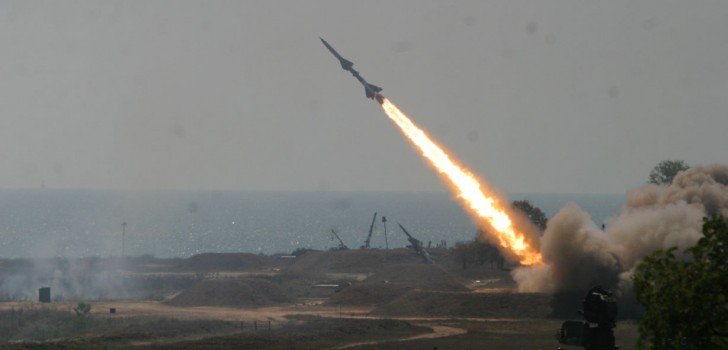
Iran successfully tested its first ever precision guided ballistic missile with a range capability to strike its regional enemy Israel. The testing of the missile is expected to result in increased tensions in the Middle East especially after the July arms agreement that saw years of sanctions against Iran canceled in exchange for the stoppage of their nuclear program.

The new missile named Emad was successfully tested on Sunday with state news agencies airing the launch. According to Defense Minister Hossein Dehghan, “The Emad missile is able to strike targets with a high level of precision and completely destroy them….This greatly increases Iran’s strategic deterrence capability.”

Dehgan also said, “Our leadership and armed forces are determined to increase our power and this is to promote peace and stability in the region. There is no intention of aggression or threats in this action.”

Anthony Cordesman, an analyst from the Center of Strategic and International Studies, said the Emad had a range of 1060 miles and would strike targets with an accuracy of 500 meters. The increased precision is a break away from the Shaba 3 missile, which has a similar travel range but is only accurate up to 2000 meters.

According to Israeli missile expert Uzi Rubin, “The Emad represents a major leap in terms of accuracy. It has an advanced guidance and control system in its nose cone.”

Iran has increasingly been wary of an Israeli attack on their nuclear sites while Israel has expressed concern over a July nuclear agreement it says has the potential to allow Iran to create an atomic bomb.

The July agreement curbs the proliferation of Iran’s nuclear energy operations in exchange of sanctions being lifted. Israel is presumed to be the only Middle East country with a nuclear weapon.

In August, Iran unveiled a short range missile named Fateh-313. The missile boosted the country’s missile precision capabilities as it is made of a solid fuel allowing it to be put together and launched faster than other liquid fueled missiles.

Increased weapons creation and testing by Iran are a cause for concern for U.S. allies in the Middle East including Israel. Though the July nuclear agreement would have extensive nuclear inspections in the country, missile operations should be regulated to curb threats of hostile attacks toward neighbor states.

US To Make Consolation Payments To Families Of Deceased And Injured In Afghanistan Hospital Airstrike

The U.S government will compensate those killed and injured after a U.S. air strike fighter jet repeatedly bombed a Medicins Sans Frontieres (MSF) hospital located in Northern Afghanistan. The bombings which have been condemned by the international community and the Afghan government have put the future of U.S military assistance to Afghanistan on shaky ground.

The U.S Pentagon announced on Saturday that it would make “condolence payments” to the families of those killed and injured during the air strike on an MSF hospital in Kunduz, Afghanistan, on Oct. 3.

In a statement on Saturday, Pentagon spokesperson Peter Cook said, it was important to address the consequences of the tragic incident at the Doctors Without Borders hospital in Kunduz, Afghanistan.

Cook also said, “US Forces-Afghanistan has the authority to make condolence payments and payments toward repair of the hospital. USFOR-A will work with those affected to determine appropriate payments. If necessary and appropriate, the administration will seek additional authority from the Congress.”

The U.S. Pentagon also said it would avail funds to repair the hospital.

Last Wednesday, U.S. president Barack Obama apologized to the MSF president and the Afghan leader for the strike, saying the hospital had been “mistakenly struck.”
However, the apology by U.S. officials has not been received well by the MSF officials.
On Wednesday, MSF international President Joanne Liu said, “it is unacceptable that the bombing of a hospital and the killing of staff and patients can be dismissed as collateral damage or brushed aside as a mistake.”

Liu called the attack a war crime and stressed for the activation of the International Humanitarian Fact-Finding Commission formed under the Geneva Convention to investigate the matter.

Though U.S. officials have repeatedly called the bombing an accident, Liu said the hospital coordinates were “regularly shared” with the military to prevent such tragedies.

Liu said, “Statements from the Afghanistan government have claimed that Taliban forces were using the hospital to fire on coalition forces. These statements imply that Afghan and US forces working together decided to raze to the ground a fully functioning hospital, which amounts to an admission of a war crime.”

During the attack, 12 MSF staff were killed while the other 10 were patients. The hospital is still trying to locate 30 staff who are yet to be accounted for.

Currently, three investigations into the airstrike are ongoing, one by the U.S. military, by NATO and by Afghan officials.

Scientists Make Major Breakthrough That Could One Day Entirely Erase Heart Attacks

Scientists are now able to control the heart of a fly using lasers. There is hope in the scientific community that this technology might eventually be able to be applied to humans.

The experiment was conducted by bioengineer at the Lehigh University Professor Chao Zhou and a team of colleagues. They started by breeding a strain of fruit flies that were genetically altered by being implanted with a light-sensitive protein which was obtained from algae.

The lasers shined at the hearts of the flies through their exoskeletons. The light from the lasers activated the cells containing the protein, allowing scientists to regulate their heart beats.

Scientists believe that this new method of heart manipulation could have some major advantages over traditional pacemakers, which are invasive and have negative effects that extend beyond the heart.

This new method is non-invasive and only cells in the heart are affected.

Similar methods have been utilized in the past, as scientists have implanted similar genes in zebrafish and mice. However this most recent experiment does have some scientific breakthroughs.

When the experiment was conducted on the zebrafish it only worked when the fish were still developing, as only then could the light from the lasers reach their heart tissues.

In the experiment involving mice, scientists had to open the chest wall of the mice through surgery.

Zhou and his team were able to stimulate the hearts of the flies at all stages of their lifecycle, without the need for invasive surgery. They even successfully used the laser system to prevent flies that were genetically designed to have heart attacks from having heart problems.

The fruit fly has genetic material that is about 80% the same as humans, meaning that this technology might someday be used in humans as well.

However, there are still challenges that remain. A major issue will be how to provide light to human hearts without first surgically implanting a light source. A stronger laser would most likely be required. Even then, scientists would need to find a way to focus the light so that it is only directed at the heart.

Despite the challenges, scientists remain hopeful that this could one day be an extremely useful heart-assistance tool for humans.

Citizens Of Detroit Have Fixed Over 10,000 Problems With Aid Of New App

A new mobile phone app is allowing citizens of Detroit to inform city officials about problems affecting their city. The app is called “Improve Detroit” and citizens are using it to better their community.

The app enables users to alert city hall about issues such as potholes, illicit dumping grounds, abandoned vehicles, water main breaks, broken traffic lights and destroyed fire hydrants.

Citizens can even use the app to see what progress is being made by city officials on their inquiry.

The administration of Detroit Mayor Mike Duggan launched the app six months ago. Since then, more than 10,000 problems have reportedly been fixed. Nearly 6,500 Detroit citizens have downloaded the app.

Duggan says, “The Improve Detroit app has ushered in a new era of customer service and accountability in city government,” Mayor Mike Duggan said. “It’s never been easier for Detroiters to get their voices heard and their complaints taken care of.”

Residents of the city have been complaining about problems in their city for a long time. Now they have a much easier way of informing city hall about issues that affect them on a daily basis.

Local resident Dan Wroblewski says, “It saves time, it gets results, and I love how I can follow the progress being made on the complaint.”

Another app called “Detroit Police Connect” allows users to obtain current information regarding the Detroit Police Department, and it gives citizens a way to anonymously contact the police. People have also been able to obtain public bus information by using the “DDOT Bus” app.

The city of Detroit has faced many problems in recent years. Its neighborhoods have been neglected for a long time. The economy of the city was essentially ruined with the decline of the American automotive industry, and the financial crisis of 2008 hit the city particularly hard. The result has been widespread financial woes, abandoned homes and decaying buildings. The city as a whole even had to declare bankruptcy at one point.

Hopefully this app will be able continue to help Detroit in its long road to recovery.

Security Officials Still Want To Violate Your Privacy By Weakening Encryption

Director of the FBI James Comey has stated that President Barack Obama will not work towards laws that would require technology companies to weaken their encryption systems by creating backdoors. Despite this, the American government will still continue to pressure major companies to establish backdoor access.

Comey said, “The administration has decided not to seek a legislative remedy now, but it makes sense to continue the conversations with industry.”

Previously, Comey demanded access points in encryption systems that would let law enforcement officers and government workers to spy on citizens and break through their security programs.

However, the Obama Administration has been concerned about such a policy. The administration has been hesitant to weaken encryption, for fear of privacy issues. This has not stopped intelligence officials from trying to convince technology companies from weakening their encryption systems anyway.

On October 1st, intelligence agencies publicly gave up on trying to gain backdoor access. But that doesn’t mean they won’t continue pressuring tech companies in private.

National Security Council Spokesperson Mark Stroh said, “As the President has said, the United States will work to ensure that malicious actors can be held to account, (but) without weakening our commitment to strong encryption. As part of those efforts, we are actively engaged with private companies to ensure they understand the public safety and national security risks that result from malicious actors’ use of their encrypted products and services.”

Even though they say they want to maintain security and encryption, federal officials still obviously want to find ways to defeat encryption. Security officials have already found ways to legally intercept communications. Their next expected course of action would be to uncover encrypted storage.

Basically, federal officials want to forcibly access messages and files that are stored on smartphones and computers, even if that means compromising security systems.

However, if backdoors are established, then criminal hackers would also be able to access such information, in addition to government officials. Establishing backdoors essentially makes encryption useless, as anyone with know-how will be able access critical information.

Furthermore, it’s not something that can be switched on or off. A system is either made to be secure, or it isn’t.

For now, the government is focused on keeping its efforts out of the eye of the public, for fears of backlash. Instead, it will pressure technology companies in private. Technologies will be caught in the middle, wanting to maintain public approval by providing secure systems, while also being heavily pressured by the feds.

Conflict Between Israelis And Palestinians Spreads To Gaza Strip As Violence Continues

The conflict between Israelis and Palestinians has spread to the Gaza Strip, where Israeli troops have killed six people. Meanwhile, the Islamist extremist group Hamas is trying to incite more violence.

The previous week saw a string of stabbing attacks take place in Israel, the West Bank, and the city of Jerusalem. The stabbing attacks eventually led to a revenge attack being conducted by a Jewish suspect, which resulted in two Palestinians and two Arabian Israelis being wounded.

However, the Gaza strip had mostly been calm until very recently.

A rocket that was shot by the Palestinians hit southern Israel early on Saturday. No damages or injuries took place. The rocket was shot shortly after violence broke out just east of Gaza City.

According to the Israeli army, multiple attempts at violently storming the border by the Palestinians have taken place. Meanwhile, rioters have frequented the buffer zone, throwing grenades and rocks and rolling burning tires at soldiers.

In the process, six Palestinians were killed, while 80 were wounded. This was the deadliest conflict in Gaza since the summer of last year.

Meanwhile, the extremist group Hamas has declared the violence to be an uprising. Many extreme Muslims want the attacks to continue, as they believe it is the only way to bring liberation to their people. The Hamas group largely resides in the Gaza.

Elsewhere in northern Israel, masked citizens have been blocking roads and attacking police officers. So far, eight people have been arrested.

With several stabbing attacks taking place in the West Bank and Jerusalem, many people are fearful that a third official Palestinian intifada, or uprising, will take place. The first occurred in 1987, while a second took place in 2000. The two intifadas combined to kill more than 5,000 Palestinians and nearly 1,100 Israelis.

The Gaza has been plagued by three wars since 2008. A conflict lasting 50 days between the Israelis and Palestinian militants in the summer of last year resulted in the deaths of more than 2,200 people, while another 100,000 were left homeless.

The enclave has been hit by three wars with Israel since 2008. A 50-day conflict between Palestinian militants in Gaza and Israel in the summer of 2014 left more than 2,200 people in the territory dead and 100,000 homeless.

North Korean Leader Says The Country Is Capable Of Fighting The United States

The ruler of North Korea Kim Jong-Un has declared that his country is capable of fighting any war provoked by the United States. The dictator made this statement as a giant military parade took place in the country to celebrate the 70th anniversary of the rule of the Workers’ Party.

North Korean troops marched through the capital city of Pyongyang by the thousands. They were led by tanks, armored vehicles and ballistic missiles. The entire scene was a display of North Korea’s military capabilities that the country obviously hopes will intimidate the rest of the world.

Kim Jong-Un told the collected mass of his citizens that the country could fight any war, including one that was initiated by the United States.

He announced, “Our party dauntlessly declares that our revolutionary armed forces are capable of fighting any kind of war provoked by the US and we are ready to protect our people and the blue sky of our motherland.”

The statement was met with a massive amount of applause from North Korean public. Many waved flags and raised supporting banners. A fireworks display was put on later that evening.

North Korea often puts on spectacular displays of its military forces in an effort to boost national pride and patriotism. The country also uses these displays to send threatening messages to the international community.

While North Korea is considerably under-financed, the country does possess nuclear capabilities, and it makes regular threats to destroy South Korea and the United States. The country remains incredibly isolated in terms of political relations. Only China sent a diplomat to the celebratory event.

The country has conducted three separate nuclear tests, while a fourth has been threatened. North Korea has greatly ignored international sanctions by developing its nuclear weapons program and conducting these tests. The international community has been unsuccessfully lobbying for North Korea to abandon its nuclear program for many years.

Recent reports have indicated that North Korea has already obtained somewhere between 10 and 16 nuclear weapons since the end of last year. However, the reliability of these weapons has been questioned.

Major Free-Trade Agreement Could Bring Negative Downturn To Chinese Economy

A free-trade agreement that is being led by the United States is expected to have a negative impact on China’s economy, as the Chinese Gross Domestic Product (GDP) could fall by an estimated 2.2%.

The chief research economist from the People’s Bank of China Ma Jun made the prediction, which was published in an official Chinese state news release.

The pending trade agreement is called the Trans-Pacific Partnership (TPP), and China is not included in the agreement. The agreement would cover nearly 40% of the global economy. It would bring together some of the top trading countries in the world, including the United States, Japan, Australia and Vietnam. It is still pending, requiring further discussion and approval by the 12 member countries.

Mainland China and Hong Kong are expected to be the two biggest losers of the impending deal, and some economists believe that it could threaten China’s position as “the world’s factory”.

Many experts believe that the trade deal is a strategy by the United States to counter China’s economic influence which is felt across the world. China has experienced an economic slowdown this year, and some believe that this upcoming deal will further restrict Chinese economic growth, in what could be a major blow to Chinese exports.

However, some economists are saying that Ma’s prediction of a 2.2% decline in GDP is overstated. Other economists are only predicting a 0.14% to 0.5% decline in China’s GDP.

The Chinese economy is expected to grow by only 7% this year. Last year, it grew by 7.4%, which was the slowest growth rate for the country since 1990.

The TPP would cover trading issues regarding investments, environment, labor and the establishment of intellectual property by state enterprises.

However, China and Hong Kong are remaining optimistic about the situation.

Honorary chairman of the Federation of Hong Kong Industries Lau Chin-ho said, “The trade deal is unfavorable to Hong Kong, but it’s not the end of the world.”

Lau went on to state that the agreement would lead to the Chinese government taking action to improve the operating environment and competitiveness of the industries of mainland China. The industries in China have been hurt by rising wages, increasing labor policies and industrial reform.

Russia Claims They Killed 300 Militants In Recent Air Strikes And US Support Kurdish Militias

The Russian campaign in Syria continues, as air strikes hit 60 ISIS targets within the last 24 hours. As the Russian attacks intensified, the U.S. shifted its policy by ceasing the failed program to aid moderate Syrians and instead began aiding Kurds and other rebel groups.

Russia’s Defense Ministry claims an average of 10 targets daily, with the recent increase in attacks aimed at preventing regrouping attempts by Syrian militants. Among the targets was a headquarters of the Liwa al-Haqq group in Raqqa, which is not associated with ISIS.

The U.S. was forced to abandon its aid to Syrian rebels, after spending over $400 million to train 125 fighters. All 125 were either defeated or surrendered their arms to Al Nusra Front.

Pentagon Press Secretary Peter Cook commented on the shift in strategy in the region, stating [the Pentagon], “will provide equipment packages and weapons to a select group of vetted leaders and their units so that over time they can make a concerted push into territory still controlled by ISIL.”

The U.S. decision to support Kurdish militias may be more fruitful, as these groups have already demonstrated their abilities in fights along the Turkish border with Syria. The aid will be going to the Popular Protection Units (YPG), who were able to defeat Syrian militants in Tal Abyad this summer in addition to cutting critical supply lines to ISIS.

The decision to aid the YPG could be politically unpopular with Turkey, who associates the group with the now disbanded terrorist group, the Kurdistan Workers’ Party (PKK). According to White House officials, the new plan has been discussed with Turkey.

With reports of U.S.-trained rebels abandoning their weapons in the face of advancing ISIS militants being all too common, the new U.S. strategy will be providing more basic types of equipment in order to moderate the blowback from such events.