Home Blog Page 77

Biden Surges To Inches Of Clinton In New Poll

Vice president Joe Biden has soared in a recent Bloomberg poll to second place and just inches away from front-runner Hillary Clinton. Vice President Joe Biden has yet to throw his hat into the 2016 presidential race. However, growing poll favorability could prove to be the needed boost to convince him to join the race.

In a poll conducted between Sept. 18 and Sept. 21 by Bloomberg surveying 375 Democrats and Democrat leaners from Iowa and Des Moines, pollsters recorded a huge upsurge in the favorability figures of Biden. Hillary Clinton led the pack with 33 percent favorability while Biden was close second with 25 percent. Vermont Senator Bernie Sanders was third with 24 percent. Other Democratic candidates were polled within the margin of error.

In terms of net favorability, Biden pooled in at the top with an astounding 80 percent in favor of and 14 percent against. Clinton was second with 70 percent in favor of and 25 percent against. Sanders was a far third with only 54 percent in favor of and 9 percent against. More than 30 percent of Democratic leaners were not sure what to think of Sanders.

Of all the candidates in the 2016 White House race, the polled Democrats were more skeptical of Donald Trump as president. Only 29 percent said they could realistically see the billionaire as president. Comparatively, 69 percent said they absolutely could not see the flamboyant Trump in the Oval Office.
In regards to the Democrat front runner, 47 percent said they could realistically envision Clinton as head of state while up to 52 percent could not.

When asked whether Biden should run, more were in favor of his candidacy than those against. Up to 47 percent wanted the Vice President to run for president while 37 percent thought he should sit it out.
Biden has not expressed his interest in the presidency formally yet. With the end of summer approaching, many are wondering whether a late candidacy would affect Clinton’s front runner status. Biden himself does not seem too committed to either option.

During an interview on his family’s decision-making process on a potential run, Biden said, “We’re just not there yet and may not get there in time to make it feasible to be able to run and succeed because there are certain windows that will close. But if that’s it, that’s it. But it’s not like I can rush it. It’s not like it either happens or it doesn’t happen. I know that’s not satisfying to anybody, but people who have been there, I know they understand.”

More Democrats are leaning toward a Biden presidency as Clinton’s numbers continue to go down. Plagued by an email scandal that refuses to fade away and a congressional Benghazi hearing, Clinton’s time at the top spot may just be winding down in favor of an undeclared presidency by Biden.


Joke Ads About Belgium’s Traffic Congestion Are Not Funny, Say Experts

Traffic experts in Belgium are saying the subject matter of a humorous ad produced by the Belgian national railway company NMBS is not a laughing matter. The ad nominates the country’s traffic jams as a candidate for UNESCO world heritage status because they are uniquely Belgian.

The video shows a pompous British actor standing on a bridge overlooking a traffic jammed road, praising the “splendor” of Belgian traffic jams, followed by a link for a petition to UNESCO.

The experts say that although the video was meant as a joke, the problem it portrays is serious. Antwerp and Brussels, headquarters to the European Union, were the most congested cities in Europe and North America, according to a 2014 traffic study released by data organization INRIX. The study estimated drivers in Brussels waste 83 hours a year in traffic jams.

The experts say not only is traffic congestion a nuisance and time waster, it also poses serious health risks with emissions from vehicles. They say the traffic problems arise from poor road planning, generous company car policies and growing suburbanization.

Cathy Macharis, a mobility professor at the Free University of Brussels, says 15 percent of all cars and 50 percent of new cars sold in Belgium were company cars. She says in many cases, employees who have company cars don’t even need them for work. Employees prefer having a car rather than a bonus or raise because they don’t have to pay tax on the car, but would on a monetary reward.

The experts say that although the spoof ad on road traffic jams was produced by NMBS, it is a major contributor to the problem. They say Belgian trains are infamous for delays and overcrowding which drive people to use their cars.

This has not gone unnoticed by a yet to be identified group which has launched a counter ad and petition to that of NMBS’s. That ad calls for Belgium’s train delays to be UNESCO world heritage listed, showing footage of passengers delayed and waiting at a train station. The footage is sound tracked with tear-jerking music from string instruments.

Scientists Achieve Major Breakthrough, Transfer Sexual Organs

Scientists in China have successfully produced healthy monkeys by using sperm derived from young monkey testicles that were transplanted onto mice. The team claims that boys who die before puberty will someday be enabled to produce offspring.

This innovation might be very useful in China, where its one-child policy has made it challenging for some families to continue their lineage.

Professor Sun Qiang from the Chinese Academy of Sciences’ Shanghai Institutes for Biological Science led the experiment.

The scientists took the testicular tissue from macaque monkeys and connected it to the backs of mice. One of the monkeys was only 14 months old. They believe that their experiment is the first instance of the reproduction of primates utilizing this method.

The process of transplanting the organs from one species to another is called a “xenograft”. While monkeys and mice were used in this case, it is theorized that the same procedure could be used on humans.

Sperm can be stored for long periods of time using freezing methods without a loss in viability. However, the sperm must be originally created by a sexually mature male.

The team of scientists wanted to know whether or not the sexual tissue would continue to grow upon being attached to a foreign host and also if it would create healthy sperm. To test this, they attached tiny ball-shaped pieces of testicular tissue from the monkeys onto the backs of the mice.

According to the scientists, most of the xenografts grew well. In fact, after only ten months, the testicles were large enough to create mature sperm. This was particularly fast, as it typically takes male macaque monkeys four years to reach sexual maturity.
The sperm from these testes was then injected into eight female monkeys. Six of them produced healthy infants.

Meanwhile, the testicles kept growing after the transplant took place. They continued making viable sperm for an additional 17 months. An analysis of the genes showed that the offspring inherited many traits of their fathers.

It remains unknown if the offspring produced through this method would be able to reproduce on their own.

For now though, the scientists plan on continuing their research in order to expand their findings.

Courts Are Going Bananas In Major Copyright Case Involving Monkey

A major debate is taking place as to whether or not an animal can own the copyright to a selfie that the animal itself took.
The curious animal in question is Naturo, a crested black macaque monkey from Indonesia that took an unforgettable selfie while playing with photographer David J. Slater’s unattended camera. The picture became known as “Monkey Selfie”.

However, PETA is filing a federal lawsuit on behalf of Naturo, stating that the monkey should be awarded the copyright for the photograph and not Slater. PETA claims that Naturo is the author of the selfie and thus should be granted the rights.

While the pictures were taken in Indonesia, a United States federal court in California has jurisdiction since the publisher of Slater’s book is from that state. Slater’s book is titled Wildlife Personalities.

In the lawsuit, PETA says, “While the claim of authorship by species other than Homo sapiens may be novel, ‘authorship; under the Copyright Act, 17 U.S.C. § 101 et seq., is sufficiently broad so as to permit the protections of the law to extend to any original work, including those created by Naruto.”

Slater is not happy with the lawsuit. He wrote on Facebook, “I am obviously bemused at PETA’s stunt but also angry as well as sad. This makes animal welfare charities look bad which saddens me, deflecting away from the animals and onto stunts like this.”
Slater added that he has worked with PETA in the past.

So who owns the photo – Naturo or Slater? Some people argue that nobody does.

Wikimedia, host of the popular website Wikipedia, has permitted the photo on its website. Slater has demanded Wikimedia to remove the photo, but the website is refusing to do so, stating that the photo cannot be copyrighted due to the fact that animals are not permitted to own copyrights.

Therefore, the photo would be in the public domain, free for anyone to use.

Meanwhile, Slater cannot make money off of the photo used in free domain.

There are three requirements for a work to receive copyright protection. The work must be fixed in a tangible medium, it must be original, and it must have an author.

In this case, the work definitely is a tangible medium, and it is certainly original.

However, the author requirement may be a problem for PETA and Naturo. Authorship implies that the work in question was created by a human being. Materials that are created by nature, plants, or animals cannot be copyrighted.

That being said, it does not appear that Slater can claim the photo either. Animals cannot create a copyrightable work. Therefore, the photo can never receive copyright protection.

As such, the photograph should fall into the public domain and be free to use by anyone.

Boeing To Set Up Plant In China Amid Layoff Fears In America

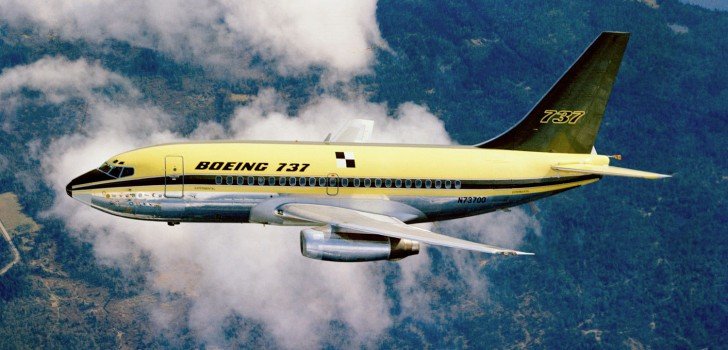
Boeing is building its first completion center on foreign territory: China. The new plant in China will increase the plane manufacturers’ global presence and production in a region where European rival Airbus already has a head start.

Dennis Muilenburg, Boeing Chief Executive said on Tuesday that they would be adding a plant in China for its 737. The company said the new plant was aimed at increasing production for its single lined jet liner.

The announcement comes just days after Boeing announced the completion of the sale of 300 Boeing aircraft to the Asian country. China state-owned Commercial Aircraft Corporation of China (COMAC) confirmed the purchase of the 300 aircraft and the setting up of the “completion center” in China.

Boeing chairman Jim McNerney said, “China’s rapidly growing aviation market plays a crucial role in our current and future success.”

China is expected to grow its fleet by 6,330 aircraft valued at $950 billion by 2034, an annual China Market Outlook from Boeing read last month.

A statement from COMAC said, “This shows cooperation between Boeing and a Chinese enterprise has been lifted to a major-manufacturer level.”

The new plant in China, however, has elicited worry in the U.S., especially for the Seattle-based firm’s workers. The workers’ largest union, representing over 35,000 employees, said they were concerned over possible layoffs following the announcement. The union expressly said, “Any shift of aerospace jobs from our bargaining unit or Washington State causes grave concern.”

Boeing’s management sought to allay fears of layoffs through an internal memo circulated by Boeing Commercial Airlines Chief Executive Ray Conner. The memo read in part, “I hope (the discussions) will be a win for Boeing, a win for the Puget Sound, and a win for our stakeholders. I want to assure you that agreements we may reach with our Chinese partners will not result in layoffs or reduce employment for the 737 programme in Washington state.”

Airbus already has a plant in the port city of Tianjin, China, where it assembles its medium range Airbus 320. It has expressed plans to complete another plant for completion and delivery of long-haul A330s.

Boeing is capitalizing on China’s growing economy and appetite for aircraft by setting up shop right in the country’s mainland. The company hopes that the new plant will result in increased revenues and a better competitiveness against competition.

Massive Amount Of Homeless People In L.A. Declared A Major Emergency

Homelessness has gotten so bad in Los Angeles that the city council has declared a state of emergency. The council is asking for $100 million to help solve the massive issue.

The declaration was reported by Mayor Eric Garcetti, who also announced major plans for removing people from the streets of the city.

Garcetti said, “We all understand the urgency that this situation requires, and what is at stake. I applaud the Los Angeles City Council for their action today in earmarking a necessary initial investment that helps launch my comprehensive plan to tackle homelessness.”

The rate of homelessness in the city has grown by 12% since Garcetti took office two years ago. A shortage of affordable housing and a lack of emergency shelters are said to be the causes for this rate increase.

Los Angeles is home to one of the nation’s largest homeless population. An estimated 25,000 Los Angeles residents are homeless. Many live on the city’s infamous Skid Row, which is more of a makeshift campsite than a public street. Skid Row stretches for blocks across the city’s public sidewalks.

According to the state of emergency declaration, the homeless situation in the city is “unprecedented and growing”.

City council member Mike Bonin said, “The proposal is more than just words. It calls for the fast-tracking of and a special, streamlined process for affordable housing. It also makes it easier for nonprofits and faith institutions to operate shelters and safe parking programs, and opens up the possibility for the Los Angeles Homeless Services Authority to use city facilities for the same purpose.”

Beyond the one-time $100 million requested in the declaration, Garcetti also wants an annual amount of $100 million in order to pay for permanent housing for homeless people. He also wants to create a foundation dedicated to the problem.

Meanwhile, Garcetti is also requesting an immediate $13 million for emergency funding to expand services for the homeless. This money would also be used for housing, most of which would come in the form of subsidies.

“If we can lift up those in need, and pick up those left behind, then we can live up to the best of our ideals,” said the Mayor.

NFL Allowed To Use Drones In Landmark Decision

The Federal Aviation Administration (FAA) is permitting the National Football League (NFL) to utilize drones for filming purposes. The sports league will use drones to shoot films, documentaries, and segments for television, but the technology will not be used to film live games.

The NFL is the first major sports league to receive this kind of permission from the FAA.

The decision arrives three months after the FAA said that it was investigating NFL teams for using drones. Reports say that the Dallas Cowboys and the New York Giants were among the teams that utilized drones. The law states that it is illegal to use unmanned aircraft for any commercial purpose without receiving federal permission.

However, the NFL is still forbidden from using drones to film live games. Additionally, the drones are required to weigh less than 55 pounds, fly no more than 400 feet high and travel less than 100 miles per hour.

The NFL is widely known for its film company NFL Films. The company made major innovations in chronicling football games, including the use of slow motion. NFL Films produces TV programs, films, and documentaries, but not live broadcasts.

NFL Films will only be allowed to operate drones over empty stadiums. They will not be permitted to use drones on game days. Drones will also be forbidden to be employed for the purpose of filming practices.

21st Century FOX is also utilizing drones, as the company used the technology to cover the United States Open golf tournament earlier this year.

Starbucks Just Launched A Service Worldwide That Will Change Fast Food Forever

Starbucks’ mobile ordering service that allows customers to pre order their favorite drinks hours before even getting to the café will now be available worldwide. The new mobile service will enhance customer experience in the country’s largest coffee retailer, making ordering morning coffee revolutionary.

The mobile ordering service has been switched on in most of the U.S. Initially, the service was only available in selected states across the country for testing but has now been expanded to its 7,400 locations. A statement from the company on Tuesday added the service, which was fully compatible on Apple and Android devices, would be hitting its locations in the UK and Canada by October.

According to Starbucks Chief Digital Officer Adam Brotman, “This is really meeting our customers’ needs for convenience in a way that’s never before been possible. It’s another channel that’s bringing additional business to the store.”

Mobile order and pay started out in December 2014. It was launched in Portland, Oregon before spreading to the Pacific Northwest early this year. By Summer, the service was active in 17 states.

The company is increasingly focusing on mobile tools to boost U.S. sales. As it stands, any of the world’s largest coffee retailer’s customers pay using their mobile phones. Starbucks estimated that the number totaled approximately 20 per cent of the company’s revenues transactions.

The availability of services such as Apple Pay, Android Pay and Samsung Pay allow customers to pay for services from selected retailers countrywide. The new Starbucks Order and Pay will offer a number of distinct advantages: customers will be able to pre order and pre pay from wherever they are, saving them from the draining hassles that are order queues and waiting for their drinks to be prepared.

Other restaurants are also testing mobile services. Taco Bell introduced a similar service last year that allowed their clients to pre order food and pay ahead through their phones. The company reported that customers using the app made more than $10 in purchases on average.

McDonald’s plans to introduce a mobile app for its 14,350 locations in the U.S. this year. Dunkin Donuts has a similar rewards program that has attracted more than 3.2 million members.

Starbucks hopes the new service will increase sales for the retailer and possibly, in time, be introduced in all their locations across the globe. Brotman said, “This has been so well-received that we’re excited to be looking at potentially every store around the globe. But it’s still very early.” Through the service, Starbucks will give its users the best ordering experience, devoid of queues and waiting lines.

America’s Green Sea Turtles Are Making A Comeback Thanks To Tough Laws And Protected Habitat

The population of green sea turtles in the U.S. is increasing for the first time since the small sea creatures were labeled endangered. The new increase in the number of green sea turtles is a credit to wildlife conservatives who have fought a long battle to have the majestic green creatures protected.

Green sea turtles were one of several creatures marked as approaching extinction. So bad was their plight that authorities devised regulations to protect the dying species. In the 1600s, an earlier population in Bermuda had already faded to extinction even though regulations had been put in place to protect them.

This time, however, tough laws are saving the creatures.

In a distinct habitat just below Cape Canaveral, the Archie Carr National Wildlife Refuge, green sea turtles are recording higher numbers than ever before. In a survey conducted last Thursday researchers and students from the University of Central Florida Marine Turtle Research Group reported counting 12,084 turtle nests in the 13 miles of the habitat. According to Dr. Kate Mansfield, the group’s leader, that was the first time the number of nests ever hit above 12,000.

Mansfield reported that the number was about 25 per cent of the population of green sea turtle nests in the U.S. Even better news was that the nests would result in over 700,000 hatchings. She added, “It’s a pretty phenomenal sea turtle nesting spot.”

The university research group has been monitoring the area for 35 years, way before the habitat was established in 1991. Mansfield attributed the rising figures of the turtle species to legislation including the Endangered Species Act, and regulations banning their fishing.

Mansfield emphasized that even though the news on higher nests was good, more was needed to protect the little creatures emerging. According to Mansfield, the turtles take up to 25 years to reach maturity. That means the generation making the nests today were hatched probably at the time the conservation refuge was launched.

The stretch monitored by the university team also has more than 12,000 nests made by loggerhead turtles. At the peak of the nesting period, up to 400 to 500 nests are dug every night.
News of the increasing green turtle population comes at a peculiar time when many of the world’s species, including the South African penguins and East African vultures, are facing certain extinction. Through mirroring the steps taken to safeguard the green sea turtles, other endangered species can be saved.

Statistics Show Taking A Selfie Is More Dangerous Than Many Of Our Greatest Fears

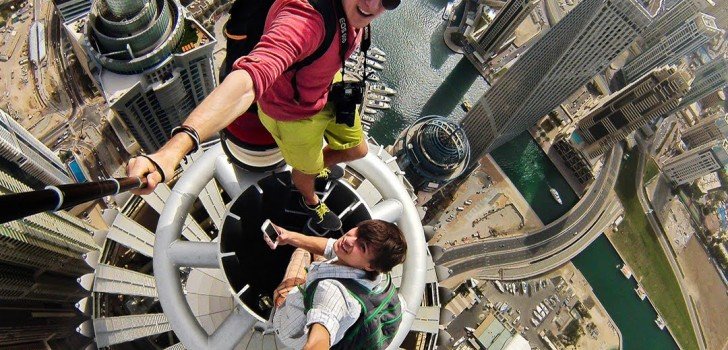
The social media trend of selfies is not only popular, it is also deadly.

A selfie refers to a picture that is taken of oneself, most commonly using one of today’s smartphones. And the practice is more lethal than you would initially imagine.

So far this year, 12 people have died taking selfies. By comparison 8 people have died in shark attacks.

Turns out you have more to fear from taking a selfie than you do swimming in the ocean.

Most recently, 66 year old Japanese tourist Hideto Ueda died while trying to take a selfie at the Taj Mahal. Ueda fell down the Indian landmark’s stairs.

The deaths remind everyone that paying attention to a phone screen rather than one’s unfamiliar surroundings is an unsafe practice.

Four of this year’s selfie casualties were the result of falling. Another likely selfie death involved getting hit by a train.

Tourists are increasingly making headlines for their reckless selfie behavior. Parks have been closed after visitors have attempted to take selfies with bear. Bull runs have forbidden selfies. And Tour de France competitors are concerned about their own safety from selfie takers.

The trend does not appear to be slowing down any time soon, but some landmarks are taking action, as they have started to forbid selfies and “selfie sticks”, a pole that is used to assist in the selfie-taking process.

In July, the Russian Interior Ministry released a brochure that covered the dangers of selfies.

People who continue to take risky selfies are strongly encouraged to exercise caution when the selfies involve weapons, ledges, animals, vehicles, and electrical wiring.

Otherwise, the “likes” on that photo might be posthumous.

Company Claims App That Records All Your Video Viewing Doesn’t Have Privacy Problems

The makers of a new app designed solely to track and report on everything being watched on the device it’s running on have assured privacy advocates they will not release any individualized information collected by the app.

Charles Buchwalter, CEO of Symphony Advanced Media, the data collection start-up which created the VideoPulse app, said all information collected is aggregated into demographic groups before being shared.

He says VideoPulse only picks up signals from broadcast programs and doesn’t record normal conversations.

Buchwalter claims that the VideoPulse system is the most advanced audience measurement available, able to track all and any online video viewed by its users through a passive listening program.

He says app users will be recruited by offering people between $5 and $11 each month they use the app, with a free sign up process that asks a variety of questions such as gender, income level and age.

Buchwalter says the questions are designed to create diverse demographic groupings to provide viewing data. Approved users will be required to have the app running in the background of their phones at all times.

The App has been tested using 15,000 users by several media companies including Viacom, NBC, A+E Networks and Warner Bros with all having been satisfied with the data received.

Media experts say with the growth of companies such as Netflix and Hulu, which have drawn viewers away from traditional television, there has really been no accurate way to track what is being watched by consumers until now. They say with VideoPulse, entertainment providers, TV networks, TV show and film production companies will have access to an invaluable source of data.

Buchwalter says “There has been a significant void in understanding how consumers are using non-traditional media platforms, but innovation has finally arrived in the media measurement space.”

Warner Bros media research chief Liz Huszarik says “Our industry has been disadvantaged by legacy measurement approaches that have failed to evolve with consumers’ increasing use of media platforms. We are hopeful that by working with Symphony Advanced Media’s VideoPulse that we can capture an accurate picture of consumers’ total TV/video usage across platforms and devices, with a transparency that’s been missing from other vendors.”

According to Buchwalter the data generated by VideoPulse in its testing phase has already produced valuable insights, including knowing millennials are watching as much TV as they have ever done, but viewing it through up-to-now non-measurable “nontraditional” means.

“When you then put that 25% back on top of the market that appears to be declining, you have all of the sudden a very different view,” he said.

Iranian President Claims His Country Is The Most Capable Of Fighting ISIS

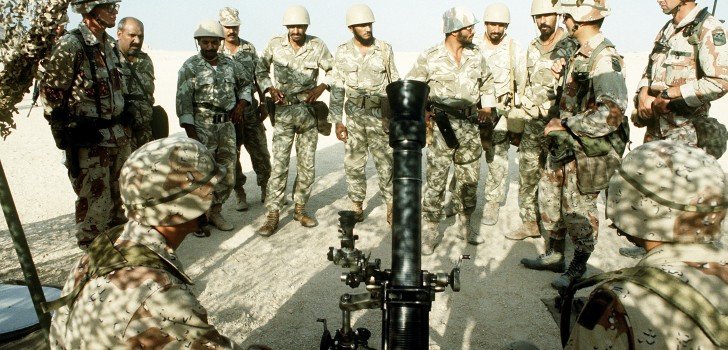
Iranian president Hassan Rouhani has proclaimed that his country is best suited to deal with terror organization ISIS. The ruler, referring to previous acts by Iran that served to help other Middle East nations experiencing anarchy inspired by terror groups, said the Middle East should be cautious of the west as they were not always the best option.

Rouhani spoke on Tuesday in a televised address to the Iranian people. The ruler said his troops had “helped both Iraq and Syria” in the war against ISIS. He, however, insisted that Tehran had no military intentions in Syria.

Rouhani’s administration has sent numerous military advisers to Syria but has abstained from sending active military to the warring nation.

Rouhani went on to say, “Just as we have helped the governments of Syria and Iraq against terrorism, upon requests from their governments, if, heavens forbid, terrorism emerged in other countries, the governments of those countries will pin their hopes to the Armed Forces of the Islamic Republic of Iran.”

Iran’s leader referred to the country’s army and Revolutionary guards as the only hope for nations plagued by terror organizations in the region.

ISIS has seized at least a third of Syria and Iraq since it broke onto the scene last year. The group has unleashed a reign of terror in the region, spreading its philosophy and caliphate across the two countries. Other states such as Libya, Egypt and Saudi Arabia have seen the rise of ISIS affiliate groups that have targeted both foreigners and locals.

Rouhani urged the countries of the Middle East not to put much hope and trust in “Western powers as their defenders. Today, our armed forces are the biggest regional power against terrorism.”

The ruler proceeded to make a hidden offer to help to Sunni led rival Saudi Arabia, though he abstained from expressly naming the country. Saudi Arabia has been fighting Iran backed rebel insurgents in Yemen who ousted the former president Abed Rabbo Mansour Hadi. The western backed Saudi air strikes have been targeting key rebel sites in Yemen.

Rouhani made his remarks in a Tuesday parade marking the 35th anniversary of the infamous Iran-Iraq war.

Iran’s offer of help to battling Middle Eastern nations has caught many by surprise as the country is barely recovering from years of sanctions recently lifted by western countries. However, given the country’s position as a regional power broker, the west should be concerned over such public attempts at ridiculing western aid.

Tensions Run High In Burkina Faso As Coup Hits Dangerous Stalemate

General Gilbert Diendere, coup leader in Burkina Faso, recently defied a mandate to step down from power and Diendere says that his forces have been instructed to retaliate if they are attacked.

The army of Burkina Faso threatened Diendere and his forces with a deadline to relinquish his position. That deadline has since passed, meaning that Diendere is subject to an assault from the military of the country.

Meanwhile the army has mandated that anti-coup protesters return home, in fear that violence would break out.

General Diendere seized power, having the support from the presidential guard. However, the Burkina Faso military has remained loyal to the threatened government. Troops have stormed the capital, trying to reclaim it.

The European Union (EU) has demanded that Diendere and the presidential guard lay down their weapons to prevent any major violence from occurring.

Leaders in the region are conducting crisis talks in Nigeria to determine a peace plan for Burkina Faso, which is a former French colony.

So far, at least ten people have been killed, while more than 100 have been injured in fights between the presidential guard and protesters. There is growing fear that fighting will soon take place between the army and the presidential guard.

General Diendere stated at a press conference that he does not want to resort to violence, but he is not afraid to defend himself if he is attacked. One army officer recently said that talks with Diendere had fallen apart.

“He wants a fight,” said the anonymous officer.

However, General Diendere claims that he will step down after regional leaders endorse the peace plan at their upcoming summit. Diendere released the interim president and the prime minister after speaking with mediators.

French ambassador to Burkina Faso, Gilles Thibault, said in a tweet that the interim president, Michael Kafando, was now at his residence.

General Diendere appears to be backed into a corner from heavy international and domestic pressure. When it was appeared that he was defeated on Monday after the mandate for him to step down, thousands of people gathered to celebrate.

Researchers Develop Powerful New Laser Weapon That Can Fit In A Backpack

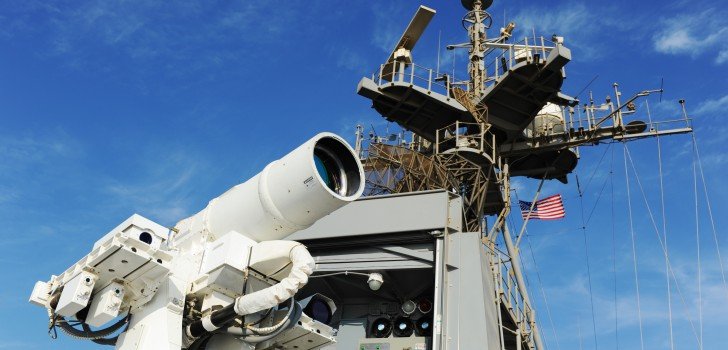
It appears that China is the latest country to make a breakthrough in the development of laser technology – particularly with military applications. The Chinese research team created the blueprint for a laser the size of a suitcase that can destroy heat-seeking sensors on missiles and satellites. Rather than only being used on large warships, as they currently are, these small devices can, in theory, be used in tanks, aircraft and possibly even on the backs of soldiers.

Presently, today’s high-frequency lasers that are used to destroy enemy missiles are large and cumbersome – so much so that they are only found on battleships. Now a research team led by Professor Li Zhiyuan with the Chinese Academy of Sciences’ Institute of Physics has reported that they have reduced the high-frequency laser generating mechanism down to a single crystal.

The result: An ultrafast laser generator literally can be shrunk down to the size of a handbag.

Li Qiang, a professor of laser optics at Beijing’s Tsinghua University proclaimed that, “This is a groundbreaking achievement. Nobody has generated a laser at such a high frequency on a single piece of crystal before. Their technology will significantly simplify the process of ultrafast laser production and reduce the size of relevant devices.”

Despite decades of research and development, scientists have thus failed in producing an ultrafast laser device that can be used outside of a laboratory. Despite these troubles, countries still spend significant time and money in trying to develop the technology for military purposes.

The basis for the importance of this type of laser is that it is much easier to use a small, ultrafast laser to destroy the tiny heat-seeking sensors of missiles rather than use a laser to destroy the thick shell of the missiles themselves.

Another application of the ultrafast laser is to detect stealth aircraft and to seek and destroy encrypted data communications.

Li’s research team has claimed that they have solved the problem resulting from huge and cumbersome lasers possessing extremely sensitive components. The team’s published report states that the highly scientific technological development “hints at a very promising means for greatly expanding the power” of lasers.

Liu pointed out that, “If [Li’s team] can achieve the efficiency they claim, I think their technology can be quickly deployed in field applications.”

China’s development of this technology means that the rest of the world, including the United States, will scramble to keep up.

Stress Study Paints Dim Picture For Cities That Rely On Commuters

In an interesting study conducted by researchers at McGill University in Montreal, Canada, several types of commuter stressors were measured in an effort to determine which was “the best” means to travel to work. The bottom line: Drivers have the most stress, closely followed by public transit commuters. The “winners”: pedestrians, who experience the least stress out of the three groups surveyed.

If the results are indication of what is to come, more commuters will choose jobs close to their homes so that they can walk to work. Whether that is a feasible result remains to be seen.

The objective stressors examined of the study participants included travel time and predictability and the subjective stressors examined included trip pleasantness. The researchers surveyed approximately 3,800 students, staff and faculty of McGill University during a wintery day in Montreal.

One of the major conclusions of the survey: drivers experienced the most stress, largely due to unexpected delays. The study points out that, “This additional time budget indicates that [drivers] have, perhaps paradoxically, less control over their commute than commuters on other modes. Frequent and unpredictable occurrences require of them a peremptory stance toward their commute, where extra time becomes the best way to assure arriving to work or school on time.”

Essentially, on average, drivers budget about 20 extra minutes in their commute time in order to deal with traffic congestion caused by accidents, poor weather conditions and construction. Interestingly, drivers expressed a stronger desire to rather commute by walking or public transit rather than either of those travellers expressed about driving.

Out of the relatively few studies previously conducted on this subject, it was determined that some commuters found riding public transportation and driving to be equally stressful. In the recent study, public transit came in just behind driving.

Other findings from the recent study came in at about the same as previous studies: walkers tended to be more satisfied with their commute and; longer commutes were more stressful than shorter ones.

With respect to each style of commuting, there were a few commonalities. With drivers, the major complaint was predictability. With regards to those who rode public transportation, the major problem was also predictability caused by delays, transfers, etc. With respect to walkers, the general vibe was that they were simply less stressed with their major concern listed as feeling safe from traffic.

In sum, the researchers conclude as follows: “[The commutes by walkers] are not only environmentally and socially more sustainable, they are also a less stressful way to travel. One way to increase pedestrian mode-share is to protect walkers from traffic and provide more pleasant and more comfortable streets to walk on. Furthermore, public transportation is also less stressful than driving, which is found to involve (somewhat perversely) less control for commuters. Increasing the predictability and range of transit options in an era of increasing driving unpredictability could lead to a great transit mode share.”

Basically, commuting to work is not the best part of the day – no matter how you do it.

Record Low Emmy Viewership Highlights Just How Little People Are Watching Regular TV

The Emmy Awards ceremony that took place last Sunday night experienced a record low in terms of viewership, as only 11.9 million viewers tuned in to watch television’s big production companies celebrate themselves.

The low audience is another example of how today’s technology is taking people away from traditional cable or satellite services and into the world of streaming. More people are “cutting the cord” of their cable or satellite service in order to transition to services such as Netflix, Hulu, and Amazon Prime Instant Video as the services are cheaper, and offer customers the ability to watch their favorite programs at their own leisure.

However, streaming services do not offer certain live events, including the Emmys, which have long been touted as a major barrier for wider streaming adoption.

Yet judging by the Emmy viewership figures it seems customers apparently believe that it is a necessary sacrifice to be made. One might expect that television viewership of major events, such as the Emmys or the Super Bowl will continue to decline over time as more people discontinue their cable or satellite services that are required to view these live events.

Some attribute the lackluster performance of this year’s Emmy Awards to other factors.

For instance, some people say that last year’s Emmy Awards had more viewers because it was aired on a Monday night, and the ceremony did not have to go head-to-head in the lineup with an NFL game. Last year’s Emmy Awards attracted 15.6 million viewers, significantly more than this year.

Others say that first-time host Andy Samberg failed to attract viewers.

The Emmys experienced previous lows in 1990 and 2008, when only 12.3 million people watched the ceremony.

Despite its poor ratings on TV, the ceremony still showed that it was popular subject of social media. It produced more than 1 million tweets, along with 14 million Facebook interactions.

By comparison, 37.3 million people tuned-in to watch the Oscars, 24.8 million viewed the Grammys, and 19.3 million watch the Golden Globes earlier this year.

As for the 2015 event itself, Game of Thrones dominated the evening, as the HBO drama won a record 12 awards, including the award for “best drama series”. Actor Peter Dinklage, who plays the character Tyrion Lannister, won the award for “best supporting actor”.

The domination marked a trend of traditional TV networks winning all the awards despite a healthy amount of quality content being produced by the likes of Netflix and Amazon. Perhaps it is yet another sign that major TV networks and production companies see clearly the threat of streaming and will do everything in their power to curb their rise. The industry was, after all, celebrating itself.

Butlers Are Making A Comeback As A Must Have Service For Fussy Travelers

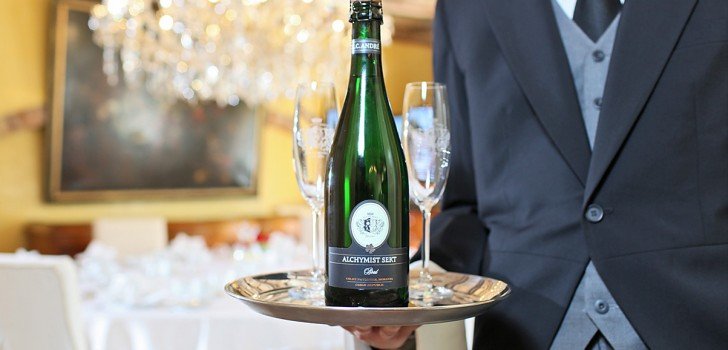
Butlers are considered by some to be the ultimate sense of luxury yet they are becoming increasingly commonplace across the hospitality industry.

And it’s not just one, do-it-all butler. There’s many types including pillow butlers, bath butlers, perfume butlers, tie butlers, doggie butlers, and cocktail butlers among others.

Butlers have even started to service customers on airplanes, such Etihad’s three room sky suite called The Residence.

However, the type of butler making the most waves is the personal butler. This butler is assigned to your hotel room for your entire stay. Some people find the situation somewhat awkward, as they are not accustomed to asking a strange person to undertake personal tasks, such as running a bath or tidying personal clothes.

Butlers are trained in a variety of tasks in order to meet the requests of their client. The Savoy Hotel in London is an example of this trend.

Head butler at the famous hotel, Sean Davoren, says “The butler takes ownership of what has been requested and ensures delivery in a timely and appropriate manner.”

At the Savoy Butler Academy, aspiring butlers are trained in food and beverage service, valeting, floristry, travel and housekeeping. The Savoy says that it seeks “a new generation of butlers who combine the discretion of a traditional English butler with the efficiency of a 21st-century personal assistant.”

One good way to learn the trade is to hear about the experiences of an actual butler. Shay Ross worked as a butler at the Savoy. He says that packing and unpacking suitcases was the largest part of his job. Additionally, he also spent time laundering clothes, preparing itinerary, and ensuring that dietary requirements were met. Ross would also prepare rooms for celebrities that had anywhere from 20 to 200 requests.

According to Ross, Middle Eastern and European clients were the most likely to know how the situation worked. Meanwhile, North American clients were more confused by the arrangement.

Ross says, “Some people just come out and say, ‘I don’t know what to do with you,’ But almost everyone finds they have a shirt that needs pressing before dinner.”

As you might expect, Ross saw some unusual activities taking place while servicing others. One client who ordered a large amount of oysters was later found by Ross snorkelling in his bathtub for the shells. Another client was particularly fond of zebra milk.

Ross also had some annoying clients as well. An ex-president of Russia requested a tuxedo overnight, but he refused to be measured.

“We got it to him only five minutes late, and he complained that the pants were an inch too long,” Ross claims.

Most guests say that repeated exposure to butlers helps make them more used to the situation, and they eventually come to view butlers as the ultimate amenity, allowing them to enjoy their trip while the butler handles mundane tasks that only take up unnecessary time.

Volkswagen Now Admits Over 11 Million Vehicles Are Affected By Its Emissions Scandal

Volkswagen has announced that more than 11 million of its diesel cars were involved in the recent emissions scandal, a number far more than previously acknowledged. The cars were equipped with cheating software that enabled the vehicles to trick regulators into believing that they were compliant with emission standards when in fact they were not.

The car company has stated that it plans to fix the cars so that they are compliant with the emission standards mandated by the Environmental Protection Agency (EPA). Fixing the cars will cost an estimated $7.3 billion.

By admitting that 11 million cars were involved in the scandal, the German car company revealed that cars outside of the United States also cheated environmental guidelines. The car manufacturer stated previously that only 500,000 vehicles were affected and that all of them were in the United States. Volkswagen has not confirmed where the other affected vehicles have been sold, but it is speculated that most were sold in Europe.

The engines that were tampered are known as Type EA 189 diesel engines.

Volkswagen has said that it intends to make a strong effort to recover public trust. The company has stated that other diesel engines produced by the company are not affected by the situation, despite having the same engine-management software.

However, the sheer number of vehicles affected by the scandal suggests severe damage to both Volkswagen’s reputation in the automotive industry and its financial standing.

The scandal shows the importance of government regulations in order to keep the automotive industry in check. White House press secretary Josh Earnest stated that the administration was concerned about the reports.

These reports detailed how the cars were programmed to sense when emission testing was taking place. At that time, equipment would be activated to reduce emissions. When the reduction equipment was not activated, the cars had stronger performance and better fuel economy, but they produced up to forty times the EPA’s allowable amount of nitrogen oxide.

The pollutant nitrogen oxide can contribute to respiratory issues, such as asthma, bronchitis, and emphysema.

Volkswagen has, thus far, been mandated by the EPA to recall nearly 500,000 vehicles that were sold in the United States. The vehicles include diesel-equipped Volkswagen Golfs, Jettas, Passats, and Beetles. Certain Audi models are also affected. Meanwhile, the company has temporarily stopped the sales of vehicles with the offending engine.

Pope Francis Is Becoming The World’s Leading Crusader Against Nuclear Weapons

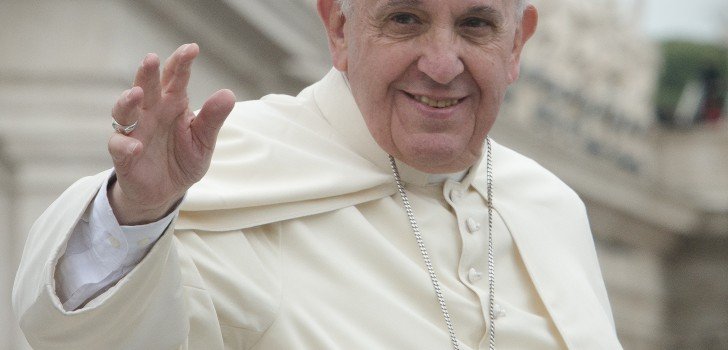
The United States is anxiously awaiting the arrival of Pope Francis, which happens later today at 4:00 p.m. In the meantime, people are brushing up on the Pope’s doctrines and beliefs. One topic that the Pope will address with members of Congress and President Obama is his position on nuclear weapons, which is as follows: it simply is immoral to possess nuclear weapons for any reason.

While Obama personally believes in this position, it is likely that the Pope’s feelings will not sit all that well with the realities faced and believed in by lawmakers.

The Catholic Church has long maintained the position that nuclear weapons must be eliminated from Earth. Pope John XXIII stated in 1963 that, “Nuclear weapons must be banned. A general agreement must be reached on a suitable disarmament program.” As a result, the United States Conference of Catholic Bishops and the church have worked together to support arms control and disarmament agreements.

And up until now, while the church has spoken out vehemently against the possession of nuclear weapons, it has recognized an exception: states may need to possess these weapons of mass destruction in order to deter other nations from launching nuclear attacks and thus ending mankind.

The Pope likely will take a stronger approach than expressed by Pope John XXII in the 60s. He will declare that any possession of nuclear weapons for any reason, even as a deterrent to world destruction, is immoral.

In December, the Pope wrote that, “Nuclear deterrence and the threat of mutual assured destruction cannot be the basis for an ethics of fraternity and peaceful coexistence among peoples and states.” Last week, the church took a more direct stance. The Pope’s spokesperson reiterated the Pope’s position that that the rationales for possessing and building nuclear arsenals are riddled with problems.

The gist of the church’s position is that in today’s world, nuclear deterrence cannot be the basis for peaceful coexistence among nations. Moreover, the risks associated with these weapons could cause extreme humanitarian consequences. Instead of acting as a step towards nuclear disarmament, nuclear deterrence itself has become a deterrent towards reaching the goal of a world without nuclear weapons.

Specifically, a recent church policy paper stated that, “in the past the church has . . . expressed a provisional acceptance of [nuclear weapons] possession for reasons of deterrence, under the condition that this be ‘a step on the way toward progressive disarmament.’ This condition has not been fulfilled – far from it.”

As such, the Pope’s message will likely trouble members of Congress and the administration. A massive buildup of United States nuclear weapons is underway and Defense Secretary Ash Carter stated last week that, “nuclear deterrent is a must-have . . . it’s the foundation, the bedrock, it needs to remain healthy and we all know we need to make additional investments, both in the Navy and, importantly, in the Air Force.”

The Pope simply does not support this position and recently asserted that, “spending on nuclear weapons squanders the wealth of nations.” It appears that the Vatican seems to have a legitimate, modern analysis of the problems facing the world, pointing out that the possession and buildup of nuclear weapons does not address the immediate, real, major issues and threats facing nations and humanity as a whole.

Despite the actions taken by the United States related to nuclear weapons, it is clear that the Pope will express his sadness and disappointment, but it is also clear that he will express forgiveness and preach his belief that it is never too late to change and be saved.

Mortar Attack On Russian Embassy In Syria Could Lead To Full Deployment Of Russian Forces

Russia has called for “concrete action” after their Syrian embassy was hit by mortar fire over the weekend. The Russian government has been increasing their military presence in Syria while giving no word on their objective. The attack on Russia’s Syrian embassy may tip the large Russian force into boots-on-ground fighting against rebels.

Russia’s Foreign Ministry said late Sunday that their embassy in Syria had come under “criminal attack.” According to the Ministry statement, “At 09:00 a.m. on September 20, a mortar shell hit the territory of the Russian embassy in Damascus. The shell was driven deep into the earth and made no damage. A large labelled fragment of the shell was later extracted from the earth by Syrian mine clearance specialists. Efforts are now being taken to find out how this shell came across to militants.”

Moscow went further to fuel speculation over who was behind the attack by saying they expected a “clear position over this terrorist attack from all members of the international community, including regional parties.” Regional parties in Syria include a U.S. led coalition that has been conducting airstrikes in the region against terror group ISIS. The Ministry called for “not mere words” but “actions” as necessary.

The Russian ministry went ahead to state why they suspected foreign influence in the attack. Through a statement, Moscow reported, “The mortar shell was fired at the Russian embassy from the Jobar district, a stronghold of anti-government gunmen. They claim they don’t belong to the Islamic State but have foreign sponsors who bear responsibility to exert influence on illegal armed groups.”

The attack came a day before Israel’s Prime Minister Benjamin Netanyahu flew into Moscow to discuss how Russia’s presence in Syria may in turn cause insecurity in Israel. Netanyahu was concerned over the presence of Russian sophisticated military equipment that may find its way into the hands of Hezbollah forces, a militia force backed by Syrian President Bashar al Assad. Hezbollah would then use these arms to rain terror on Jewish state.

U.S. officials have confirmed Russia’s military fleet in Syria to include: 28 combat aircraft, close to 20 helicopters including Mi-15 Hip transport copters and Mi-24 Hind attacks and 9 tanks. Reports on Monday added that Russia had even began flying drone surveillance systems in the Middle East country, Moscow’s first air operations in the country.

Netanyahu said of the trip, “Our policy is to do everything to stop weapons from being sent to Hezbollah.”

Security analysts high up in Israel’s circles have expressed concern over Russia’s involvement in Syria, saying it may create an axis between age old enemies Hezbollah, and now Moscow.

The attack on Russia’s diplomatic mission is a flagrant attack on another sovereign. However, Russia should be careful not to point figures before investigations are concluded as doing so will raise international tensions. The blame game will also not help the thousands of Syrians suffering under oppression by Assad’s regime and ISIS.

America’s Four Largest Airlines And Their Shareholders Are Facing A Major DOJ Antitrust Investigation

Antitrust officials in the United States are examining whether or not the country’s four biggest airlines formed a sort of airline cartel, in which they worked together in order to keep airfares high. It is also suspected that the largest shareholders of the airlines might be involved as well.

The four carriers in question are American, United, Delta, and Southwest.

The antitrust division of the Justice Department has requested details about meetings with the major shareholders of the airlines. At the meetings, it is suspected that “industry capacity” was a significant topic of discussion.

Officials believe that consumers pay higher airfares when the same investor owns shares in more than one of the big four airlines. Academic papers have suggested that customers tend to overpay for fares when there exists such an overlap of ownership.

According to one study, airfares are as much as 11% higher than average when overlapping ownership takes place.

The information available points to unlawful coordination by the airlines in order manipulate seat capacity. By limiting the number of supplied seats on airplanes, while demand for said seats remains the same, the airline companies are able to increase ticket prices.

The investigation by the antitrust department does not mention any investors or individuals by name. Also, nobody has been accused of any specific wrongdoing at this time. However, the department is attempting to determine what exactly took place at meetings where “industry capacity” was discussed.

Some of the biggest United States money managers are allegedly involved in the situation.
Major investment firms represent some of the largest shareholders of the big four airlines. These firms include BlackRock Inc., State Street Corp., JPMorgan Chase & Co., and Primecap and Capital Group Cos. These firms all own significant stakes in at least two of the major carriers.

However, the firms are playing naïve, saying that they expect regular competition in the airline industry. The airlines are also either refusing to comment or denying the allegations.

BlackRock Inc. spokesperson Ed Sweeney said, “While we can’t comment on the DOJ’s investigation of the airline industry, we expect fair and ethical competition between the companies we invest in on behalf of our client.”

The big four airlines stated in July that they have been cooperating with all requests made by the government. The investigation was disclosed around this period of time.
According to Southwest spokesperson Brad Hawkins, the company has made its capacity decisions in regards to its own best interest and without any sort of coordination or collusion with the other airlines.

The Justice Department is looking into the situation further by examining relevant studies, such as one by the University of Michigan and the consulting firm of Charles River Associates.

According to this particular study, ticket prices are increased by 3% to 11% when there are common investors between separate major airlines. The study was conducted by Professor Martin Schmalz and economists Jose Azar and Isabel Tecu.

According to Schmalz, there are two possible explanations for this occurrence.

One is that the airlines refrain from aggressive competition. This comes in the form of the airlines refusing to either expand their seating capacity or lowering their airfares. Taking either of these actions would be against the interests of their largest shareholders. These shareholders also maintain stakes in their competitors.

If the airlines work together, there’s no need for them to compete.

Another theory is that executives in the airline industry are coordinating moves on capacity or pricing by discussing strategy through large investors, who can act as middlemen for the airlines.
However, while the study offers some interesting theories, it offered no evidence of a cartel by the airline industry.

Furthermore, the investigation has surprised some analysts due to the fact that the prices of airline tickets have been on the decline this year. This goes against the theory of the airlines conspiring to work together to avoid competitive tactics.

Meanwhile discount airlines, such as Spirit Airlines, have been working hard to increase their number of seats, causing domestic coach fares to plummet.

The topic of capacity discipline has been a common theme in the airline industry since deregulation occurred in 1978. The airlines attempt to line up their supply of seats to the demand for tickets. Whenever the two become out of balance, the airlines make adjustments by scaling back their offered supply. It’s a typical practice.

For instance, in 2009 with the recession, average fares fell by 14%. As a result, airlines made the largest cut since World War II. Since then, the airline industry has consolidated, with several mergers taking place. The airlines have been very dependent on mergers and seat capacity management in recent years after the industry experienced $58 billion in losses from 2000 to 2009. Thanks to these techniques, airlines in the United States have a combined profit of $26.6 billion since 2010.

For now, the government says that they will continue to look into the matter to make sure that the airline companies are indeed staying as competitive as possible and not working together to manipulate things into their favor.

The NHTSA Is Quietly Working On A Plan To Make Breathalyzers Mandatory In All New Cars

Measures for preventing people from driving drunk might be taken to extreme levels in the near future, as a movement is taking place in the United States to have breathalyzers installed in every vehicle in America.

The National Highway Traffic Safety Administration (NHTSA) and the Alliance of Automobile Manufacturers are quietly leading this effort, which many people consider to be a major invasion of privacy. The technology would test a driver’s blood every time they get into their vehicle in order to determine their blood alcohol content (BAC).

The groups have started a five year agreement called Driver Alcohol Detection System for Safety (DADSS). The program is seeking to examine the feasibility of widespread alcohol level detection systems in cars, as well as the public challenges that would come about if such a requirement were to be implemented.

While the groups claim that the technology would be “non-invasive”, many people believe that any device that takes an individual’s BAC every time they use a vehicle they’ve purchased is precisely the definition of invasive.

It is unknown how exactly the proposed breathalyzers would function. Some believe that a system similar in nature to Interlock would be most effective. Interlock is best known as the breath system that DUI offenders are mandated to install into their cars. With this system, the vehicle cannot start until the driver breathes into the device, proving that they are not intoxicated.

The group is also considering less complicated equipment. One possible method might be sensors that are able to determine the alcohol level of the driver through their breath as they sit in the seat. Another method that is being discussed is a touch system that can detect alcohol levels through skin.

In such a scenario, police would theoretically be able to decrease their enforcement of DUIs, since people under the influence would supposedly be unable to start their vehicles, at least not without the assistance from someone who is not intoxicated. This would allow police to focus more on any driving action that violates road rules or causes an accident, rather than singling out people who are impaired on alcohol through methods such as DUI checkpoints.

Still, it’s difficult not to imagine the possibility as an invasion of privacy.

Apple Met With California Regulators To Discuss Testing Permits For A Self Driving Car

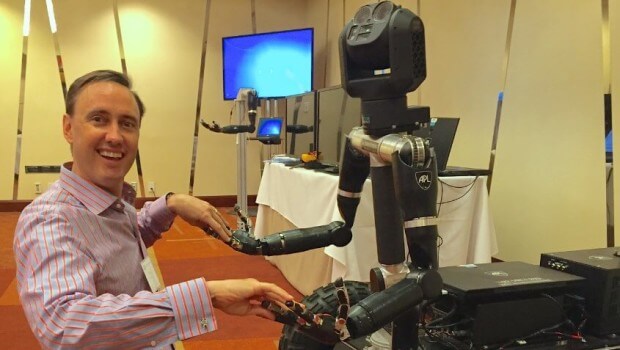
Apple continues to move quickly in the game of driverless vehicles, this time by meeting with California legislators chiefly responsible for self driving vehicle regulation. The rumor mill that Apple is building a car has gotten a lot of grist but things continue to look like by 2020, U.S. citizens could just be listening to their favorite playlist from their iPhones in a driverless Apple vehicle.

The Apple car, internally called “Project Titan”, is well underway and much closer to realization than most industry insiders originally thought.

The latest development saw Apple executives, including legal representative Mike Maletic, reportedly had hour-long meetings with the California Department of Motor vehicles.

The meeting between the two organizations occurred on Aug. 17th. Former California Secretary of State Bernard Soriano was in attendance, as were Brian Soublet and Stephanie Dougherty, head of enterprise planning regulation at California Department of Motor vehicles.

Analysts said negotiations were likely to have been focused on the 2012 California Senate Bill 129B granting the California Department of Motor Vehicles authority to develop regulations on the testing and operations of self driving vehicles. The bill separates operations from testing and Apple does not yet have a testing permit.

Negotiations for the permit in California can last up to one year and cost an estimated $5 million in insurance, self-insurance and bond. The regulations also require that test drivers should never have been charged with DUI or an accident that was their fault. They must also have not more than one point on their licenses.

Apple has recently appeared to have been pushing to release its first electric vehicle by 2020.

Automakers spend on average seven years before launching a car. Should Apple launch its car project, it will be in direct competition with established automakers such as General Motors and Tesla. Both companies are gearing for an electric car that can travel 200 miles and costs less than $30,000 by 2017.

Analysts have said Apple would have something of a head start going into the car industry after posting record profits of $18 billion last year and $178 billion in cash reserves – more than enough to fund project Titan. Then there’s also the Apple brand, which seems to be able to sell just about anything.

Clinton Continues To Extend Lead Over Sanders As Biden Weighs Possible Bid

Hillary Clinton has increased her lead over Bernie Sanders in the race for President among the Democrats. This is a reversal of recent trends, as Sanders had been gaining support, while Clinton’s lead was shrinking.

The most recent polls show that Clinton has 42% of support from Democrat voters. Sanders achieved 24%, and Joe Biden, who hasn’t even announced whether or not he will run, received 22%.

Clinton is up by five percentage points, having received 37% in the previous poll, while Sanders is down three percentage points, having been at 27%. Biden has managed to increase his share by two percentage points from 20%.

Every other candidate received less than 5%.

If Biden decides not to run, then Clinton’s lead would become even larger. In such a scenario, Clinton would achieve 57% of the Democrat vote, while Sanders would receive 28%.

A month ago, these figures without Biden stood at 48% for Clinton and 32% for Sanders.

Clinton has been working to increase her numbers by participating in a large number of sit-down interviews with major television networks. She is still facing criticism for her usage of a private email server while she was in office as the Secretary of State.

On Sunday, Clinton appeared on “Face the Nation.” She tackled perceptions that she is “inauthentic,” claiming that she is indeed a “real person.” Clinton also discussed economic policy and her support of Obamacare.

Meanwhile, Sanders recently held a rally at the University of New Hampshire that managed to attract 3,000 people, or five times as many people that showed up for Hillary Clinton’s rally at the same university just two days prior.

Sanders also bashed Republican candidate Ben Carson over Carson’s comments that he would not want a Muslim to be President of the United States.

Sanders said, “Look, you judge candidates for president not on their religion, not on the color of their skin, but on their ideas on what they stand for. That’s what democracy is supposed to be about. So I was very disappointed in Dr. Carson’s statement and I disagree with him.”

While Sanders remains a topic of discussion, the Vermont Senator has some catching up to do with Clinton, at least according to the polls.

Colorado Is Making Way More Money From Its Marijuana Tax Than It Expected

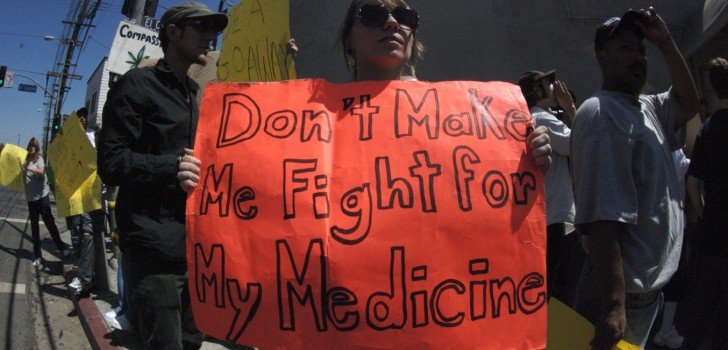
Colorado is lighting up its record books, as the tax revenue that the state is receiving from legalized marijuana is blazing almost as fast as the smokable drug responsible for the increase.

The numbers indicate that the tax revenue received by the state during this year’s summer was more than double that of last year and fully exceeded projections.

During the first seven months of 2015 the state of Colorado has taken in $73.5 million. At the current rate, Colorado will collect over $125 million in tax revenues by the end of the year.

Expectations fell short in 2014, as experts estimated that legalized marijuana would bring in around $70 million. However, the state was only able to collect $44 million in marijuana taxes, as sales totals did not meet the expectations of analysts.

This year is a different story, as tax revenue from marijuana sales is greatly exceeding expectations.

People involved in the marijuana industry believe that the sales boom might be caused by an increase in social acceptance.

President of the Colorado Cannabis Chamber of Commerce Tyler Henson said, “I attribute it to more and more people (being) comfortable with the legalization of marijuana. They don’t see it as something that’s bad for them.”

Tim Cullen, CEO of Colorado Harvest Company, said “People who would never have considered pot before are now popping their heads in.”

The Colorado Harvest Company runs three marijuana dispensaries in the Denver area, and they plan to have a fourth in the near future. According to Cullen, sales in his stores have experienced a monthly growth rate from 8% to 12% nearly every month this year. Most of the sales come from Colorado residents who are buying recreational marijuana.

Marijuana has been embraced by Colorado since becoming legalized. A poll that took place in February showed that 58% of Colorado citizens supported keeping marijuana legal, while 38% opposed the idea.

Another factor that might help explain the increase of marijuana sales over the past year is the fact that the number of dispensaries selling marijuana has increased. When the retail sale of marijuana began in January 2014, the only stores that were allowed to sell recreational marijuana were those with licenses for medical marijuana. Over time, more stores have opened, and now there are hundreds of dispensaries across the state.

With the increased number of dispensaries, sellers of marijuana have had to work hard to attract customers. The average marijuana customer is a far cry from the young college-aged stoner stereotype. Today, the typical cannabis connoisseur is more sophisticated and looking for specific marijuana strains. In other words, the average customer is a middle-aged business professional with disposable income.

Many shoppers say that purchasing marijuana in dispensary today is a similar experience to that of a fine wine shop. Workers recommend particular varieties of marijuana based on the customer’s needs. Marijuana lingo is usually common place, as customers will likely hear about the various aspects of a strain, including its “aromatic notes”. Dispensaries have also been known to utilize practices such as weekly promotions and loyalty programs.

The increase in marijuana sales can also likely be attributed to tourists visiting the Centennial State. During 2014 Colorado’s 71.3 million visitors spent a record $18.6 billion in Colorado. Coincidentally, this was also the first year of marijuana legalization. 2015 tourist sales have not yet been released.

However, certain aspects are holding back the marijuana industry. Aspiring dispensary operators face a lack of access to credit cards and bank loans. They are also unable to receive certain federal small business deductions. Furthermore, the marijuana industry cannot openly advertise the way that liquor companies are able to.

Despite the challenges, sales for cannabis are expected to increase, as marijuana continually becomes more socially acceptable.

Hedge Fund Manager Turned Pharma CEO Defends 5,500% Price Increase Of AIDS Drug

In what is being blasted as one of the worst cases of abject greed seen for sometime, a former hedge fund manager turned pharmaceutical entrepreneur has bought the rights to a drug used to treat life-threatening parasitic infections in HIV/AIDS patients.

He then raised its price 5,500 percent overnight. This saw the price of the drug, Daraprim, go from $13.50 to $750 per tablet.

According to media reports, 32 year old Marin Shkreli, founder and CEO of Turing Pharmaceuticals, purchased the rights to the drug for $55 million on the day that Turing announced that it had raised $90 million in its first round of financing.

Daraprim, which has been in use for 62 years, is used to treat toxoplasmosis which is an opportunistic parasitic infection which affects babies and people with weak immune systems from AIDS and certain types of cancer.

Pharmaceutical experts say the drug sold for $1 a tablet just a few years ago with its price increasing to $13.50 as the rights to the drug went between pharmaceutical companies. They say the previous price increases, although fairly substantial, were nothing compared to the 5,500 percent increase imposed by Shkreli.

The price rise has been questioned by doctors who prescribe it for patients. Infectious diseases division head at the Icahn School of Medicine at Mount Sinai asked, “What is it that they are doing differently that has led to this dramatic increase?”

Shkreli has defended the massive rise saying the money from sales will be used to develop better toxoplasmosis treatments which have less side effects.

“This isn’t the greedy drug company trying to gouge patients, it is us trying to stay in business,” he said, adding many patients used the drug for less than a year and that the hiked price was similar to what is being charged for other drugs used to treat rare diseases.  

“It really doesn’t make sense to get any criticism for this.” said Shkreli.

But Shkreli’s claims of putting profits back into better treatments for toxoplasmosis have been shot down by experts. “I certainly don’t think this is one of those diseases where we have been clamoring for better therapies,” said professor of infectious diseases at Emory University in Atlanta, Dr. Wendy Armstrong.

The Daraprim controversy is not the first flack the fledgling pharmaceutical company owner has received. The experts say that as owner of the hedge fund MSMB Capital he was accused of trying to persuade the Federal Drug Administration (FDA) to not approve some drugs made by companies MSMB capital was shorting.

In 2011, Shkreli co-founded a company called Retrophin, which also acquired the rights to drugs that had been on the market place for many years and then raised their prices. His own board fired him in 2014, filing a Federal District Court complaint which accused him of using Retrophin funds to pay back unhappy investors in his hedge fund.

Hungary Becomes Latest European Country To Launch Anti-Migrant Ad Campaign

In one country’s latest move to “deal with” the Syrian refugee crisis, the Hungarian government has put the world on notice that it will not allow migrants to enter the country illegally. Earlier this morning, the government posted warnings in both Jordanian and Lebanese newspapers that crossing the country’s borders illegally is punishable by imprisonment.

The full-page announcements state that “the strongest possible action is taken” against those who attempt to do so. The ads further state that, “Do not listen to the people smugglers. Hungary will not allow illegal immigrants to cross its territory.” The warnings were posted in Arabic and English.

Hungary’s stance is the latest wrinkle in the crisis as all of Europe is under significant pressure from tens of thousands of refugees who are risking their lives in efforts to reach European nations in order to seek sanctuary. The country closed its border with Serbia on September 15th and has now erected an additional steel barrier at one border crossing with Croatia to try to stem the flow of migrants. The migrants keep coming, however, and the majority are Syrians.

Hungary chose to publish the warnings in Lebanon as the Mideastern country houses over 1.1 million Syrian refugees. It also chose to publish in Jordan, which currently has a population of 630,000 refugees. Many of these refugees are receiving no work opportunities or aid and therefore they are planning to migrate to Europe.

As harsh as Hungary’s announcements seem, they are not the first of their kind. Earlier this month, one of Denmark’s governmental agencies posted ads in Lebanese newspapers hoping to deter migrants from crossing into Denmark. The ads stated that the nation has reduced aid to migrants by one-half and also that migrants whose applications are denied will be deported immediately.

In contrast to the positions taken by some European countries, Lebanon is taking a different stance. Agencies have appealed to financial donors to help the country deal with the refugees, which includes providing free schooling to refugee children. Elias Bou Saab, the Lebanese Education Minister, stated that the country will take into its schools even more children than last year. While the government plans on enrolling 200,000 refugee children, that leaves another 200,000 without schooling.

Bou Saab told reporters that, “There are a still greater number of students out of schools, and that is a danger, danger to Lebanon and to the region. When they lose hope that there is no job opportunity or chances to go to school or chances that give them hope in life, they start to look for legitimate and illegitimate ways to go from one place to another [meaning the current exodus to Europe].”

While many European countries recognize that increased funding to Lebanon and other Mideast countries is the key to slowing down migrants from trying to reach Europe, others are not contributing anything – or at least as much as they can.

Some analysts believe that wealthy Gulf states are not paying their fair share and also suggest that the United States is not contributing as much as it could.

The raging civil war in Syria has been going on for five years and has produced greater than four million refugees and has killed more than 250,000 people.

France Rules Google Must Apply ‘Right To Be Forgotten’ Requests Worldwide

ln a ruling that may have legal implications on a worldwide scale, France’s data-protection regulator rejected Google’s appeal of its decision to widen and expand Europe’s “right to be forgotten” to all of Google’s websites as opposed to just the European versions. The ruling likely will lead to a lengthy and protracted legal battle.

The Commission Nationale de l’Informatique et des Libertes (“CNIL”), ruled that Google must follow a formal order that was handed down earlier this spring directing the company to apply the right to be forgotten to all of Google’s domain names, including Google.com, rather than just local European ones, such as Google.fr. The ruling also states that if Google fails to do so, it faces possible sanctions.

The dispute between Google and the CNIL began in 2014 when the European Court of Justice (“ECJ”) determined that European citizens have the right to request that Internet search engines remove sensitive or embarrassing search results that include their name.

Since that determination was made, Google has been implementing the ruling, but it has only removed such links from its European website domains and not from sites such as Google.com. Furthermore, Google has continued to maintain this policy even after the CNIL issued the company a formal notice ordering the company to apply the ECJ ruling to all of its websites internationally.

Google has been trying to convince the CNIL to reverse its order – to no avail. In fact, Google said it would fight any such order on a matter of principle.

As of now, the CNIL can issue initial fines of up to $165,000 – pittance compared to Google’s annual revenue of $66 billion. However, any sanction can be appealed.

In its appeal to the CNIL, Google argued that applying the right to be forgotten beyond Europe’s borders could set a precedent for more authoritarian governments to apply Internet censorship beyond their borders. The CNIL did not buy the argument.

In its order rejecting Google’s appeal, the CNIL said that, contrary to Google’s position, the CNIL was not trying to apply the law to countries outside of Europe, but rather, simply to apply European law to companies doing business in Europe. The regulators further stated that Google’s attempts to circumvent the law makes it very easy for individuals or entities to find private information that individuals have requested to be forgotten – thereby undermining the intent of the ruling.

In response to its appeal rejection, Google stated that, “As a matter of principle, we respectfully disagree with the idea that one national data protection authority can assert global authority to control the content that people can access around the world.” When the initial ruling was handed down in July, Google stated that the order was “disproportionate and unnecessary” as most French Internet users access the European versions of Google rather than international versions of the search engine.

NASA Gives Manned Mars Mission A New Official Timeline

The long dreamed of trip to Mars by American astronauts has been given a timeline with NASA recently announcing that they have finished a thorough review of the planned mission, and everything is going according to plan for a launch by 2023.

The original date was estimated to be August of 2021. However, NASA recently made structural changes to the Orion Capsule, moving the mission back to a date of April of 2023. The manned mission to Mars is being called EM-2.

Even though the mission has been delayed by almost two years, NASA is expressing great confidence that humans will soon step foot on Mars. NASA’s Curiosity Rover is currently exploring the red planet, giving NASA engineers a good idea of what to expect on a manned mission.

NASA administrator Charles Bolden said “Our work to send humans out into the solar system is progressing. Orion is a key piece of the flexible architecture that will enable humanity to set foot on the Red Planet, and we are committed to building the spacecraft and other elements necessary to make this a reality.”

The Orion Capsule has already been successfully tested by NASA. The test provided scientists and engineers with useful performance data. The data has already been used to make improvements into the design of Orion. Another test flight of Orion is scheduled to launch on NASA’s Space Launch System (SLS) rocket.

After the SLS launch takes place, engineers plan to continue working to improve the capsule. Eventually, they will simulate the mission itself, complete with fully integrated environment control and life support systems. The simulation will also include advanced launch and reentry spacesuits to be worn by the team.

While NASA might be ready before April of 2023, the agency is wise in not rushing its mission. Spacecraft are delicate and dangerous, and it’s best not to take any unnecessary risks. However, once humans are walking on the distant red planet, it will no doubt be worth the wait.

Crowdfunding Kingpin Decides To Reorganize Into Socially Responsible Business Structure

Kickstarter, the popular crowdfunding platform, has changed its name and has reincorporated as a Public Benefit Corporation. The announcement that it is changing its business model was made on its blog.

From now on Kickstarter Inc will be known as Kickstarter PBC, and joins other U.S. based companies like Patagonia Inc and This American Life, in publically chasing social values in their business.

The announcement read “More and more voices are rejecting business as usual, and the pursuit of profit above all. Positive impact on society becomes part of a Benefit Corporation’s legally defined goals.”

Begun in 2009, Kickstarter is known for pooling individual investor funds for movies and electronic gadgets. It has raised funds for projects ranging from the movie “Veronica Mars” to Pebble Smartwatches, making its money by taking a percentage of the money raised. The latter crowd sourcing project reportedly raised the watchmaker $10 million.

Now the company said it will pursue a “positive impact on society” – legally.

“In our new charter we spell out our mission, our values, and the commitments we have made to pursue them. There was not a single dissenting vote by a Kickstarter shareholder to re-incorporate as a Benefit Corporation” read the blog announcement.

The company said that among other things, its new charter will ensure it donates five percent of all post-tax profits to arts education and groups fighting inequality, and “nor will it sell user data to third parties.”

It pledged that “Kickstarter will not use loopholes or other esoteric but legal tax management strategies to reduce its tax burden”.

One of the company’s founders, Perry Chen, said he hopes other companies will follow Kickstarters newly adopted model. He said “As younger companies come up and think about how they operate and how they want to be structured, maybe they won’t be so easily swept up by all the usual choices. Maybe they’ll be thinking long term, thinking about how to look after the things they care about.”