Home Blog Page 70

Netflix Unveils New Original Programs Targeted Towards Children

LEGO is coming to Netflix, as the on-demand streaming service is looking to expand its offerings of original programming.

Two new original series from the LEGO brand will come to Netflix next year. LEGO: Bionicle: The Journey to One is set to appear during the first quarter of 2016, while another series, Lego Friends: The Power of Friendship will make its debut in the second quarter.

LEGO: Bionicle: The Journey to One is based on LEGO’s popular line of robot-like action figures called Bionicles that users construct themselves. Bionicles were originally available from 2001 to 2010. The line was relaunched in a reboot earlier this year.

LEGO Friends: The Power of Friendship will follow a group of girls and their dog as they live in their home town of Heartlake City. The series is said to contain lots of music.

Netflix is also planning to launch other original series also aimed towards children.

Dawn of the Croods is being currently developed by DreamWorks Animation.

Saban Brands, makers of the popular series Power Rangers is launching a new show titled Glitter Force in December. The series is an adaptation of the Japanese anime Smile PreCure.

A show about teenage musicians called Lost & Found Music Studios is set to arrive in early 2016.

In 2017, two more children shows, Buddy Thunderstruck, which is from Americans Greetings Entertainment, and Las Leyendas, an animated series based on a Mexican film trilogy, are set to make their respective debuts on Netflix.

The streaming service believes that children are a big part of their audience, and representatives say that they want to make a stronger effort to market towards kids.

Director of Children’s Content for Netflix Andy Yeatman said, “Roughly half of our 65 million members around the world regularly watch kids content and with the addition of these seven diverse original series we are continuing our strong investment in kids programming. We know kids love Netflix and that’s in part because they never really outgrow us. We program and recommend new TV shows and movies from preschool through their teen years and into adulthood.”

Democrats Accuse Benghazi Panel Of Bias Against Hillary Clinton

House Democrats attack Benghazi panel for apparent outright attack on Hillary Clinton and her presidential campaigns. Democrats now want the panel completely disbanded for breach of House ethics rules. Republicans will hear none of it.

Nancy Pelosi, House of Representatives Democratic leader, said on Thursday that the committee investigating the 2012 Benghazi attacks had violated the ethics rules of the Congress. This was after Kevin McCarthy, House of Majority leader, indicated on Tuesday evening that the probe’s main aim was to undermine Hillary Clinton’s presidential candidacy.

McCarthy pointed out to Fox News on Tuesday that everyone thought Hillary Clinton was unbeatable. “But we put together a Benghazi special committee, a select committee.” McCarthy said and concluded that Clinton’s numbers were dropping as a result.

These remarks resulted in angry Democrats calling for the disbandment of the investigating committee. McCarthy recently launched his campaign for the position of House speaker. John Boehner, the current speaker, retires on Oct. 30.

The remarks also raised concern among Republicans who thought that he should apologize for what he said, while others downplayed the situation, terming it a “media stumble”. McCarthy, not one to take any chances with heading the speaker’s election, later apologized for his remarks.
Republicans contend that the Benghazi panel was instituted to investigate the 2012 attacks on U.S. facilities in Benghazi, Libya where four Americans were killed. However, following McCarthy’s comments, Democrats said that the real reason why the committee was formed was now clear.

“The question is, is this an ethics violation of the rules of the House?” Pelosi asked, pointing to the fact that the actions of the committee could be a violation of the congressional ethics laws. The laws ban the use of taxpayers’ money for political purposes. Pelosi further said, “I think he (McCarthy) clearly, gleefully claimed that this had a political purpose and a political success.”

McCarthy defended himself Thursday on Fox News, saying that he did not have any intention of implying that the committee was formed for political purposes. McCarthy also stated that he had talked to the panel’s chairman, Representative Trey Gowdy, and clarified that he did not have any such intention.

Boehner, a Republican, said that the panel would continue with its work as “this investigation has never been about former Secretary of State Clinton, and never will be.”

McCarthy’s remarks come in the wake of his campaign to succeed the current speaker. Although he is a top contender for the seat, his recent showing has cast him in negative light. When asked if this situation could affect his campaign, McCarthy told Fox News, “This is not what you are going to see as speaker of the House.”

Wages Expected To Increase As US Economy Blossoms

After long periods of speculation, wages in the United States might finally see a serious increase.

Average hourly earnings have risen by just two percent per year during the last six years. However, economists are predicting that the rate of growth could soon increase it by 2.4%. This would be the highest rate of growth for hourly earnings since August of 2009.

Economists had predicted an increase in the wage rate in recent years, but it has never quite met their expectations.

This time might be different. For one, the growth rate at this time last year was weak, giving this year’s period a chance to shine. Meanwhile, the unemployment rate is at its lowest point in more than seven years. In what has become a favorable job market for workers, employers are expected to increase wages in order to retain staff.

New York economist Jay Feldman said, “”It’s not a big acceleration. It’s a little bit above the range it’s been at for the last few years, but given the tighter labor market, it’s what one would expect at this point. There’s a little bit less slack, and a lot of survey data have been pointing to faster wage growth for some time.”

Figures released from the Commerce Department showed wages increasing by 0.5% and 0.6% in August and July respectively. This represents the largest back-to-back rises for this year, and it shows that the economy is performing strongly.

End of the year predictions also look favorable.

More than 19% of Americans say that they expect to receive an increase in pay sometime in the next six months. That is the highest rate since January and the second greatest since November of 2010.

Meanwhile, 13% of managers say that they plan to increase pay in the near future.

The Employment Cost Index is expected to increase as well. In the first quarter of this year, it showed a 2.6% increase, but the rate slowed to 2% in the second quarter. The index will be released later this month.

Low Nicotine Cigarettes Are The Key To Getting Smokers To Quit

Low nicotine cigarettes are the key to getting more people to quit smoking and reducing dependency, a new study shows. Smoking is the largest cause of heart complications and cancer. Low nicotine cigarettes can save millions of smokers around the globe from future health complications.

A study conducted by University of California officials revealed that low nicotine levels in cigarettes was the key in reducing dependency on the dangerous drug. The study took 800 smokers who smoked five or more cigarettes a day and were not interested in quitting when initially surveyed. Some participants were assigned to continue smoking their usual cigarettes. The others smoked cigarettes ranging from 0.4 milligrams of nicotine to 15.8 milligrams of nicotine per gram, the same level found in most cigarettes.

According to the University of Pittsburgh study leader Dr. Eric Donny, “We wanted to see how much lower it would need to be to see that effect, where dependence did not happen or was diminished.”

The cigarettes were provided for free and no one, except those assigned who were assigned to smoke their regular cigarettes, was informed of the levels of nicotine in their cigarettes.

The study revealed that though the low-nicotine smokers were more likely to smoke some extra cigarettes in addition to the ones given in the study, the overall number of both cigarettes and nicotine levels were lower in those groups. In the last week of the study, low nicotine users were found to only smoke 15 or 16 cigarettes a day, while their high nicotine counterparts smoked up to 22 a day.

Upon standardized testing, the low nicotine users even showed less dependence on nicotine as opposed to the high nicotine folk. In the month following the experiment, up to 35 percent of the low nicotine smokers tried quitting as opposed to only 17 percent in the other test group.

Another study leader Dr. Neal Benowitz, University of California, said of the connection between low nicotine and lesser dependency, “This, I think, provides support. What our study shows is that it’s feasible.”

The Food and Drug Administration (FDA) was given power in 2009 to authorize lower nicotine levels in cigarettes. It has yet to exercise such authority.

The study goes to show that nicotine can be reduced to bring down dependency by smokers. The FDA should act fast to regulate nicotine levels in cigarettes so as to combat high smoking numbers.

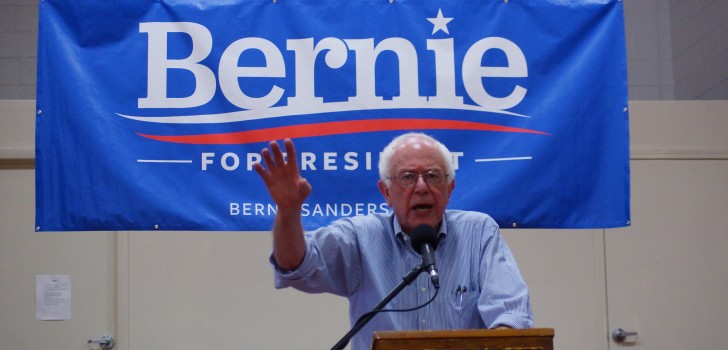
Bernie Sanders Catches Up On Hillary In Fundraising

Democratic Presidential hopeful Bernie Sanders appears to have resonated with Democratic donors last quarter and is now neck and neck with Hillary Clinton in his ability to raise funds.

He may even have an edge.

During the last fundraising quarter ending in September, Clinton held 58 fundraisers while Sanders only had seven.

Sanders raised 1.3 million donations from his 650,000 supporters. Clinton on the other hand did not reveal how many donations she had inspired. Sanders raked in $25 million by end of September. Clinton’s team did not reveal how much she had in her bank.

While the law does not require Super PACs to reveal just how much they have raised for their candidates, not until January at least, Clinton’s silence has raised a lot of eyebrows. Sanders’ figures are very much mind boggling. From a candidate that six months ago could not even be considered a legitimate presidential contender, to raising 25 million in three months, the Vermont Senator has shown he is not one to be tossed aside.

Regarding Sanders’ huge fundraisings, senior political analyst David Axelrod tweeted, “Sanders fundraising is remarkable. The (number) to keep an eye on now is cash on hand. Very possible he has more than HRC.”

Politically, Sanders’ meteoric financial rise shows two things: One is that Sanders is meeting people at the grassroots and greeting potential voters as opposed to canoodling with the same donors in dinners. The other is that Sanders has been able to conserve plenty of money, keeping away from lavish events for high end donors.

This efficiency has brought Clinton’s Democratic lead into question, with many analysts saying it reinforces what is already open knowledge within Democratic circles: Sanders is the energy candidate connecting with the masses, while Clinton is the establishment favorite struggling to connect with the people.

Having a $25 million war chest will definitely help Sanders in Iowa and New Hampshire. The senator will be able to launch an aggressive television campaign with ads focused on his candidacy. Clinton will likely outspend him in commercials, but the Vermont Senator will give her a hectic run for the voters on the ground.

Clinton has largely centralized her fundraising to Democratic regulars while Sanders has gone down to the grassroots to marshal the Democrats. If Sanders keeps his momentum steady, the Democrats will have a new front runner in the coming few months.

EPA Imposes New Restrictions On Ground-Level Ozone

New limits on smog emissions were released on Thursday by the Environmental Protection Agency (EPA), in a move to decrease suffering due to asthma and respiratory illness.

The EPA has dropped the limit on ozone from 75 parts per billion (ppb), to 70 ppb, in part due to new studies linking ozone exposure to asthma development.

According to the Office of Management and Budget (OMB), Obama administration officials met with industry groups such as the National Association of Manufacturers, Marathon Oil Corp and American Petroleum Institute, but sent only deputies to health and environmental groups like the American Lung Association and the Sierra Club.

Both industry and environmental groups were upset with the new limit, with each side claiming that it was either too low or too high. Government officials considered a stricter limit of 68 ppb, but chose to listen to industry group representatives like Paul Noe, vice-president of the American Forest and Paper Association.

Noe stated that going with a 68 ppb limit would cost ten times as much as 70 ppb. Noe also claimed that the stricter limit would nearly triple the number of affected pulp and paper facilities, from 41 to 114.

This was not the first time the administration listened to industry groups. In 2011, Obama shelved an EPA proposal for tighter pollution standards in light of the precarious status of the economic recovery.

Limits on the air pollutant nitrogen oxide are set to drop by one third by 2025, following a 50% reduction in 1990. However, many have not met the 1990 limits yet, and criticize moving to a lower standard.

John Walke of the National Resources Defense Council criticized the Obama administration for not pursuing a lower limit, “The president’s legacy is shaping up to be one of unprecedented leadership on combating climate change, but weakness on health standards for smog pollution.”

EPA administrator Gina McCarthy defended the limit stating that studies showing an effect from ozone levels as low as 60 ppb were not shown to be harmful.

Trump Vows To Drop Out Of Race If Polls Begin To Decline

Sporting poll numbers at just above 20%, Donald Trump has stated that he will not remain in the race if his polls begin drop into the low single digits. With 15 Republican candidates left in the race, Trump retains a strong lead ahead of the second and third place candidates, Ben Carson and Carly Fiorina, who are both polling around 13%.

Trump’s new position is a long way from claims he made in the first Republican debate, when he stated that he may decide to run as an Independent if he did not win the Republican nomination. In September, he relented and signed a pledge of support for whoever wins the Republican nomination.

Trump is not a stranger to changing his position on the issues, a fact he demonstrated this week when he promised to send back any Syrian refugees if he was elected. Earlier in September, Trump blamed Obama for the crisis and said, “I hate the concept of it, but on a humanitarian basis, with what’s happening, you have to.”

The U.S. has so far taken in 1,500 Syrian refugees since the start of the civil war in 2011.
Trump’s new stand on the issue echoes similar statements by world leaders from around the globe, including Canadian Prime Minister Stephen Harper, who criticized his opponents in the federal election earlier this month for being too willing to accept the refugees.

With many world events in chaos, or teetering on the edge, there is plenty of space for the real-estate mogul to make criticisms and outrageous claims, one of his favorite pastimes.
As Russia pursues its aggressive expansion in Ukraine, and now Syria, the issue will surely be a new source of quips on the administration’s missteps and failures to “negotiate.”

After Obama administration officials endlessly repeated their policy of “deconflicting” the situation with Russia in Syria, it was widely seen as a humiliation when Russia moved to begin airstrikes on Wednesday after issuing a one hour warning to U.S. officials.

Volkswagen Loses Two Green Car Awards Following Emissions Scandal

Volkswagen has been stripped of two “Green Car of the Year” titles following the revelation of its emissions test-rigging schemes. The news illustrates that the most serious damage to the company may be to its image, even as it sets aside over $7 billion for repair costs and regulatory fines.

Sales numbers released today confirmed such fears, with September sales coming in flat. The company’s September sales were far behind industry competitors, except for Audi vehicles. The news was especially dire considering that brands like Ford, Toyota and Nissan all posted double-digit gains due to Labor Day weekend sales.

Such large gains were an unusual quirk of accounting, because in 2014, Labor Day sales were counted under August sales, whereas this year they fell under September. Kelley Blue Book analyst Alec Gutierrez stated that the company’s sales for October and November would give a better picture of the damage it has sustained from the scandal.

Kelley Blue Book said that interest in prices of Volkswagen vehicles had increased almost 80% in recent weeks. The car-shopping site TrueCar said that interest in buyers for such vehicles has seen an associated decline. Customers of the brand may end up saving money if they do choose to buy, with TrueCar vice president Larry Dominique expecting the company to issue more incentives to lure back interest.

The company stopped selling its 2-liter diesel vehicles following the September 18th announcement of the emissions issue.

The affected awards were originally given to the 2009 Volkswagen Jetta and the 2010 Audi TDI. These models were specifically chosen in part for their high fuel efficiency. As a result of its emissions scheme, these vehicles were able to achieve higher mileage numbers due to an associated rise in the emission of nitrogen oxide.

The Green Car Journal editor, Ron Cogan stated that the decision to remove the rewards was “unfortunate but appropriate.”

U.S. Accuses Russia Of Not Using Precision Weapons in Syria And Targeting Rebel Areas Instead Of ISIS

In an attempt to bring Russia under international condemnation following the start of its air campaign in Syria Wednesday, the U.S. Air Force pointed out that the Russia’s lack of precision-guided weapons would lead to considerable civilian casualties.

The U.S. wars in the Middle East have themselves come under scrutiny due to allegations of civilian casualties, which can sometimes be unavoidable. Lt. Gen. Robert Otto accused the Russian forces of conducting the recent airstrikes in the area north of Homs, a rebel area not under ISIS control.

Otto stated, “To me, it was representative of what you’d expect from dumb bombs, being dropped from airplanes at medium altitudes, which is not that impressive.”

Russian government officials stated that civilian casualties were inevitable, but the U.S. is concerned that a campaign of indiscriminate bombing may lead to a surge in recruitment to extremist groups like ISIS.

The U.S. has stated that its air campaign in Syria practices extreme caution with its airstrikes, relying on drone surveillance to confirm the absence of civilians around potential targets.

Lt. Gen. Otto confirmed this view, stating, “Our approach has been to be very cautious with the application of force. If at the end of the day you inadvertently kill innocent men, women and children, then there’s a backlash from that. And so we might kill three, and create 10 terrorists.”

U.S. officials have claimed a desire to coordinate with the Russian military in Syria. The United States’ Deep distrust toward Russia may see that collaboration only extends to ensuring the two nations do not experience mid-air collisions as they pursue their respective military objectives.

U.S. suspicions were stoked earlier in the week after reports of an intelligence-sharing agreement between Syria, Iraq, and Russia were released. And although Kremlin officials denied the U.S. accusations of targeting rebel-held regions, they also did not reveal the exact locations of their airstrikes.

Hurricane Joaquin Now Category Four And Could Prove Extremely Deadly For US

Hurricane Joaquin increased in intensity to a category four hurricane on Thursday, as the hurricane wreaked havoc on the Bahamas.

The east coast of the United States is preparing for the hurricane which is said to be extremely dangerous.

A category four hurricane features wind speeds in the range of 131 to 155 miles per hour. It has the ability to cause catastrophic damage to property. The hurricane scale ranges from one to five.

Hurricane Joaquin has shown maximum sustained winds in the excess of 130 mph. The hurricane is expected to increase in strength over the next day.

The storm will continue move over the Bahamas into Thursday night, as the islands will experience heavy rain and destructive winds. Officials in the Bahamas say that they expect up to 15 inches of rain.

The Bahamas have closed their schools, and cancelled flights. Meanwhile, cruise ships headed for the area were diverted to alternative locations.

The latest bulletin from the National Hurricane Center said that the storm has developed into an extremely dangerous category four hurricane. The storm has the potential to cause flooding and life-threatening damage.

Officials as far north as New York are already making emergency preparations. President Barack Obama is keeping a close eye on the situation as it develops.

Weather experts are particularly concerned about the slow speed at which the storm is traveling. Its slow speed means that it has longer amounts of time to cause destruction as it crosses over land.

The storm is expected to continue a northwestern path that might eventually take it up the eastern coast of the United States. Heavy rainfall is already expected in the Carolinas and Virginia.

On Tuesday, Virginia was hit by flash flooding. The state, which has already declared a state of emergency, will have a difficult time preparing for Hurricane Joaquin. Virginia is forecasted to receive up to ten inches of rain.

The Norfolk Naval Station has been put on notice to be prepared for event of destructive winds. The station is the largest naval base in the country.

Joaquin is the third hurricane and the tenth named storm of the 2015 Atlantic Hurricane Season. Any storm that reaches tropical storm status receives a name. The first named storm of the season always starts with the letter A, and the process continues down the alphabet.

Hurricane season starts in June and ends in November. Peak activity usually takes place in September.

Tropical Storm Erika has been the most destructive storm so far this season. The storm killed around 30 people on the small island of Dominica in the Caribbean.

Officials from the National Oceanographic and Atmospheric Administration predicted that the 2015 Atlantic Hurricane Season would be less active than usual as a result of the El Nino phenomenon. Temperatures of the surface of the ocean have been cooler than usual, which usually prevents major storms from forming.

Iranian Forces Join Russian Air Fighters To Help Embattled Assad In Syria

Hundreds of Iranian troops have made their way to Syria to fight alongside President Bashar al-Assad’s troops. The Iranian military offensive comes in the wake of the first Russian airstrike in Syria against anti-Assad rebel movements.

According to a Syrian official, “The (Russian) airstrikes will in the near future be accompanied by ground advances by the Syrian army and its allies. It is possible that the coming land operations will be focused in the Idlib and Hama countryside.”

Russia conducted its first airstrike inside Syrian territory on Wednesday. In the coming days, the elite Russian air force rained bombs on territory occupied by anti-Assad rebels. The airstrikes will be supported by a ground offensive spearheaded by hundreds of Iranian soldiers alongside Lebanese Hezbollah fighters. A majority of them only flooded into Syria in the last 10 days.

According to the official, “The vanguard of Iranian ground forces began arriving in Syria: soldiers and officers specifically to participate in this battle. They are not advisors … we mean hundreds with equipment and weapons. They will be followed by more.”

Previously, direct Iranian support for Assad only came in the form of military advisors. Iran also marshaled Shi’ite militia fighters, Iraqis and Afghans included, to fight alongside Syrian army forces. Lebanon’s Hezbollah is the only group to have fought alongside Assad since early in the conflict.

The joint battle points to a new alliance between Russia and Syrian President Assad’s sympathizers: Iran, Iraq and Lebanon. The alliance’s main goal is to recapture huge swaths of land lost to rebel movements.

The Russian airstrikes targeted the towns of Homo and Hama, in the west of Syria. The towns form the center bases for anti-Assad rebels, who reports indicate are western backed. The strikes did not target ISIS controlled towns, many of which are in the north and east.

Insurgent groups such as the Ahrar al-Sham alliance and the al Qaeda linked Nusra Front are also in the north, in the province of Idlib.

Russia’s involvement in Syria points to a greater geopolitical picture where the soviet east is teaming up with anti-U.S. administration in the Middle East. The result will be a weakened U.S. influence in the Middle East, benefitting Russia.

US To Continue Military Aid To Governemnts Deploying Child Soldiers

The U.S. government will continue giving military support to countries that use child soldiers, completely rendering a law banning such aid useless. The granting of military aid to countries that still use child soldiers to fight their wars will go to reduce the efficiency of international laws banning the recruitment of child soldiers into war.

The White House announced that it would go on supplying military aid to governments notoriously known for using child soldiers. A presidential memo that was published on Tuesday stated that it was in the national interest of the United States “to continue supplying military assistance” to countries such as the Democratic Republic of Congo (DRC), Somalia, Nigeria and South Sudan.

With Nigeria as the sole exception, international human rights observers have expressed concern over the rampant deployment of child soldiers in the other three countries. According to Unicef, at least 12,000 child soldiers are fighting government or rebel forces in South Sudan. In the DRC, The United Nations has recorded cases of up to 4,000 boys and girls recruited by both government and non-governmental forces last year. Up to a third of these cases are children below the age of 15.

According to Policy and Advocacy Director at Child Soldiers International Charu Hogg, by further aiding these governments, the U.S. was sending “the message that child recruitment abuse can be completely sidelined by political considerations.”

Hogg said that Obama’s decision rendered nugatory a 2008 law prohibiting the military aid of governments known for using child soldiers. The 2008 Child Soldiers Prevention Act banned the U.S. from offering military assistance to governments engaging in use of child soldiers. However, a clause in the Act allowed for military aid only if it was in the national interest.

Somalia, the DRC and Nigeria have all received full waivers. South Sudan on the other hand only received a “waiver in part.” The waiver in part will see the South Sudanese government receive military training but not military supplies.

Hogg said that by granting the waivers to “persistent perpetrators” of anti-child soldier laws, the U.S. was undermining “the credibility of the Child Soldiers Prevention Act.”

The internal memo further delegated the role of making the decision to supply military aid to Yemen squarely on the shoulders of the Secretary of State. This in effect allows the ban on military aid to be raised in a country where up to a third of the fighters are underage.

The U.S. administration is flaunting child soldier prevention laws for its own selfish interests. It is imperative that a stop is put to the military aid so as to deter further recruitment of young boys and girls from causeless wars.

Bernie Sanders Raised A Stunning Amount Of Money Last Quarter While Hillary Faltered

Democratic Presidential hopeful Bernie Sanders appears to have resonated with Democratic donors last quarter and is now neck in neck with Hillary Clinton in his ability to raise funds.

He may even have an edge.

In the last fundraising quarter ending September, Clinton held 58 fundraisers while Sanders only had seven.

Sanders raised 1.3 million donations from his 650,000 supporters. Clinton on the other hand did not reveal just how many donations she had inspired. Sanders raked in $25 million by end of September. Clinton’s team did not reveal just how much she had in her bank.

While the law does not require Super PACs to reveal just how much they have raised for their candidates, not at until January at least, Clinton’s silence has raised a lot of eyebrows. Sanders’ figures are very much mind boggling. From a candidate that six months ago could not even be considered a legitimate presidential contender to raising 25 million in 3 months, the Vermont Senator has shown he is not one to be tossed aside.

Regarding Sanders’ huge fundraisings, senior political analyst David Axelrod tweeted, “Sanders fundraising is remarkable. The # to keep an eye on now is cash on hand. Very possible he has more than HRC.”

Politically, Sanders’ meteoric financial rise shows two things: One is that Sanders is meeting people at the grassroots and greeting potential voters as opposed to canoodling with the same donors in dinners. The other is that Sanders has been able to conserve plenty of money keeping away from lavish events for high end donors.

This efficiency has brought Clinton’s Democratic lead into question, with many analysts saying it reinforces what is already open knowledge within Democratic circles: Sanders is the energy candidate connecting with the masses while Clinton is the establishment favorite struggling to connect with the people.

Having a $25 million war chest will definitely help Sanders in Iowa and New Hampshire. The senator will be able to launch an aggressive television campaign with ads focused on his candidacy. Clinton will likely outspend him in commercials, but the Vermont Senator will give her a hectic run for the voters on the ground.

Clinton has largely centralized her fundraising to Democratic regulars while Sanders has gone down to the grassroots to marshal the Democrats. If Sanders keeps his momentum steady, the Democrats will have a new front runner in the coming few months.

New Chinese Advertising Law Targets Smartphone Giant Xiaomi

Leading Chinese cellphone maker Xiaomi is the first target of a new law against false advertising that was passed on September 1st.

The rival cell phone startup Cong brought attention to the practice when its CEO, Tan Wensheng, notified police of Xiaomi’s use of phrases such as “first-class” and “the most advanced” in product descriptions.

Prior to the passage of the new law, Chinese consumers had already become accustomed to the grandiose advertising claims, and gave them little weight. The penalties for violations of the law begin at $31,000.

Industry analyst Zhu Dalin confirmed that superlative advertising  was quite common among hardware manufacturers, “The new law will have a certain impact on Internet companies, but not too much- after all, consumers are so accustomed to clichés such as ‘the super phone’ and ‘the omnipotent TV’ that these phrases make no real sense to them now.”

News of the investigation was leaked from the Beijing Ministry of Industry and Commerce, but both they and Xiaomi have yet to release a comment on the case.

Xiaomi recently regained the top position among cell phone manufacturers in China in the second quarter of 2015, dethroning Apple.  Attacks from competing firms have increased following Xiaomi’s 48% growth between the first and second quarters, but rival Cong does not even hold one of the top five spots in device sales.

Overall, smartphone sales in the Chinese market have dipped compared to last year, which may have led to more fighting among rival firms than usual.

This is not the first time that Xiaomi has been under investigation for dubious advertising claims after its new smartphone, the Red Mi Note 2, was found to have falsely identified the supplier of the device’s screen. As one of the industry’s leading companies, Zhu argued that the company should have pre-emptively warned consumers about the mix-up.

New App Feature Allows Users To Track The Volume Of People In An Area

The messaging and calling app WeChat has released a new feature that enables users to the see the density of people within a specific area in real time. The app works much like a “heat map”, with the “hotter” areas representing the areas with a larger number of people.

The new feature has been released just in time for the Chinese “Golden Week” holidays.

People enjoying the festivities in China will certainly enjoy the useful new feature. With crowded streets essentially being guaranteed, planning movements beforehand will be critical in getting from one place to another quickly. Golden Week in China attracts massive amounts of people, and it is one of the busiest times of the year in the country.

The program is also able to inform users which days of the week are the busiest in a particular area, as well as what times of day are expected to be the most crowded. These tools make the app particularly useful for planning outdoor events or promotions.

Users will be able to utilize the program to check levels of people density in every major city of China. The data reveals that Tiananmen Square in Beijing is the busiest location out of every major Chinese city.

Currently, the feature is only available in Chinese. Users will have to change the language setting on their phone to Chinese in order to access the program.

WeChat has been universally adopted across China. The country expects that services offered by the app will expand across more Chinese cities next year. It is widely viewed as having the potential to become an important everyday tool for Chinese citizens.

The app should be able to introduce several new features in the future. With increasing data about public activity quickly becoming available, there’s no telling what else WeChat will be able to accomplish.  

Updated: 10 Killed, 20 Wounded In Shooting at Umpqua Community College in Roseburg Oregon

Updated: A shooting at the Umpqua Community College in Roseburg, OR has killed 10 people with an additional 20 wounded.

The 20 year old suspect in the shooting, who has not been identified, has been confirmed as dead.

According to Oregon State Police spokesman Bill Fugate officers and the gunman traded fire. At least four guns believed to the be the shooter’s were recovered at the scene.

A spokesperson from the Douglas County Sheriff’s Department confirmed that the shooting took place. No further details have been provided at this time.

A tweet from the Douglas County Fire Department revealed that the shooting was a “code 4”. Multiple casualties were confirmed, and several ambulances quickly arrived on the scene.

Officers reportedly responded to the shooting at around 10:40 am Pacific Time. Traffic from police scanners confirmed that the shooter was taken down.

A spokesperson for Mercy Medical Center in Roseburg said that the hospital is the only one in the town, and most patients are likely to arrive at the facility.

Police officials are looking through the campus, searching for additional evidence.

Agents from the United States Bureau of Alcohol, Tobacco, Firearms, and Explosives are currently heading to the city.

Roseburg, OR has a population of about 20,000 people. It is roughly 260 miles south of Portland.

CEO At Center Of Deadly Mine Disaster Facing Life In Jail For Numerous Safety Violations

The former CEO of Massey Energy Co., Don Blankenship, is set to go on trial on Thursday in West Virginia. Blankenship is facing federal charges that come from a mine explosion that killed 29 people in 2010.

Blankenship is up against three felony counts for supposedly disregarding hundreds of safety violations at the Upper Big Branch Mine. He is also being accused to trying cover up the violations after the fact.

The Upper Big Branch Mine is about 40 miles south of Charleston, WV.

The 2010 explosion was the worst mine disaster in the United States in nearly four decades. A fire at the Idaho Silver mine killed 91 workers in 1972.

So far, more than 100 people have been contacted for jury selection. The trial is taking place in the United States District Court in Charleston, WV.

The trial has been relocated from Beckley, WV by Judge Irene Berger, after representatives of Blankenship argued that the former CEO would not receive a fair trial in that area because of the incident that occurred, as well as the intense publicity of the upcoming trial.

Blankenship is pleading not guilty. He is currently free on a $5 million cash bond. Lawyers of Blankenship have repeatedly made attempts to delay the trial.

Prosecutors are accusing the former CEO of conspiring to falsify evidence and violating federal security laws by lying about the safety practices of Massey.

If Blankenship is convicted on all charges, he faces up to 30 years in prison.

In March, a gag order issued by Judge Berger was lifted. The gag order had sealed filings and disallowed participants from discussing the case.

Blankenship served as the CEO of Massey Energy from 2000 to 2010.

Massey Energy was purchased by Alpha Natural Resources Inc. for roughly $7 billion in 2011.

Students Buying Their Degree Hurts Just About Everyone

In several parts of the world, buying a diploma or degree is easy if you have the money to do so. This hurts legitimate students, educational systems and the economies of entire countries. Not to mention that medical “students” with un-earned degrees can literally kill people.

As an example of this problem, 19-year old Egyptian Mariam Malak is an exceptional student with stellar high school grades. However, when the nationwide graduation exam results were released, Malak was told she scored zero because she failed to answer a single question on her tests.

As Malak knew she answered all of the questions, she believes that her exam papers were switched for those of a student whose family paid a bribe to education officials in order to get a high score. The government says it analyzed the handwriting on the exams and determined the exams with a zero score belonged to Malak. Malak then hired a lawyer and took her case to the Egyptian courts. Her attorney, Ihab Ramzi, stated that, “We are fighting this on behalf of all students who have suffered injustice in the Egyptian educational system. This case is just an example of the rampant corruption inside the Ministry of Education.”

Malak has become a crusader for the cause and she has received an enormous amount of support on social media. Several celebrities have also offered to pay for Malak’s tuition at a foreign university.

Corruption in Egypt’s education system is not new. In fact, the anti-corruption group, Transparency International, conducted a study in 2013 and found that 67% of the surveyed Egyptians said that the country’s education system is corrupt.

Throughout the world, corrupt schools hurt students whose families will not or cannot pay bribes. Researchers also believe that economies are hurt as well. Legitimate students are often denied chances to work their way up to meaningful jobs and students who received their degrees through bribes get important jobs but cannot perform. Bright students end up with menial jobs and unqualified students end up in government agencies or major companies. Ukrainian economist, Ararat Osipian, points out that, “We have public servants who cannot manage simple paperwork. It’s a terrible waste of human capital.” Everyone suffers.

Many companies are aware that this type of corruption takes place and therefore make potential employee candidates sit for exams in the presence of company officials. Those who do well are offered the chance to participate in an extended internship to prove their skills are legitimate.

The problem is so bad in Ukraine that the United States and the European Union do not recognize medical degrees earned from Ukrainian universities.

Likewise, even the best students from some countries have difficulties pursuing advanced degrees or getting jobs abroad. These countries’ graduates have a poor reputation and their professionals such as doctors and engineers are not trusted.

Strict FBI Hiring Standards Are Forcing The Agency To Recruit Teens

The FBI is looking to recruit new computer hackers, and it is starting with young people. The security agency is starting a new program designed to develop the youth of America into expert hackers before they get off-track by instead becoming the leaders of successful companies, doctors, lawyers or stoners.

The program will begin next fall, and it will be offered to high-achieving high school students in the Pittsburgh area. The classes will teach students fundamentals in computer security, and students will receive university credit for their participation.

FBI representative Christopher Geary said, “We know the talent we need and we need to go earlier and get to people when they’re making career and life decisions.”

Geary says that the competition for computer security experts have evolved so rapidly that the FBI must do whatever it can in order to attract top-talent.

The new program was developed in a joint-effort between FBI offices in Pittsburgh, the Indiana University of Pennsylvania and the Norwin School District.

The Norwin School District still needs to approve the program. The school district has been hurt by financial issues, and the FBI has stated that it will not provide the district with any funding.

Despite this, the FBI is assuming that the program will go ahead next fall as planned.

The FBI has complained that marijuana usage by young people has hurt their previous recruitment efforts. FBI agencies are currently understaffed, particularly for computer scientist roles, supposedly because young stoners don’t want to join the FBI as computer hackers.

Director of the FBI James Comey was recently quoted as saying, “Some of those kids want to smoke weed on the way to the interview”.

Representatives of the FBI have also admitted that the agency is having a hard time competing with businesses in the private sector, which offer larger salaries than that of the FBI.

Time will tell if the FBI is able to convince young people into pursuing careers with security agencies rather than going down a path of jam bands and the munchies.

Study Shows That Babies Time Their Smiles To Manipulate Adults

Babies might be smarter than you think, as researchers have discovered that infants smile in order to manipulate adults. The adorable smile of a baby is usually just a ploy in order to get their older counterparts to fulfill their requests. The findings come from a study that was conducted by research psychologists at the University of California at San Diego.

Study leader Javier Movellan says, “Babies are very goal-oriented.” Movellan’s team found that babies time their smiles precisely, often for the purpose of getting adults to smile back at them.

The study was conducted by utilizing a simulated toddler, which consisted of a robot named Diego-San, to test how well they could elicit smiles out of undergraduate students.

When the robot made smiles at random rates, the students were unlikely to smile. However, when data obtained from interactions between mothers and their smiling babies was input into the robot’s programming, the robot successfully managed to make the students smile more often.

According to the results, by the time a baby is four months old it is able to determine how long to make eye contact and when to turn its lips into a smile in order to maximize the number of positive responses they get out of adults.

The researchers of the study did not mention the purpose of getting adults to smile. However, it is believed that since babies are essentially helpless, they have a natural need to maximize the amount of positive emotions out of their caretakers. Babies are aware that their caretakers are experiencing positive emotions when they smile.

Therefore, making adults smile is a regular goal of babies.

The research team also mentioned that their findings might assist psychologists in creating new ways to monitor the development of children. They believe that this will be especially useful for children with autism.

Scientists Discover Incredibly Poisonous Snake In Australia

Australia is already well-known for its amazing variety of poisonous creatures, and now scientists have added one more snake to the list. The snake is called Acanthophis cryptamydros, also known as the Kimberley death adder.

As the name implies, the poisonous reptilian originates from Kimberley, Australia, which is in the northwestern portion of the continent, and its victims are added to the death toll of poisonous snakes.

Scientists previously believed that all of the death adder snakes were members of the same species. However, during a recent study of the snakes in the region, scientists discovered that the Kimberley death adder was a separate species altogether. The Kimberley death adder has more in common with death adders from the desert than it does with its closest relatives in terms of genetics, which usually reside in forests and woodlands.

Amphibian scientists Paul Doughty said, “These snakes are super-camouflaged; its idea is to look like a rock or a bunch of leaves. Unlike a brown snake they aren’t designed for speed at all, they are quite slow. They use their tail like a lure, they will dangle it down while it’s hidden until a lizard or something comes close and then it will strike.”

Paul Doughty was part of the team of scientists that helped identify the snake.

The Kimberley death adder is orange in color, and it has diamond-shaped heads and scales. The color and texture of the snake help it blend in with the terrain on the desert. The snake is extremely venomous, so much so that is apparently one of the ten deadliest snakes in the world.

Ironically, all of these snakes live in Australia.

The newly discovered snake is also said to be extremely rare.

Kimberley has been a great location for scientists who want to discover new species of amphibians. Since 2006, researchers have discovered six new species of frogs, several new species of geckos and the smallest goanna in the world.

Doughty says, “The Kimberley is an isolated corner of Australia with relic species clinging on for millions of years. There is a huge untapped diversity that we’re just getting a handle on. I could easily point to 20 or 30 specimens we have here that haven’t been described. I won’t run out of things to describe from the Kimberley in my career and my successor won’t run out either.”

Only one live sighting of a Kimberley death adder has been reported in the wild so far. It’s likely that the territory of the serpent is being threatened by fire, wild cattle, and the cane toad plague.

Beauty Really Is In the Eye Of The Beholder Study Shows

According to a recent survey, what humans consider to be attractive qualities of other people is based on our own individual life experiences. What some people consider to be beautiful might be totally different from others as a result of differing life experiences.

In the survey, participants were asked to rate the attractiveness of various faces from different nations and cultures throughout the world.

According to the results, common preferences, such as facial symmetry, accounted for only about 50% of a person’s total attraction to a face. The other half was completely personal, coming from influences such as the faces of a childhood crush or the faces of one’s parents.

The phenomenon is not believed to be based on genetics, as even identical twins sometimes demonstrated considerably different facial preferences.

However, the study still acknowledges that some people are going to be more widely perceived as attractive than others.

Study co-author and psychologist Jeremy Wilmer says, “People will generally agree that Brad Pitt is an attractive guy. There might be some very interesting debates around the dinner table about whether he’s a 7 or a 4. But the reason that supermodels make loads of money is that, on average, lots of people think they are pretty attractive.”

There has been a longstanding debate over the source of our shared preferences. Previous research has suggested that it relates to evolution and that certain features indicate that one is able to successfully reproduce. Other research has pointed to the possible role that culture has had on our preferences.

However, for this study, Wilmer and his team wanted to focus on the extent to which the perception of beauty differs between people, as well as where our particular preferences are derived from.

Participants of the study were able to access a website where they could rate images of faces that were obtained from around the world. They would rate the faces on a scale of one to seven, with seven being the most attractive.

Wilmer says of the results, “It turns out that we can predict about 50 percent of a random person’s preferences with another random person’s preferences. But then the other 50 percent of our preferences are different.”

The team found that the 50-50 breakdown was applicable even to twins with virtually identical genes. This disputed previous tests that showed that facial recognition is largely driven by genetics.

“So it was really surprising that our study found such a relatively low impact of genes and a higher impact of environment,” Wilmer stated.

According to Wilmer, personal experience represents the core of our individual preferences.

“It’s not socioeconomic status or the schools you went to. Most twins go to the same school. I like to think of it this way: Yes, identical twins have the same genes and the same family, but as they walk down the street they aren’t joined at the hip. They are going to have different friends and different significant others,” he says.

In the future, Wilmer and his team hope to identify the certain aspects of a face that lead to a person’s individual perception of attractiveness. They also want to figure out which particular life experiences of humans have the greatest impact on attraction.

“Is it experiences with friends and significant others, or is it just the experiences of walking down the street and passing by a unique bunch of people that nobody else passed by in exactly the same way?” he questions.

Police Are Using GPS-Embedded Robbery Bait That Is Raising Serious Legal Questions

Since the creation of the United States criminal justice system, advancements in technology have helped authorities catch criminals. One of the most recent developments includes the use of GPS tracking devices.

Recently, a robbery spree in New York State led to hits on dozens of stores as well as the murder of one store clerk. For months, authorities only had blurry surveillance footage of a man in a hooded sweatshirt to go on.

In an attempt to catch the suspect, police placed a very small satellite-connected GPS tracker in a wad of bills in the register of a local store. Sure enough, the suspect stole the money, was tracked by police and arrested shortly thereafter.

Following the arrest, Nassau County Police Chief Steven Skrynecki noted that, “[The GPS technology] tools are part of our arsenal” and that the use of such technology is used “as a matter of course in our investigations.”

It seems like the GPS-embedded cash (or other items like prescription pill bottles) simply replaces the exploding dye packs that bank tellers used to hand to robbers during a robbery. Outside of the building, the dye packs exploded, staining the money as well as the robber.

However, the use of GPS technology is raising new questions in the legal community. Some legal experts believe that the use of these devices has the potential to be abused by law enforcement officers as they may “snoop on” criminals for reasons other than robbery. Some defense lawyers are challenging these cases in court.

The United States Supreme Court provided law enforcement with some guidance when it rendered a decision on the matter in 2012. The court’s decision stopped short of holding that a warrant was always required when police used these devices. But, the ruling did not address the issue of whether it was legal to pre-emptively embed GPS devices in objects that are likely to be stolen.

George Washington University constitutional law professor Jonathan Turley observes that, “This is the latest chapter in the challenge to the Fourth Amendment by new technology. There is always a concern technology can outstrip existing constitutional law. Now it’s up to the courts to decide when police departments can use this technology to facilitate an arrest and prosecution.”

Courts generally have held that police are within their rights when they go after suspects that have stolen something containing a tracking device. For many years, police have caught car thieves using LoJack.

However, some analysts believe that the use of GPS-embedded technology is different. For example, police could monitor the whereabouts of a suspect over a length of time in order to determine what other crimes the suspect may be involved with. Jay Stanley, a policy analyst with the American Civil Liberties Union believes that, “As a baseline, I don’t think people should be tracked with GPS without a warrant. If somebody steals an object and the police don’t arrest them for six months and just collect information about how they’re living their life, that could be problematic.”

As the use of GPS-embedded technology becomes more prominent in the quest to catch criminals, it is likely that an increased number of challenges will be raised in court. How judges will rule on evidence collected in this manner remains to be seen.

Mexican Government Extradites 13 Drug Lords To The United States

Government officials report that Mexico has extradited 13 people associated with drug trafficking to the United States. In addition to the drug trafficking related crimes, the defendants were wanted on a number of other charges, including the murder of a United States Consulate employee, money laundering and several violent crimes.

United States Attorney General Loretta Lynch released a statement that, “Today’s extraditions would not have been possible without the close collaboration and productive relationship the Department of Justice enjoys with officials at the highest levels of law enforcement in Mexico.”

One of those extradited is Edgar Valdez, known as La Barbie because of his fair complexion. The Texas-born Valdez headed the Beltran Leyva cartel until he was arrested in the summer of 2010. He became one of the most powerful figures in the cartel after Mexican soldiers killed former boss Arturo Beltran Leyva in 2009. Valdez’ rise to power set off a power struggle within the gang.

According to officials, Valdez grew up in Texas selling marijuana and eventually worked himself up the ranks to become a Mexican drug lord. He faces drug charges in Texas, Georgia and Louisiana.

Also extradited is Jorge Costilla Sanchez known as El Cos. He was the long-time leader of the Gulf cartel who was captured by the Mexican navy in 2012. According to the United States Department of Justice, Costilla was charged in 2002 in Texas with importing and distributing marijuana and cocaine, money laundering and threatening federal law enforcement officers with assault, kidnapping or murder.

Another suspect sent over the border included Jose Emanuel Garcia Sota, who faces charges related to the 2011 killing of United States Immigration and Customs Enforcement agent Jaime Zapata.

Prior to their extradition, some of the prisoners were residents of central Mexico’s maximum security facility, Altiplano. The prison was the scene of the escape of Sinaloa Cartel leader Joaquin “El Chapo” Guzman. The escape was a huge embarrassment for Mexican president Enrique Pena Nieto, and the extraditions were carried out three months after the dramatic escape occurred.

Red Hot Kardashian Apps Have Insiders Questioning Their Sustainability

However you may feel about the Kardashians, one thing you cannot deny is there ability to make money. Their latest business venture was the September launch of a subscription-based lifestyle apps for Kim and Khloe, Kendall Jenner and Kylie Jenner. Kourtney’s app will be launched later this year. The apps quickly rose to the top of Apple’s App Store downloads – led by Kylie’s, which was the most downloaded app in the United States for two consecutive days.

Digital media analysts are closely watching the performance of the “stars’” apps to see if stand-alone subscription offerings can fare well against ad-supported services. BTIG analyst Rich Greenfield observed that, “We’ve been living in a world where there’s been one pure-play big bundle, and now we’re going to find out over the next several years how big the marketplace is for niche subscriptions. In the mobile world, there’s a way for content creators to have a direct connection with fans without the gatekeepers that have historically gotten in the way.”

The Kardashian apps are free to download but require a $2.99 monthly subscription fee in order to access exclusive content. Kylie has a curated radio station while Kim offers makeup tutorials and Khloe offers workout and other lifestyle tips. Subscribers to the apps will also be treated to personal diary entries, live stream videos, giveaways and passes to certain events.

As for the newly launched apps, the sisters enjoyed about three million combined downloads within the first seven days of availability. According to Business Insider’s projections, the apps should earn combined revenues of $32 million in the first year alone.

Lloyd Braun’s Whalerock Industries is responsible for the collaboration with the Kardashians. Whalerock has plans to launch several of these types of apps over the next year, including one with Howard Stern. In describing the company’s commitment to the apps, Whalerock president Jeff Berman stated that, “Our north star is that the fans have to feel like they’re getting three or four times the value of what they’re paying.”

Whalerock executive Jared Heinke pointed out that the apps’ early performance has exceeded the company’s expectations and added that, “We’re going to earn every subscription – in the first week, the first month, the first year.”

Indeed, a major concern is whether the apps can maintain a steady stream of new subscribers over time. The sisters’ apps have already seen a reduction in number of daily downloads. It remains to be seen whether fans’ initial interest is sustainable over a sufficient length of time in order for the apps to be profitable in the long run. Rather than relying on media hype, the sisters will have to continually update their content and provide a product that fans will continue to want to invest.

China Rocked By Multiple Severe Bombings With Seven Dead

China has been attacked by multiple bomb explosions in the past few days.

The first attack consisted of 17 major bomb explosions that killed at least seven people, while wounding an additional 51. The attack took place in the prefecture of Liuzhou.

A 33 year old individual with the last name of Wei has been identified as the most likely suspect for this attack. Wei was detained by Chinese authorities, who have not yet identified a motivation for the attack.

But perhaps more troubling is that a second attack occurred one day later in Liucheng. The attack destroyed a residential building, but no casualties have been reported at this time.

Authorities in China do not yet have a suspect in the second attack. The suspect of the first attack was already in custody when the second attack took place.

Liucheng is part of the administration of the Liuzhou prefecture.

The attacks were possibly carried out using parcel bombs. Similar devices were reportedly sent to areas such as hospitals, shopping malls, government offices and prisons. However, this has not yet been confirmed.

It’s clear that the attacker(s) wanted to harm as many people as possible.

The country has already been uneasy as of late due to economic concerns and slowing rates of expansion. The Chinese slowdown has affected commodity prices worldwide. Major commodity trading companies, such as Glencore, have seen significant declines as a result.

Most experts believe that the attacks were not the result of terrorists, but rather from Chinese citizens who are dissatisfied with China’s recent decline. The bombings are being treated as a criminal act by authorities.

Mailing services have been temporarily suspended in the affected areas. The services are set to resume on October 3rd.

Authorities have informed residents in the affected areas to report any suspicious activities.

The second attack took place as China was about to begin a week-long national public holiday.

It is somewhat unusual that China is not censoring this news. The country has historically downplayed such attacks. There might be more to this situation than initially meets the eye.

Chip Cards To Replace Magnetic Stripes But Are Americans Ready?

The magnetic stripe found on credit cards has had a long run. Several decades to be accurate. Created in the 1960s, the magnetic stripe changed the way that consumers and merchants did business. Now, the death of the magnetic stripe is imminent, making way for “chip cards.”

Credit cards and retailers have decided to make the switch to chip cards because too many security breaches related to magnetic stripes have cost banks too much money. As of October 1st, merchants, rather than credit card companies, will be held liable for fraudulent charges if they do not utilize chip card readers.

In recent years, magnetic stripe cards have become targets by savvy hackers and identity thieves. Encoded information about the cardholder is found on the stripes and criminals can access this information by using an altered card reader or by hacking into a retailer’s “secure” network. They can then make counterfeit cards which will work until the security breach is discovered and the credit card numbers are changed.

Chip cards constitute a safer alternative to magnetic stripes. The cards communicate with card readers to create specific, unique data each time they are used. If a criminal got a hold of that data and created a counterfeit card, it would be useless for future transactions. Chip cards can also be used in combination with a holder’s signature and PIN, thereby making it more difficult for the thieves who steal physical cards to use them.

It appears that the biggest complaint regarding the chip cards is the length of time needed to complete a transaction. Rather than swipe a card and put it away, chip card holders must insert the card into a reader and leave it there for the duration of the transaction. It also takes time for the system to verify the transaction and issue a unique transaction code. The process takes additional time as consumers and merchants learn how to use the new technology.

Six out of ten credit card holders still do not have a chip card. Merchants are not ready either, as only five to ten percent of United States retailers are prepared to accept chip cards. Many merchants express no interest in adopting the technology.

Laurence Cook, co-founder and CEO of nanoPay, an online payments company, proffered that, “I think it’s going to take a lot of time for people to get used to it.” Sean McQuay, a credit cards expert at NerdWallet, noted that, “We’re not going to have an overnight shift.” Matt Schulz, senior industry analyst at CreditCards.com echoes these sentiments. “This is the biggest change in decades in how credit cards are used in America, so we shouldn’t be surprised that things are moving slowly.”

Jerome Svigals, a lead developer of the magnetic stripe technology at IBM, predicts that chip cards will only have a fraction of the length of the career that the magnetic stripe enjoyed. He points out that many of the new machines that read chip cards are also equipped with technology that can communicate directly with a person’s smartphone. He expects the chip card to be replaced by smartphone payments in the near future.

French Artist Creates New Rendition Of Historic Train Station

A French artist has envisioned a revamping of a train station that transforms the transportation depot into a library which contains a beautiful tropical garden, complete with blue skies, grass and bushy palm trees.

French artist and interior designer Pierre Ciret constructed the conceptual rendition of the hypothetical library from a historic train station called Gare de Nice-Ville, which is located on Avenue Thiers in the French city of Nice. The name is appropriate, because the rendition can certainly be called “nice”.

The artist describes the atmosphere of the design as consistent with what is already present. He says that it would be fun, playful and full of vibrant life. Sunshine would stream in to brighten the building’s attractive atmosphere.

The station’s current construction would be kept in place, and it would be used to complement the presence of new colors and materials, allowing people to enjoy the modern-meets-nature design and make the most out of available space.

Large openings would bring solutions to the problems of glare, heat and poor lighting. Visitors would be able to read in great comfort.

The design also includes curved glass ceilings, rustic hardwood floors and courtyards consisting of grass and palm trees, centering a bodacious boardwalk.

And of course, a library would not be complete without bookshelves. In Ciret’s design, bookshelves would blend into the scenery, almost as if they were a part of nature. The natural beauty of plants and sun rays would shine in the open space.

Although it’s just an artist’s rendition, it’s fun to imagine that such a gorgeous area actually exists. Ciret definitely did a “nice” job.

Gare de Nice-Ville was built in 1867. It was originally built away from the town center of Nice, but the city has since expanded, making the station one of the city’s center points. While the station has been remodeled several times, it has kept its traditional style of Arles stone sculptures and a forged steel rooftop.

This Map Of 1600s Manhattan Shows A Forested World You Wouldn’t Imagine

At one point in time, the land that is now Manhattan in New York City had an array of wildlife, including gray wolves, bears, and songbirds. The land that has since been replaced by buildings and skyscrapers, was also home to many tribes of Native Americans.

Now a project from the Wildlife Conservation Society is letting people revisit this time period. The Welikia Project is an interactive recreation of what Manhattan was like in the year 1609, right before Dutch settlers came to the island.

The landscape would be virtually unrecognizable to New Yorkers of today.

Manhattan had a remarkably diverse natural landscape which included hills, valleys, forests, fields, wetlands, salt marshes, beaches, springs, ponds and streams. There was abundant wildlife, and Natives lived peacefully on the land before Europeans arrived.

The area had an incredible amount of biological diversity, and it even had porpoises in its waters. Manhattan before settlement is believed to have rivaled the national parks of Yellowstone and Yosemite in terms of wildlife.

The Welikia Project’s interactive exhibit allows users to scroll from the present to the past in order to transform a map of the now urbanized island into its previous form. The urban environment slowly transitions into a luscious forest with an abundance of ponds and streams.

Users can even type in a specific address to see what that area once looked like. Every block or neighborhood comes complete with a list of animal and plant species that are believed to have once lived there.

For instance, the site of the new World Trade Center had meadow voles, white-footed mice, ospreys, redback salamanders, and black-cherry trees. Harlem was home to edible blackhaw shrubs, rabbits, robins, red-tailed hawks, and deer. Along the Harlem River were beavers, plovers, flying squirrels, and snapping turtles.

manhattan3 manhattan2 NY1

The Welikia Project is still a work in progress, with some areas still needing to be filled in. People are encouraged to help the Wildlife Conservation Society finish the project by offering donations. You can check them out here.

The Answer To Styrofoam Waste Could Be Plastic Eating Worms

Chinese scientists believe they may have found the solution to the problem of what to do with styrofoam waste. Because of styrofoam’s very slow biodegradation properties, it can sit in landfills for hundreds of years. The solution? Feed it to mealworms.

The scientists from Beihang University in Beijing say they have discovered that mealworms will dine on polystyrene and other similar foam products when they don’t have access to foods they usually eat. They say the worms can convert 48 percent of the styrofoam they eat into carbon dioxide.

Along with their colleagues, Lei Jiang and Jun Yang tested and found that the mealworms will eat polystyrene, although according to Yang, “They prefer not to. When we supply additional food like potatoes, mealworms will eat potatoes first.” Mealworms are the larvae of the mealworm beetle.

Scientists all over the word have been trying to find a way to halt the ever increasing tide of hard-to-break-down plastic waste, searching for invertebrates or microbes that can biodegrade hydrocarbon-based polymers into inorganic compounds like CO2 and water.

Michigan State University’s plastic biodegradation expert Ramani Narayan, says that although Chinese researchers have made an interesting discovery, it is not yet ready for practical or commercial application.  He says that even though half of the polystyrene eaten by mealworms  is excreted back into the environment in fragments, these may not be totally biodegradable and could pass toxins up the food chain.

Yang agrees with Narayan’s theory and says that engineering bacteria could boost the biodegradation process, but it may take some time. He says the next phase is to better “understand the mechanism and environmental factors responsible for degradation in the mealworms’ guts and identify the bacterial enzymes and genes involved”.