Home Blog Page 61

Donald Trump Is Crushing The Competition In Nevada And South Carolina

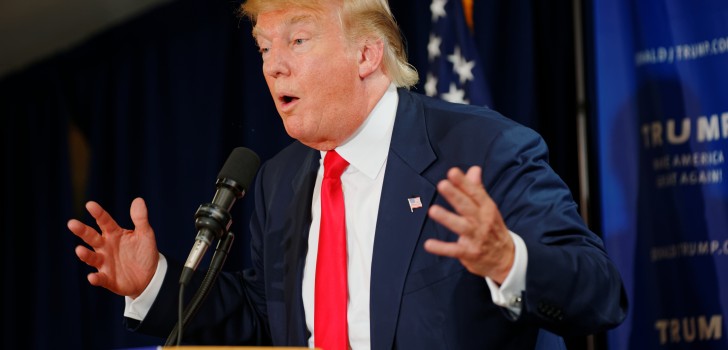
Donald Trump currently has a double digit lead over Ben Carson in both South Carolina and Nevada, as he is continuing to dominate the Republican race.

The two states are the next to hold nominating contests for the 2016 presidential election. Trump is recognized in both states as the best candidate to deal with a variety of important issues.

In Nevada, Trump has the support of 38% of Republican voters in Nevada, while Carson is second with 22%.

Trump has the support of 36% from Republican voters in South Carolina, compared to Carson’s Republican support rate of 18%.

No other republican candidate even comes close to Trump or Carson, as Carly Fiorina, Ted Cruz, Marco Rubio, Mike Huckabee and Jeb Bush are all lagging far behind.

Trump is particularly strong in these two states. Most states show that the businessman and reality television star has the support of about 25% of Republican voters.

More than half of Republican voters in Nevada say that they have made up their mind as to who they will vote for. Only 40% of Republican voters in South Carolina say that they have made their decision.

The majority of Republican voters believe that Donald Trump is the best presidential candidate to handle the economy and the issue of illegal immigration. Most states say that the economy is the most important issue when deciding who to vote for president.

Additionally, 6 out of 10 Americans believe that Trump is the most likely candidate to bring changes to Washington.

However, voters are not as confident in Trump when it comes to dealing with ISIS and handling social issues in the United States.

Just under half of all voters believe that Trump has the best chance of ultimately winning the presidential election next year.

The polls that were conducted in Nevada and South Carolina took place between October 3rd and October 10th.

England’s Highest Court Hands Victory To Ex-Wives Whose Husbands Withheld Assets During Divorce

Ex-wives who feel they were cheated out of proper payouts during their divorce may get another bite at the apple. The United Kingdom’s Supreme Court ruled that when a spouse commits fraud during divorce proceedings, and a property settlement results – the case may be reopened at a later date. Basically, if, after a divorce is closed, it is learned that one spouse lied about his or her assets and their value, the whole case becomes fair game again.

In the United States, a property settlement reached in a divorce proceeding is generally not modifiable. This means that, unlike child support and parenting schedules, the property settlement cannot change over time. If an ex-spouse wins the lottery the day after a divorce becomes finalized, the other ex is simply out of luck.

However, if it is shown that one spouse committed fraud during the proceedings, the case generally can be reopened and the property distribution can be modified based on the new evidence.

In England, that is now officially the case.

The case was brought by two ex-wives who found out after their divorces that their husbands hid their true wealth. Alison Sharland originally received approximately $16 million as part of her divorce settlement. She then learned that her husband was talking with banks and valued his company at much higher than he valued it at the time of divorce.

Judge Brenda Hale handed down the ruling in London on Wednesday and stated that, “By the husband’s fraud and the judge’s order, she had been deprived of her right to a full and fair hearing of her claims.” The Supreme Court remanded the case to the lower court so a new property division could be decided.

The other ex-wife, Varsha Gohil, settled her divorce in 2004 and agreed to receive about $417,000 as part of the deal. Her ex-husband was later convicted and imprisoned for money laundering up to $57 million. The Supreme Court ruled that the husband did not properly disclose all of his assets at the time the divorce settlement was reached and thus, the case should be reopened.

A lawyer at Barlow Robbins, Joanna Farrands, noted that the court’s decision could “open the floodgates for many previous divorce agreements to be revisited.”

Another attorney, Graham Coy, was pleased with the court’s decision. “Perseverance wins out. This is a victory for common sense and a defeat for dishonesty – it just goes to show that if you don’t put all your cards on the table when divorcing it might come back to bite you further down the road.”

Major Gun Store Ordered To Pay Millions Of Dollars For Selling Weapon Used In Shooting

A prominent gun store in Milwaukee has been ordered by a Wisconsin state court to pay $5.73 million to two former police officers who were severely wounded in a shooting.

Badger Guns was found by the court to be negligent due to sales that led to the 2009 shooting of former police officers Bryan Norberg and Graham Kunisch.

Badger Guns now goes by the name of Brew City Shooting Supply.

The case is only the second court case in the United States regarding the possibility of potential harm resulting from the sale of firearms, and it is the first case to rule against the gun store.

The defense plans to appeal the decision. Defense attorney James Vogts argued in court that Badger Guns couldn’t be held legally responsible for crimes committed using weapons that they sold.

In 2005, a federal law granted civil immunity to gun dealers, but there were exceptions outlined in the law. One such exception regards the “negligent entrustment” of a buyer with a gun. This exception led to the ruling against Badger Guns.

The case all started with a problematic sale. In this case a “straw purchase” took place. A “straw purchase” is when the buyer of a gun, who either cannot pass the background check or does not want their name associated with the sale, has someone else purchase the weapon for them. Straw purchases are generally legal, unless the person who completes the transaction at the store has knowledge that the person ultimately receiving the gun tends to use it for criminal activities.

In May of 2009, Jacob Collins purchased the handgun for Julius Burton. On the transaction form, Collins marked “no” in the column asking if he was the actual buyer of the gun. However, the store clerk allegedly changed the response to “yes”.

Next month, police officers Norberg and Kunisch saw Burton riding his bicycle on a sidewalk, which is a city ordinance violation in Milwaukee. The officers told Burton to move, but he refused. They started pursuing Burton, who then proceeded to shoot the officers.

Burton, who was 18 at the time of the purchase, was not old enough to purchase a handgun in the state of Wisconsin, where you must be 21 to purchase a gun. 18 year olds are only allowed to possess guns.

Eventually, the sale was traced to Badger Guns. Based on the accounts, the establishment was eventually found responsible for the negligent sale. Burton went to prison for the shooting. Collins was not charged, as he did not commit a crime.

Badgers Guns is reportedly the source of more than 500 guns located at crime scenes. It has been referred to the “No. 1 crime gun dealer in America”.

The Jury ultimately determined that Badger Guns could have done more to prevent crimes like the one against Norberg and Kunisch.

While appeals from the defense will undoubtedly take place, the ruling is still extremely significant for gun shops across the country.

People Are Unable To Have Student Loan Debt Removed As They Fall Into Financial Ruin

The American government has launched a new attack against people looking to have their student loan payments eased, as the United States Department of Education recently intervened in a legal case of an individual who was trying to have his student loans erased in a bankruptcy filing.

Under current laws, student loans can only be erased in extremely rare situations, and the American government is doing everything it can to keep it that way. Borrowers must prove that they have a “guaranteed certainty of hopelessness” in order to have student loans forgiven.

Lawyers for the Department of Education are saying that if any leeway is given to borrowers, then the entire fiscal stability of the student loan program would be in jeopardy.

The lawyers do have a point; if people took out more student loans than they could afford because they thought that they would be easily forgiven, it could lead to an event much like the financial crisis of 2008, when people took out mortgages that they couldn’t afford.

However, this could result in people having to work past typical ages of retirement, where their opportunities for employment are extremely limited.

These actions from the Department of Education are nothing new. The department has traditionally pressured courts to apply the harshest possible standards when taking the pleas of bankrupt students into consideration.

When a person files for bankruptcy, the person typically has all of their debts forgiven, but their credit rating is essentially destroyed for up to ten years.

However, student loans are a unique type of debt, in that an individual must prove to have suffered from extreme circumstances in order to have such debts removed.

That being said, these extreme circumstances have never been defined. Courts have had to determine how poor a person must be and how long they must be stuck in such a situation in order to have their student loans forgiven.

Traditionally, that threshold has been extremely high. A person in debt typically has to convince the court that making student loan payments makes life essentially not worth living.

In hearings, courts go through all of a person’s daily expenses to determine if they can maintain a minimal standard of living if they have to continue to make student loan payments. Courts have considered things like contributions to retirement accounts, dinners at fast food restaurants, cell phone plans and nutritional supplements to be luxury expenses.

The government says that such scrutiny of one’s financial life is needed to protect the student loan program. However, many people obviously consider these fears to be heavily exaggerated.

For now, the Department of Education will most certainly continue to pressure courts into making life difficult for people in student loan debt.

Futuristic Pill Could Give People The Effects Of Exercising Without Doing Anything

Scientists might someday be able to develop a pill that would allow people to receive the benefits of exercising without having to actually exercise. The news comes as researchers are continuing to make progress in identifying the molecular processes that occur when people exercise.

Scientists at the University of Sydney in Australia recently had a breakthrough when studying molecular processes. Their study involved having men engage in high-intensity exercise for a duration of ten minutes. The men were then analyzed to see how the exercise affected the activity of the proteins in their bodies.

The scientists found that about 1,000 different molecular changes occur in the muscles that are activated during rigorous activity. While it’s only an initial study, it did offer scientists the first real comprehensive map of the process of exercising.

However the process of creating a pill to simulate all the cellular activity of exercising is a very complicated task. Most drugs simply target individual molecules of the body. In order to create an all-in-one “exercise pill”, entire pathways of molecules would have to be affected. Plus, natural exercise sets off extremely complex responses in muscles that would be hard to mimic using medication.

Another part of the development of such a pill would involve being able to “trick” body cells into thinking that they are being used when they are actually stagnant. Without that ability, an “exercise pill” wouldn’t function properly.

Additionally, scientists don’t believe that they could create a pill that could make bones stronger, speed up blood flow or increase one’s heart rate like natural exercise can.

While the pill, if even possible, is still just a pipedream at this point, it could be extremely beneficial for people who simply cannot exercise, such as victims of stroke or spinal cord injuries.

Of course, it would also be useful for those who don’t want to get up off of the couch.

Giant Wooden Megaphones Showcase The Sounds Of Nature In Estonian Forest

An idea from an architecture student from the Estonian Academy of Arts is bringing the sounds of forests in Estonia to life, much to the delight of visitors.

Estonian Academy of Arts student Birgin Õigus, along with help from designers Tõnis Kalve and Ahti Grünberg, has installed three giant megaphones that are constructed from wood in the Pähni Nature Center of Estonia.

The idea is that the megaphones can be used as an acoustic art installation. The natural sounds of the forest are able to be amplified so that those visiting the nature center are able to better hear what goes on around them as they explore the forest.

The wooden structures are also large enough to support musicians who want to perform in the forest. The giant megaphones can also be utilized by forest visitors as a seating area to take a break from walking, and can also be a good spot to have a picnic with friends.

They really are the perfect spot to think about and discuss the wonders of the natural forest.

They’re also a good way to escape from inclement weather.

The wooden megaphones have been strategically placed in an area of the Pähni Nature Center so that when a forest visitor stands in the middle of the three wooden structures, they will have a total surround sound listening experience of natural forest sounds. It rivals the experience offered by surround sound systems at one’s own home.

The massive megaphones do not use electricity, making them completely acoustic. The wooden structures are free for any visitor of the forest to use and enjoy. The hope is that they will last for many years so that future generations can also experience the natural sounds of the forest.

More than 50% of Estonia is forest land that has been left largely undisturbed.

Port Of Los Angeles Has Not Complied With Pollution Measures It Agreed To Over A Decade Ago

According to an environmental notice released by the Port of Los Angeles, the Port acknowledges that it has not carried out several vital pollution-reduction measures it agreed to following a legal settlement reached several years ago.

The 2001 lawsuit was brought against the Port by the Natural Resources Defense Council on behalf of community groups and residents claiming that the Port was improperly contributing to pollution.

Among the 11 of 52 measures the Port agreed to make but has not complied with include its failure to reduce noise, traffic and air pollution when it allowed for the expansion of the China Shipping North American terminal. Specifically, the Port has not acted on its promises to require all ships to slow down as they approach the docks and shut down their diesel engines – in order to reduce harmful emissions. Also, trucks and tractors used at the Port have not been fueled by less-polluting gas.

The China Shipping North America terminal is one of the busiest at the publicly-owned port.

In response to the discoveries of the Port’s failures, officials blamed previous administrators and promised to fix the problem.

Many individuals and groups are incredibly unhappy with this news. Mark Lopez, who heads the East Yard Communities for Environmental Justice, stated that, “This whole time we’ve been led to believe that this is a much cleaner project than it has been.” He said the pollutants could lead to “untold health consequences to the community.”

The legal settlement reached over a decade ago required the Port to set aside $50 million to combat the effects of more ships, trucks and cargo-moving equipment.

Port of Los Angeles Executive Director Gene Seroka told community members at a meeting last week that, “We are faced with an unfortunate issue of delayed implementation,” and that, “We are committed to ensuring that something like this never happens again.” Seroka noted that the measures agreed to “had never been attempted anywhere in the world. The Port believed, at the time, that these measures, although far-reaching, were realistic.”

David Pettit, an attorney for the Council, said he “never thought for a second that [the measures agreed upon] wouldn’t happen. My belief is the Port has known for years that the mitigation wasn’t happening and didn’t tell anybody. This issue now is what to do about it.”

Interestingly, the Ports disclosure of its failures closely followed a public records request from a small newspaper seeking information on the mitigation measures.

Consumers Hanging Onto Petrol Pump Savings Instead Of Spending Them

Consumers have been pocketing instead of spending savings from lower fuel costs, which according to the U.S Commerce Department has made for a sluggish end to third quarter retail sales figures.

September figures show a 0.1 percent gain which was down from the pessimistic forecast of 0.2 predicted by 82 economists surveyed by Bloomberg. More than half of merchant categories showed decreases.

Thomas Costerg, a senior U.S. economist at Standard Chartered Bank, says the sluggish sales raises concerns about consumer spending staying power which accounts for about 70 percent of the economy. He says this is particularly worrisome as overseas demand for U.S. products also slowed.

“Consumption has been a strong pillar of growth over the summer, but this pillar is probably more fragile than previously expected,” he says. “Consumers would like to see more wage growth before spending a bit more freely.”

Seven of 13 major retail categories showed declines in September, headed by a three percent drop at service stations as fuel costs continued dropping. According to AAA, regular gasoline prices around the U.S this week were $2.30 a gallon, 50 cents lower than the year’s high in mid-June.

Meanwhile a U.S Labor Department report shows falling energy costs dampened wholesale inflation, with the producer price index decreasing by 0.5 percent, the most since January.

Financial experts say uncertainty in financial markets may be prompting consumers to hold on to savings as the Commerce Department’s report show building-material dealers, electronics stores, online merchants, and even grocery stores saw purchases slow in September.

However, automobile sales kicked the downward trend with sales rising 1.7 percent in September, the largest rise since May.

Ward’s Automotive Group industry data shows car and light truck sales in September were the best in a decade, rising at a 18.1 million annualized rate, following a 17.7 million pace in August.

The experts say federal policy makers are closely watching economic data for signs cooling overseas markets are spilling over and posing risks to the U.S.economy.

Carl Riccadonna, chief U.S. economist at Bloomberg Intelligence says slides in retail sales “will exacerbate concerns that the negative feedback mechanism is stronger than many forecasters currently anticipate”.

Europe Is Building An IT Infrastructure Free From Google And NSA

Europe is working to construct an information technology infrastructure that is free of American influence, as the recent collapse of the Safe Harbor Agreement is having devastating effects on American technology companies.

Meanwhile, European information technology developers have the challenging task ahead of establishing functional and secure programs in Europe to replace the American companies that they are abandoning.

European companies are now turning to open-source alternatives instead of popular American companies, such as Google and Dropbox. The result is that Silicon Valley might soon have less of an influence over the world.

The news comes after a decision was made in the Schrems v. Facebook case in European Court. The court ruled that any data protection promise made by a company in the United States is worthless in Europe. Any business that processes the data of Europeans using American servers is exposed to legal trouble.

Open Xchange CEO Rafe Laguna says, “Suppose I’m a German business, and I get an agreement from Google, which says everything is good, and I put that into my file. When a customer sues me, I go to court and find that agreement isn’t worth a dime. Google cannot guarantee what they’re guaranteeing. This takedown of Safe Harbor will be remembered as a historical event. It’ll be patched, but it’ll be a bad patch. The real patch is you do business with a trusted supplier operating in a country whose laws you trust. And that doesn’t mean the over-the-top big boys from California.”

The process of replacing Silicon Valley mainstays in Europe will take a considerable amount of time, but Europe has already started this process.

Open Xchange has already started providing Europeans with email and secure storage systems, but the company still needs to fill gaps, such as a major social networking platform. Currently, almost 200 million Europeans make use of their systems. The company is working with European telecommunication companies to increase their offerings.

However, the email systems of Open Xchange still need some work. Currently, they are only secured using bare minimum encryption techniques. Higher standards are in the process of being developed.

Open sourced and locally-hosted European software should be able to fill the gap eventually, but there is still a long road ahead of Europe if they want to do away with American data infrastructure completely.

The Hong Kong Electronics Fair Is Wowing Visitors With Stunning New Products

The bi-annual Hong Kong Electronics fair is currently displaying several new innovative products that have recently been made available to consumers. The event allows electronics companies to put their designs and innovations on display in order to attract buyers. More than 60,000 people attended the event last year.

A popular trend this year focuses on the introduction of wearable devices that function with smartphones and tablets. These devices keep track of the health of the wearer in various ways. It’s no surprise that this is popular, giving the prominence of both smartphones and healthy living.

Another feature of many products is the ability to complete routine chores. Some new products vacuum carpets, while others tend to plants. Another product regulates air conditioning in the home.

The convention in Hong Kong is different from most electronics fairs, in that the event focuses on products that are already on sale rather than prototypes that are still in development.

Needless to say, the current fair has already shown off some products that are expected to be major hits.

The Motorola Scout 5000 is being called the “smartphone for dogs”. It features a camera, two-way audio and a GPS tracking system to locate the pet if it ever becomes lost.

A new app called the Nixplay Seed allows users to send photos to their digital photo frames whenever they want. This way, they can put new photos on display as soon as they are taken.

An innovative new device called Aumeo Audio adjusts audio content to best suit an individual based on their hearing range and sensitivity. The product received more than 2,000 supporters on a crowdfunding website.

Bluetooth PlantCare lets users input information about their plant’s maintenance schedule into their smartphone. The device will then take care of the plant for the user. Additionally, it can also be set so that it waters the plant when the soil is detected to be too dry, and it can even adjust the pH level of the soil.

The InnoBand-D takes the number of steps you travel in a day and converts the number into calories burned. It can also monitor your sleeping quality.

The Freebee Fit Arc Reflex is a digital swimming coach that tracks physical activity conducted in the water.

The WISA Cup is a calorie-counting “smart cup” that records how many calories a person consumes. It can be set to function with hundreds of different beverages.

The CielPUR Air Quality Detector alerts users when there are unwanted particles in the air. It can also keep track of carbon dioxide and humidity levels.

And of course, many more products are being displayed at the convention to great success.

Chinese Research Shows A Centipede’s Venom May Be Gateway To Next Generation Painkillers

Research by Chinese scientists has led to the discovery of a chemical compound found in the venom of a centipede that may act as a super painkiller – without the side effects of morphine.

The discovery of the compound could lead to the military’s reduction of its reliance on morphine for battleground injuries. Professor Lai Ren, lead researcher in the study, stated that, “It is completely different from morphine. Morphine is only intended for emergency use. It has many side effects and can lead to addiction over the longer-term.”

Morphine has been the go-to drug in the military since the start of World War I. However, in addition to its addictive properties, it can cause a patient’s blood pressure to drop to a dangerous level. It can also stop a patient’s breathing in some cases.

Lai pointed out the main goal of their research was to develop a new painkiller for use long-term – without the problematic qualities of morphine. The centipede’s venom may be a breakthrough in this cause.

Lai’s team identified and isolated a compound called RhTx from a toxin found in the Chinese red-headed centipede. This chemical may have the ability to turn pain on and off like a switch.

The importance of effective painkillers, including drugs like morphine and codeine, cannot be overstated. Despite the possible side effects, their use is crucial in cancer patients and those suffering from post-war trauma and combat injuries.

That is where Lai’s team comes in. The theory behind the study is that if a particular chemical can activate the pain mechanism, it theoretically can be reversed to shut the switch off. After years of research, the scientists identified RhTx – which binds to a heat-sensing proteins in humans called TRPV1.

Lai notes that the TRPV1 protein is a popular research subject in trying to create new, effective painkillers. But, as Lai points out, “It is still too early to say whether the centipede toxin will replace morphine and become the ultimate painkiller. There are long roads ahead.”

“Pain is a very complex scientific issue, with lots of questions remaining about its underlying mechanisms.”

Democrat Debate Covers Wide Range Of Issues Without The Sideshow

After two very fiery Republican debates, it was time for the Democratic presidential hopefuls to take the stage. Participating in the debate, hosted by CNN and moderated by Anderson Cooper, were frontrunner Hillary Clinton, Bernie Sanders who is currently in second place in the polls, and outside contenders Martin O’Malley, Jim Webb and Lincoln Chafee. Notably absent was Vice President Joe Biden, who has yet to decide whether he is going to make the run for president.

Clinton appeared to be the victor of the night, while Sanders did an impressive job as well. The remaining three did not have much impact on the debate at all.

Clinton, whose campaign poll numbers have been in a steady decline – largely due in part to her well-known email scandal – was poised, confident and well spoken. She needed to deliver a good performance given her troubles so far. Once again, Clinton is the leading candidate who has a real chance of being upstaged by an upstart outsider – much like Obama did to her in 2008.

Nonetheless, she tried to convince the masses why she should be president. Referencing her loss to Obama in 2008, she stated that, “The issue is not whether you get knocked down, it’s whether you get back up.”

Clinton faced criticism regarding her recent flip-flops on her positions with respect to the Trans Pacific Trade deal, gay marriage and the Keystone XL Pipeline. In response, she said that, “I have been very consistent. Over the course of my entire life, I have always fought for the same values and principles, but, like most human beings, including those of us who run for office, I do absorb new information. I do look at what’s happening in the world.”

Of course, her email scandal came up during the debate and surprisingly, she received some unexpected support from Sanders. He adamantly stated that, “Let me say something that may not be great politics, but the secretary is right – and that is that the American people are sick and tired of hearing about the damn emails. Enough of the emails, let’s talk about the real issues facing the United States of America.” Following which, the two shook hands.

The issue of gun control was a hot topic, with Clinton stating that, “This has gone on too long and it is time the entire country stand up against the NRA.” Sanders fired back saying that, “all the shouting in the world is not going to do what I hope all of us want,” which is tighter restrictions on gun control.

The Syrian war also was debated, with Clinton proffering that the U.S. needs to stand up to Putin’s bullying and must “take more of a leadership position” in dealing with the bloody civil war. Sanders called the war “a quagmire within a quagmire” and claimed that it was a direct result of the Iraq war – which Clinton voted to authorize in 2002. Her vote was a major issue in the 2008 campaign and did not serve her well.

Of course, Trump was not left out of the debate entirely. He was mentioned in passing and live-Tweeted during the coverage. He described the Democrats as “all very scripted and very rehearsed” and argued that at least two of the candidates did not even belong on the stage.

Groundbreaking Deal May See American Vehicle Armor To Be Used By Ukrainian Military

Deals are currently in negotiation between the United States and Ukraine to bring armor upgrade kits to Ukraine that would be used on their military vehicles. The news comes after Humvees were sent to Ukraine by the United States in March. The country was apparently highly impressed with what they saw.

The Humvees were overhauled with armor, and officials refer to the creation as the “Survivable Combat Tactical Vehicle”. American officials would not discuss the pending deal with Ukraine at length due to the fact that it has not been completed.

While the vehicle looks like a standard Humvee on the outside, the newly applied armor allows it withstand bomb blasts in order to protect troops. More than 2,500 American troops in Iraq were killed by bomb blasts against the vehicles that they were travelling in. The new Humvee also has a v-shaped bottom that helps divert such attacks.

The new Humvees were created by stripping down used Humvees and providing them with new power sources, suspension systems and, of course, new armor. Additionally, the fuel cells and batteries of the vehicles were repositioned to make them safer.

About 30% of the re-created vehicles are completely brand new. Despite the major increase of armor, the vehicles are still relatively light weight.

The United States is allowing the deal to take place because it considers the upgrade kits to be a defense tool rather than destructive weapons. The United States will not install the upgrade kits on the Ukrainian vehicles.

Ukraine has sought American military technology for a long time. Last February, Ukrainian President Petro Poroshenko attended a major convention in Abu Dhabi where he met extensively with weapons experts from the United States and Europe.

Joint projects like this will definitely strengthen the industrial ties between the two countries. Ukraine wants to improve its military power, and the United States can help them do that. However, the United States will be sure to monitor its investment.

Leaders from Ukraine have also reportedly expressed interest in drones.

Key To Cancer Cure Might Have Just Accidentally Been Found In Malaria

Danish scientists may have accidentally taken a huge step towards finding a cure for cancer when they unexpectedly discovered a malaria protein that may be an effective weapon against the disease.

Ali Salanti from University of Copenhagen says the discovery came when researchers were searching for a method of protecting pregnant women from malaria, which can damage the unborn baby as it attacks the placenta. Instead they found that “armed” malaria proteins can attack cancer. They found that a toxin produced by the protein the malaria vaccine uses to destroy malaria cells also kills cancer cells.

The process has already been tested in cells and on mice with cancer. Salanti says she hopes that they can begin human testing in the next four years. The mice had been implanted with three types of human cancers. The tests reduced non-Hodgkin’s lymphoma tumours to a quarter of their size, got rid of prostate cancer entirely in two of six mice, and kept alive five out of six mice that had metastatic bone cancer. In the latter case, all mice in the associated control group died.

“For decades, scientists have been searching for similarities between the growth of a placenta and a tumor,” says Salanti . “The placenta is an organ, which within a few months grows from only few cells into an organ weighing approx. two pounds, and it provides the embryo with oxygen and nourishment in a relatively foreign environment. In a manner of speaking, tumors do much the same, they grow aggressively in a relatively foreign environment.”

“The biggest questions are whether it’ll work in the human body, and if the human body can tolerate the doses needed without developing side effects,” says Salanti. “But we’re optimistic because the protein appears to only attach itself to a carbohydrate that is only found in the placenta and in cancer tumors in humans.”

Australia Announces Plan To Exterminate Two Million Feral Cats

Australia has announced its plan to protect several threatened species by destroying millions of feral cats. However, the plan has its detractors, drawing criticism from some animal rights activists and celebrities including Brigitte Bardot and English pop star Morrissey.

Gregory Andrews, Australia’s threatened species commissioner, has responded to critics of the plan stating that feral cats continue to prey on more than 100 threatened species. He further noted that they have already been a “major contributor” to the extinction of almost 30 species of mammals in Australia over the past 200 years.

He specifically listed some of the species destroyed in part by the feral cats: the desert bandicoot, lesser bilby, big-eared hopping-mouse, and crescent nailtail wallaby. He described these species as “delightful creatures, rich in importance in Australian Indigenous culture, and formerly playing important roles in the ecology of our country. We don’t want to lose any more species like these.”

In fact, the Australian Department of the Environment says that feral cats are the leading threat to the country’s mammals – more so than habitat loss and foxes.

The plan would use traps and poison to kill the cats.

The invasive species, numbering an estimated 20 million in Australia alone, were brought to the country by European settlers.

Ms. Bardot, an animal rights activist, called the plan “a scandal, a shame. This animal genocide is inhuman and ridiculous.” She argued that Australia should neuter rather than kill the feral cats.

Morrissey went even further calling the Australian government “a committee of sheep-farmers who have zero concerns about animal welfare or animal respect.” He referred to the planned killing as the destruction of “2 million smaller versions of Cecil the Lion.”

Despite the outrage of a few, Andrews noted that the Australian government has the support of numerous organizations. He said the plan was supported by “the overwhelming majority of key environmental nongovernment organizations” of which includes the World Wildlife Fund and the Nature Conservancy.

Andrews pointed out that, “The greatest impact of feral cats occurs across Australia’s vast deserts, rugged mountains, forests and savannas: remote and often inaccessible landscapes that are home to our native wildlife.”

Customers Can Now Purchase Company Stock At The Store While Shopping

Consumers will soon be able to purchase company stock at retail stores, as chains such as Kmart and Office Depot are planning to offer cards that give purchasers a small amount of stock in some of the best known companies of the country. The “stock cards” are expected to go on sale later this week.

The idea was created by the startup company Stockpile Inc., which believes that the stock cards might be good way to give a gift to loved ones or to get young people involved in investing at an early age. Buyers will be able to purchase the stock cards without giving out their personal information.

Founder and CEO of Stockpile Avi Lele says, “It is taking something complicated and expensive and making it accessible to everyone.”

The cards function like traditional gift cards. When recipients turn the cards in, they will receive stock instead of cash. Recipients will also be able to trade the shares that they have purchased or received in exchange for the stock of other companies.

Stockpile is licensed by the Securities and Exchange Commission, which has permitted this new selling technique. However, it is unknown if the American public will be interested.

Estimates show that only 13.8% of families in the United States own stock directly. Most Americans choose to invest in mutual funds or their retirement accounts.

However, the company hopes that the stock cards will be viewed more like gift cards than like stock. Last year, nearly $94 billion was put onto gift cards. They are a major hit with Americans and a popular gift at any time of the year.

Meanwhile, stores that plan to carry the stock cards are installing spaces to display the cards, and they are training employees to answer any questions from customers. The cards say “stock” across the top so that consumers won’t confuse them for a gift card.

The initial release of the stock cards includes major companies such as Coca-Cola, Facebook and Apple. In total, 20 companies will participate. Buyers can also purchase a generic card that allows the recipient to purchase the stock of any company of their choosing. Purchasers can also buy cards representing precious metals, such as silver and gold and other commodities.

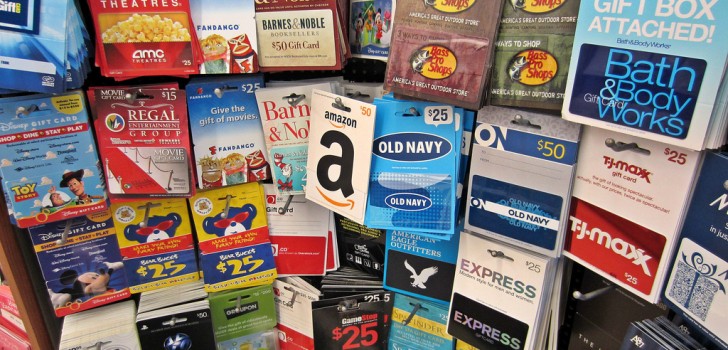
The cards will be available in denominations of $25, $50 and $100. Customers will receive the appropriate amount of “partial shares” when they exchange the cards for stock on the Stockpile website.

Once the card is activated on the website, the stock is maintained there. Users will not have to pay any activation or monthly fees. However, they will have to pay a transaction fee of 99 cents for any future sale or purchase of stock. It is unknown if consumers will be restricted to stocks participating in the program.

Time will tell if the stock cards will be a success or not, but it certainly makes getting into the market easier than ever before.

Israel To Deploy 300 Troops And Hundreds Of Security Guards After Palestinian Attacks

Following a day declared by Palestinians as the “Day of Rage,” where at least three people were killed and several others were wounded by Palestinian men, the violence continues. The attacks yesterday occurred in Jerusalem and near Tel Aviv.

The coordinated attacks illustrate the latest unrest of Palestinians in Israel which is continuing to grow. Israeli Prime Minister Benjamin Netanyahu convened an emergency meeting of his cabinet to determine what police should do in the situation. The meeting convened well into the night and the security cabinet announced its plans earlier this morning.

Officials decided to seal off Eastern Jerusalem Palestinian districts from the rest of the city in an attempt to contain the violence. Officials also decided to take away certain residency rights and to destroy the homes of some known Palestinian attackers.

Hundreds more security guards were drafted in order to secure public transport.

Israel’s internal security minister announced that the bodies of dead Palestinians who attacked Jews will likely not be returned to their loved ones for burial. Gilad Erdan said that the funerals of Palestinian attackers often are turned into “an exhibition of support for terror and incitement to murder.” He said that Israel should not allow these dead attackers to “enjoy respect and ceremonies.”

Adding to Palestinian unrest is the fact that a growing number of Jews are visiting the al-Aqsa mosque compound in Jerusalem, one of Islam’s holiest sites in the world. The ancient relic also houses two sacred Jewish temples – which creates severe conflict.

In response to the unrest over al-Aqsa, Netanyahu has said that Israel will continue to ban non-Muslim prayer at the site but that Jews are still allowed to visit.

Palestinian President Mahmoud Abbas disavows the current violence but also calls for al-Aqsa to be “defended” from Israel. His administration has also spread on social media allegations that some Palestinians killed by Israeli police were executed.

Netanyahu demanded that Abbas “Stop lying. Stop inciting. If the situation deteriorates as a result of this incitement . . . you will bear responsibility.”

The Israeli government has not been able to stop the violence so far – mostly carried out by young Palestinians. As of now, it is not believed that these attackers are affiliated with known militant groups. But, the attacks are getting more coordinated and sophisticated, which is very worrisome to Israel.

In the meantime, panic is gripping the nation. Israelis do not know what to do or where to go. They are very afraid that the recent incitement of violence is only the beginning to a long, drawn out violent war.

Yesterday, The Obama administration voiced its concern and State Department spokesman John Kirby stated that, “The United States condemns in the strongest terms [the] terrorist attacks against Israeli citizens.” He added that the U.S. urges both sides “to prevent actions that would further escalate tensions.”

Sweden Could Eliminate Physical Currency And Become The World’s First Cashless Society

Sweden is on the verge of becoming the world’s first “cashless society”, as in the near future, every financial transaction that takes place in the country is expected to be performed digitally. The removal of physical cash is expected to make money laundering and terrorist funding more difficult.

Industrial technologists from the KTH Royal Institute of Technology in Sweden’s capital city of Stockholm have published a study which shows that cash is rapidly disappearing from Swedish society.

Co-author of the study Niklas Arvidsson said, “Our use of cash is small, and it’s decreasing rapidly.”

The study discovered that there is just 80 billion Swedish Crowns, or just under $1 billion, in the pockets of the Swedish public and company cash registers. Only about half of that amount is in regular circulation.

Virtually every shop in Sweden accepts debit and credit cards. Most Swedish citizens carry no cash on their person. Also increasing in popularity is an app called ‘Swish’ that allows financial transactions to take place on smartphones.

Meanwhile banks are also participating in the trend. Many banks have opened that won’t even accept cash. The ones that do accept cash require that the customer inform the teller as to where the cash came from. The purpose of this requirement is to prevent money laundering and the financing of terrorism. The teller is trained to report any suspicious transactions to the police.

However, while a society without physical cash has its perks, there are some downsides as well. Homeless people and undocumented immigrants are likely to be left behind in the transition. Also, the elderly population of Sweden might have a difficult time using computers and smartphones to access their financial holdings. Many analysts predict that vulnerable sectors of Swedish society will become more reliant on Sweden’s social security system, which is one of the most generous in the world.

Experts are also worried about making the Swish app function in international transactions. It is also unlikely that other countries would be able to make a transition to a cashless society as easily as Sweden.

Arvidsson stated, “Swish is a brilliant idea, but to introduce it internationally is a challenge, not least because it takes a long time to change other countries’ banking systems from scratch. But it is not impossible that a Swish-based banking revolution can also occur abroad.”

While there are some challenges ahead, Sweden could very well become the world’s first society to do away with physical cash completely.

Russia And U.S. To Discuss Air Safety Measures After Aircraft Near Miss In Syria

An “incident” where US and Russian combat aircraft came within miles of each other have forced the two countries into urgent talks today on air safety in Syrian airspace.

According to a U.S defense spokesperson, the planes were in “visual contact” with each other with only 10 to 20 miles separating them.

Two previous rounds of talks have failed to find agreement on the best way to avoid an “accidental conflict” .

The latest incident, which took place on the weekend, involved two Russian and two U.S. aircraft which “entered the same battle space”. U.S. Defense spokesman Colonel Steve Warren says the Russian planes had repeatedly broken air patrols, coming close to U.S. American unmanned aerial vehicles or drone aircraft. Russia has not yet commented on this claim.

U.S. Secretary of Defense Ash Carter says he expects a deal on air safety over Syria will be reached soon.

Russia says it has “updated proposals” which it will present at the new meeting.

Carter says, “Our talks… are very professional, they’re very constructive, and I expect them to lead in very short order to an agreement.”

But he stressed America is “not able at this time to associate ourselves more broadly with Russia’s approach in Syria because it is wrongheaded and strategically short-sighted”.

Russia began its airstrikes in Syria on 30 September, claiming it is targeting Islamic State militants and other jihadist terror groups after a request for militarily assistance from Syrian President Bashar al-Assad. But Syrian activists backed by western countries say Russian planes have been attacking non-military targets. Moscow denies the claims.

Yesterday two shells hit the compound of the Russian embassy in the Syrian capital Damascus as “hundreds” of pro Assad supporters rallied outside in support of Russian air strikes in Syria. News reports say no one was killed, but some were injured.

At Least 30 Managers Were Involved In The Recent Volkswagen Emissions Scandal

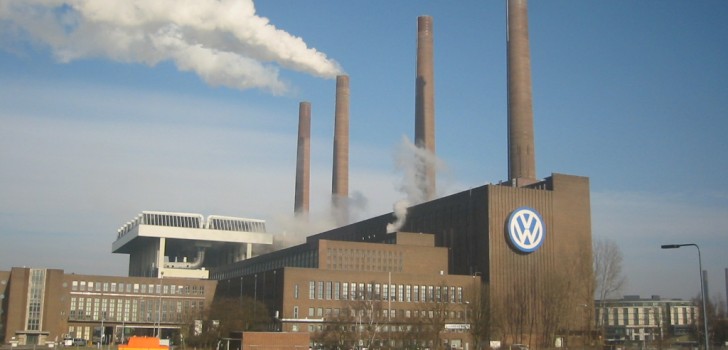
Investigators have found that at least 30 managers from Volkswagen were involved in the company’s recent emissions scandal.

Volkswagen placed cheating devices into 11 million of its diesel vehicles worldwide in order to trick regulators into believing that the vehicles were compliant with emissions standards, when in actuality, they were producing emissions up to forty times the legal limit. Nearly 500,000 of these vehicles were in the United States.

Last week, President of Volkswagen America Michael Horn said that a small number of software engineers were responsible for installing the cheating devices, and it was not a decision made by corporate.

Volkswagen has yet to comment on the allegations that more than 30 managers were involved in the scandal.

As a result of the recent report from investigators, dozens of managers from Volkswagen are expected to be suspended by the company.

Volkswagen has also hired law firm Jones Day to conduct an internal investigation of its own.

Reports indicate that the managers who knew that the emissions cheating was taking place were not only expected to continue the cheating, but they were soon planning to widen the scandal to other diesel cars as well.

Newly appointed CEO of Volkswagen Matthias Mueller is reportedly planning to speak with top management from the company on Thursday. The meeting will discuss the current state of the investigation, as well as the best way to move forward.

Needless to say, Mueller will have his work cut out for him in repairing the tarnished image of the once proud German auto company.

Mueller replaced former CEO of Volkswagen Martin Winterkorn, who resigned from his position shortly after news of the scandal broke out to the public.

In Germany, a criminal investigation into the scandal is currently taking place. Recently, German police raided Volkswagen’s headquarters in Wolfsburg, Germany in order to uncover more information about the scandal. It is widely expected that criminal charges will eventually be filed.

Google Works With NASA and FAA To Bring Delivery Drones Testing To The United States

Last year, Google announced its plans to get in the drone delivery game and joined the likes of Amazon in the quest to make such drones a reality. Google has been testing its Project Wing in Australia for the past year and is now ready to bring testing to the United States.

According to documents filed with the Federal Aviation Administration (FAA), Google has been cleared to test two separate drones in the U.S. The first model, with the codename M2 was approved in early October and the B3 soon followed.

Google’s version of the delivery drone – at least the original model – looked like a tiny airplane and launched into the air facing upwards, like a space shuttle. It makes its deliveries by lowering a package attached to a long string.

Due to its collaboration with NASA, Google was able to skip some tedious steps before receiving the go-ahead to start testing its drones in the U.S.

In fact, Google has joined several companies, including Amazon, in working with NASA, the FAA, other government agencies and researchers to turn the drone delivery program into a reality.

Back in July, Amazon Prime Air unveiled its plans at a NASA convention. Central to its proposal is the creation of a designated 200 foot slice of air, located between 200 feet and 400 feet from the ground, that would only be used by drones equipped with the technology that will allow them to fly safely and autonomously. A further 100 feet of airspace, between 400 feet and 500 feet, would be a no-fly zone. If Amazon’s proposed plans are accepted by the Federal Aviation Administration (FAA), the American public could see tens of thousands of drones whizzing by in the air within the next several years.

Amazon’s proposals are much more ambitious than what the FAA proposed in its recent attempt to draft commercial drone rules earlier this year. In that draft legislation, the FAA proposed that commercial drones only fly during the day and within the plain view of a licensed operator from the ground. These two restrictions alone make Amazon’s Prime Air delivery system virtually impossible.

As of now, it is unclear whether the FAA will allow for drone delivery, a move that Amazon Prime Air vice president Gur Kimchi calls behind the times. Kimchi stated that current drone operators and companies are not cooperating with each other to create a safe environment. Kimchi stated that Amazon’s proposals “can only be safe if everyone else is safe.” He further stated that, “[t]he key here is to simplify the airspace, not complicate.”

Parimal Kopardekar, head of NASA’s drone management project stated that he hopes the United States can adopt a universal drone traffic system before a tragedy occurs. “It’s crucial,” he stated. Without a uniform system, “everyone flies anywhere they want to and they end up going into no-fly zones and into firefighting efforts and near airports.”

As a result, several companies are working together and NASA’s short-term goal is to develop and demonstrate a system that will safely allow for drone operations within five years. Within 10 to 15 years, the agency hopes to safely enable the huge increase in the number of delivery drones.

China Inks Its Largest Arms Deal With Pakistan And Becomes World’s Third Largest Arms Exporter

China has signed an arms deal with Pakistan which experts say is worth between $4-5 billion. The arms deal, believed to be China’s biggest, will deliver a total of eight new submarines to Pakistan.

China’s Global Times newspaper says with the deal, China has overtaken Germany to become the world’s third-largest arms exporter.

Pakistan’s minister for defence production Tanveer Hussain has confirmed the deal while opening a new exhibition center at Pakistan’s Defence Export Promotion Organization.

He says four of the submarines will be built in China, while the other four will be constructed in Pakistan under a technology transfer agreement. Pakistan will also build a submarine training center in its main port city, Karachi.

Hussain would not reveal the model of the new submarines, though analysts believe they will be a variant of the S-20, which is the export version of China’s Type 039A/Type 041 class diesel-electric submarine.

The new deal will modernize Pakistan’s submarine fleet, currently made up of eight subs, which include two French Agosta-class 70-B subs and three Agosta-class 90-B subs.

Experts say China has been transferring weapons technology to Pakistan for some time.

Not much information is being released about the capabilities of the Chinese submarines which are part of the deal with Pakistan. Research analyst in the Defence and Military Analysis Programme at the International Institute for Strategic Studies, Tom Waldwyn says as it “benefits countries on both sides to keep this a secret”.

He says if the subs are AIP S-20s, they would give Pakistan “greater operational flexibility through increased endurance.”

Military analyst Brian Cloughley, another military analyst who has been closely watching the arms partnership between the two countries says even with the transfer of technology, Pakistan will remain reliant on China for arms.

“It is in the interests of both parties to have as much as possible manufactured in Pakistan, but of course the really high-tech systems will have to come from China, as it’s simply not cost-effective for Pakistan to gear up to make them,” he says.

Brazil Economy Is Tanking As 20,000 Jobs Are Leaving Sao Paulo Every Month

The economy of Sao Paulo, Brazil, once a major bright spot for the country, is now taking a serious downturn. The labor market in the industrial city is declining rapidly, as nearly 20,000 jobs are leaving the city every month.

The rate of unemployment in the city has reached 7.6% this year. By the end of last year, it was only at 4.3%. The main reason for this is the decline of the automotive industry in the country, as Sao Paulo is known for being the primary vehicle hub for Brazil. Companies like Ford and Daimler are feeling the pain in the once thriving city.

Problems in the government are also having a negative impact, as Brazilian President Dilma Rousseff is facing impeachment. Meanwhile, the country is falling deeper into a recession, as many citizens are falling further into debt due to largely uncontrolled credit spending.

It’s not unlike the recent financial crisis a few years ago in the United States, where people purchased homes they couldn’t afford, eventually resulting in a mass of essentially worthless mortgage-backed securities.

One year ago, a major scandal was revealed at Brazil’s state oil company, Petrobras. The news came after Brazil had recently entered into a recession.

The result has been devastating to the Brazilian economy. Its currency, the Brazilian Real, has experienced the largest decline out of every major world currency this year. Meanwhile, inflation rates have nearly reached double digits, and the country’s budget deficit is the largest in more than 20 years.

Standard & Poor has declared the country’s credit rating to be “junk”, as the economy is expected to contract by 3% this year. Unemployment is predicted to reach 10% by the end of next year.

The trend is a major fall for the BRIC nation that has been largely viewed as an emerging economic powerhouse for many years. Some even called Brazil “the next China”. The woes range all the way from the country as a whole to the local economies of small towns.

Unemployment is hitting the country particularly hard. Shopping malls that were once packed with people are now completely empty. Stores are being shut down left and right. Defaults on loans are a daily occurrence. Loan rates are too high for new businesses to emerge.

The country’s falling rate of production and rising rates of inflation and unemployment are not expected to improve any time soon. Brazil is deep into crisis, and it could be years before things get better.

FBI Joins UK Authorities In Hunt For Bank Account Hackers Who Stole Over $31M

The UK’s National Crime Agency (NCA) and the Federal Bureau of Investigation (FBI) are on the hunt for cyber-attackers who hacked into British bank accounts and stole more than $31 million.

So far, one person has been arrested.

An NCA spokesperson said the hackers used malware identified as Dridex and “harvested” victims’ online banking details to siphon off funds.

The spokesman said the NCA has enlisted the help of the FBI and other authorities to “limit the malware’s usefulness”.

The US Department of Justice says a Moldovan citizen, Andrey Ghinkul, has been arrested in Cyprus and the U.S. is seeking his extradition.

One expert has told media despite the one arrest, the hackers have been “particularly cunning” to avoid being detected.

Cybersecurity expert Prof Alan Woodward, who consults for Europol says, “This is very sneaky software that relied on people not being vigilant with their online banking. If you imagine thieves making lots of little transactions, rather than one big one, it is more likely to go unnoticed.”

The Dridex Trojan infects computers through a malicious Microsoft Office document – usually a bogus invoice – which is emailed to victims. The hackers rely on victims downloading it onto their machines, rather than exploiting security holes in operating systems.

“Banks have software running constantly in the background looking for suspicious transactions, but criminals are adopting patterns that are not flagged up,” says Prof Woodward. “With thousands of computers infected, they only need to take a small amount from each bank account and suddenly they’ve got millions.”

The FBI is encouraging people to use anti-virus software on all computers and Professor Woodward says, “All the usual advice applies.Don’t open unexpected email attachments, even if they appear to be from the bank. And check your bank statement for suspicious transactions. Query anything you don’t understand, even if it’s a small amount, as criminals may be taking a small amount from millions of other people.”

This New Investment Fund Will Focus On Companies Fighting Against Cancer

One investor has launched a new equity trading fund (ETF) that focuses on investing in pharmaceutical and biotech companies that are striving to develop immunities to cancer.

Biotech blogger and investor Brad Loncar is offering the Loncar Cancer Immunotherapy ETF (CNCR). The ETF will invest into companies that try and combat cancer by using drugs designed to modify the immune response of the body. By changing the body’s immune response, it will be able to attack any cancerous cells that have taken over.

The ETF holds a total of 30 pharmaceutical and biotech companies, all of which are working to beat cancer. Some are large names like Bristol-Myers and Pfizer, while others are virtually unheard of, such as Ziopharm Oncology and Bluebird Bio.

While it is definitely a niche ETF, focusing on a very exclusive area in the market, the newly established fund seems to be performing well so far.

It’s worth mentioning that Loncar chose a particularly poor time to launch the ETF. The biotech industry recently took a downturn after Democratic Presidential Candidate Hillary Clinton promised to fight against price gouging in prescription medication.

However, it isn’t all bad. The biotech sector has been one of the strongest industries over the previous decade, offering investors a 300% return.

Interestingly, the CNCR ETF is giving each individual stock in its portfolio an equal weighting. The performance of smaller companies in the portfolio will have just as much of an impact on CNCR as the household names. This should cause the ETF to be somewhat more volatile than average. The ETF will charge investors 0.48% of their investment in the fund every year.

Loncar believes that focusing on a particular area of the biotech industry will help make investing easier on his part.

Loncar says, “A goal is to take biotechnology and break it down into one of its individual components, like cancer immunotherapy, that people are specifically interested in. It’s a more straightforward and efficient way of looking at a sector.”

A similar ETF that also focused on cancer treatment and prevention existed a decade ago. It was called HealthShares Cancer ETF (HHK). It failed miserably, as the ETF had to liquidate in less than a year. Loncar obviously hopes to have more success than this predecessor.

U.S. Airline Passengers Will No Longer Be Permitted Lithium Batteries In Checked Baggage

The Federal Aviation Administration (FAA) says that airline passengers in the U.S. will no longer be permitted to pack lithium batteries in their checked baggage.

The ban follows an incident on Monday when an Alaska Air flight from Newark to Seattle had to make an unscheduled stop in Buffalo, New York. The crew had to use a fire extinguisher to douse a flight attendant’s credit card machine which had begun to overheat and smoke because of a “melting” lithium ion battery.

A statement released by the Administration says the ban covers “spare lithium metal and spare rechargeable lithium ion batteries for personal electronics such as cameras, cell phones, laptop computers, tablets, watches, calculators, etc”.

“Spare (uninstalled) lithium ion and lithium metal batteries must be carried in carry-on baggage only. When a carry-on bag is checked at the gate or at planeside, all spare lithium batteries must be removed from the bag and kept with the passenger in the aircraft cabin. The battery terminals must be protected from short circuit.” says the statement.

The ban is an extension of a previous FAA ban on the shipping of lithium batteries as freight on passenger aircraft, due to an “immediate and urgent” risk of overheating batteries causing fire or explosion.

If a battery develops a short circuit, the FAA explained, the buildup of hydrogen and other gases as surrounding batteries are also heated can defeat a plane’s halon fire suppression system.

Air France, British Airways, Delta, Cathay Pacific and Singapore Airlines had already placed a voluntary ban on lithium battery cargo on their passenger flights when Boeing “warned operators of its aircraft not to carry bulk shipments of batteries until logistics companies design better transport packaging and shipping procedures”.

Last week the British Airline Pilots Association called for all passengers’ battery powered gadgets to be carried as cabin luggage.

Value Of World Assets Drops In 2015 While Wealthy 1% Still Owns Half

The total value of all assets in the world dropped nearly 5% in 2015 to around $250 trillion, but the distribution of that wealth has continued to become more heavily weighted towards the wealthiest individuals, the so-called “one percent.” Since its records began, Credit Suisse reports that this portion of the population now controls more than 50% of the wealth in the world, with the United States accounting for the majority within that group, at 46%.

As the world economy sputters this year, economies in Europe and Latin America saw declines in household wealth of 12% and 17%, respectively. China and North America accounted for the only regions that saw an increase in household wealth, at 7% and 4.4%, respectively.

However, this increased wealth has been associated with an increase in debt levels for both China and North America. In the U.S., this was facilitated by the easy money policies of the Federal Reserve following the 2008 financial crisis.

Digging further into the data, citizens in the U.S. may be surprised to learn that if they earn at least $3,210, they are among the top 50% in the world, after debts have been subtracted.

Much of this increase in wealth within the U.S. is composed of financial assets, which has been made possible by debt-fueled buybacks of equities. Instead of allowing the deflationary cycle to take its course following the housing bubble, the Federal Reserve instead pursued a pattern of dropping interest rates, allowing companies to further leverage themselves.

Even with the hit that U.S. stock indices took in August of this year, economist Robert Shiller maintains that the economy is still within bubble territory, with investors claiming they are losing confidence in current valuations. “That’s the sign of the bubble. They’re worried but they’re thinking they’ll get out. This can suddenly turn, and we’re looking somewhat like that now.”

InStyle Sets The Scene For Magazine Readers’ Virtual Reality Experience

Virtual reality has entered the lifestyle magazine market with InStyle launching what it calls its first virtual reality (VR) cover, featuring Drew Barrymore. Readers with a smartphone and VR headset will be able to access behind the scenes footage of the cover photoshoot, including taking a closer look at brands worn by Barrymore, as well as additional content like tutorials on makeup.

InStyle editorial director Ariel Foxman says the magazine is in all systems go mode, with plans to take the experience inside celebrity homes and to the red carpet. But it won’t be all about the reader experience, as it also presents the magazine with a new revenue source from sponsorship opportunities and native advertisements.

While experts note that VR has been slow to adopt en masse, they believe this will change, especially in retail. The new generation of Apple and Android smartphones all have VR capabilities, and headsets like Google Cardboard are inexpensive. They point to a 2015 Walker Sands study, which shows 63 percent of consumers believe VR will have an impact on their shopping experience in the future.

For its VR cover, InStyle teamed up with cinematic VR studio Jaunt, whose Vice President, Scott Broock, says the partnership will explore and introduce new ways to give readers “immersive experiences made possible by virtual reality”. He says they will “layer in interactivity,” including retail capabilities.

“The interactivity will be spurred by the gaze, how long someone is looking at an object,” Broock says. “If you stare at an object, it will trigger a reaction that will be a floating icon — here’s where you can order that sweater, for example. That’s very organic to the scene.”

As well as contextual experiences, like footage of a red carpet event or photo shoot, Broock says VR can be used to tell the story of a brand, while not “overtly selling” a product, it will “give you a feeling” of the brand.

Brooke says VR offered an opportunity to reach a wide range of potential customers.

“With cinematic virtual reality, we can show that this experience can be applied to many different places, and it’s united by the fact that everyone has a smartphone. There is no demographic.”

Chief creative officer at SapientNitro North America, Gary Koepke, says retailers should gear their thinking to outside the store revenue sources through experiences.

“Creativity is going to be huge for virtual reality,” he says adding “opportunity for brands to sell products is going to rise within experiences outside of a straightforward retail setting”.

His advice for retailers, when it comes to VR is, “Get in early, so you’re not catching up later.”

The United States Plans To Start Patrolling The Waters Of South China Sea

The United States has informed its allies in Asia that it plans to start conducting naval patrols near the artificial islands constructed by China in the largely disputed South China Sea. The move could result in increasing tensions between the United States and China.

The patrols are being called the “Freedom of Navigation Patrols”, and they will come within 12 nautical miles of the islands. The purpose of these patrols is to challenge efforts by China to claim large portions of the area, supposedly for strategic purposes.

China has constructed military airstrips on some of the islands, and they might be planning a full-fledged military base. China has claimed most of the South China Sea to be part of its sovereign territory. The United States has been warned by China in the past not to come too close to the islands.

Secretary of Defense Ashton B. Carter and Secretary of the State John Kerry met with leaders from Australia to discuss the patrols. Leader of the Pacific Command of the United States Admiral Harry B. Harris Jr. also took part in the meetings.

American leaders have not specified when the patrolling would begin, but it is likely that they waited until Chinese President Xi Jinping completed his American visit so that the matter would not be a distraction.

There has been much debated between the Obama Administration and America’s Asian allies over how to respond to China’s activity in the South China Sea. Some leaders say that countries need to force China out of areas that do not rightfully belong to China. Others want to leave the situation alone, as they believe that taking action would result in further military buildup.

Meanwhile, officials from China have stated that they plan to take action if American warships come within 12 miles of the islands. It is unknown what kind of action they would plan to take.

A spokesperson from the ministry of China Hua Chunying said, “There is no way for us to condone infringement of China’s territorial sea and airspace by any country under the pretext of maintaining the freedom of navigation and overflight. China is severely concerned about reports that the United States planned patrols around the artificial islands in the Spratly archipelago.”

While meeting with President Barack Obama at the White House, Chinese President Xi Jinping said that China does not plan to militarize the islands. President Jinping went on to stress the importance of navigational freedom. He says that the United States can sail or fly anywhere they want to, as long as they do not violate international territorial laws.

Based on the United Nations Convention regarding the Law of the Sea, 12 mile territorial limits are placed on naturally formed islands. However, this does not necessarily include artificial islands.

Five other nations also make territorial claims in the South China Sea.

The Way Doctors Determine Treatment For Superbugs May Be Wrong

The rise of antibiotic-resistant bacteria is growing at an alarming rate. New studies show that the single test – used for the past 50 years – to decide how to treat stubborn infections may be severely out-of-date.

The findings of a study conducted by Michael J. Mahan, a professor of microbiology at the University of California, Santa Barbara, may have huge implications for how doctors decide to treat those patients infected with superbugs. “We’re saying the standard way the world does this is wrong.”

His theory is that the standard test used to determine what antibiotics may work against a certain bacteria has holes. Presently, labs use a solution called Mueller-Hinton broth in which to grow the infecting bacteria. Then scientists attack the bacteria with various antibiotics to determine which one works best. This test is used around the world. Mahan points out, however, that the bacteria infecting live patients attack human cells – not the cells found in the broth. By changing the growth environment, the bacteria may react differently to certain antibiotics.

The study involved testing the salmonella bacteria in the Mueller-Hinton broth as well as in a solution that more closely resembles human cells. The findings indicate that the bacteria reacted differently to certain antibiotics in each solution. So, while a doctor may determine that an antibiotic would not be a good choice for a patient with a certain bacterial infection – as determined by the Mueller-Hinton test – he could be wrong.

Another recent study led by Victor Nizet, showed similar results. He observed that the traditional, standard test has “nothing to do with the patient. The patient’s not made out of Mueller-Hinton broth.”

Scientists and researchers know that the recent studies may have enormous impacts on how doctors choose which antibiotics to prescribe a patient. Stanley Maloy, dean of the college of sciences at San Diego State, points out that, “It’s really clear from these papers that there are key examples where the way we’ve been doing things up until now is probably inadequate. It is a very big shift.”

Still, it may be a while before new tests are used in hospitals. Mahan said that hospital labs could easily expand their procedures to include testing difficult-to-treat bacteria in the kind of solution he used – in addition to the standard Mueller-Hinton broth. However, Dan, Andersson, a professor of medical bacteriology at Uppsala University in Sweden notes that, “There are many things that clinical microbiology labs in principle could do, but they don’t do because it’s too complicated and too expensive.”